







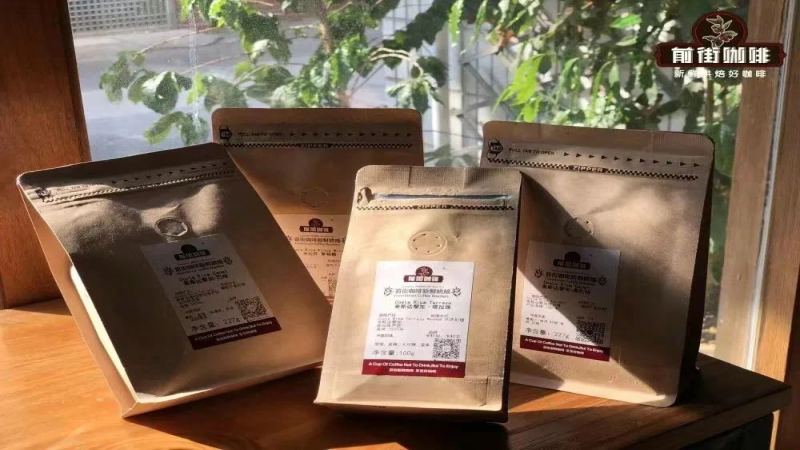
What mouthfeel should Mandheling coffee present? Rich nutty, dark chocolate, and caramel-cream-like mellow texture—these are the classic flavors it should have. This article begins with the reason why Front Street Mandheling is medium-dark roasted, analyzes how the Sumatra wet-hulling process shapes its unique herbal and woody aroma, and why the resulting high defect rate requires deep roasting to mask. It also explains in detail the PWN brand certification and G1 grade classification standards of Golden Mandheling, and addresses a common question among pour-over enthusiasts—why does it taste only burnt and bitter when brewed—by providing professional parameter suggestions from Front Street baristas, including KONO dripper selection, grind size adjustment, 87–88°C water temperature control, and a three-pour technique, to help you brew a cup of mellow Mandheling with both caramel sweetness and chocolate-nutty flavors.
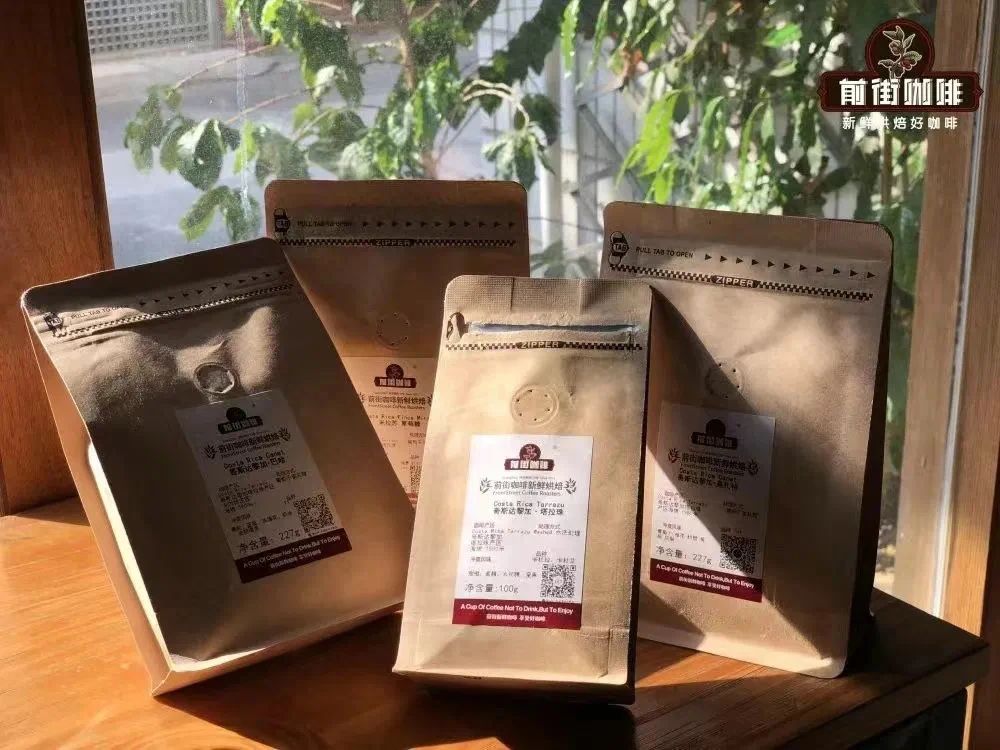
After medium-dark roasting, Front Street Mandheling gives off a highly recognizable intense coffee aroma, interwoven with scents of nuts, dark chocolate, roasted chestnuts, and spices such as cinnamon. On the palate, a caramel and creamy smoothness quickly fills the entire mouth, the body is solid and heavy, and the sweet aftertaste is obvious and long-lasting. For drinkers who prefer strong, bitter-style black coffee, this bean is one of the top single-origin choices.
Why are most Front Street Mandheling beans medium-dark roasted?
Front Street has noticed that in the past, Mandheling on the market was almost uniformly medium-dark roasted, presenting the classic strong black coffee style. With the advancement of the specialty coffee wave, more and more consumers have begun seeking more distinctive coffee experiences, so some merchants have launched medium or even medium-light roasted Mandheling products. The lighter the roast, the more acidity remains in the beans, the flavor leans toward fruity, herbal, and tea-like notes, and the body decreases accordingly. Since light-roasted Mandheling is so refreshing, why not simply roast it even lighter?
Drinkers familiar with Mandheling probably know about Sumatra's unique wet-hulling process. Before the final drying stage arrives, the green beans are sent into a huller, where greater friction tears away the semi-dry parchment layer clinging tightly to the beans. During this friction and agitation process, the green beans are easily crushed or bruised. The "naked beans" that have lost the protection of the parchment layer dry extremely quickly, but at the same time are directly exposed to humid air, and various microorganisms then breed.
The wet-hulling process certainly gives Mandheling its distinctive herbal and woody aroma, but it also leads to a relatively high defect rate in green beans, and deep roasting happens to perfectly conceal these flaws. In addition, Mandheling's rise to fame is inseparable from its early discovery by the Japanese. Given the taste preferences of the Japanese market, Japanese-style deep roasting is most favored, which is also why most Mandheling is roasted relatively dark. What Front Street hopes to present to drinkers is the classic Mandheling flavor, so the two Front Street Mandheling coffees sold daily are both medium-dark roasted: the Front Street Lintong Mandheling everyday drinking bean from the Lintong region, and the Front Street PWN Golden Mandheling coffee from the Aceh region.
What grade does Front Street Golden Mandheling belong to?
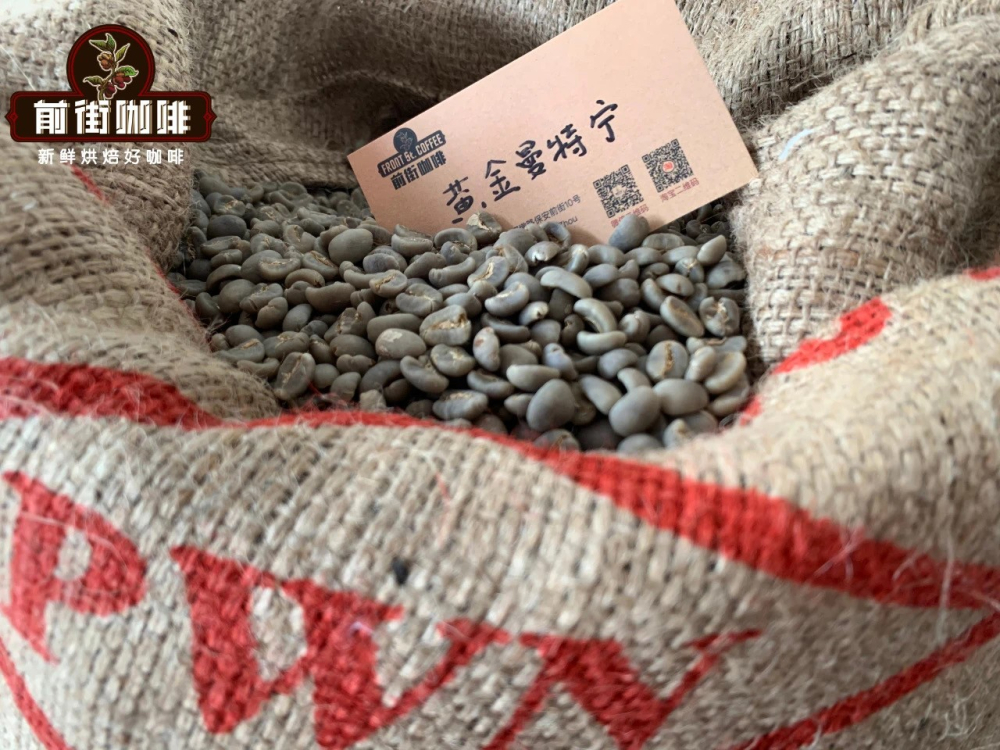
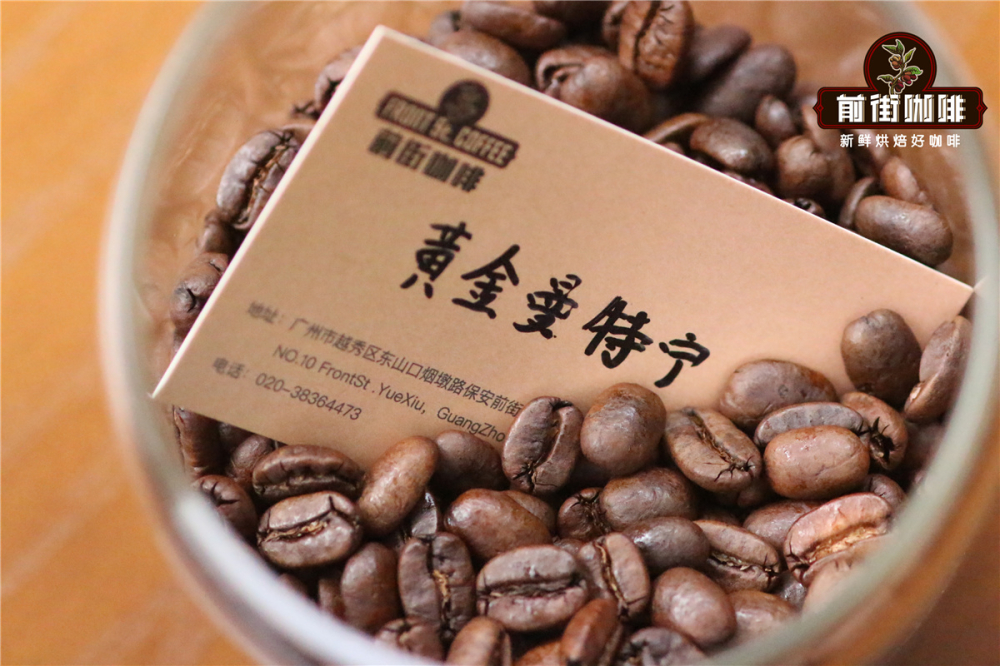
"Golden Mandheling" is the exclusive brand of the Indonesian company Pwani Coffee Company (PWN). There are many types of Mandheling products on the market, but because PWN has registered the English name "Golden Mandheling" as its trademark, only Golden Mandheling produced by PWN is truly Front Street Golden Mandheling in the genuine sense. To identify authentic Front Street PWN Golden Mandheling, you can check the green bean jute bag printed with the PWN logo and the certificate of origin signed by PWN. Front Street has already displayed these two identifiers in its Dongshankou store.
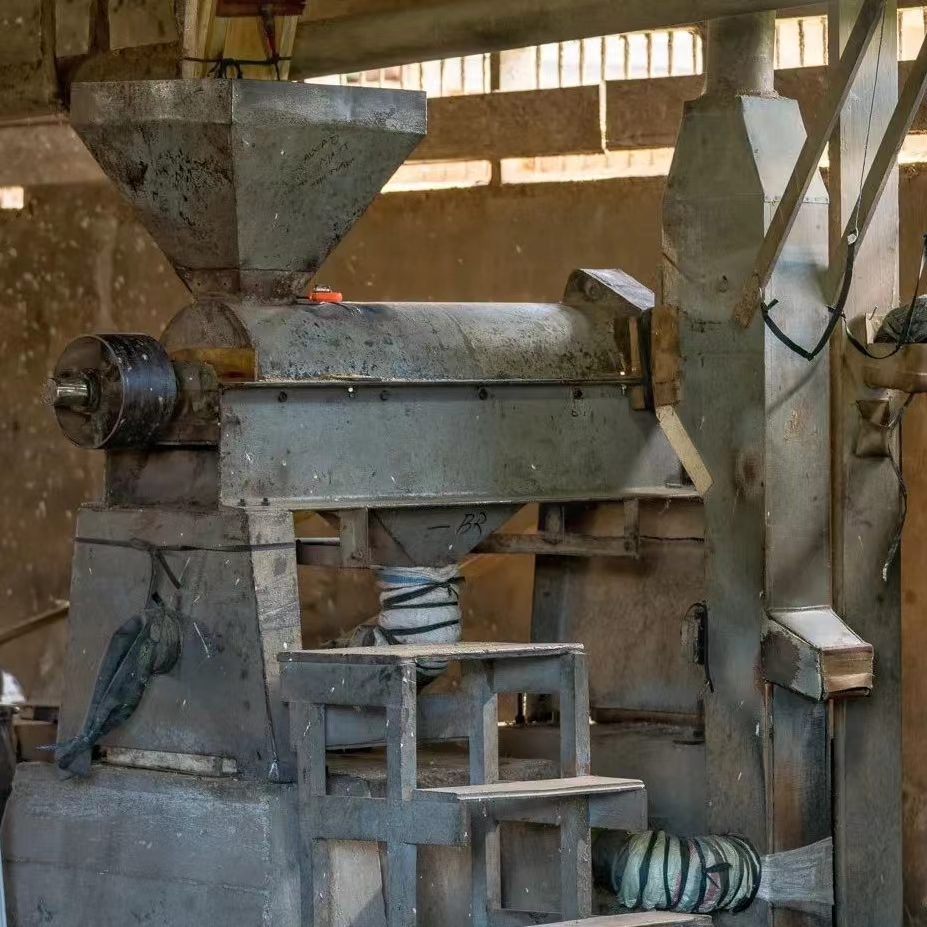
When the Japanese took an interest in Sumatra coffee back then and purchased it for a long time, they gradually discovered that the quality of local beans varied greatly. So they invested more effort in Mandheling production and began establishing strict standards and methods for screening defects. Starting from values such as bean density, size, shape, and color, the Mandheling produced had to undergo both machine and manual removal of defects to ensure the beans were intact, uniform, large, and translucent, while also reducing earthy and grassy off-flavors. It is said that in sunlight they appeared golden and shining, hence the name "Golden Mandheling."
The grading of Indonesian green coffee is mainly based on the number of defective beans, with size as a secondary factor. General quality requirements are no live insects, no moldy or rotten-smelling beans, a maximum moisture content of 12.5%, and an impurity rate below 0.5%. According to the defect rate, there are six grades in total. The highest grade, G1, requires fewer than 11 total defective beans in a 300-gram sample. The Front Street Lintong Mandheling coffee in Front Street's everyday drinking bean series is G1 grade, uses the wet-hulling process, and presents the conventional version of Indonesian Mandheling flavor.
PWN, which pursues perfection in screening, purchases Mandheling green beans of 18 screen size and above, G1 grade with fewer than 3 defective beans in a 300-gram sample, which is the highest grade of Indonesian green beans. Then, strictly according to standards, it carries out one machine sorting plus three manual selections to remove defective beans, ensuring that the shape and size of the Mandheling coffee beans are uniform and consistent. In addition, before packaging, PWN also places the green beans in a machine for density and color sorting, making Golden Mandheling uniform and translucent in color.
Does pour-over Front Street Mandheling taste only burnt and bitter? Maybe you just brewed it poorly!
Front Street's coffee brewing parameters are all set based on the characteristics of the coffee beans, the roast level, and the flavor profile. Mandheling is a bitter-toned coffee that is relatively dark roasted. FrontStreet Coffee baristas will choose a KONO dripper to brew this kind of full-bodied bean. Compared with the v60, the KONO dripper has a smooth curved surface, weaker exhaust effect, and straight ribs occupying only one quarter of the dripper, allowing the coffee bed and hot water to form immersion extraction, resulting in a rounder and fuller taste. The KONO dripper is also suitable for medium-dark roasted coffees such as Front Street Brazil Queen's Farm coffee and Front Street Jamaica Blue Mountain No. 1 coffee.
Deep roasting makes the internal structure of coffee beans loose, so they can be crushed with a gentle pinch of the hand, which means that after being ground into powder they have strong water absorption. To avoid the coffee grounds releasing too many bitter substances after absorbing water, Front Street will coarsen the grind and use lower-temperature water for pour-over brewing.
Grind size is one of the key factors affecting coffee flavor. After coffee beans are ground into powder and come into contact with hot water, they release a large amount of water-soluble flavor substances. When adjusting the grind size, Front Street uses a Chinese No. 20 0.85mm standard sieve. Medium-light roasted coffee beans consistently use a 75–80% passing rate, while medium-dark roasted coffee beans use 70–75%. Compared with light-roasted coffee, the internal structure of medium-dark roasted Mandheling beans is looser, absorbs water better, and easily releases large-molecule bitter substances. To avoid over-extraction, Front Street chooses a coarseness with a 70% passing rate on the No. 20 standard sieve.
Water temperature works similarly to grind size: the higher the water temperature, the higher the extraction efficiency, the easier it is to release various substances and components, and the higher the concentration. If water close to boiling is used for brewing, it is easy to extract unpleasant bitter substances. Therefore, when brewing medium-dark roasted coffee beans, Front Street uses brewing parameters different from those for light-roasted coffee beans. Medium-dark roasted beans undergo more caramelization reactions than light-roasted beans and more easily release large-molecule bitter substances. To avoid extracting too many off-flavors, Front Street will appropriately lower the water temperature. The brewing water temperature for light-roasted coffee is 91–93°C, while for medium-dark roasted coffee beans Front Street recommends 87–88°C.
Recommended brewing water temperature: 87–88°C
Coffee grounds: 15g
Coffee-to-water ratio 1:15
Grind size: medium-coarse grind (70% passing rate on Chinese standard No. 20 sieve)
The brewing method uses three-stage pouring. Dividing the pour into three stages can better express the full body and caramel sweetness of Front Street Golden Mandheling coffee.
For the first stage, bloom with 30ml of water. This pour completely wets the coffee grounds, allows degassing, and prepares for better extraction of coffee flavor substances afterward. For the second stage, pour 100ml. This stage mainly washes out the golden foam of Front Street Golden Mandheling and raises the coffee bed. For the final stage, gently pour 95ml in the center, which can enhance the coffee's sweetness. The brewed Front Street Golden Mandheling overall displays a substantial, full body, with caramel sweetness and chocolate and nutty flavors.
The above content is compiled by CoffeeHunters, a coffee news website.


