







Mandheling coffee, with its rich, bitter profile and unique herbal aroma, has become a favorite among dark roast enthusiasts. On Front Street Coffee's bean list, Lintong Mandheling and PWN Golden Mandheling come from Sumatra's Lintong and Aceh regions respectively, both medium-dark roasted, presenting flavors of dark chocolate, caramel, and spices. Golden Mandheling, hand-sorted multiple times by PWN, boasts extremely high cleanliness and a clear sweetness. This article will walk you through Mandheling's origin story, the wet-hulling process, and Front Street baristas' complete pour-over parameters and three-stage pouring technique for Golden Mandheling, helping you brew a rich, clean cup at home.
Front Street Mandheling coffee is the brand's richest bitter-toned representative, with an entry of intense dark chocolate, roasted hazelnut, and caramel flavors, and a finish revealing a unique hint of herbal spice. PWN Golden Mandheling, located at the top right of Front Street's bean list, stands out for its exceptional cleanliness thanks to repeated manual sorting, delivering a rare clarity and sweetness.
Where does Front Street Mandheling coffee come from?
The Indonesian Mandheling we usually drink is almost always dark roasted, to suppress acidity and amplify the rich, bitter tones. Front Street's bean list features two Mandhelings: Front Street Lintong Mandheling daily bean and Front Street PWN Golden Mandheling, from Sumatra's Lintong and Aceh regions respectively, both medium-dark roasted. Front Street aims to present dark chocolate and caramel flavors while preserving Mandheling's wild herbal character. This distinctive fragrance stems from Mandheling's growing environment and processing method.
Front Street Mandheling coffee comes from the mysterious Indonesian island of Sumatra. Sumatra is divided into eight provinces, yet only the high-altitude Aceh and North Sumatra provinces cultivate Arabica on a large scale. Sumatra has a tropical rainforest climate, with clouds and rain often shrouding the forests, casting a mysterious veil over the land. The coffee harvest season runs from September to April, when farmers can be seen busy picking in the hills. Traditional Lintong Mandheling is cultivated by the Mandailing and Batak peoples, while the "rising star" Lake Tawar Mandheling is grown by the Gayo people.
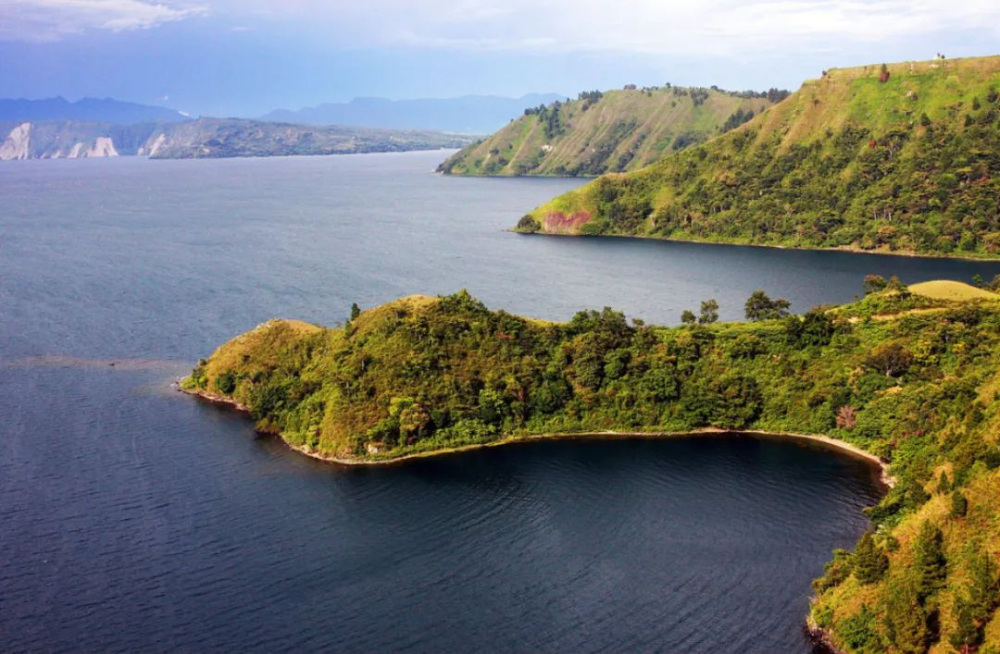
Locals plant coffee trees around two major volcanic lakes—Lake Tawar and Lake Toba. The Gayo mountains around Lake Tawar offer ideal coffee-growing conditions, with widespread organic farming and a long cultivation history, yielding higher quality and quantity. Many green bean traders also favor this area, including the locally renowned Pwani Coffee Company (PWN).
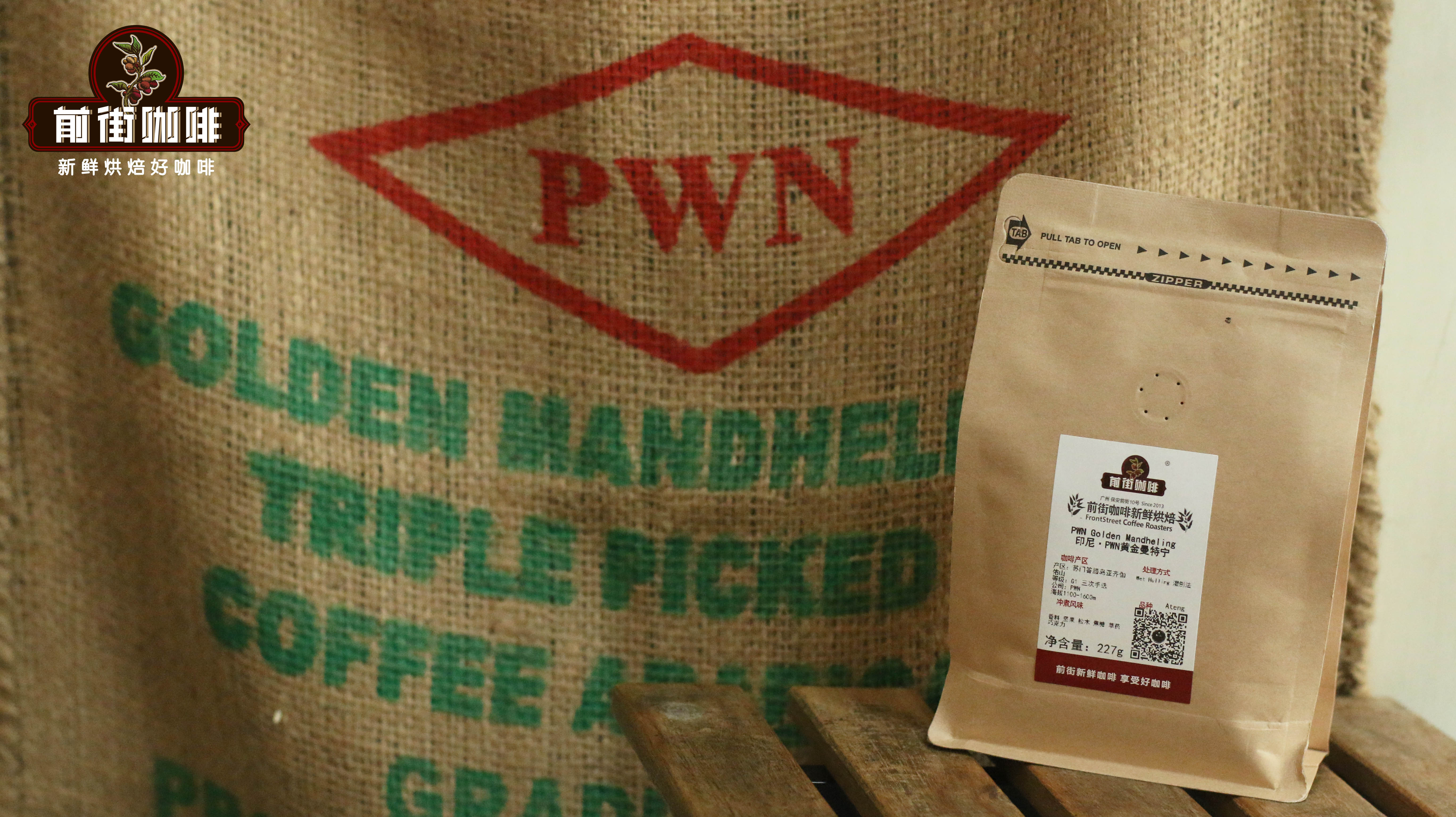
PWN primarily purchases high-quality Mandheling green beans, which undergo one machine sort plus three manual hand sorts to select plump, flawless beans—all classified as specialty grade. "Golden Mandheling Coffee" is their flagship product. Early on, to secure exclusivity as the supplier of Golden Mandheling Coffee, PWN registered the English trademark "Golden Mandheling," meaning only their Golden Mandheling is the true Golden Mandheling. Front Street's Golden Mandheling coffee beans are of course "authentic products" purchased from PWN, processed using Indonesia's unique wet-hulling method.
The flavor profile of Indonesian Mandheling stems from the wet-hulling process.
The biggest difference between Indonesia and many coffee-growing regions lies in its humid weather—year-round humidity of 70–90%, typhoons arriving without warning, and annual rainfall exceeding 2000mm. Such harsh weather makes it impossible to use the 2–3 week sun-drying typical of Africa. Washed processing is not only time-consuming but also costs more in labor and water—unaffordable for Indonesia, which prioritizes volume. Thus they developed a unique semi-washed method: wet-hulling.
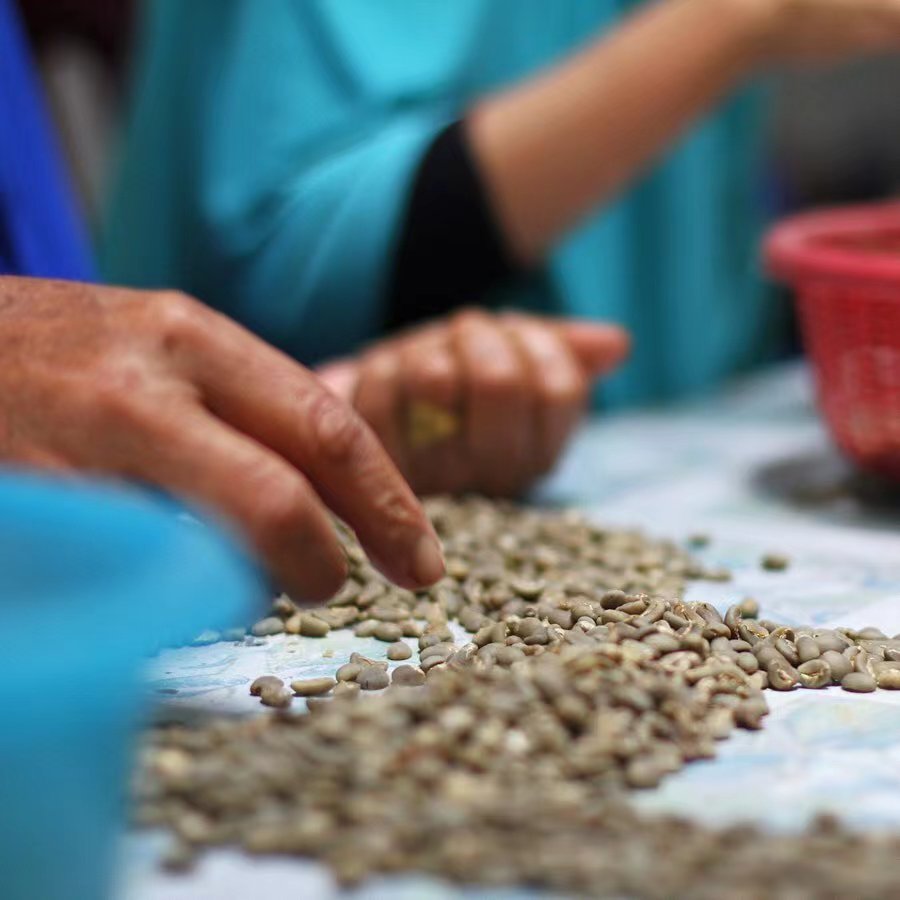
After removing the skin and pulp, the coffee cherries are poured directly into tanks for a short fermentation of a few hours, during which a small amount of mucilage remains on the parchment. The mucilage is removed by scrubbing. The parchment beans are then dried—the first drying only needs to reach 30–40% moisture content, taking about 2–3 days, after which farmers sell the green beans to collectors. The collectors then hull the semi-dry parchment beans directly by machine to obtain the innermost green beans.
Because the hulling machine uses strong friction to tear open the parchment layer clinging to the green beans, at this stage white or green mucilage often oozes out. Due to prolonged soaking in mucilage and the humid environment, the green beans eventually become soft, pale and swollen, forming a grayish-green color. The friction and agitation also make the beans more prone to being crushed or dented, especially at both ends, forming small nicks that create "goat-hoof" beans. These "naked beans" without parchment dry very quickly, while being directly exposed to the humid environment and various microorganisms. This gives Indonesian coffee its unique woody, spicy, and herbal notes—what we call "the taste of place."
I believe some friends are already curious about what this Southeast Asian flavor is like. If you haven't tried Front Street Mandheling coffee yet, Front Street suggests starting with the small-package Front Street Lintong Mandheling daily bean. Brewed with the wet-hulling method, Front Street Lintong Mandheling presents the classic Mandheling flavor, making it convenient to try at home.
The best pour-over method for Front Street Golden Mandheling coffee.
To brew the best aroma from Front Street Mandheling coffee, Front Street will use the store's most popular Front Street PWN Golden Mandheling coffee beans as an example to explain Front Street's pour-over approach.
For rich-bodied coffees like Front Street Indonesian Mandheling, Front Street Brazil Queen Estate, and Front Street Jamaican Blue Mountain, Front Street baristas prefer the KONO dripper. Compared to the V60, the KONO dripper has a smooth curved surface—a design meant to ensure the filter paper clings to the dripper wall after wetting—and guide ribs only a quarter of the dripper's height, restricting airflow upward so water can only exit through the bottom into the server. This increases the time coffee grounds absorb water, allowing the coffee bed and hot water to form an immersion extraction, making the coffee rounder, richer, and more concentrated.
Medium-dark roasted coffee beans undergo significant internal structural changes, becoming porous and absorbing water more readily when ground. Without properly adjusted brewing parameters, the coffee easily over-extracts and turns bitter. To get enough aroma without over-extraction, extraction yield must be reduced. Front Street uses a lower water temperature and a coarse-sugar grind to limit the release of bitter large molecules. Front Street stores use an EK43S grinder at setting 10, with water at 87–88°C.
Dripper: KONO
Water temperature: 87°C
Dose: 15g
Coffee-to-water ratio: 1:15
Grind size: 70% passing Chinese standard No. 20 sieve
Pouring method: three-stage pour
For the first stage, pour 30g of water to bloom for 30 seconds, starting the timer as you pour. Use a slow, small stream, starting at the center and spiraling outward, making sure to wet the entire coffee bed.
After 30 seconds, begin the second stage with a slightly stronger, steady stream, pouring 95g of water to lift the entire coffee bed. The stream should be vertical and even. At this point the scale reads 125g, and pouring finishes in about 55 seconds.
When the water level drops to halfway, begin the third stage with a slow, small stream in a small spiral, pouring 100g. Try to keep the stream from spiraling too wide, as this can disturb the coffee bed and cause under-extraction. The total water added is 225g, and the drip finishes in about 2 minutes. Remove the dripper, swirl the coffee in the server to mix evenly, and it's ready to taste.
Pour-over Front Street PWN Golden Mandheling coffee: intense dark chocolate aroma, with roasted hazelnut, caramel, and melon flavors blending beautifully, a clear spice note in the mouth, a rich, clean body, and a lasting finish.
The above content is compiled by CoffeeHunters, a coffee news website.


