







For friends who are just getting into specialty coffee, seeing a barista sell beans from different origins mixed together can be confusing. In fact, this is blended coffee, also known as mixed coffee. This article, from the perspective of Front Street Coffee, systematically explains the definition of blended coffee, the purpose of blending, the difference between pre-roast blending and post-roast blending, and blending approaches for different origins and different varieties. It will also introduce in detail the formulas and flavor characteristics of Front Street's four espresso blends, along with suggested parameters for pour-over blended coffee, to help coffee lovers fully understand the value and uses of blended coffee.
Recently, quite a few regular customers have been coming to Front Street stores to buy espresso blends, while first-time visitors often look puzzled, not understanding why the baristas at FrontStreet Coffee would mix several kinds of beans together to sell. In fact, this is blended coffee beans, also called mixed coffee. Next, Front Street will explain to everyone exactly what blended coffee beans are.
What Is Blended Coffee
Friends familiar with coffee all know that single-origin coffee refers to beans from one single origin, such as Front Street Ethiopia Yirgacheffe or Front Street Indonesia Mandheling. They all belong to single-origin coffee beans, and the brewed flavor also carries the unique character of the local origin. Blended coffee, on the other hand, mixes single-origin beans from different origins together. However, Front Street must specifically point out that blending is by no means random. The blending ratio and harmony between flavors must be strictly controlled in order to create delicious coffee.
For example, take Front Street Ethiopia Yirgacheffe and Front Street Indonesia Mandheling and blend them. The flavors of these two beans can be said to be completely opposite: one has a fresh lemon and citrus note, while the other has herbal and earthy aromas. If mixed one to one, Front Street really cannot imagine how bad that taste would be. It can be seen that blending beans is very particular and cannot be paired casually.
Moreover, Front Street has always believed that blended coffee beans are an art. A coffee blender must first have a thorough understanding of the flavor characteristics of major origins in order to create an alluring aroma and make the coffee taste better. This depends not only on extensive coffee experience and inspiration, but also on precise ratio calculations, so saying that the process of blending coffee beans is an art is not an exaggeration at all.
Since it is a blend, it naturally refers to a combination of two or more original beans. But there is one special case: different roast levels of the same coffee bean can also be blended together, and even new beans and aged or old beans of the same kind can be blended. So the "types" in blending no longer refer only to coffee varieties in the narrow sense, but broadly extend to the flavor level of coffee. Blending usually uses two to six kinds of coffee beans; too many types instead makes it impossible to showcase coffee's unique flavor.
Why Blend Coffee
Surely some coffee fans will ask Front Street: single-origin coffee already tastes good enough, so why make blended beans?
In fact, the origin of blended coffee is in Italy. The espresso drinks commonly seen in cafes, whether lattes, mochas, or cappuccinos, all use blended beans. The reason is that blended beans can make coffee that is not originally rich enough become richer, and where there is demand, there is naturally a market. Initially, Italian blended coffee appeared because rich, bittersweet espresso was popular at the time, while single-origin coffee has flavor bias, with both advantages and disadvantages. In addition, high-quality single-origin coffee beans are expensive, while blended coffee is more cost-effective, lower in price than single-origin, yet still capable of unique flavor. So at that time many Italians chose blended coffee rather than single-origin, and blended coffee thus developed and remains popular to this day.
The main purpose of blended coffee is to maintain flavor stability and taste balance. After all, coffee fruit is an agricultural product, and each year climate and environmental issues can cause unstable flavor. Perhaps this year it is sweeter, and next year it is not as sweet. Mixing several kinds of coffee beans together can solve this problem well, at least allowing the coffee flavor tasted each year to remain consistent.
There is another point: surely some coffee fans wonder why espresso cannot be made with single-origin beans. This is because the espresso machine has a characteristic of magnifying the most prominent flavor of the coffee beans. For example, the main flavor of Ethiopia Yirgacheffe is citrus lemon acidity, and the espresso machine will amplify its acidity; while the main flavor of Indonesia Mandheling is herbal, earthy, and somewhat bitter, and the espresso machine will amplify the bitterness. Therefore, FrontStreet Coffee does not use single-variety coffee beans to make espresso, otherwise the resulting coffee is very unbalanced and the taste is affected. This is also why espresso needs to be made with blended beans.
How Blended Coffee Beans Are Blended
Blended coffee is divided into pre-roast blending and post-roast blending. Pre-roast blending is mixing the coffee beans before roasting, while post-roast blending is roasting first and then mixing. Front Street believes that the advantage of pre-roast blending is that the same roast level can make the coffee flavor stable and uniform, completing it in one roast, and the same roast level can also greatly reduce the difficulty of quality control and improve efficiency. But it is not perfect; pre-roast blending has major limitations, so for pre-roast blending Front Street generally recommends using several beans with relatively similar density, otherwise the flavor will be inferior to the original origin's expression. For example, beans that are always suitable for a light roast must be roasted together with beans also lightly roasted to achieve a doubly good effect. But roasting a light-roast bean together with a dark-roast bean is incompatible, isn't it, and will lead to poor flavor.
As for the advantage of post-roast blending, Front Street believes it is that each bean can be roasted separately according to its optimal roast level, maximizing each bean's characteristics. But the disadvantage of post-roast blending is that daily quality control and management are more difficult, and inconsistent roast dates require attention to more resting periods. Just imagine using four or five coffee beans for post-roast blending: this one product alone requires tracking four or five roast dates. So post-roast blending and pre-roast blending each have advantages and disadvantages, but their purpose is the same: to make the coffee flavor more delicious.
Of course, blended coffee also has two blending approaches. One is blending coffee beans from different origins, such as the best-selling Front Street Classic Blend and Front Street Commercial Blend. Both products add a small amount of Robusta on top of Arabica, giving the espresso rich crema and enhancing body.
The other blending approach is blending between different coffee varieties. For example, Front Street Butterfly is famous for blending about 70% Geisha variety, and Front Street Costa Rica Mirazu Estate Geisha Blend mixes half Geisha variety with half SL28, ET47, and Maico. However, Front Street believes that calling coffee beans made by mixing different varieties a "blend" is only to highlight a certain variety among them, not blending in the traditional sense. Interestingly, if coffee beans mixed from different varieties are also called blends, then most of the coffee beans we commonly see would all be blends, such as the common Kenya coffee, which often mixes SL28 and SL34.
Front Street Coffee's Four Blended Coffee Beans
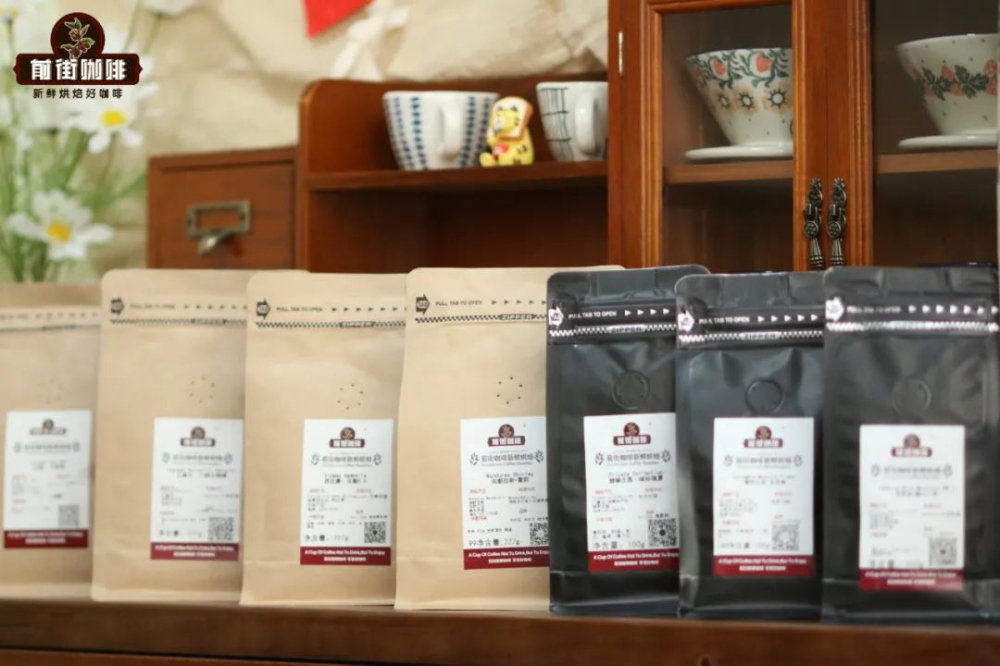
As Front Street said above, blended coffee beans are an art, and cannot be achieved by casual mixing. It relies on the coffee blender's repeated trials to create a cup of coffee with excellent flavor. Therefore, Front Street's roasters also went through repeated ratio testing and created the currently offered Front Street Sunflower Warm Sun Blend, Front Street Specialty Blend, Front Street Commercial Blend, and the espresso moka pot coffee beans recommended by many baristas, Front Street Black Cocoa Blend. The difference among these blends is that they provide balanced, high-quality blended flavors for different price points. Next, Front Street will introduce these four blended coffees in detail.
Front Street Specialty Espresso Blend Coffee Beans
For this blend, Front Street used coffee beans from Brazil and Colombia. It tastes of a light roasted grassy aroma, mildly fragrant with a slight bitterness, smooth and pleasant, with a comforting aftertaste. This is because coffee beans from Colombia's Huila region have a pleasant acidity, a fragrant aroma, moderate acidity, and rich sweetness that is very thought-provoking; coffee beans from Brazil's Cerrado region have a comfortable bittersweet taste and are extremely smooth on the palate. So the combination is simply superb and can meet the daily production needs of coffee shops.
Front Street Commercial Espresso Blend Coffee Beans
For this blend, Front Street used coffee beans from Brazil and Colombia plus 10% Robusta coffee beans. The taste is classic. Front Street believes this blend tastes of rich crema and mouthfeel, along with caramel sweetness, and also has nutty, cocoa-like, and dark chocolate flavors, with balanced acidity and sweetness, a slight bitterness, and a lasting finish. This Front Street Commercial Blend, like the Front Street Specialty Blend, uses a ratio of Colombian and Brazilian coffee beans. The difference is that Robusta is also added, which provides rich crema, making the coffee fuller in body and suitable for daily coffee shop needs.
Front Street Black Cocoa Basic Espresso Blend Coffee Beans
For this blend, Front Street used coffee beans from Brazil and Yunnan. Front Street believes it tastes of soft fruit acidity and caramel sweetness, along with nutty and dark chocolate flavors, smooth and viscous, but relatively light in taste. This is because Yunnan's natural conditions are very similar to Colombia's, with high altitude and a large temperature difference between day and night. Its flavor is mellow, with moderate acidity, a rich and full-bodied taste, uniform beans, high oil content, and fruity notes. Its quality and mouthfeel are similar to Colombian coffee. However, it still tastes slightly lighter than Colombian coffee, while coffee beans from Brazil's Cerrado region have a comfortable bittersweet taste and are extremely smooth on the palate. Therefore, these two coffee beans also blend into a good flavor, and this espresso moka pot coffee bean recommended by many baristas, Front Street Black Cocoa Blend, is very cost-effective, suitable for espresso beginners and small coffee shops, and also suitable for coffee shops and home users who prioritize cost and have average flavor requirements.
Using Blended Coffee for Pour-Over
Blended coffee is not only for espresso; it can also be pour-over brewed. However, the brewed flavor will always differ somewhat from the flavor brewed by an espresso machine, but Front Street believes that a different flavor from pour-over is also quite special, isn't it? So whether you choose pour-over or an espresso machine, just make it the way you like.
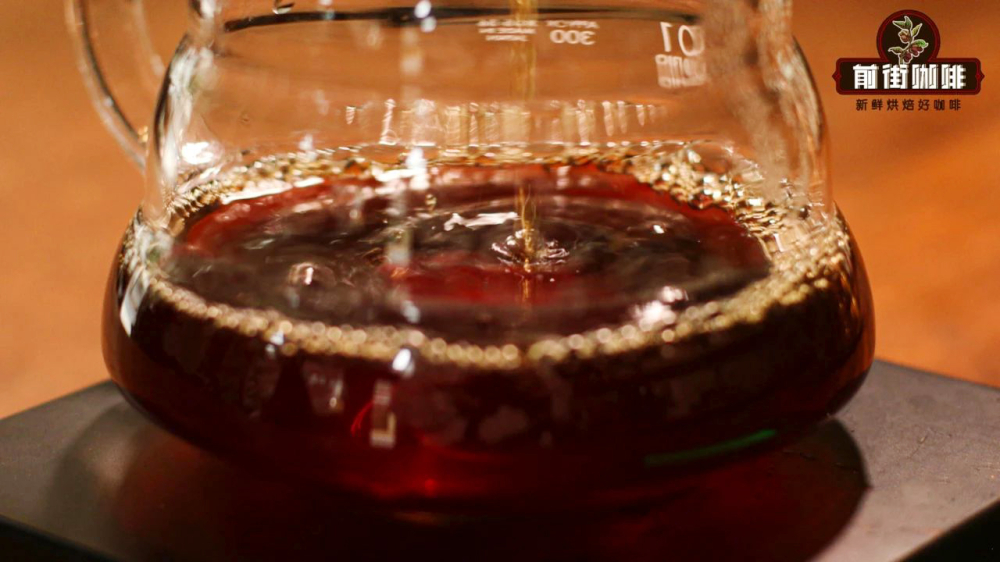
Next, Front Street will share the pour-over data with coffee fans who want to brew pour-over themselves.
Front Street pour-over coffee parameters: Kono dripper, 15g coffee dose, water temperature 90℃, coffee-to-water ratio 1:15, grind size (80% passing through a No. 20 standard sieve, coarser than the grind size for espresso)
Brewing method: Front Street uses staged extraction, using 30g of water for a 30-second bloom, pouring in a small stream in circles until 125g for the first stage, then continuing to pour until 225g when the water level drops and is about to expose the coffee bed, stopping the pour, and removing the dripper when the water level drops and is about to expose the coffee bed, (timing starts at the beginning of the bloom) with an extraction time of 2'00"
The above content is compiled by CoffeeHunters, a coffee news website.


