







Honduras, as an important coffee-producing country in Central America, nurtures distinctive specialty coffees thanks to its complex terrain and diverse climatic conditions. From High Grown Coffee to Strictly High Grown Coffee, from classic Bourbon and Caturra varieties to the recently sought-after whisky-sherry barrel fermentation process, Honduran coffee displays rich layers of flavor. In this article, Front Street Coffee will systematically outline the core knowledge of Honduran coffee—from the geography of its producing regions, variety classification, green bean morphology, and roast profile design, to the cupping and brewing performance of two distinctive beans, Sherry and Litchi Orchid—to help coffee lovers gain a deeper understanding of this region's unique charm and find the cup that suits their taste.
When Honduran coffee is mentioned, the first thing that comes to many people's minds is Sherry coffee beans. Its vanilla aroma, silky creamy texture, honey-like sweetness, and fermented vinous notes are truly unforgettable. Below, Front Street will give you an overview of Honduran coffee and its characteristics.
Honduras' Geography and Climate Conditions:
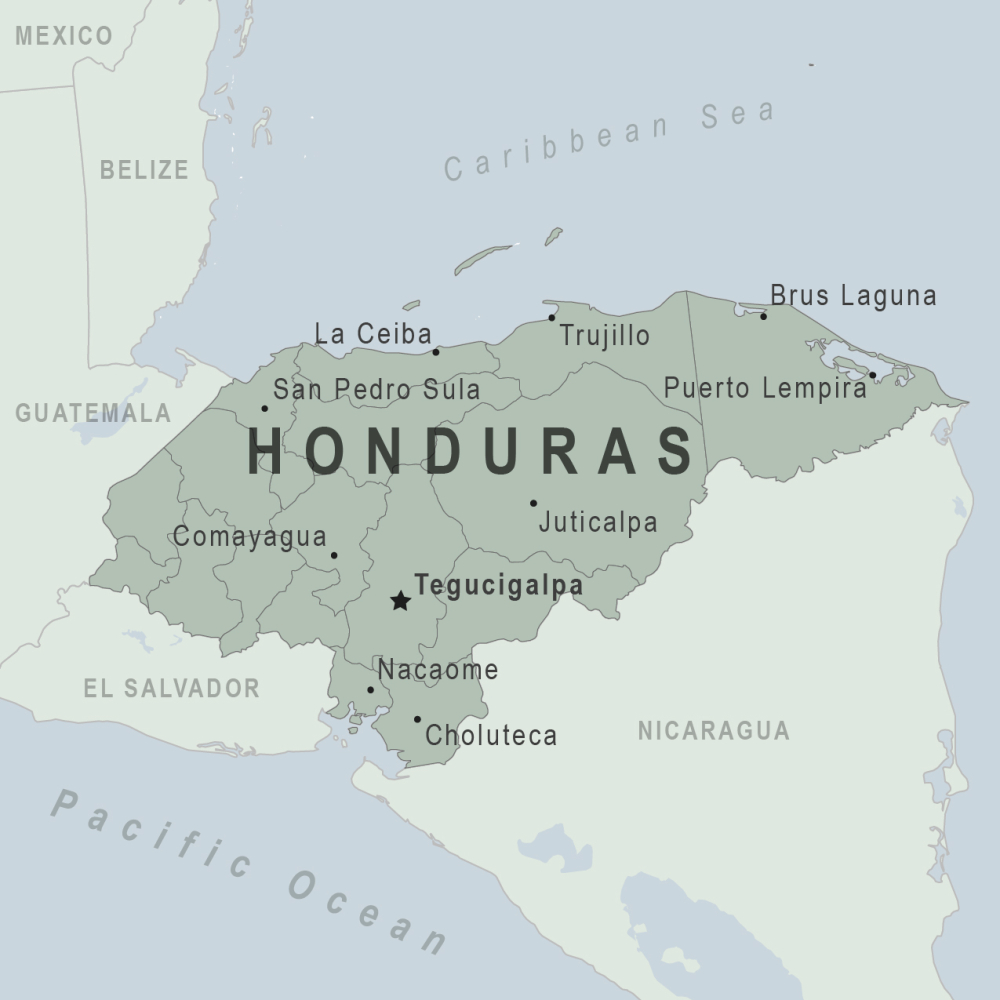
Honduras is located in northern Central America, with the Caribbean Sea to the north, the Gulf of Fonseca of the Pacific Ocean to the south, Nicaragua and El Salvador to the southeast, and Guatemala to the west. Its territory is dominated by mountains and plateaus. The country covers an area of 112,492 square kilometers, with a coastline of about 1,033 kilometers. Apart from the coastal plains, almost the entire country is mountainous. Peaks in the northwest can reach 3,000 meters above sea level, and the southern mountains also rise above 2,400 meters. Major rivers include the Coco River, the Patuca River, and the Ulúa River. Numerous rivers originating in the inland mountains crisscross the land, flowing into the two oceans respectively. Between the mountain ranges, many basins and river valleys have formed, among which Sula and Lepaguare are the larger basins, while Comayagua and Jamastran are the main river valleys.
Many islands are scattered along the coast, with the Bay Islands and the Tigre Islands in the Gulf of Fonseca being the more prominent ones. Honduras' diverse terrain brings varied climates. The coastal plains of Central America have a tropical rainforest climate, with an average annual temperature of about 31°C. The mountains, meanwhile, show subtropical forest climate characteristics, with an average annual temperature of 23°C. From June to November each year is the rainy season, with suitable temperatures and ample rainfall, providing an ideal environment for coffee cultivation.
Honduras produces two types of coffee of quite outstanding quality that are much favored by coffee lovers. One is "High Grown Coffee," cultivated at elevations of 1,000 to 1,500 meters; the other is "Strictly High Grown Coffee," at elevations of 1,500 to 2,000 meters, representing the country's highest grade. Most Honduran coffee is exported to the United States and Germany.
The total area of coffee farms in Honduras reaches 280,000 hectares, mostly small plantations, with most covering less than 3.5 hectares. These smallholder farms contribute 60 percent of the country's coffee production. Because the coffee farms are mostly located in mountainous areas, harvesting is done by hand, followed by meticulous processing to ensure bean quality. Honduras harvests three million bags of coffee each year, with an ample supply and excellent quality, and has now ranked among the world's top ten coffee exporters.
The Appearance Characteristics of Honduran Coffee Beans:
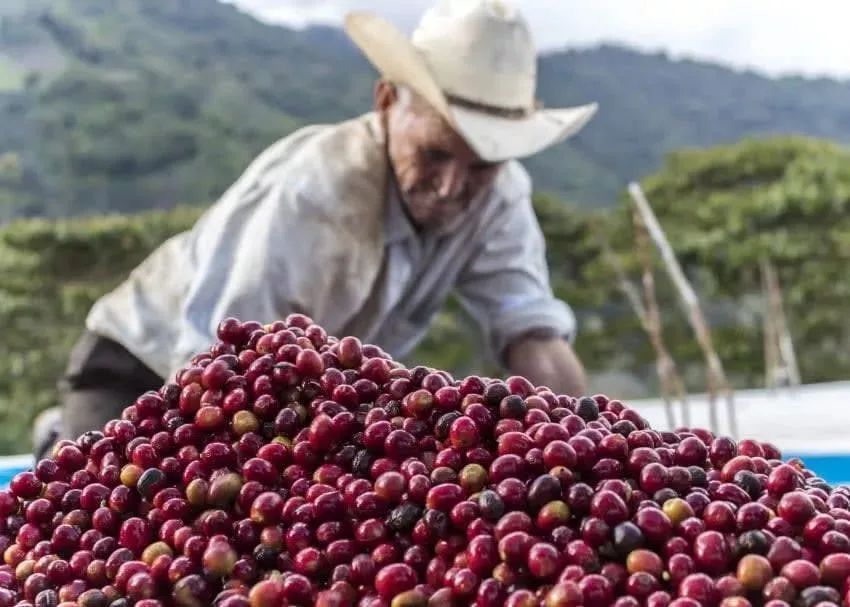
Honduran coffee beans are relatively large, fairly consistent in size, and uniform and glossy in color. To make harvesting easier, farmers keep coffee trees from growing taller than 150 centimeters, because trees that grow too tall must be harvested with ladders, which is time-consuming and easily damages the tree by bending and breaking branches. Since coffee cherries on the same tree do not ripen at the same time, maintaining good bean quality requires hand-picking, followed by selecting the ripe cherries. The coffee cherries on a single branch often take several weeks to be fully harvested.
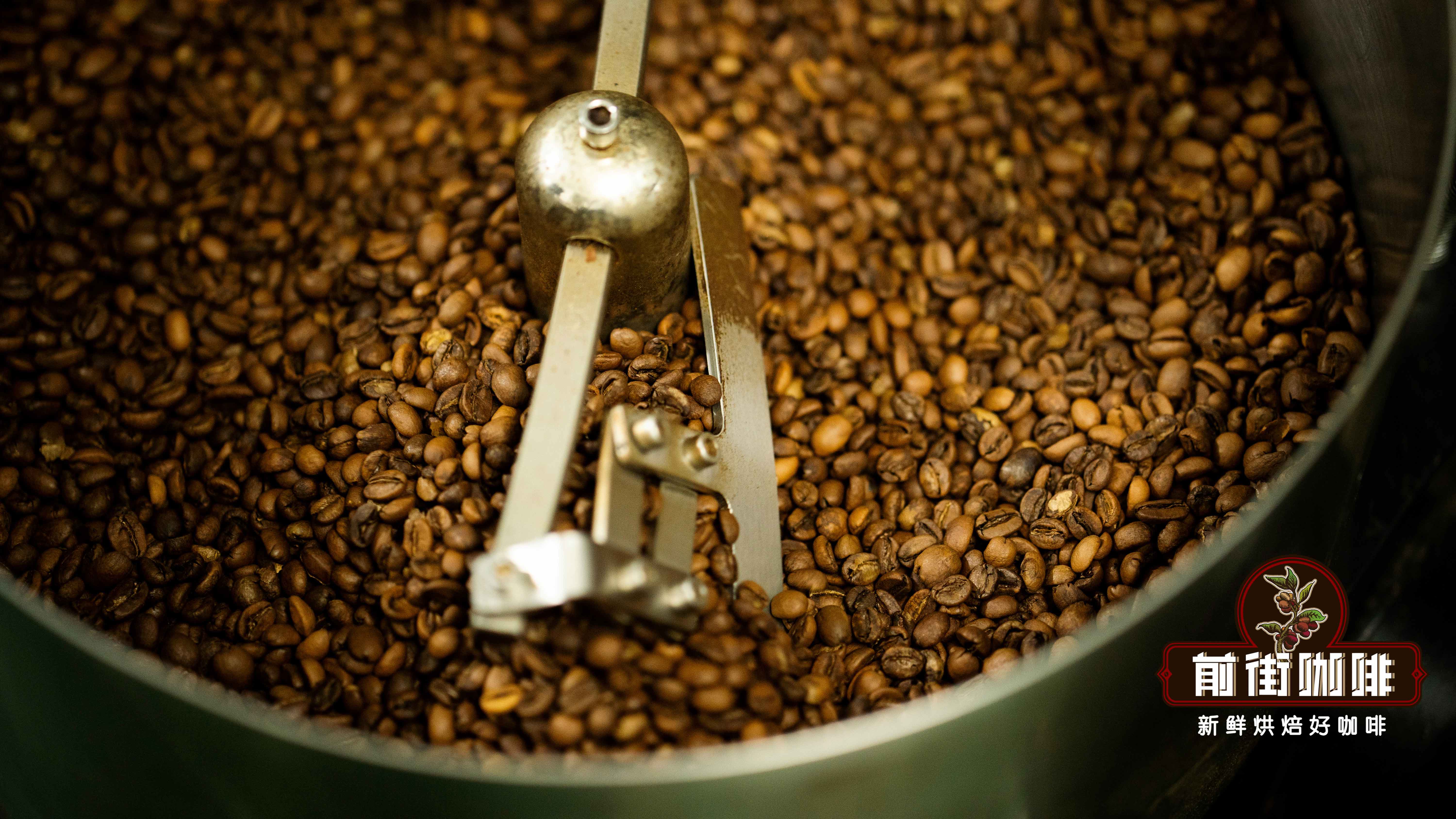
Honduran coffee beans belong to the hard bean type, with medium moisture in the green beans and fairly uniform bean size. To develop the full-bodied flavor typical of Honduran coffee, hard beans need to be roasted to at least a medium level. We set an approximate range and, based on it, designed medium, medium-dark, and second-crack roast profiles.
FrontStreet Coffee recommends keeping good records before roasting, including the coffee beans' moisture content, density, origin, processing method, as well as the ambient temperature and humidity in the roasting room, and planning the roast profile in advance. During roasting, record the relevant chemical and physical changes; these all help to better understand the final roasting result and to improve the profile.
Roaster: Yangjia 800N, 550g green beans charged
Roast Profile:
When the drum temperature rises to 200°C, charge the beans; set the damper to 3. After 1 minute, adjust the heat to 170°C and keep the damper unchanged. Roast until 5 minutes 45 seconds, at 151.7°C, when the bean surface turns yellow, the grassy smell completely disappears, and dehydration is complete; adjust the heat to 140°C and change the damper to 4;
At the 9th minute, irregular wrinkles and dark patches appear on the bean surface, and the toast aroma clearly turns into coffee aroma—this can be seen as the prelude to first crack. At this point, listen carefully for the sound of first crack. First crack begins at 8 minutes 23 seconds; reduce the heat to 80°C and open the damper fully (be very careful when adjusting the heat—do not reduce it so much that the cracking sound cannot be heard), and drop the beans at 202°C.
The sweetness performs very well, especially the caramel sweetness, which is particularly prominent, while the thick mouthfeel and rich oily texture together form a full body—very pleasing!
Tasting Notes: Cream, Roasted Nuts, Milk Chocolate
Honduras Whisky Sherry
The Sherry coffee's producing region is located in Masaguara, a city in southwestern Honduras, and the Mocha Estate there is precisely the birthplace of this wine-aroma coffee. Because Honduran Sherry coffee has very low green bean yields and uses the popular fermentation processing method of recent years, it has become a quite distinctive single-origin offering on Front Street's bean list.
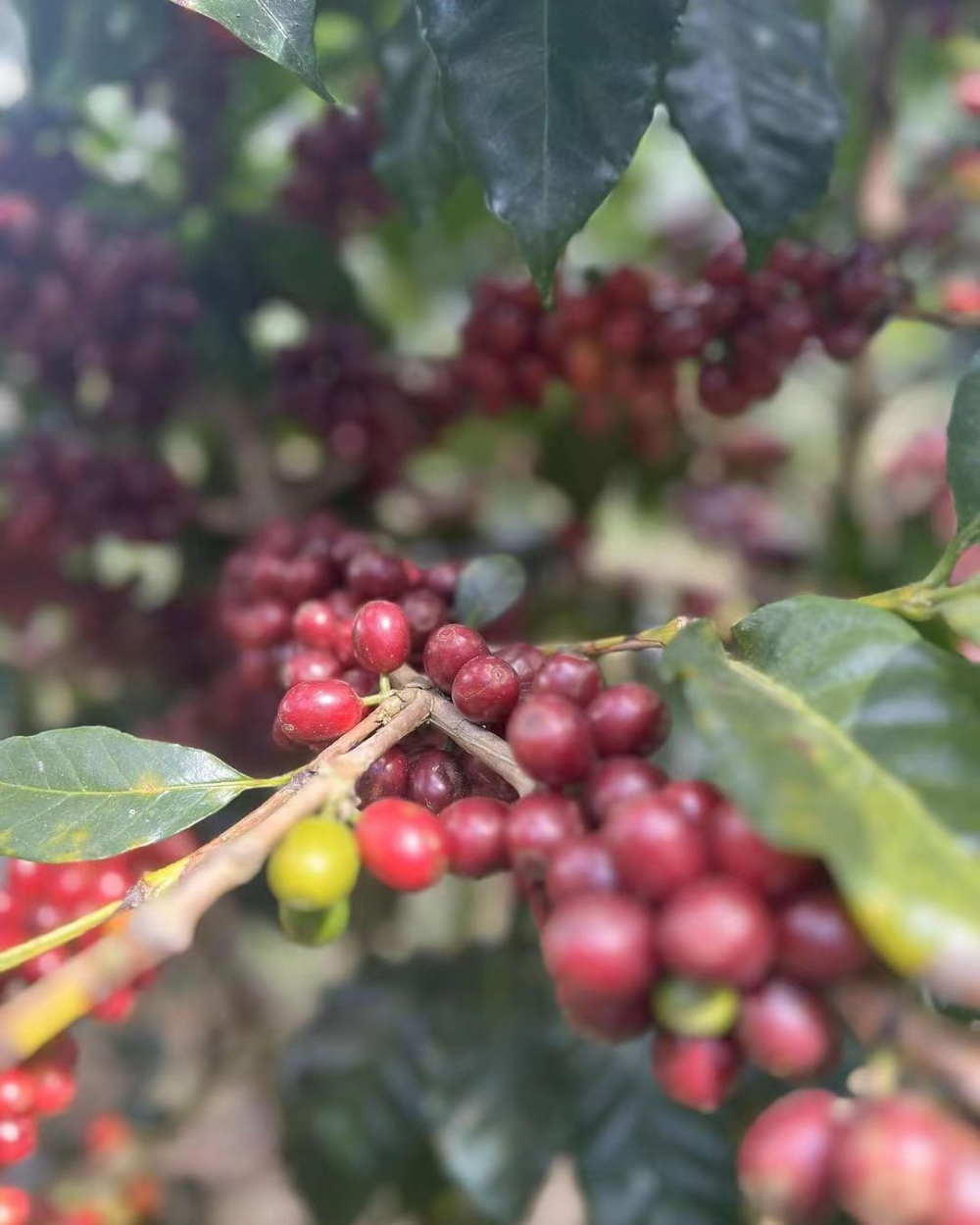
Honduran Sherry coffee beans are grown at elevations between 1,500 and 1,700 meters. Front Street's Sherry coffee is a blend of Caturra, Catuai, Pacas, and other varieties. After fine washing, whisky-sherry barrel fermentation, and roasting, Front Street's conclusion from experimental brewing is: the brewed flavor of Honduras Sherry shows whisky, berries, almond, and dark chocolate, with a maple-syrup-like sweet finish; after brewing, it smells distinctly of vanilla and cream.
The whisky aroma comes from the way Sherry coffee is processed. FrontStreet Coffee's Sherry coffee beans use whisky barrel fermentation plus fine washing (whisky must be aged in oak barrels during production; after aging, the oak barrels have absorbed the whisky's flavor and retain a rich vinous aroma).
The processing flow is as follows: first, freshly picked coffee cherries undergo fine washing, then they are placed into barrels that previously aged sherry wine and fermented at low temperature for 30 to 40 days (at about 15 to 20°C), after which they are dried in the shade.
Sherry barrels are barrels used by sherry wineries in the whisky industry for aging. During sherry production, the Solera System maturation process is used. This process refers to blending and aging sherry of different vintages after fortification, which is also what gives sherry its unique flavor. Coffee beans fermented in sherry barrels naturally take on the flavor of sherry wine, creating an intoxicating and unique taste that has become very popular in recent years.
Varieties: The vast majority of coffee varieties grown in Honduras are Arabica, mainly Bourbon, Caturra, Catuai, Typica, and the Pacas-derived varieties.
Typica: Locally, criollo is commonly used to refer to the Typica variety. Its branches usually form a 60-degree angle with the trunk. The coffee cherries are of excellent quality and widely favored by buyers.
Bourbon: Widely planted in high-altitude mountain areas. Branches form a 45-degree angle with the trunk. Newly sprouted coffee leaves are light green. Bourbon is also considered a taller variety; in the early planting stage it often needs pruning and care, and each plant requires a larger growing area.
Caturra: Originating in Brazil, it is a mutation of Bourbon. FrontStreet Coffee's beans from this Sweet Orange Estate are of the Caturra variety. Caturra is very popular among farmers for its high yield. Similar to Caturra, the plant is short and suitable for intensive planting, making harvesting and care more convenient. Its branches also form a 45-degree angle with the trunk. The leaves are relatively round and quite glossy, with good resistance to natural disasters, especially wind and rain. It inherits Caturra's advantage of a low trunk and overcomes the shortcomings of Mundo Novo; another advantage is that the cherries hold firmly and are not easily knocked off by strong winds, making up for the fragility of Arabica cherries.
Catuai: Also originating in Brazil. It is a cross of Mundo Novo and Caturra. Catuai is a hybrid of New World and Yellow Caturra. After several generations of selection, it was officially released in 1972. Catuai is also a dwarf variety, but taller than Caturra. The branching angle and leaf shape are the same as Caturra, only lighter in color. It has high yield; similar to Caturra, the plant is short and suitable for intensive planting, with good resistance to natural disasters, especially wind and rain; the trunk is low and the cherries hold firmly.
Maracatu: A cross of Maragogype and Caturra, with larger beans.
Pacas: A Bourbon mutation discovered in El Salvador, a new variety formed by a single-gene mutation. The plant can be planted more densely, with shorter internode spacing and a larger fruiting area, ultimately resulting in higher yield per unit.
Villa Sarchi: A natural mutation of Bourbon, relatively short in stature, discovered in Costa Rica in the 1950s and named after the place of discovery, Sarchi.
Honduras Mocha Estate Litchi Orchid Coffee Beans
Honduras Mocha Estate Litchi Orchid Region: Masaguara Estate: Mocha Estate Altitude: 1,500-1,700 meters Variety: Caturra, Catuai Processing: Fine washing + brandy barrel fermentation Flavor: Fermented notes, vinous aroma, slight cream, nuts
Fine Washing + Brandy Barrel Fermentation
This Litchi Orchid, fine-washed and fermented in brandy barrels, is made by first fine-washing freshly picked coffee cherries, then placing them in brandy oak barrels for low-temperature fermentation for 30 to 40 days (at about 15 to 20°C), allowing the green coffee beans to absorb the flavor of the barrels, and finally drying them in the shade. Beans processed through brandy barrel fermentation carry a soft lychee and honey sweetness, while also blending the vinous aroma of brandy and the fragrance of oak barrels.
Roasting Recommendations Front Street's Honduran coffee beans smell distinctly creamy. To showcase this bean's character, Front Street's roaster produced two profiles for comparison. [Profile One] Charge temperature: 220°C; turning point: 6'30", 151.6°C; first crack: 9'53", 183°C; 1'40" development after first crack; dropped at 196°C.
[Profile Two] Charge temperature: 220°C; turning point: 5'50", 152.6°C; first crack: 9'15", 183°C; 2'10" development after first crack; dropped at 195°C. Cupping Flavor [Profile One] Flavor: floral, berries, dark chocolate, honey, lychee. On the palate, the berry acidity is prominent, and as the temperature changes, sipping reveals a faint vinous aroma. [Profile Two] Flavor: cream, dark chocolate, honey, lychee, brandy. On the palate it is fuller-bodied with prominent sweetness, and as the temperature changes, sipping reveals a clear vinous note.

Brewing Flavor The brewing parameters Front Street uses are: Hario V60 dripper, 90°C water temperature, 1:15 coffee-to-water ratio, grind size (BG-6S: 80% passing a Chinese standard No. 20 sieve) Brewing method: staged extraction. Bloom with 30 grams of water for 30 seconds, then pour in a slow circular stream until 125 grams for the first stage; when the water level is about to expose the coffee bed, continue pouring until 225 grams and stop; when the water level is about to expose the coffee bed again, remove the dripper. (Timing starts at the beginning of the bloom.) Total extraction time is 2'00".
When brewing these two profiles, Front Street tries to keep the parameters and technique as consistent as possible. [Profile One] On entry there are berries, florals, and honey; as the temperature changes, brandy vinous notes and creamy flavors gradually appear. On the palate, the berry acidity is clearly felt while hot, but there is a green, unripe sensation. [Profile Two] On entry there are lychee, brandy, dark chocolate, and cream; as the temperature changes, the vinous note and dark chocolate become prominent, the mouthfeel is full-bodied, and the sweet finish is pronounced.
Comparing the two profiles of Front Street's Honduran Litchi Orchid coffee beans: although [Profile One] has decent sweetness and berry aroma, with berry acidity on entry, its cleanliness is slightly poorer and it has astringency, with an insufficient finish. Although it has flavor, it tastes distinctly fruity-acidic, and this bean's vinous aroma does not fully stand out, proving that this bean is not suited to a light, fast roast. [Profile Two], however, performs better than [Profile One] in vinous notes and sweetness, with clear flavors and a thick, smooth mouthfeel; from entry to finish, the vinous note and dark chocolate flavors are prominent, with some honey sweetness as well. Because [Profile One] showed somewhat fruitier acidity and a green, unripe sensation, and the bean's flavors were not fully expressed, Front Street's roaster extended the bean's development time in [Profile Two] to develop more flavors, making this bean's overall performance more balanced.
Before listing any bean, Front Street conducts multiple rounds of roasting adjustments and comparisons, then evaluates the flavor through cupping and pour-over tasting, to ensure that the bean Front Street selects has clear classic regional flavors as well as standout qualities. This is also why, despite offering so many beans, Front Street has none with identical flavors. Honduras has many coffee-producing regions and many estates, and the flavors differ slightly; the most important thing is to find the coffee that suits you.
The above content is compiled by CoffeeHunters, a coffee news website.


