







Among Asian coffee-producing countries, Indonesia occupies a position that cannot be overlooked. This archipelagic nation straddling the equator, through its three major islands of Java, Sulawesi, and Sumatra, has nurtured coffees of strikingly different styles. Java once wrote a glorious chapter in coffee history, Sulawesi draws explorers with the complex flavors of the Toraja highlands, and Sumatra's Mandheling has conquered countless black coffee lovers with its full body and low acidity. The unique wet-hulling process further gives Mandheling a muted aroma of wood, herbs, and earth. This article will go through the terroir, varieties, processing methods, and flavor characteristics of these producing regions one by one, and offer an in-depth interpretation of the PWN Golden Mandheling standard and Front Street's cupping performance.
Among the many coffee-producing countries in Asia, Indonesia is undoubtedly a particularly noteworthy presence. This archipelagic nation in the Indian Ocean has territory spanning both sides of the equator, and among its islands, Java, Sumatra, and Sulawesi are renowned in specialty coffee circles for producing coffees of pure style and highly distinctive character. Today, Front Street will take everyone into these core producing regions of Indonesia.
Java
Java is the fifth-largest island in Indonesia and played an extremely crucial role in the history of coffee development. What people commonly call "Java coffee" generally refers to the Arabica beans produced on this island. Unlike other parts of Indonesia, where primary processing is generally carried out in smallholder workshops, Java's coffee mostly comes from large farms or plantations, many of which are managed by government departments and generally use modern washed processing. The main variety is S795, which locals call Jember, an artificially bred cultivar.
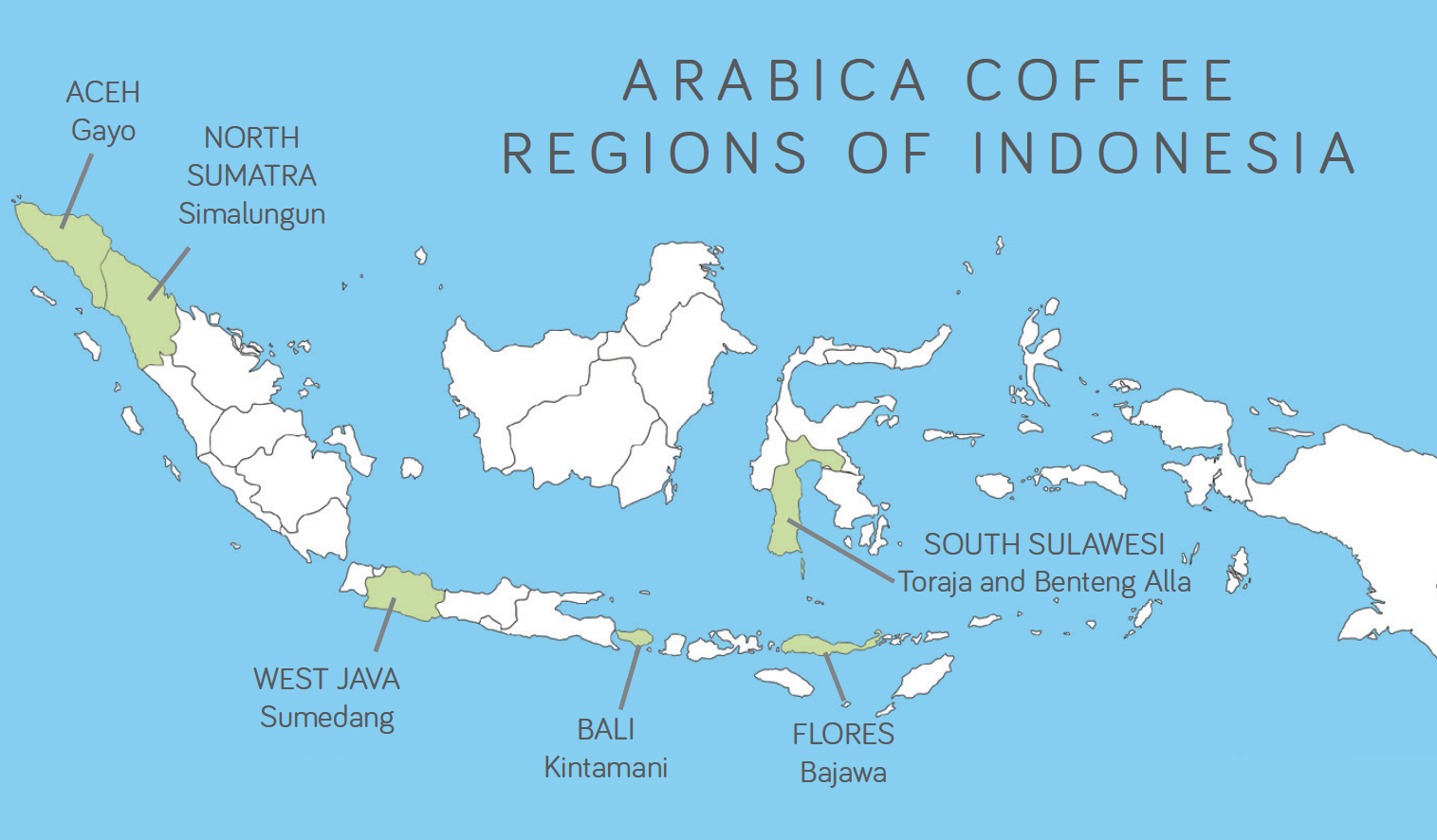
Java's coffee-growing belt can be divided into three regions: West Java, Central Java, and East Java. The island's terrain is dominated by mountains, hills, and volcanoes, with coffee farms mostly distributed at around 1,400 meters above sea level. In 1696, coffee was introduced from India to the Jakarta area of western Java; in 1711, the Dutch East India Company shipped Java coffee to Europe for the first time, and trade continued into the 20th century. However, today Java's glory has long been overshadowed by Sumatra and Sulawesi. Java's coffee is known for its delicate aroma, relatively soft acidity, fine mouthfeel, and good overall balance. The most famous estates locally include Blawan, Jambit, Kayumas, and Pankur.
Sulawesi
Sulawesi, formerly called Celebes, is one of the geologically oldest islands in this archipelago, with exposed surface rocks all exceeding a million years in age. In coffee-growing areas, yellow-red podzolic soils are often seen; beneath the surface layer, these soils often contain several layers of clay and are quite rich in iron. The island's most famous coffee-producing region is Toraja in the highlands of South Sulawesi.
Kalosi is the central town of the region south of Toraja. A small amount of rather interesting coffee beans locally are wet-processed, with flavors worth pondering carefully; if you have the chance, trying them is strongly recommended. The more common processing method on Sulawesi is semi-washed, and the island also produces quite a bit of Robusta. People often use "Sulawesi coffee" to refer to the representative style of this producing region, which is known for its full syrupy body, rich layering, deep tonality, and lively acidity.
Sumatra
If you prefer full-bodied black coffee, then you must have heard of Indonesian Mandheling, also called "Sumatra coffee," whose beans come from the island of Sumatra. The entire island of Sumatra is divided into eight provinces, but only the high-altitude provinces of Aceh and North Sumatra actually grow Arabica coffee on a large scale. Sumatra has a tropical rainforest climate, with mountain forests shrouded in mist and clouds year-round and abundant rainfall, adding a touch of mystery to the island.
Sumatra was one of the earliest regions in the world to grow coffee on a large scale, with the vast majority of production coming from the northern province of Aceh and North Sumatra Province (abbreviated as North Sumatra) south of Aceh. Both main production areas are distributed around well-known local volcanic lakes, namely Lake Toba and Lake Tawar, traditionally known as the Lintong producing region and the Aceh producing region respectively. Volcanoes have brought fertile soil to Sumatra, and the coffee produced here usually carries aromas of spices, nuts, chocolate, and vegetation, and is deeply favored by many coffee lovers.
It is said that during the Japanese occupation of Indonesia in World War II, a Japanese soldier drank an especially rich and fragrant cup of coffee in a cafe and asked the shopkeeper about it. The shopkeeper mistakenly thought the man was asking where he was from and casually replied, "Mandailing." After the war, the soldier recalled the coffee he had drunk in Indonesia and asked locals to ship 15 tons to Japan. Unexpectedly, it became very popular, and the name Mandheling spread from then on.
Located on the equator, Sumatra has a typical tropical rainforest climate, humid and rainy year-round, with frequent typhoons and scarce freshwater resources. At the time, coffee farmers had limited financial means and could not use the traditional washed method to process large batches of coffee beans. In order to sell the beans as quickly as possible, they had to develop a wet-hulling method that could be completed in just four days. So-called wet hulling is the "forced" removal of the parchment layer wrapping the green beans before it has completely dried, so the green beans complete their final drying in a "naked" state.
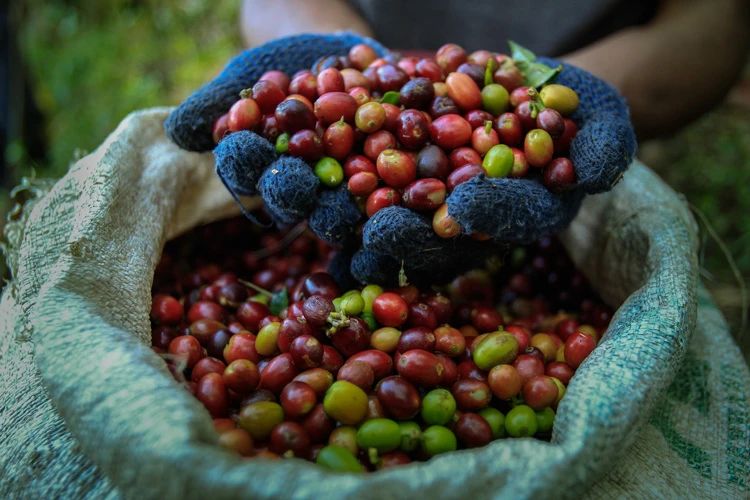
After harvesting, the coffee cherries are first depulped with a pulper, then poured into a water tank for brief fermentation of several hours. At this point, a small amount of mucilage still remains on the parchment, which needs to be removed by washing. The parchment beans are then sent for drying. When the green beans first dry to a moisture content of 30% to 40%, the coffee farmers sell the beans to collectors.
Collectors use special machines to hull the purchased semi-dry parchment beans directly with greater friction, removing the mucilage and parchment to obtain the inner beans. Drying then continues; the drying process takes 2 to 4 days, and the moisture content finally drops to 12% to 13%. Although each step is greatly shortened in time, the "naked beans" still absorb moisture from the hot and humid air, so the resulting Mandheling has a bit more of a "muted aroma" of wood, herbs, and earth. Several Mandheling coffees that Front Street has sourced are precisely produced by the wet-hulling method; in order to present the typical full-bodied mouthfeel, Front Street uses a medium-dark roast.
As the representative of Sumatra coffee, Mandheling was originally just the name of a small place, and later gradually evolved into the name of an ethnic group—Mandailing. Mandheling coffee has low acidity, is rich and fragrant, with a prominent bitter note, and also carries obvious herbal spice flavors, very much matching people's impression of traditional coffee. Among them, the Golden Mandheling coffee produced by PWN is the top representative.
What does Golden Mandheling mean?
The rise to fame of Mandheling coffee stems from Pwani Coffee Company (PWN), which successfully sold Mandheling to Japan. Unlike many local green bean traders in Indonesia, PWN is the exclusive supplier of high-grade Golden Mandheling coffee, having secured Indonesia's best Mandheling producing regions, and all the Mandheling beans it produces are top-grade. The Golden Mandheling coffee that long occupies the upper right corner of Front Street's bean list comes from PWN, and the Dongshankou store even displays the burlap sacks used for green bean packaging and certification certificates.
The wet-hulling method saves a great deal of time and labor costs in green bean processing, but the rapid process also brings a relatively high defect rate, so only strict hand sorting can remove defective beans that machines cannot screen out. PWN puts the Mandheling green beans it purchases through one round of machine sorting plus three rounds of hand sorting, with quality far above Indonesia's local highest G1 grade and meeting Front Street's PWN Golden Mandheling production standard, which requires the following points:
1. Green bean screen size: above 18-19 mesh after one hand sorting
2. Fewer than 3 defective beans in a 300-gram green bean sample
3. Green coffee bean grade is G1
4. Color is darker green, uniform in size, neat in shape
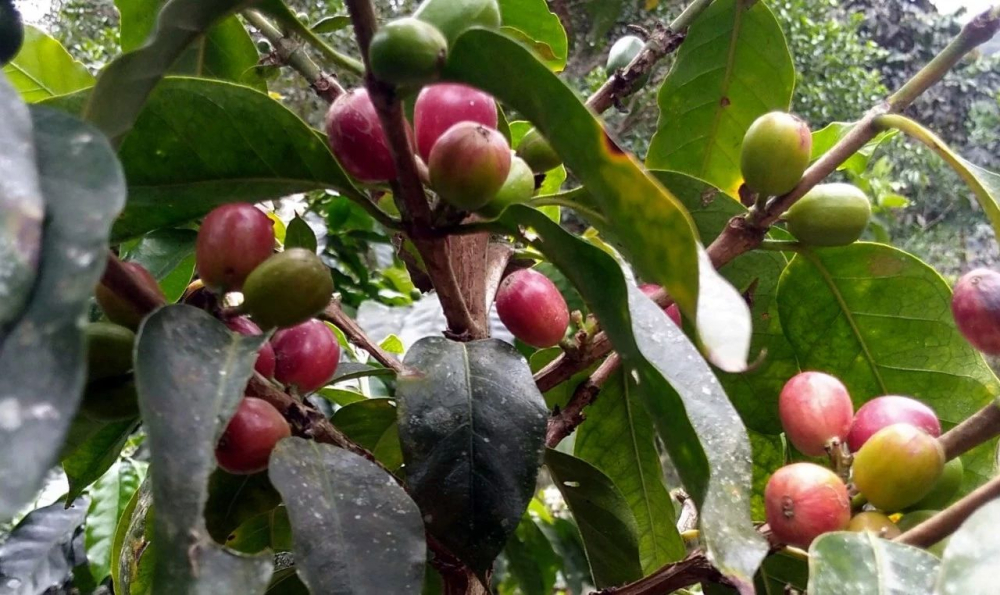
Before launching a coffee bean, Front Street always tastes the coffee through cupping. Cupping is an evaluation of coffee bean quality and flavor; a unified standard allows a more objective identification of the strengths and weaknesses of the flavors the beans present, as well as their characteristics. After cupping by Front Street, the Lintong Mandheling everyday drinking beans show a rich nutty tonality, with a hint of melon aroma in the finish; after the temperature drops, herbal flavors emerge, with a full body and saturated aroma. Front Street's PWN Golden Mandheling not only has the aromas of dark chocolate, nuts, and caramel, but also the flavors of herbal spices and pine wood, with the sweet aftertaste of dark chocolate, a full finish, high cleanliness, and a gentle fruity acidity after the temperature drops.
The above content is compiled by CoffeeHunters, a coffee news website.


