







Geisha is hailed as the pinnacle of the coffee world, and Panama is undoubtedly the top choice for savoring the classic Geisha flavor. From the perspective of Front Street Coffee, this article systematically reviews the cultivation terroir of Panamanian Geisha, the origin classification system of Hacienda La Esmeralda, delves into the differences between Red Label and Green Label Geisha, and shares the flavor expression of Volcanic Rock Geisha. At the same time, Front Street Coffee's barista will demonstrate the complete pour-over process for Esmeralda Red Label Natural Geisha, breaking down everything from parameter settings to pouring techniques, helping coffee enthusiasts brew a cup of specialty Geisha with both floral and fruity notes at home.
For more specialty coffee knowledge, please follow our WeChat official account: Front Street Coffee (FrontStreet Coffee)
The discussion around specialty coffee heats up year after year, with various high-quality coffee beans of different styles emerging on the market. If one were to pick the most popular variety, Geisha would certainly be on the list. Since Geisha first emerged and made its name in Panama, producing regions across many countries have introduced this variety, hoping to replicate the legend of the "pinnacle of the coffee world"—Colombia, Guatemala, Ethiopia, and even Yunnan in China have seen Geisha appear in recent years. However, in Front Street's view, if you want to experience the most classic Geisha flavor, Geisha from Panama is the most representative.
What are the characteristics of Panamanian Geisha ?
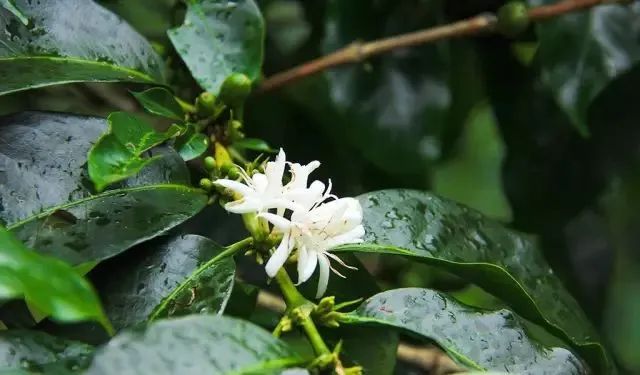
Coffee is essentially an agricultural crop, and various factors in the terroir of a producing region will affect the final flavor of the fruit to varying degrees. Compared to other Arabica varieties, Geisha is particularly sensitive to its growing environment—it requires high altitude, fertile soil, and either cloud cover or plant shade, and cannot withstand direct sunlight. The owner of Hacienda La Esmeralda once mentioned that a large number of shade trees must be planted in the estate to protect the delicate Geisha, and traditional pruning methods had to be used in the early planting stages, otherwise the plants would easily die. The higher the planting altitude, the longer it takes for Geisha cherries to ripen, and the more complex and unique the flavor expression. At the same time, cherries grown at high altitudes ripen later and produce relatively fewer fruits.
Coffee cultivation in Panama is mainly distributed across the western highlands: Boquete, Volcan, and Renacimiento, with the Boquete Valley and the Volcan area around Baru Volcano being the most famous. Both locations are in Chiriqui Province, right in the core of the coffee belt, with fertile volcanic soil and primary forests. Boquete is a town in Chiriqui Province, situated on a plateau at about 1,000 to 2,000 meters on the eastern side of Baru Volcano, facing the warm, humid Caribbean monsoon on one side and influenced by the cold Atlantic current on the other, with steep, towering terrain. Baru Volcano National Park within its jurisdiction is an ecological conservation area with rich biodiversity and seven microclimates, perpetually shrouded in mist with abundant rainfall, creating excellent natural conditions for coffee cultivation.
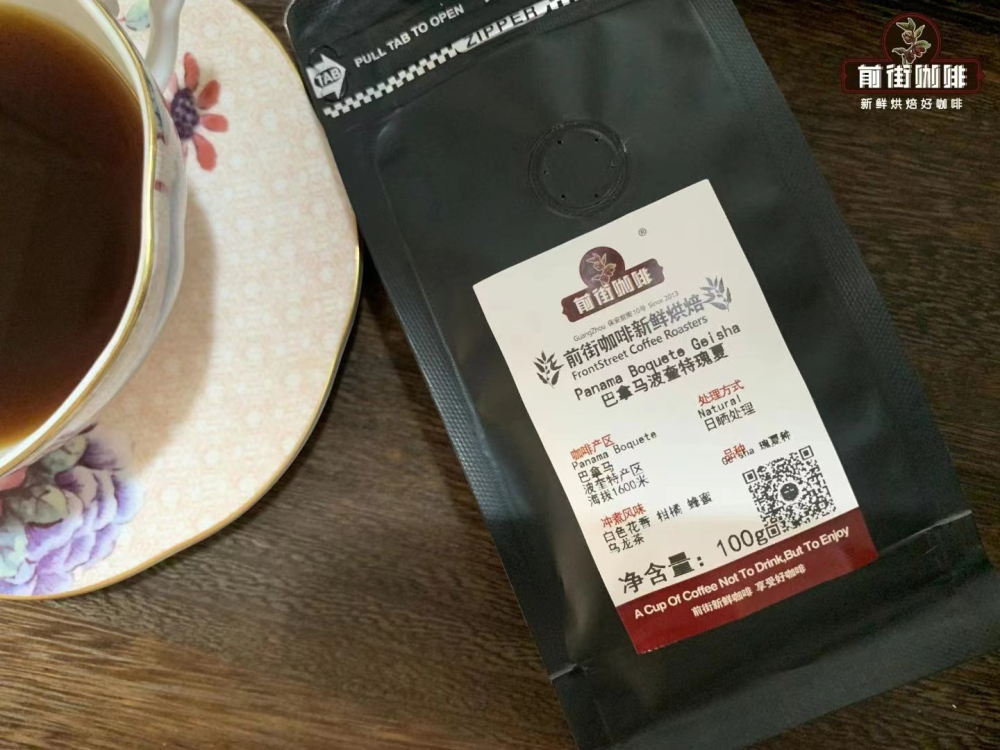
Thanks to the region's exceptional terroir, coffee cherries absorb multiple natural essences, ultimately presenting elegant floral and fruity aromas with layered acidity. Front Street's Panama Hacienda La Esmeralda Geisha coffee and Elida Estate Geisha coffee are both produced in the Boquete region. To let more coffee enthusiasts appreciate the regional flavor of Boquete, Front Street has specially launched a Panama Boquete Geisha coffee with typical Panamanian coffee flavor characteristics.
What flavor is Hacienda La Esmeralda's Geisha?
When it comes to Geisha, Hacienda La Esmeralda's reputation in the specialty coffee world is almost universally known. In 2004, Hacienda La Esmeralda won the Best of Panama coffee competition with its Geisha, and has since broken auction price records year after year, becoming the focus of the coffee world. Hacienda La Esmeralda not only brought Geisha to the world stage but was also the first estate to strictly classify Geisha, with its annual Geisha lots drawing industry-wide attention. After Geisha's championship win, the estate owners, the Peterson siblings, implemented more systematic management of the Geisha trees on the estate based on altitude, area, and cupping performance.
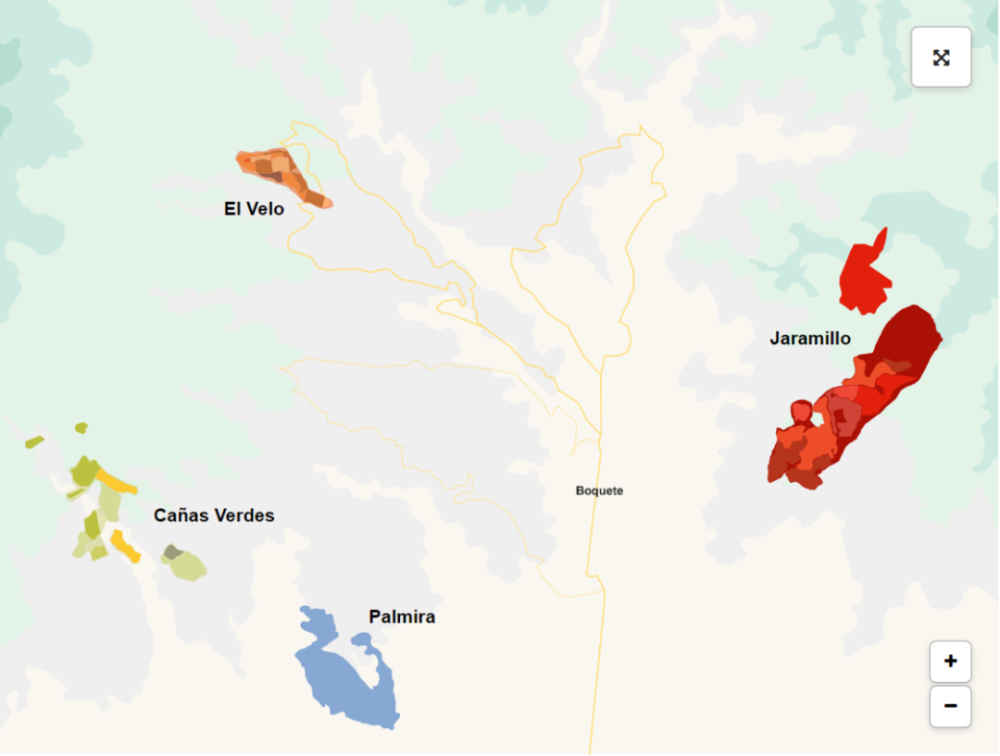
In terms of major divisions, Geisha cultivation areas are divided into three main plots: Cañas Verdes, Jaramillo, and El Velo. To ensure every coffee lot can be traced to its source, Peterson further subdivided each major plot into different smaller plots, and buyers purchasing Geisha coffee can trace the specific cultivation plot through lot information.
The Geisha variety was originally discovered in the Jaramillo plot, and the Peterson siblings' decision to raise the cultivation altitude of Geisha was also implemented starting there. As the discovery site and breeding ground of Geisha, Jaramillo became the most renowned plot of Hacienda La Esmeralda. The average altitude of this plot is above 1,650 meters, and the cold, humid mountain air allows the Geisha coffee here to contain rich natural essences with intense aromas. Currently, Jaramillo is divided into five smaller plots: Mario, Noria, Reina, Bosque, and Buenos Aires. Among them, the Mario and Bosque plots perform particularly well in various competitions.
Hacienda La Esmeralda's green bean processing plant is located in Cañas Verdes, at the foot of Baru Volcano, about a twenty-minute drive from the town of Boquete. During coffee cherry harvest season, the estate owner arranges workers to strictly follow standards, picking fresh cherries only at optimal ripeness, with all hand-picking and sorting, and transporting them to the factory as quickly as possible for subsequent screening.
The difference between Red Label Geisha and Green Label Geisha
On Front Street's bean list, there are about 10 Geisha coffees to choose from. Some friends may see the "Red Label" and "Green Label" markings and wonder what they actually represent.
Red Label is the Esmeralda Special grade (including auction lots), the highest category. Red Label is harvested from high-altitude Geisha cherries at 1,600 to 1,800 meters, with cupping scores exceeding 90 points, mainly from the Jaramillo and Cañas Verdes farms. Although high altitude brings considerable challenges to cultivation and harvesting, the floral and fruity charm of Boquete Geisha is most prominent precisely because of this. Hacienda La Esmeralda holds an independent auction event, and among the divided plots, the Red Label lots submitted for competition are called auction lots. Auction lots have exclusive numbers, each corresponding to a complete lot from a specific plot. The one most commonly heard of is probably the Mario plot of the Jaramillo farm. The Esmeralda Red Label Geisha coffee beans that Front Street has acquired are precisely from the Mario plot, using natural processing.
Green Label refers to Private Collection. Green Label is also selected from cultivation areas at 1,600 to 1,800 meters, harvested from the Jaramillo and Cañas Verdes plots, but Hacienda La Esmeralda does not specify the plot information, so it does not participate in auctions. Although its grade is below Red Label, Green Label mainly showcases the signature classic flavor of high-altitude Geisha. The Green Label Geisha that Front Street has acquired uses washed processing, with cupping notes of fresher, more natural lemon, berry, pomelo, and Tieguanyin tea flavors.
Besides Red Label and Green Label, there was previously a third brand—Blue Label Geisha, now renamed "Volcanic Rock Geisha." Its predecessor was actually Geisha 1500, which is the Blue Label. Volcanic Rock Geisha blends Geisha coffee beans from Hacienda La Esmeralda's three major plots, with cultivation altitudes of 1,400 to 1,500 meters. Front Street compared the natural and washed Volcanic Rock Geisha through cupping and found that both have distinct citric acidity; the washed Volcanic Rock presents clean oolong tea aroma and sugarcane sweetness, while the natural lot has a bit more tropical fruit and fermented wine notes, with a richer, more mellow sweetness.
How to brew a delicious pour-over Geisha coffee?
Geisha coffee is world-renowned for its rich floral aromas and complex fruit-toned character. Front Street's roaster wants to preserve more of Geisha's fine acidity, so a medium-light roast is chosen (with slight adjustments for different lots). This roast level does not significantly alter the high hardness of high-altitude beans, so brewing requires a somewhat higher extraction rate to present fuller flavor layers. Here, a higher water temperature and a finer grind size are used to stimulate more aromatic compounds. Additionally, Front Street wants the flavor expression of Geisha coffee to be clearer, so the coffee-to-water ratio is widened slightly to 1:16.
To increase the extraction rate of Geisha coffee while avoiding over-extraction and highlighting the sweet-and-sour flavor layers, Front Street Coffee (FrontStreet Coffee) baristas choose the V60 dripper. The V60's cone body features spiral ribs connecting the top and bottom as well as a large central hole, which speeds up the flow of water; the spiral-shaped vent design lengthens the water flow path, increasing contact time between coffee grounds and hot water. Each stream of water converges along the grooves toward the center of the dripper, concentrating the pressure on the coffee grounds and resulting in a more layered extraction.
Below, Front Street demonstrates the brewing steps for the Esmeralda Red Label Natural Geisha served in-store. You can use it as a reference and compare it with your own brewing approach.
The pour-over parameters for Red Label Geisha coffee are: Dripper: V60, Water temperature: 92°C, Coffee dose: 15g, Coffee-to-water ratio: 1:16, Grind size: fine sugar consistency (80% passing through a No. 20 sieve)
Fold the filter paper and fit it snugly into the dripper. Use a small amount of water to wet the filter paper while making it adhere better, then discard the water from the server. Next, add the coffee grounds and gently tap to distribute the bed evenly. For the first pour, gently add 30g of water for blooming, with a blooming time of 30 seconds. For the second pour, add water up to about 125g, circling outward evenly and steadily. Then wait for the coffee liquid to drop, and when it has dropped halfway, pour the final round of water up to 240g. After all the coffee has dripped through, the total extraction time is generally about 2 minutes.
The pour-over Esmeralda Red Label Geisha coffee tastes of fresh jasmine, citrus, and tropical fruit acidity, with flavor layers that change with temperature. The overall mouthfeel is smooth, with a pleasant tea-like finish.
The above content is compiled by CoffeeHunters, a coffee news website.


