







In recent years, new processing methods in the specialty coffee scene have emerged one after another. Colombian beans often steal the spotlight with winey fermented notes or floral aromatics, while the region's original flavor profile is instead obscured. This article returns to the specialty producing regions of southern Colombia to sort out the terroir differences of Huila, Cauca, Nariño, and Tolima, the characteristics of the Caturra variety, and the significance of washed processing for flavor purity, and includes Front Street Coffee's Huila everyday beans' roasting curve, cupping performance, and V60 brewing parameters, helping coffee lovers understand a producing region's basic taste in the most affordable way.
For more specialty coffee knowledge, please follow the WeChat public account: Front Street Coffee
In recent years' specialty coffee trends, Colombian beans have frequently broken into the mainstream through various new processing methods, enjoying unmatched prominence for a time. Among the Colombian coffee beans launched by Front Street Coffee, Huayueye carries a thick berry jam fermented aroma, while Rose Valley wins the hearts of many female consumers with its charming rose fragrance and peach sweetness. These innovative processing methods certainly have outstanding aromas, but they also make the original hometown taste of Colombia seem blurry. Friends often ask Front Street: what should the Colombian producing region itself taste like? In this article, Front Street focuses on this topic and talks about Colombian coffee beans.
Colombia is located in the northwest corner of the South American continent, adjacent to Panama in Central America, and roughly falls between 3 and 8 degrees north latitude. It is a tropical country, with climate differentiated by terrain elevation, fertile volcanic soil, annual rainfall of about 2,000 to 3,000 millimeters, mild temperatures, and humid air. This climatic diversity allows Colombia to harvest coffee all year round. The southern part of the eastern plains and the Pacific coast have a tropical rainforest climate, the mountains at elevations of 1,000 to 2,000 meters have a subtropical climate, and the northwest has a tropical savanna climate. The average annual temperature is between 15.8 and 20.5 degrees Celsius, and the average temperature in coffee-producing regions fluctuates around 18 to 22.5 degrees Celsius. Front Street believes that low latitude combined with high altitude and volcanic soil gives Colombian coffee a balanced flavor structure, intense acidity, highly recognizable flavor characteristics, a relatively solid mouthfeel, and sometimes a hint of red wine-like charm and praiseworthy fruit notes.
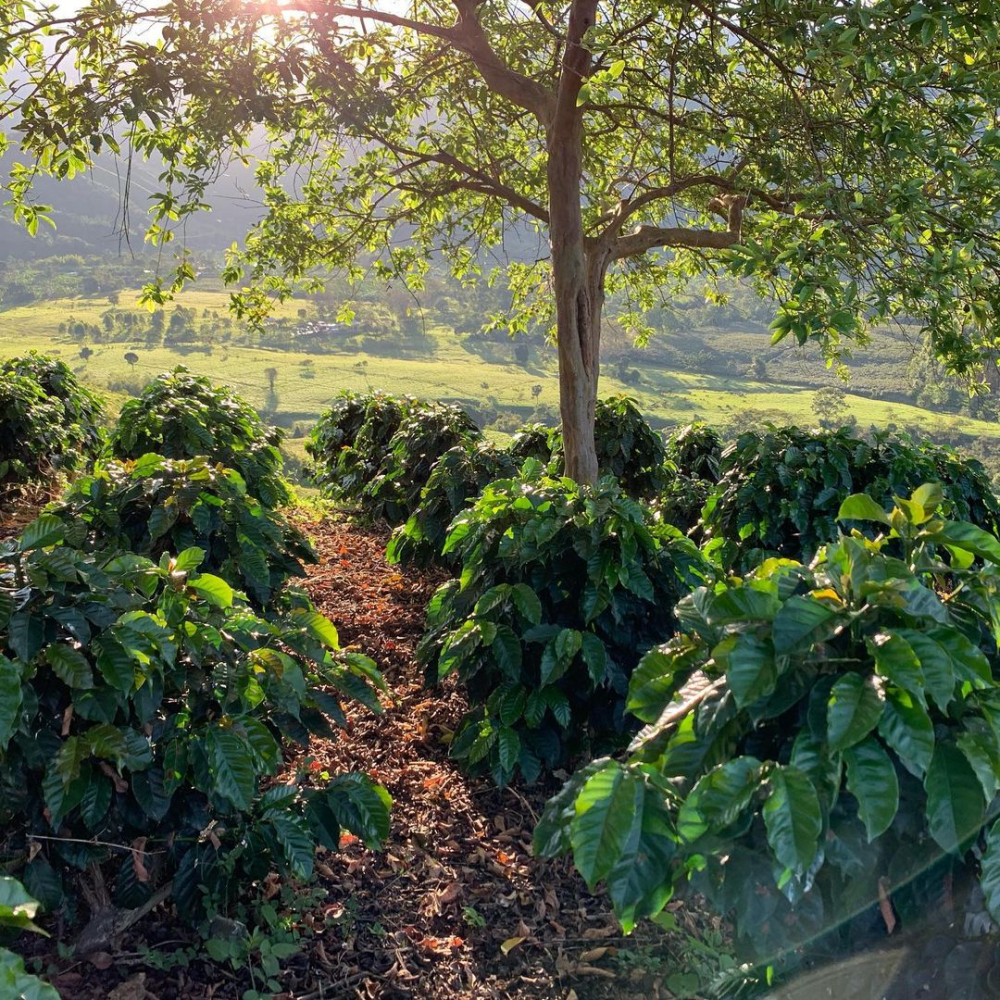
Colombia's specialty coffee bean producing regions are concentrated in the south, mostly at elevations above 1,500 meters, mainly distributed in Huila, Cauca, Nariño, and Tolima. These places generally have delicate acidity and berry sweetness, with outstanding sweetness expression. Huila is located in the southern section of Colombia's Central Cordillera in the south of the country and is the most well-known specialty coffee producing region in the country. This area is surrounded by mountains, with cultivation elevations exceeding 1,500 meters. Several of Colombia's most important rivers converge here, bringing abundant water sources and moisture. Unlike the balanced, mellow, and smooth tone of Colombian coffee in the public impression, many specialty beans produced in smallholder micro-lots actually carry distinct regional character. In recent years, the international market has increasingly valued coffee quality and specialty standards, and the producing region has gradually abandoned the past system of grading by bean size, turning instead to micro-regional selections organized by micro-producers, in which dozens of smallholders combine their respective harvests into a single micro-lot for sale. This also creates the opportunity to directly screen out many outstanding specific smallholder coffees through lot-by-lot cupping.
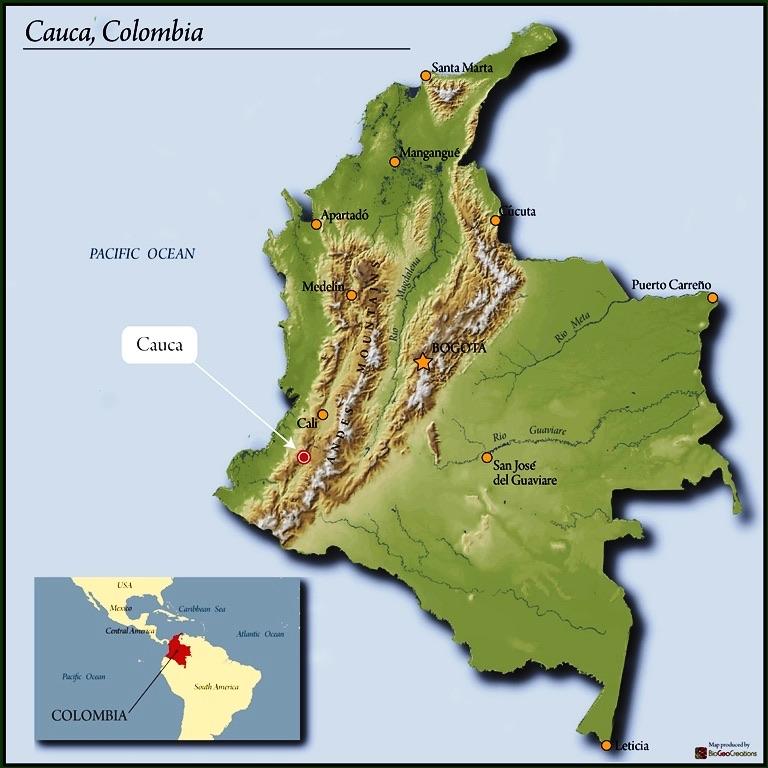
Cauca is a certified Colombian coffee region of origin, with an average elevation of 1,758 meters, rising as high as 2,100 meters. The local terrain, rainfall, temperature, and volcanic soil provide ideal conditions for coffee growth. Eighty percent of the territory is mountainous, with parallel mountain ranges in the east and center as part of the Andes. The central range includes two major volcanoes, Sotara and Petacas. Cauca's rainfall pattern is similar to that of other southwestern producing regions, showing a clear monomodal distribution, with the dry season mainly from August to September each year, followed by the rainy season bringing a concentrated coffee flowering period, and then the concentrated harvest season of the following year.
The biggest climatic difference between Cauca and other producing regions is probably its large temperature variation: the daily average temperature is 11 degrees Celsius, while the daytime average is 18 degrees Celsius, and the temperature difference between day and night is one of the key factors creating high-quality coffee. Low nighttime temperatures plus relatively higher altitude slow the pace of coffee growth, allowing the coffee seeds and beans to more fully absorb nutrients from the coffee fruit, and also giving Cauca coffee better acidity and a much-praised special sweetness. Nariño is located in southwestern Colombia, bordered by the Pacific Ocean to the west and Ecuador to the south. The Andes run through the entire province. Coffee is grown at high elevations of 1,600 to 2,300 meters in the cloud belt, and the soil is fertile volcanic geology. The beans are smaller in shape but plump, with an emerald green color. The vast majority of Nariño's annual output is purchased by large American bean merchants. Narino Province is located in southwestern Colombia, bordered by the Pacific Ocean to the west and neighboring Ecuador to the south. The Andes run across the province. Here there are majestic mountains and beautiful scenery, as well as many rivers flowing southward through the area. It belongs to Colombia's high-mountain coffee-growing zone and has nurtured many specialty coffee smallholders. Nariño's total annual output is about 150,000 bags, of which only about 6,000 bags are carefully selected beans.
Tolima is adjacent to Huila and Cauca. The north-south-trending Andes (M. Andes) and Cordillera (M. Cordillera) run through it, and between these two famous mountain systems runs the Magdalena River (R. Magdalena) from south to north. The name Tolima comes from the Pijao people who first lived here. In the language of this ancient group (Pijao word), tolima means "snowed." Tolima's farms are generally slightly larger than those in other southern Colombian producing regions, at about 10 to 15 hectares. The cooperative model is also common here, with farmers sending their own small batches of coffee cherries to cooperative processing plants. Some farmers also process it themselves, using their own small-scale facilities capable of handling the day's harvested volume to complete the processing. Colombian coffee cultivation In 1808, coffee was first introduced to Colombia, brought by a priest from the French Antilles via Venezuela. Today the country is the second-largest producer after Brazil, with an annual output of 13 million bags of 60 kilograms each, while Brazil's output is 22 million bags. The status of Colombian coffee beans can be seen from this fact: all vehicles entering the country must be sprayed and disinfected to avoid accidentally bringing in diseases that could harm coffee trees.
In the early 1960s, coffee yield was about 600 kilograms per hectare, and today it has increased to about 900 kilograms, with some farms even reaching 2,500 kilograms. However, ensuring quality has always been the primary issue in the coffee industry. Colombia established the National Federation of Coffee Growers (Federacion Nacional de Cafeteros, or FNC) in 1927, responsible for quality supervision. Although the federation is a private company, it acts on behalf of the government. In addition to organizing the industry, the federation is also responsible for raising reserve funds in harvest years. In recent years, as coffee prices have declined, the federation has nearly exhausted its financial reserves. The National Federation of Coffee Growers also undertakes responsibilities such as health care, education, road building, hiring cultivation technicians, conducting research, supervising product quality, directly handling export business accounting for 50% of total exports, and hiring marketing personnel. Like Kenya's national coffee management association, it is a model coffee organization. Among Front Street Coffee's offerings, the Colombian everyday beans best represent the flavor of the Colombian producing region. When choosing a new everyday bean to launch, Front Street selects beans from major producing regions that best represent the local original taste, then introduces them to everyone in 100-gram small packages. Front Street hopes every coffee lover can drink the basic flavor of a coffee-producing region at the most favorable and cost-effective price.
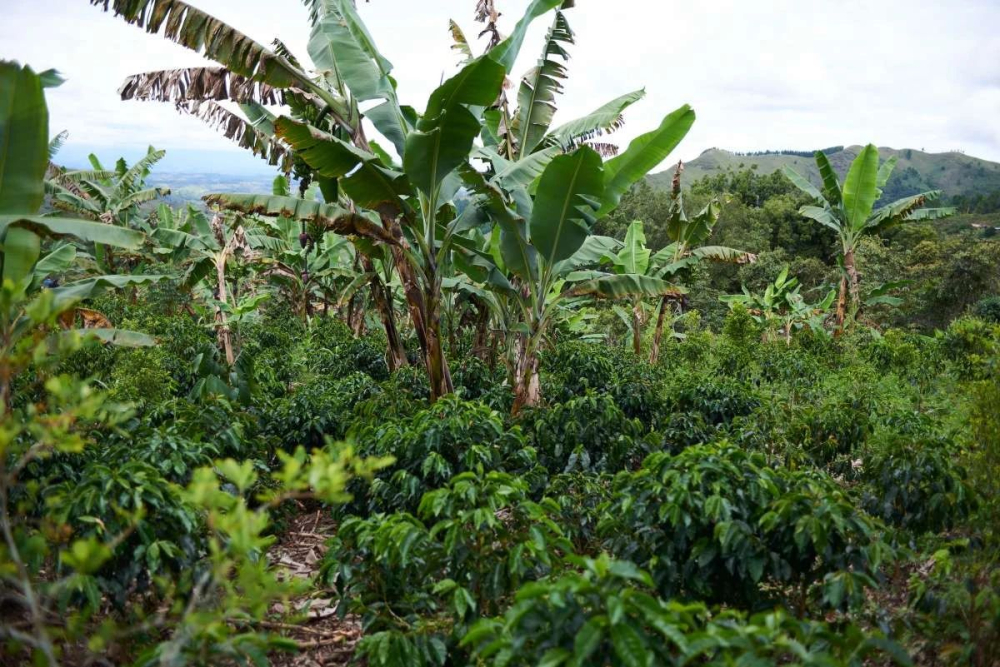
Country: Colombia Region: Huila Altitude: 1,500-1,800 meters Variety: Caturra Processing method: Washed process Flavor: Nuts, dark chocolate, caramel, soft fruit acidity
Coffee Variety
Caturra is a natural mutation of the Arabica variety Bourbon, discovered in Brazil in 1937. Its tree is not as tall as Bourbon, being shorter and smaller. Because it inherits Bourbon's bloodline, its disease resistance is relatively weak, but its yield is higher than Bourbon's. Although discovered in Brazil, Caturra is not actually suitable for growing in Brazil, so it was not planted on a large scale there. Instead, it became widely popular in Central and South America; for example, Colombia, Costa Rica, and Nicaragua all plant Caturra on a large scale.
Washed Processing Method
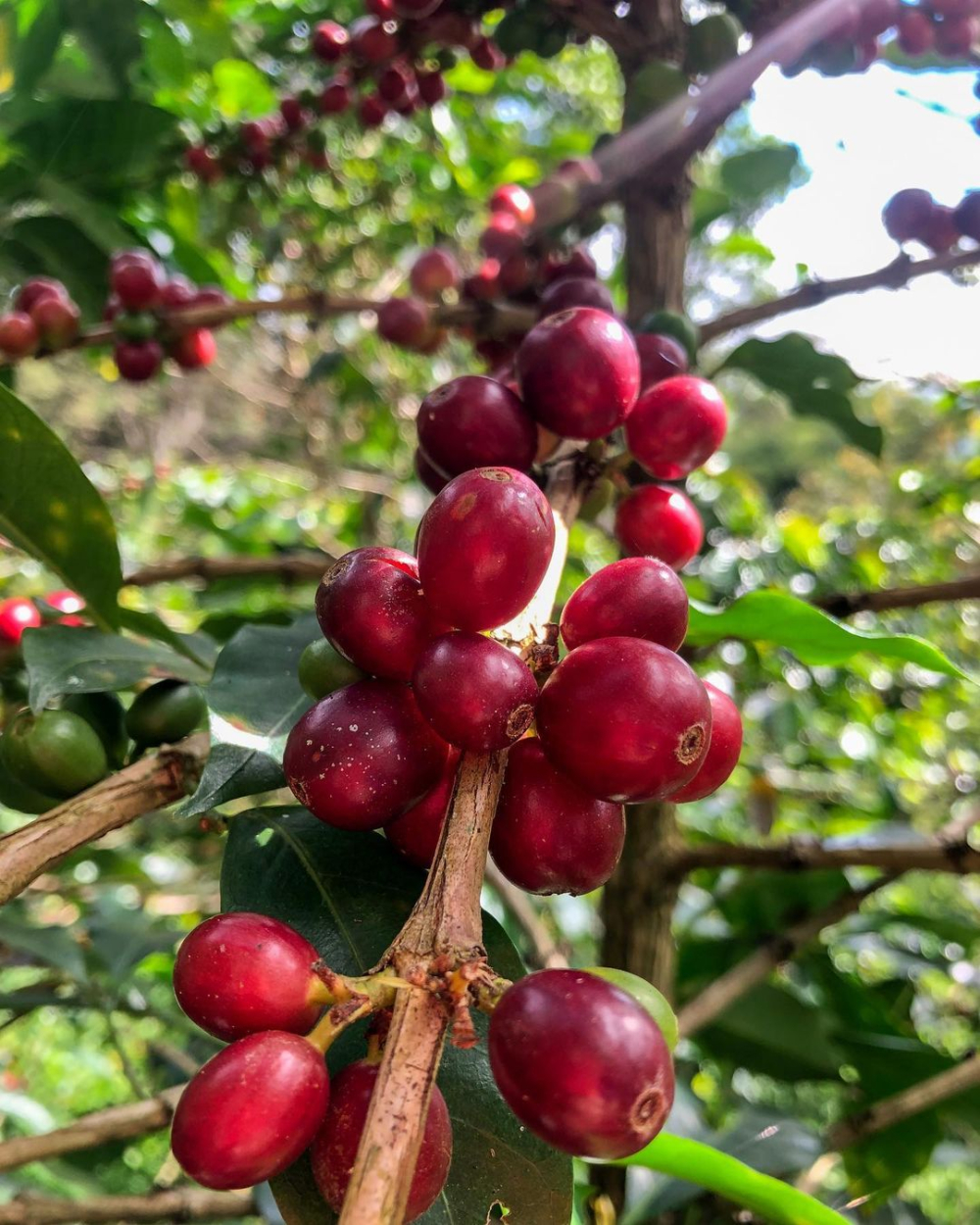
Coffee farmers first pour the harvested coffee cherries into a large water tank. Underdeveloped, inferior beans will float to the surface, while mature, plump fruits sink to the bottom. At this point, the defective beans or fruits floating on the surface are removed. Then the outer skin and pulp of the coffee fruit are removed with a pulping machine. At this stage, the coffee beans still have a slippery layer of mucilage attached. The coffee beans with mucilage are placed into a fermentation tank for 16 to 36 hours, during which microorganisms break down the mucilage. After fermentation is complete, a large amount of clean water is used to thoroughly remove the remaining mucilage from the coffee beans. Finally, the washed coffee beans are dried. The washed processing method can have both soft and intense acidity, body ranging from light to heavy, and sweet, spicy aroma.
Front Street takes into consideration that washed processing better reflects the cleanliness of coffee's mouthfeel and the purity of its flavor presentation, so when analyzing the specific flavor of a coffee-producing region, it uses that region's washed beans as a reference.
Front Street Roasting Suggestions
Because this Colombian Huila bean has relatively high density, uniform screen size, and plump bean shape, Front Street's roaster wanted to express its aromas of nuts, dark chocolate, and caramel, so after first crack the heat was adjusted and the roasting time extended, dropping the beans at 3'00'' and 202 degrees Celsius.
The charge temperature was raised to 185 degrees Celsius, with airflow set at 3 and heat at 120. The turning point was at 1'32'' and 98.6 degrees Celsius; when the temperature reached 140 degrees Celsius, airflow was opened to 4; at this point the bean surface turned yellow, the grassy smell completely disappeared, and the dehydration stage began; when the temperature reached 192 degrees Celsius, the heat was adjusted to 80 and airflow was opened to the maximum of 5; at 8'30'', ugly wrinkles and dark streaks appeared on the bean surface, and the toasted bread smell clearly turned into coffee aroma, which can be defined as the prelude to first crack. At this time, it is necessary to listen clearly for the sound of the first crack begin. First crack began at 9'15'', developed for 3'00'' after first crack, and the beans were dropped at 202 degrees Celsius.
Front Street Cupping Report
How do Front Street Coffee baristas brew Colombian Huila coffee?
Front Street Coffee uses a V60 dripper to brew Colombian producing-region coffee. The 60 conical dripper has larger holes, and together with its unique spiral curved ribs, it allows air to escape more easily, thereby improving extraction quality.
Water temperature: 90-91 degrees
Grind size: EK43s setting 10 (granulated sugar size / No. 20 sieve bowl with 80% of powder passing through)
Coffee-to-water ratio: 1:15
Dose: 15 grams
Front Street brewing method:
In the first stage, pour 30 grams of water for a 30-second bloom, then pour 95 grams (the electronic scale shows about 125 grams), finishing the pour in about 1 minute; when the water level drops to two-thirds of the coffee bed, pour the remaining 100 grams (the electronic scale shows about 225 grams), finishing the pour in about 1 minute 40 seconds. Dripping is completed at 2'00'', remove the dripper, and extraction is complete.
Brewed flavor: nuts, dark chocolate, soft fruit acidity in the middle, and caramel sweetness.
The above content is compiled by CoffeeHunters, a coffee news website.


