







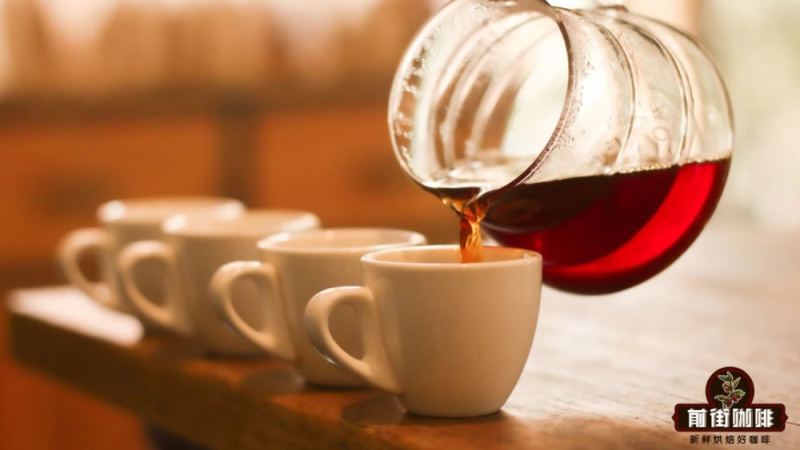
To enjoy a good cup of coffee at home, you don't actually need overly complicated equipment—the key is to clarify your own taste preferences and budget. Coffee is ultimately a beverage, as close to daily life as tea. This article focuses on common home brewing methods, covering pour-over devices like the Hario V60, Kalita Wave, and Clever Cup, to portable options like the AeroPress, Moka Pot, French Press, and Chemex, and then to espresso fully automatic, semi-automatic, drip, and capsule coffee machines, explaining one by one the people each suits, key operating points, and flavor characteristics. The article also combines Front Street Coffee's various bean lists to offer bean selection suggestions for different devices, helping you find the brewing setup that best fits your own rhythm.
For more specialty coffee knowledge, welcome to follow Front Street Coffee (FrontStreet Coffee).
Brewing coffee at home is ultimately a pretty relaxed affair, with two core points: what kind of coffee you usually want to drink, and how much budget you're willing to invest. As a beverage, coffee holds a status similar to tea, and many people walk into a café for a very simple reason—they just want a cup.
Friends often ask Front Street: to make coffee at home, do you need a very expensive set of equipment? And how should one choose a brewing method that suits them? Below, Front Street will go through common home methods one by one—there's sure to be one you like.
Pour-over Coffee
Suitable for: those who enjoy delving into the fun of coffee
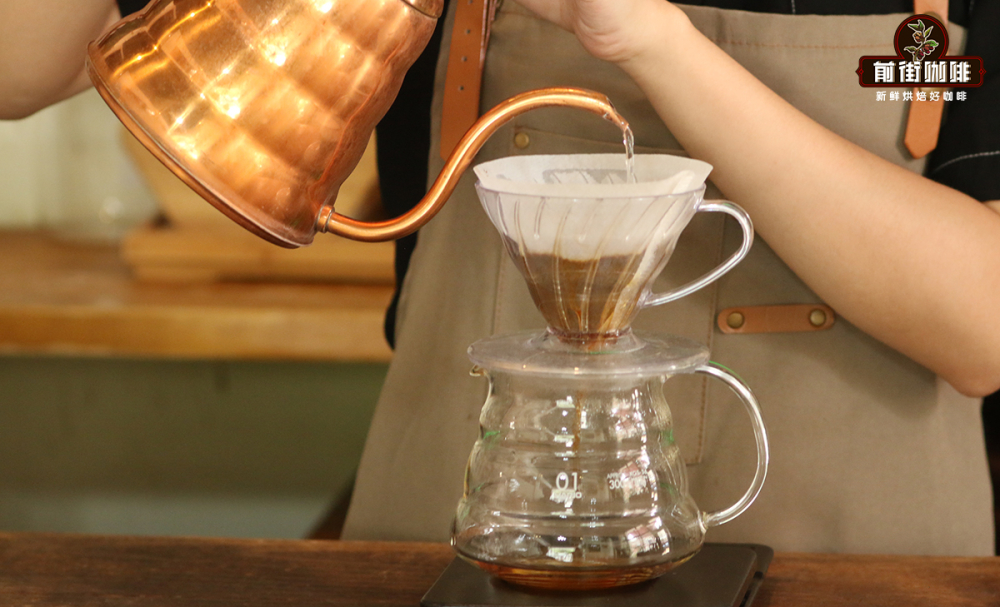
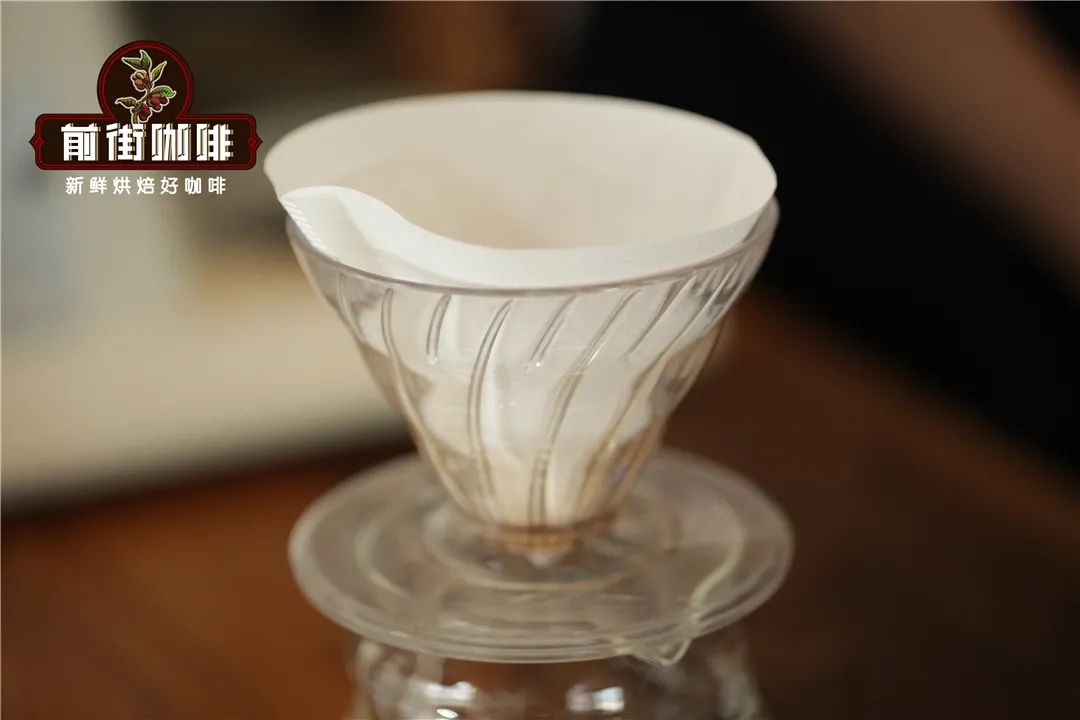
Pour-over usually consists of a gooseneck kettle, a dripper, and filter paper.
The greatest charm of this method is that each brew tastes slightly different, which is exactly the reason Front Street baristas favor pour-over the most.
There are quite a few variables affecting flavor: water temperature, blooming time, flow rate, circling technique, number of pours, grind setting, and so on—every detail influences the final taste.
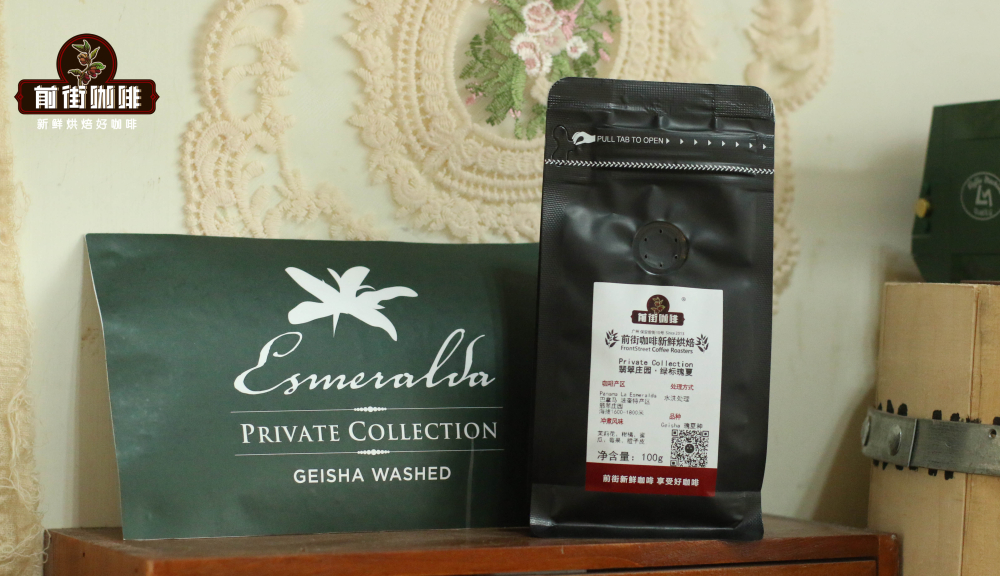
Pour-over can handle almost all single-origin beans: Front Street Fruit Ding Ding · Yirgacheffe, Front Street Little Tomato · Kenya, Front Street Blue Mountain No. 1 · Jamaica, Front Street Emerald Green Label Geisha, Front Street Blackberry · Costa Rica, Front Street Big Belly Button · Colombia, Front Street PWN Golden Mandheling, Front Street 2013 Yunnan Natural Typica.
/
Hario V60 Dripper
This is an extremely popular brewing device on the market, named for its 60-degree conical shape.
The coffee brewed with it is clean and richly layered. By adjusting parameters like water temperature, grind size, and coffee-to-water ratio, you can achieve different flavor presentations.
Tips: For a first attempt, you can choose a medium-fine grind, bloom for 30 seconds, then pour in a thin stream in concentric circles over the coffee bed.
/
Kalita Wave Dripper
The Kalita Wave looks similar to the V60, but its working principle is quite different.
The Wave has a flat bottom with three small round holes; this design changes the water flow path, allowing water to contact the coffee grounds more evenly for more stable extraction and a more balanced taste.
Usage is similar to the V60, also using a medium-fine grind, blooming, then pouring in concentric circles over the coffee bed. Whether using a coarse or fine stream, maintain stability from start to finish, and avoid pouring onto the edges of the coffee grounds and filter paper. Of course, you can also try other pouring approaches, such as multi-stage pouring, with small amounts completed in several rounds.
Clever Cup
Suitable for: those who want convenience and a balanced taste
The Clever Cup has a low barrier to entry and few variables, making it another convenient, fast, and stable choice besides the AeroPress.
This device was invented by a Taiwanese person, with an approach similar to brewing tea: first place the filter paper into the Clever Cup, rinse it with hot water and warm the cup, then let the water drain through the clever mechanism (push the middle gate up and the valve opens automatically, hence "Clever" dripper). Regarding grind, Front Street suggests pairing with medium-roast, more balanced beans, such as Front Street Bird of Paradise, Front Street Huilan, Front Street Strawberry Candy, etc.
Its method of use is slightly different. First, whether to pre-wet the filter paper is up to you; after pouring the coffee grounds into the dripper, first pour in a small amount of hot water—at this point you can stir or skip it. After blooming ends, pour in hot water according to the coffee-to-water ratio; this step doesn't require drawing concentric circles, and after pouring you can stir to aid extraction. When the steeping time is up, place the dripper on the server, the valve opens automatically, and extraction is complete.
AeroPress
Suitable for: those obsessed with a full-bodied mouthfeel
The AeroPress was born for convenience—a portable device that produces coffee quickly, and it even has an annual World AeroPress Championship. Rather than a competition, it's more like everyone celebrating this amazing invention. It has diverse playstyles and lots of room for operation, with no absolutely fixed rules.
Coffee made with the AeroPress is full-bodied, and there are many directions to experiment with, making it very beginner-friendly.
AeroPress standard vs. inverted brewing methods/differences
Front Street believes the biggest difference is: with the standard method, coffee liquid filters out while you're pouring water, affecting the completeness of the taste; the inverted method avoids this problem.
As for AeroPress brewing parameters, if you ask Front Street for a standard recipe, we can probably only apologize (shrug.jpg). But we do have two insights: the AeroPress's material means it dissipates heat slowly and loses little temperature; however, too high a temperature easily over-extracts, and too low a temperature under-extracts. Using a slightly lower water temperature, around 84 degrees plus or minus 2 degrees, yields a smoother, more balanced taste.
Moka Pot
Suitable for: those who deeply love espresso-style flavors
The Moka Pot is also called an "Italian drip pot," and like the French press, it's a common coffee brewing device.
The Moka Pot has three internal chambers: the bottom holds water, the middle holds coffee grounds, and the top holds the brewed coffee liquid, with a metal filter between each layer. When heated on a stove, steam increases pressure in the bottom chamber, forcing water through the coffee grounds in the middle and finally stopping in the top chamber as brewed coffee. Usually the last portion from a Moka Pot is not used.
Compared to espresso's 9 atmospheres of pressure, the Moka Pot uses only 1.5–3 atmospheres, but it's still rich and fragrant compared to other brewing methods, and it retains crema, making it very popular. If you want to easily extract espresso with crema, Front Street believes freshly roasted medium-to-dark roast beans are especially key. If you prefer a rich, full-bodied taste, you can choose Front Street Classic Blend, Front Street Commercial Blend, Front Street Dark Cocoa Base Blend, Front Street Specialty Blend—these are all dual-use beans for Moka Pot and espresso machine that baristas strongly recommend.
French Press
Suitable for: those who want coffee in the simplest way
This is probably the most widely recognized and simplest coffee brewing device in the world. Most French presses on the market are affordable, easy to use, and large-capacity models can make multiple servings at once. In terms of taste, it's full-bodied, but it can't fully express all the flavors of the coffee beans.
If you've noticed the surface of the brewed coffee, you'll find that coffee itself contains oils. The French press method places coffee grounds in the pot and steeps them in hot water for a certain time before extraction; unlike pour-over filter paper, it doesn't filter out some of the oils, so the taste is fuller than pour-over. It's therefore better suited to dark roast or intensely aromatic beans; recommended purchases are Front Street Colombia Huila, Front Street Brazil Cerrado, Front Street Colombia Cidra.
Chemex
Suitable for: Chemex is especially suited to artsy types, and also to those who want to brew multiple servings at once
A large Chemex can brew 8 servings of coffee at once.
For coffee, the most noteworthy thing about this dripper is its special proprietary filter paper. Chemex filter paper is thicker and ultimately retains more oils. However, due to the device's deep-V design, consistency of taste is harder to control. Unlike other pour-over devices, the Chemex is better suited to a medium-coarse grind. The brewed coffee tastes especially clean with clear flavors, but consistency is hard to guarantee and requires more practice.
Home Coffee Machines
Suitable for: "refined players" who deeply and heavily love coffee
Home coffee machines are mainly divided into four types: fully automatic espresso machines, semi-automatic espresso machines, drip coffee machines, and capsule coffee machines.
Fully Automatic and Semi-Automatic Espresso Machines
Fully automatic espresso machines require no manual operation—they can automatically grind, tamp, and brew coffee; just add coffee beans and enjoy. Rich features mean a more complex structure and higher maintenance costs. Semi-automatic machines are called the most professional coffee machines, with better extraction performance than fully automatic, but they require manual dosing and tamping, demanding more from the operator; compared to fully automatic, their structure is simpler and maintenance is easier.
This type of equipment uses pressure extraction, plus a very fine grind and higher water temperature, so if you choose lightly roasted beans, it's easy to get sour, astringent flavors. Therefore Front Street recommends prioritizing dedicated espresso beans, especially coffees with flavors of nuts, cocoa, cookies, chocolate, caramel, such as Front Street Classic Blend Coffee Beans, Front Street Commercial Blend Coffee Beans, the espresso and Moka Pot coffee beans recommended by many baristas—Front Street Dark Cocoa Blend Coffee Beans, Front Street Specialty Blend Coffee Beans, etc.
Drip Coffee Machines
Drip coffee machines are also called American-style fully automatic.
Drip coffee is relatively lighter in concentration and simple to operate, producing a finished cup in 5–8 minutes, very suitable for home and office use. But because it uses normal-pressure hot water, it can't extract coffee oils, and the concentration isn't high. If you don't want to drink instant and aren't after espresso, a drip coffee machine is a good choice.
Capsule Coffee Machines
If you want to drink espresso but find it troublesome, a capsule coffee machine is the best choice.
Just use a coffee capsule with one-button operation, and you can enjoy the deliciousness of espresso; some capsules can also be paired to make fancy coffee.
The downside is the higher cost of use: a single espresso from a fully automatic or semi-automatic machine costs 1–3 yuan, while a capsule costs 3–9 yuan; moreover, capsules from different brands are not compatible. Choosing a capsule coffee machine is actually choosing a system—the capsule system determines the number and price of capsules you can enjoy later. A home coffee machine can make the rich espresso you love, and also help train you to become a barista.
The above is a general introduction to devices suitable for home use. Their common point is: as long as you master simple brewing techniques, you can get a cup of coffee that's your own!
The above content is compiled by CoffeeHunters, a coffee news website.


