







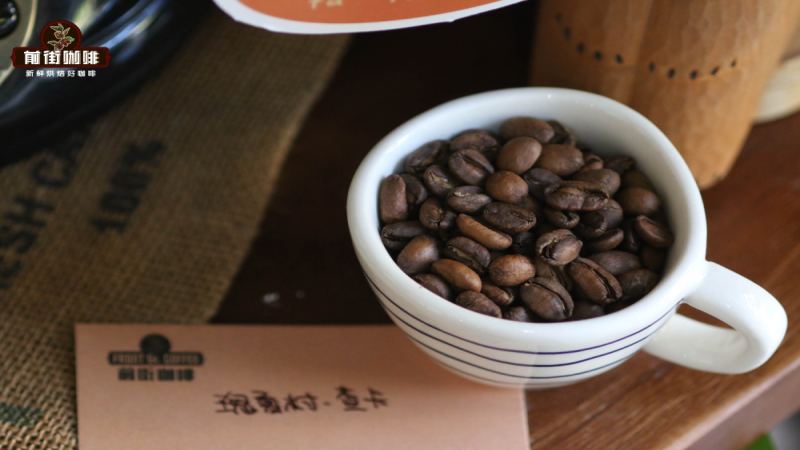
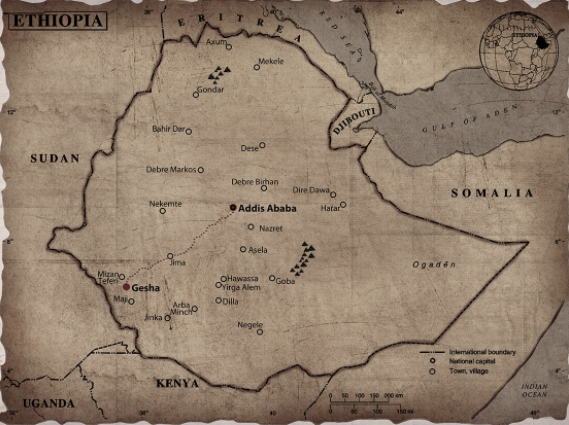
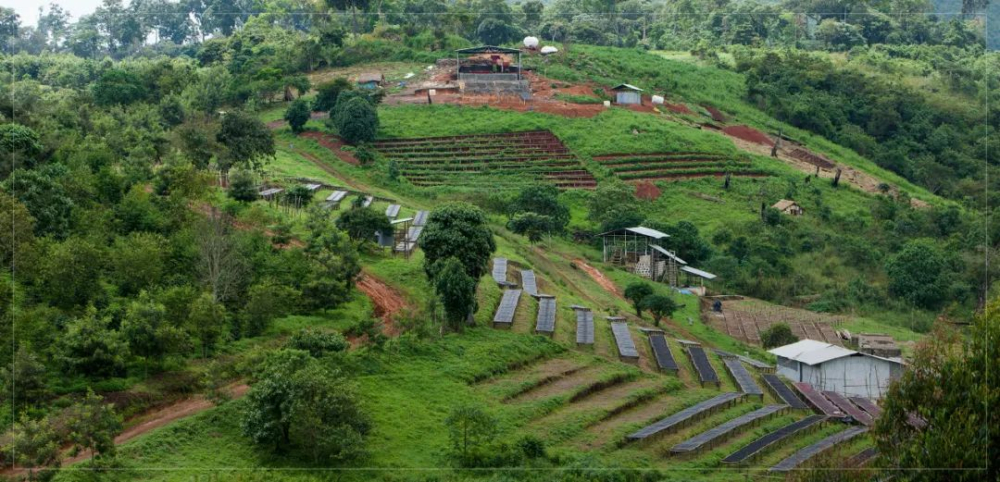
Located in the Bench Maji region of Ethiopia, Gesha Village Coffee Estate is a name that has attracted much attention in today's specialty coffee circles. This large estate covering 471 hectares was gradually established after documentary director Adam Overton and his photographer wife Rachel Samuel conceived the idea in 2007, and during their search for wild Geisha they discovered the Gori Gesha forest. Gesha Village strictly classifies its coffee beans into Auction, Gold, Red, Green, and Chaka lots to satisfy different levels of flavor pursuit. Front Street Coffee has introduced the natural-process lot from Gesha Village this time, and conducted pour-over parameter tests for the Red Label, hoping to use a medium-light roast and three-stage extraction to present the floral aroma and complex fruit notes of Geisha to the greatest extent. This article will sort out the origin of Gesha Village, its grading logic, and give specific brewing suggestions for coffee lovers' reference.
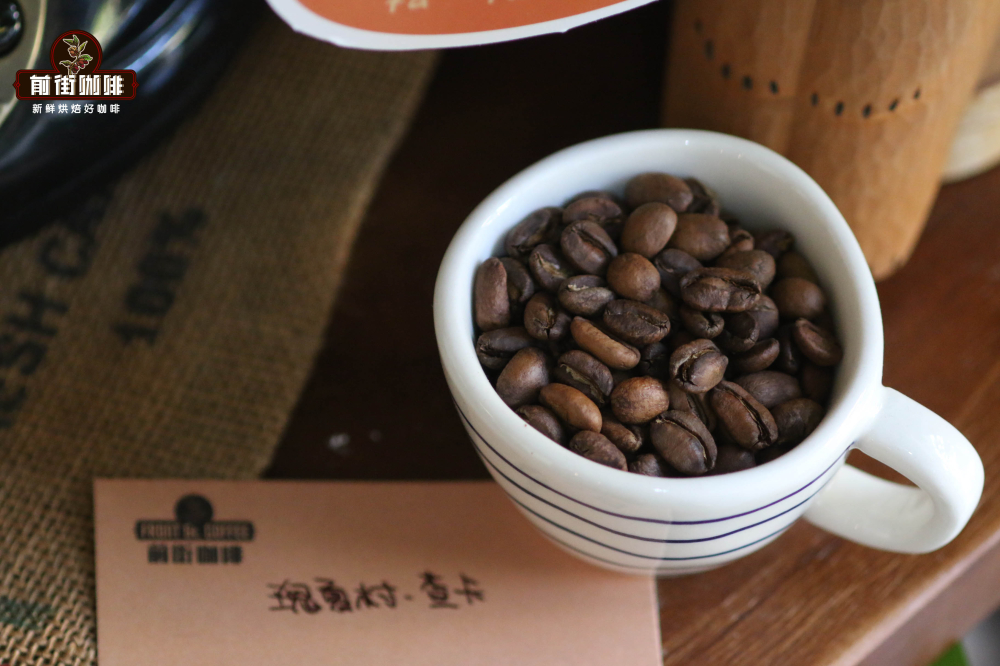
Front Street Coffee: Ethiopia Gesha Village Coffee Estate Chaka Region: Bench Maji, Ethiopia Estate: Gesha Village Coffee Estate Altitude: 1900-2100 meters Varieties: Gori Gesha, Gesha 1931, Illubabor Processing method: Natural process
How Gesha Village Coffee Estate Came to Be
In 2007, documentary director Adam Overton and his photographer wife Rachel Samuel walked into the Gera coffee forest in the Bench Maji area while filming a coffee-themed documentary for the Ethiopian government. It was this experience that planted the idea in their hearts of creating their own coffee estate and brand.
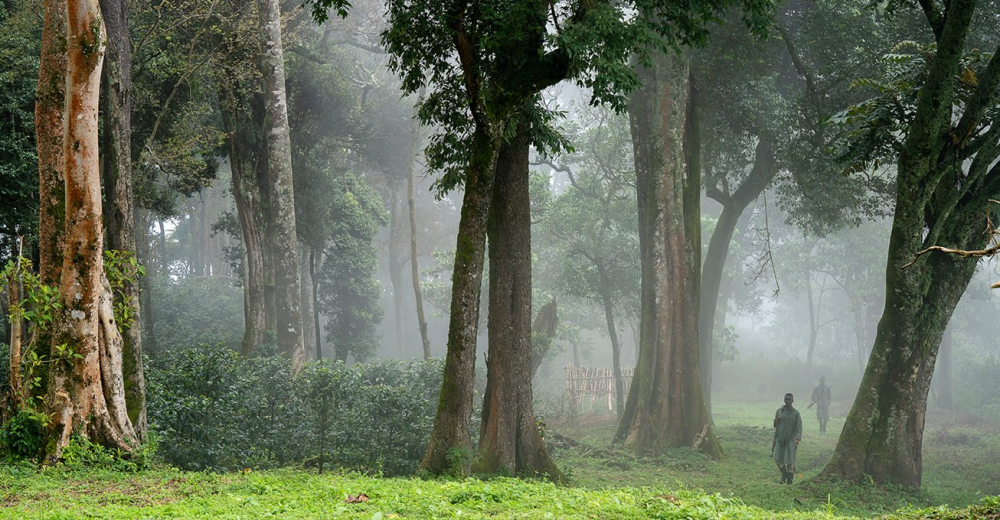
In 2009, they met Willem Boot, owner of Finca La Mula and a BOP judge. This industry figure's thinking gave the Overton couple a new direction: return to Ethiopia and search for the birthplace of Geisha. So they came to Ethiopia's region closest to South Sudan—Bench Maji, at an altitude of about 1700-2100 meters. Many local places are called Gesha Village, and this area is also considered the most likely to preserve original Geisha. Adam followed Willem Boot to explore the dense forests around the estate. In this jungle tightly surrounded by forest, they discovered many wild tree species, and what excited them most was finding wild Geisha.
Only later did they learn that this was the Gori Gesha forest—the place where the Geisha variety was first discovered by humans. They harvested seeds from the original Geisha trees, selected them, brought them back to Gesha Village for planting, and established a coffee estate here, naming it Gesha Village Coffee Estate. This is the source of the Ethiopian Gesha Village coffee beans currently on Front Street's coffee list.
Gesha Village Coffee Estate Front Street's Ethiopian Gesha Village coffee beans have performed actively in the specialty coffee market in recent years with a solid reputation, so Front Street has introduced them into the shop for coffee fans to taste. According to Front Street's understanding, Gesha Village is not a small estate, but a large coffee estate with a total area of 471 hectares, and its coffee is known for a bright and clean flavor.
This large estate is also divided internally into 8 blocks, each with a unique microclimate and different soil characteristics. The estate owner initially continuously screened coffee varieties, ultimately determined suitable seeds for planting, and then confirmed quality through cupping. Therefore, Gesha Village's coffee beans are also divided into different grades, namely the Gesha Village Gold Label, Red Label, Green Label coffee beans, etc. sold in Front Street's shop.
How Does Gesha Village Grade Its Coffee Beans?
As Front Street mentioned above, Gesha Village is very large, and different microclimates cause subtle differences in the coffee beans grown on each piece of land. In order not to let down Gesha Village's "flavor reputation," the estate implements a strict internal grading system, divided into Auction, Gold, Red, Green, and Chaka lots. Next, Front Street will briefly explain the characteristics of these labels.
Auction Lot Geisha
Accounting for only 3.7% of Gesha Village's annual production, it is the estate's top lot after rigorous screening and can only be obtained through the 2018 Gesha Village Coffee Estate global auction. The cupping scores of the 2018 auction lots were 88.15-92.67 points, among which they are further divided into Champion's Reserve and Farm Reserve. For example, Gesha Village 2018 Auction Lot RSV.6 belongs to the auction lot. Gold Label Lot Geisha Accounting for only 5% of Gesha Village's annual production, it is a lot often chosen by competitors around the world, and roasters with high quality requirements also purchase it. It has complete traceability, outstanding flavor in each lot, and high complexity, making it the estate's best label after the auction lot;
Red Label Lot Geisha A lot with complete traceability, presenting the typical Gesha Village flavor. Its flavor intensity and complexity are slightly weaker than the Gold Label lot, making it a single-origin lot with very high cost performance;
Green Label Lot Geisha
A lot from a single block and a single variety, with the typical Gesha Village flavor. Its flavor intensity and complexity are slightly weaker than the Red Label lot;
Chaka Lot A Geisha coffee blend produced by Gesha Village, containing three varieties: Gori Gesha, Gesha 1931, and Illubabor (a native Ethiopian disease-resistant variety).
The Area and Planted Varieties of Different Blocks in Gesha Village
Moreover, according to Front Street's understanding, the owner of Gesha Village is very detailed in numbering the blocks, which facilitates later management and flavor traceability; the following picture shows the area and planted varieties of different blocks in Gesha Village.
From this picture, it can be seen that the terrain on the west side of the estate is relatively higher, so the three blocks OMA, SURMA, and SHEWA-JIBABU are at slightly higher altitudes, while the shading ratio on the south side is relatively higher, and the north side receives longer sunlight. Among the eight blocks, the estate managers choose the most suitable variety for each block based on differences in microclimate such as altitude, soil conditions, and shade conditions, ensuring that each major block can develop distinct characteristics.
The above is some related information about Gesha Village Geisha coffee beans compiled by Front Street, and Front Street conducts cupping and brewing tests before putting any new beans on the shelf. So next, let's see what parameters can make Gesha Village taste better.
The flavor of Geisha coffee is world-famous for its rich floral aroma and complex fruit notes. Front Street hopes to retain more of Geisha's high-quality acidity, so it chooses a medium-light roast (slight adjustments will be made for different lots). This roast level does not change much of the high hardness of beans grown at high altitude, so brewing requires increasing the extraction rate to a certain extent to present a fuller flavor hierarchy. Here, a higher water temperature and a slightly finer grind size will be used to stimulate more aromatic substances.
Next, Front Street will demonstrate the brewing steps for the Gesha Village Red Label served in the shop. Everyone can refer to it and compare it with their own brewing approach.
Pour-over suggestions for Gesha Village Red Label coffee:
Dripper: V60
Water temperature: 91-92℃
Dose: 15g
Coffee-to-water ratio: 1:15
Grind size: fine granulated sugar size (sift the grounds with a No. 20 sieve to 80%)
Three-stage extraction: First pour 15 grams of coffee powder into the dripper and tare the weight. For the first stage, pour 30g of water for blooming for 30 seconds, and start timing at the same time. Throughout, pour with a small stream from the center point and begin spiraling outward, making sure to wet the entire coffee bed.
For the second stage, begin pouring with a slightly larger stream to add 120g of water, with the purpose of lifting the entire coffee bed. The water column should be poured vertically and evenly. At this point the scale shows 150g, and pouring is completed in about 55 seconds.
When the liquid level drops to the halfway point, begin using a small stream to pour the third stage of 90 grams in a small spiral, trying to control the stream so it does not spiral too widely, as it is easy to disturb the coffee bed and cause insufficient extraction. The final total poured water is 240 grams, and the drip completion time is about 2 minutes 10 seconds. After removing the dripper, shake the coffee liquid in the sharing pot evenly and it is ready to taste.
The above content is compiled by CoffeeHunters, a coffee news website.


