







Sumatra, with its volcanic soil, high-altitude mountains, and humid climate, has given rise to the world-famous Mandheling coffee. To cope with the rainy environment, local farmers invented the wet-hulling method, a unique semi-washed process that not only shortens the drying cycle but also gives the beans their signature woody, spicy, and herbal notes. From Lake Toba to Lake Tawar, from the Mandailing people to the Gayo people, different regions and ethnic groups together have shaped the rich character of Mandheling. Meanwhile, the Golden Mandheling launched by Indonesia's PWN company, through strict screening and exclusive trademark registration, has become synonymous with specialty Mandheling. The Golden Mandheling that Front Street Coffee has offered year-round comes from PWN. This article will take an in-depth look at the technical details of wet hulling, the origin story of Mandheling, and the grade standards and cupping performance of Golden Mandheling.
Wet hulling is a green bean processing method that Indonesian coffee farmers developed in response to the local extreme weather. It not only greatly shortens the drying cycle of coffee beans but also shapes the one-of-a-kind flavor profile of Mandheling. Today, wet hulling has become the most common post-processing method for Indonesian coffee. Today, Front Street Coffee will take you into a deeper understanding of this special green bean processing method.
Which Indonesian coffee is the most famous?
Sumatra is the largest island in Indonesia, bordered by the Indian Ocean to the west and facing the South China Sea to the east, with the equator running across it. It happens to lie on the Pacific Ring of Fire, with volcanoes scattered throughout, providing the land with abundant volcanic ash soil. The mountainous areas are shrouded in clouds and mist year-round, with high altitudes, abundant rainfall, and pleasant temperatures, making this land rich in products, and coffee is one of the most suitable crops.
As a representative of Sumatran coffee, Mandheling was originally just a very small place name, and later gradually evolved into the name of an ethnic group—Mandailing. Mandheling mainly comes from two major lakes in Aceh Province and North Sumatra Province: Lake Toba and Lake Tawar.
Lake Toba is the largest volcanic lake in the world and the largest highland freshwater lake in Indonesia. Its average annual temperature is about 22°C, with a tropical rainforest climate. The rainy and humid environment, combined with a mountainous altitude of about 1,400 meters, makes it rich in spices, timber, palm oil, and other agricultural products, and coffee is naturally among them. Under the drizzly weather, most fruit trees grow on higher-altitude slopes, and various ferns cover the ground, together providing good sun protection for coffee, so growers do not need to use shade planting.
Located in central Aceh Province, Sumatra, the Gayo Mountains have a very unique microclimate, close to the famous volcanic Lake Tawar. Here the lake water is clear and the natural environment is excellent. Coffee trees are planted on high mountains at 1,200–1,800 meters, shrouded in mist all year round, with large temperature differences between day and night. The volcanic soil is rich in minerals and nutrients, and fallen fruit serves as fertilizer. Farmers widely adopt organic cultivation for coffee, and together with a long history of cultivation, this makes the coffee produced here higher in both quality and yield. Many green bean traders also value this place more, including the very famous local Pawani Coffee Company (PWN).
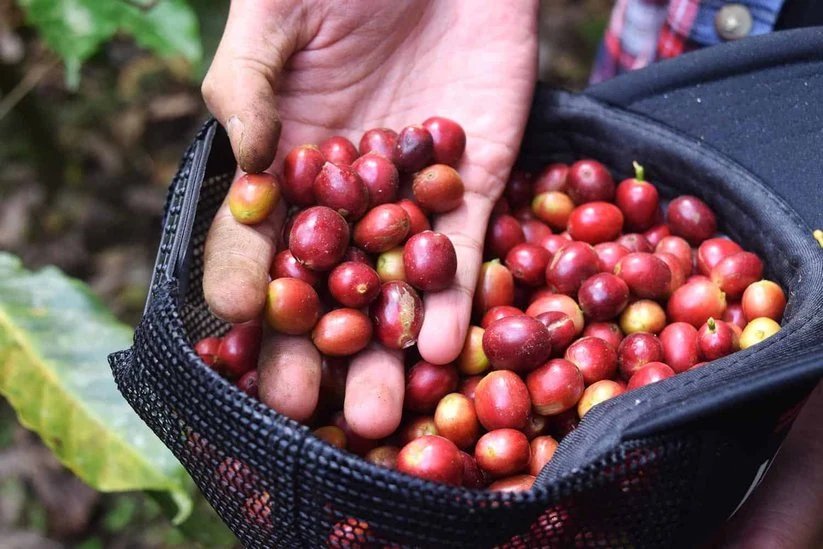
Every year from September to April is the season when coffee cherries ripen, and you can see many farmers busy picking in the mountains. Traditional Lintong Mandheling is grown by the Mandailing and Batak peoples, while the "rising star" Lake Tawar Mandheling is grown by the Gayo people.
Why use wet hulling?
The biggest difference from many coffee-producing regions is that Indonesia is mostly humid weather, with humidity between 70–90% all year round. Typhoons can come at any time, and annual rainfall even reaches more than 2,000 mm. Such harsh weather makes it impossible to use sun-drying for as long as 2–3 weeks like in Africa. Washed processing is not only time-consuming but also consumes more labor costs and water resources, which Indonesia, with mass production as its goal, simply cannot afford. So they developed a unique semi-washed method—wet hulling.
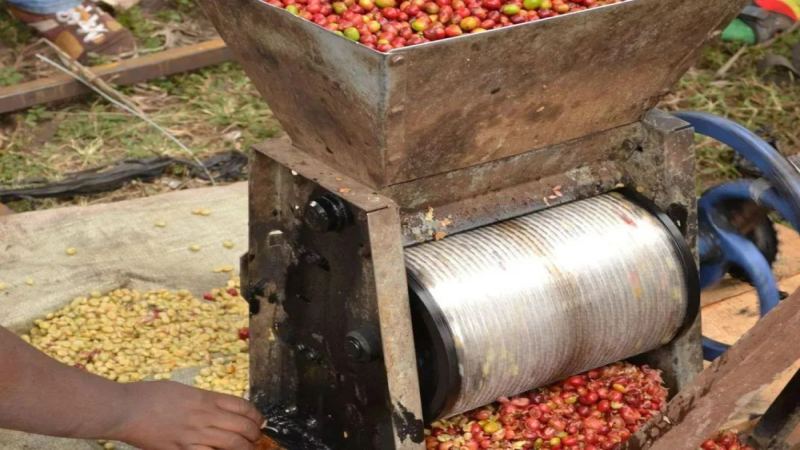
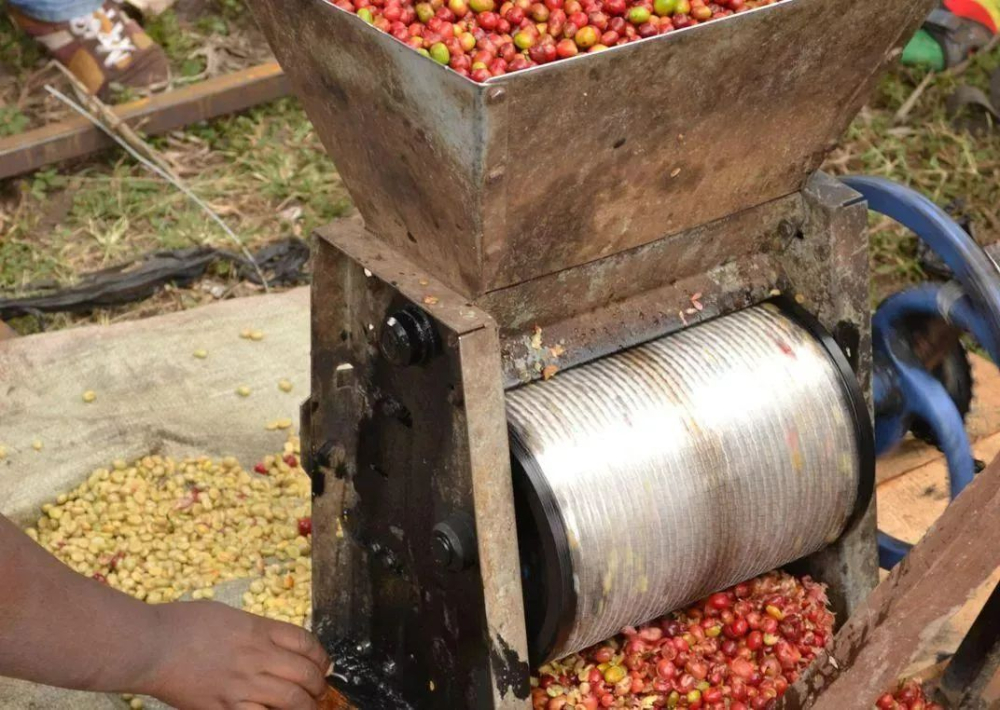
Coffee cherries with the skin and pulp removed are poured directly into a pool for brief fermentation of a few hours. At this point, a small amount of mucilage still remains on the parchment. The mucilage is removed by scrubbing. Then the parchment beans are dried. The first drying only needs to reach 30–40% moisture content, about 2–3 days, after which the coffee farmers sell the green beans to collectors. The collectors directly hull the semi-dry parchment beans they purchased by machine to obtain the innermost green beans.
Because the hulling machine uses relatively strong friction, it tears open the parchment layer clinging tightly to the green beans. At this stage, white or green viscous liquid usually flows out. Due to long soaking in mucilage and the humid environment, the green beans finally become soft, whitish and swollen, forming a grayish-green color. Through the stirring of friction, the green beans are also more likely to be crushed or injured, especially at both ends, forming small gaps and producing shell beans. The "naked beans" with the parchment layer removed dry very quickly, and at the same time are directly exposed to the humid environment and affected by the growth of various bacteria. This gives the coffee a unique woody, spicy, and herbal character, which is what we call the "Mandheling flavor."
Which Mandheling has the highest grade?
The Indonesian local green bean company PWN mainly purchases high-quality local batches of Mandheling green beans and produces only specialty-grade Mandheling. "Golden Mandheling" is its exclusive signature. At the time, Japanese buyers took a liking to Sumatran coffee and planned to purchase it long term. They gradually discovered that the quality of local beans was often uneven, so they paid more attention to Mandheling production and began to establish strict standards and methods for screening defects, including values such as bean density, size, shape, and color. The Mandheling produced needed machine plus manual removal of defects to ensure that the resulting Mandheling beans were complete, uniform, large, and translucent, while also reducing Mandheling's earthy and grassy flavors. It is said that under the sun it appeared golden and shining, so it was named "Golden Mandheling."
It is worth mentioning that in order to protect the golden signboard of "Golden Mandheling," the far-sighted PWN company preemptively registered "Golden Mandheling" as an exclusive trademark, so only its Golden Mandheling coffee beans are genuine. Unlike many local Indonesian green bean traders, PWN is the exclusive supplier of high-grade Golden Mandheling coffee and has contracted Indonesia's best Mandheling coffee-producing regions, so the Mandheling beans it produces are all top-grade. The Golden Mandheling coffee that has long occupied the upper right corner of Front Street Coffee's bean list is produced by PWN, and the Dongshankou store also displays the jute bags used for green bean packaging and certification certificates.
Wet hulling saves a lot of time and labor costs in green bean processing, but the rapid process also brings a higher defect rate, so only strict hand sorting can remove defects that machines cannot screen out. PWN puts the purchased Mandheling green beans through one machine sorting plus three manual selections. In quality, this is far above Indonesia's local highest G1 grade and meets Front Street Coffee's PWN Golden Mandheling production standards, which require meeting the following points:
1. Green bean screen size: above 18–19 screen after one hand sorting
2. Fewer than 3 defective beans in a 300-gram green bean sample
3. Green coffee bean grade is G1
4. Color is darker green, uniform in size, and neat in shape
Before Front Street Coffee releases a coffee bean, it tastes the coffee in the form of cupping. Cupping is an evaluation of coffee bean quality and flavor. A unified standard can more objectively identify the strengths and weaknesses of the flavors presented by the beans, as well as their characteristics. Through cupping, Front Street Coffee found that PWN's wet-hulled Golden Mandheling not only has the aroma of dark chocolate, nuts, and caramel, but also the flavors of herbal spices and pine wood, with the sweet aftertaste of dark chocolate, a full finish, high cleanliness, and a gentle fruit acidity after the temperature drops.
The above content is compiled by CoffeeHunters, a coffee news website.


