







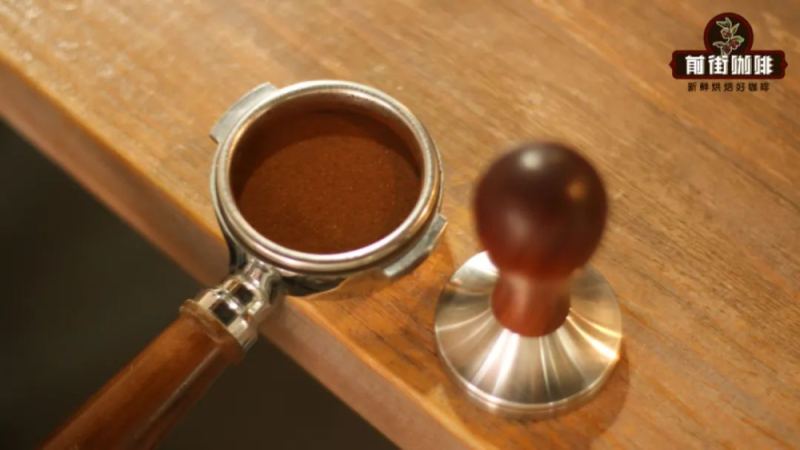
Tamping is a seemingly simple yet controversial part of making espresso. Some people casually rotate the tamper, while others put all their strength into packing the puck down as hard as possible. Just how much does tamping pressure affect extraction? Can the firmness of the puck really influence the flow rate? Front Street Coffee answers these questions through two sets of comparative experiments with different grind sizes, using actual extraction time data. This article will guide you through the subtle relationship between tamping pressure and grind particle size, helping you find the tamping method that suits you.
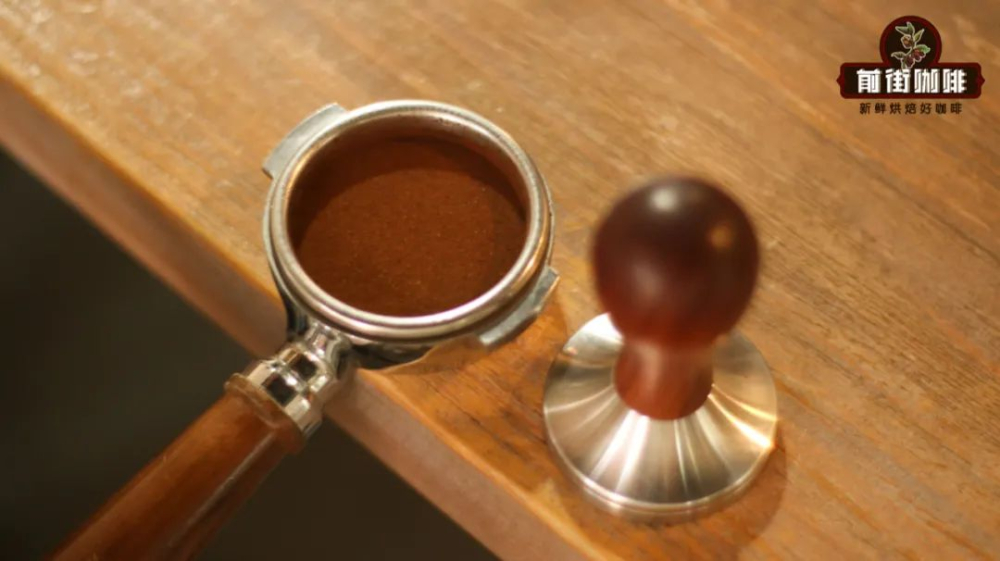
Watching a barista tamp can sometimes be a pleasure in itself. Every barista has a different understanding of tamping, so their movements vary widely.
Everyone has long agreed on leveling the coffee bed. Once the puck is uneven, it easily causes channeling, ultimately leading to uneven extraction. The biggest disagreement among baristas is: just how much force should be used to compress the coffee grounds.
The Two Major Schools of Tamping
One school of baristas believes that as long as the puck is level and compacted, that's enough. They typically give the tamper a gentle spin, applying just a bit of pressure, the whole motion smooth and elegant. In their view, no matter how much force is used to tamp, the firmness of the puck is insignificant in the face of the espresso machine's high-pressure extraction.
The other school firmly believes that only tremendous force can pack the puck down tight. You might see their arm veins bulging as they tamp, as if they're trying to push themselves off the ground, a stance that seems to say: the table and the coffee grounds—only one can be flat. They believe that tamping pressure can effectively control the flow rate, and the harder you tamp, the more even the extraction.
So, just how much force should be used to tamp the puck?
The Tamping Experiment
Front Street chose two grind settings, coarse and fine, and designed two sets of experiments, each tamped with different pressures. Let's see whether tamping really requires precise control of force.
The grinder used in the experiment was a Galileo Q18, with a dose of 20g, a target yield of 40ml, a fine grind setting of 1.5, and a coarse grind setting of 2.5. Extraction time was used to judge whether tamping pressure would affect the extraction result.
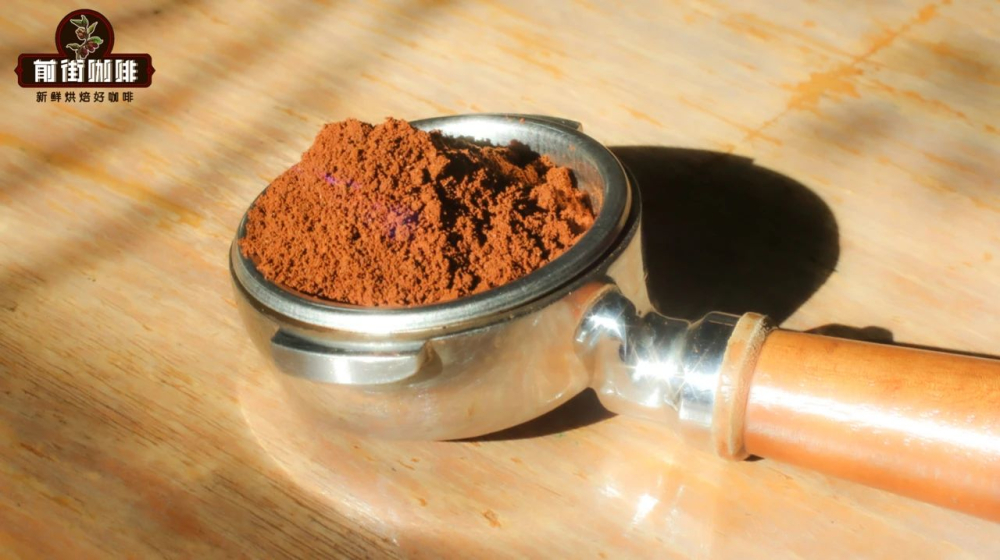
(Left: coffee grounds ground at setting 1.5; Right: coffee grounds ground at setting 2.5)
Fine Grind Tamping Comparison
We ground 20g of coffee at setting 1.5, distributed the grounds, and then tamped the puck with two different pressures: 1.5kg (normal force) and full force.
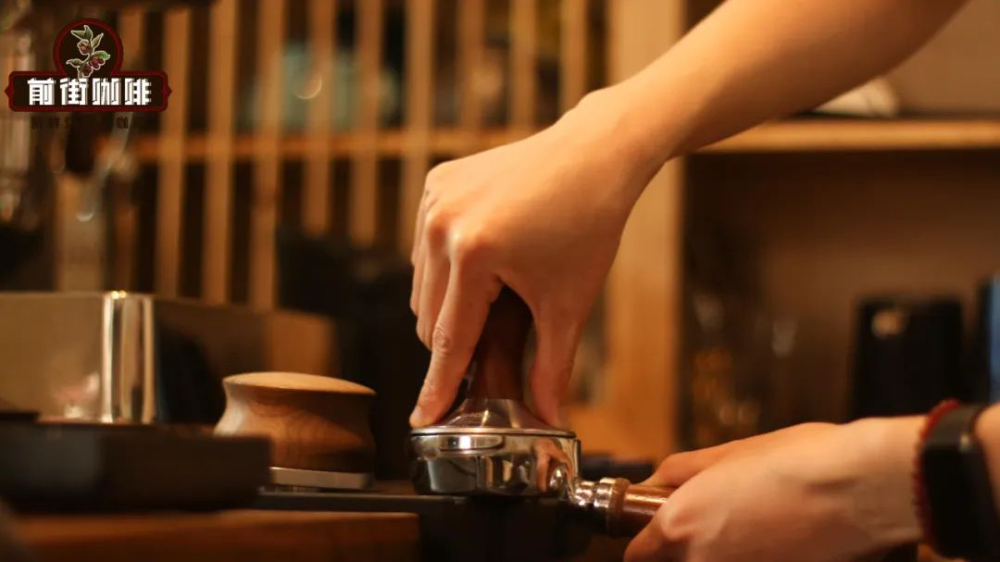
(The digital scale's maximum range was 3kg, so we borrowed our neighbor's bathroom scale; the full-force tamp weighed about 9kg)
The 20g puck tamped with 1.5kg of force took 30 seconds to extract 40ml of liquid; the puck tamped with full force took 33 seconds. To rule out interference from changes in the coffee grounds, we repeated the extraction once, and the time was still 33 seconds. It's clear that a fine-grind puck does indeed produce extraction differences due to different tamping pressures.
Coarse Grind Tamping Comparison
Likewise, after distributing the grounds, we tamped the puck with 1.5kg and full force respectively. The results were surprisingly consistent—both took 20 seconds to extract 40ml of liquid (because the grind was coarser, the extraction time itself was shorter).
Experiment Conclusion
From the above experiments, it can be seen that differences in coffee grounds density cause the puck to require different amounts of force to reach a compacted state.
What does this mean? Taking the fine grind experiment as an example, the reason different tamping pressures produce different results is that finer coffee particles require greater force to compress to a compacted state. 1.5kg of force is clearly not enough; more force is needed to tamp the puck to its most compact.

If the force is increased slightly to 2kg, the extraction time will match that of the full-force puck. Because at that point the two pucks have the same degree of firmness, the extraction time is naturally the same.
The coarse grind group happens to confirm this: the gaps between coffee particles in the puck are larger, so 1.5kg of pressure is already enough to make the puck very compact. Even if you tamp with all your strength, the extraction result is nearly the same as with 1.5kg. Therefore, we can adjust tamping pressure appropriately according to the grind size—the finer the grind, the slightly more force you can apply.
The above content is compiled by CoffeeHunters, a coffee news website.


