







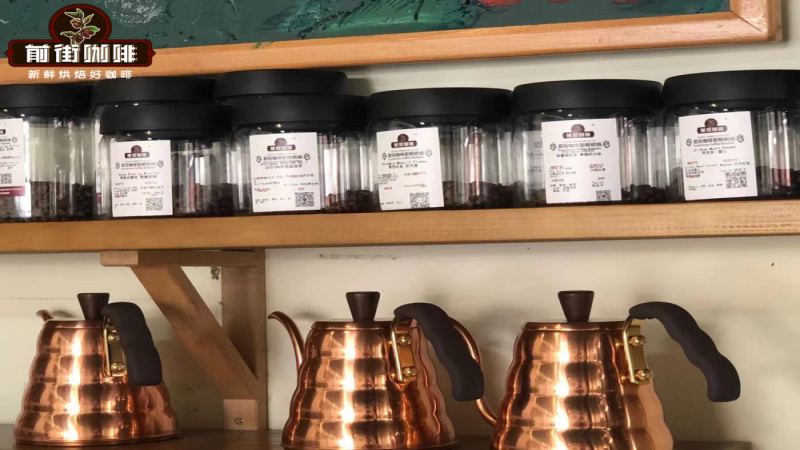
The charm of pour-over coffee lies in the subtle differences in every cup, but brewing a well-balanced cup of coffee depends on precise control of parameters such as grind size, water temperature, dripper, and coffee-to-water ratio. This article starts from two beans from Front Street Coffee—Ethiopia Goddingding and Brazil Queen's Estate—to compare the differences in brewing strategies between light roasts and dark roasts, and takes a deeper look at the relationship between concentration and extraction yield in the SCA Golden Cup extraction theory. Whether you are a beginner just getting started or an enthusiast hoping to refine your skills, you can find practical references here and understand why the same beans can taste different when brewed at home.
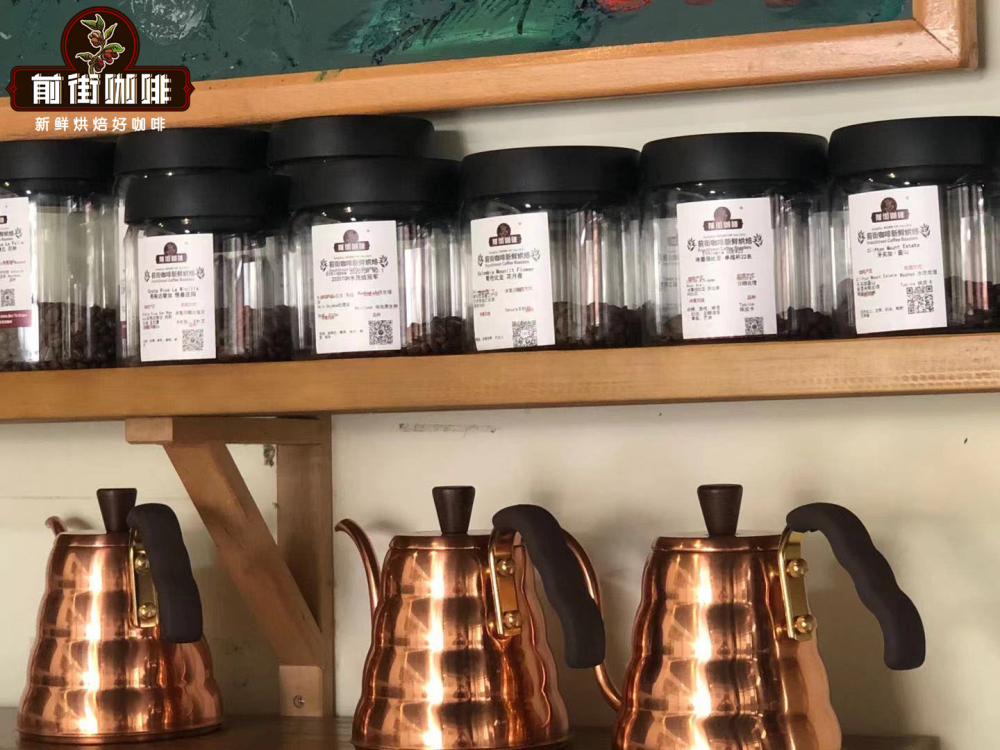
Front Street has found that compared with espresso with milk added, the group of people who are especially fond of pour-over coffee is growing. As Front Street Coffee continues to introduce the terroir characteristics of various producing regions, more and more people choose to come to Front Street in person to experience the unique charm of coffee from different origins.
Many expectant friends come to Front Street's baristas hoping to get recommendations for pour-over coffee beans, and they succeed in buying the beans they like. They ask the barista to brew a cup on the spot for them to taste, and indeed they get the flavor they were hoping for. However, after taking the beans home, the problem appears—how should they brew them? Why is it that no matter how they brew at home, they cannot reproduce the taste they had at Front Street? Some even eagerly contact Front Street Coffee online to ask what temperature should be used for pour-over coffee and how to determine the standard for pour-over coffee grind size.
Below, Front Street Coffee will once again sort out some basic points about pour-over coffee for everyone.
First, let us review the process of making a cup of pour-over coffee. Here Front Street selects two coffee beans, Ethiopia Goddingding and Brazil Queen's Estate, for comparison. As usual, Front Street will first briefly introduce the background information of these two beans.
[Ethiopia Goddingding]
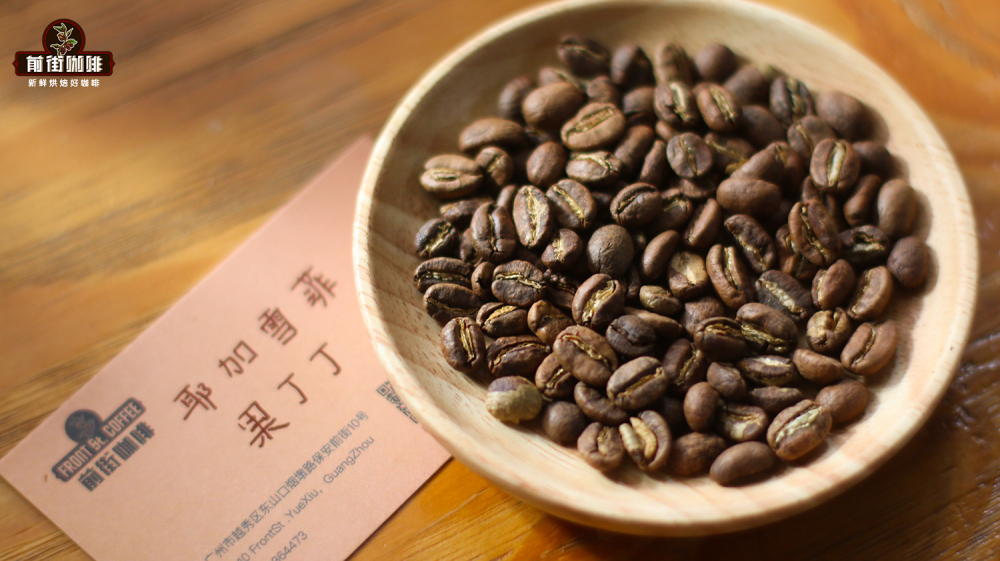
This Front Street Ethiopia Goddingding comes from the Yirgacheffe producing region. The growing altitude in Yirgacheffe is around 2,000 meters. It once belonged to the Sidamo producing region, with a large temperature difference between day and night and fertile soil. In the local language, "Yirga" means to settle down, and "Cheffe" refers to snow, so Yirgacheffe carries the meaning of "let us settle down and make a living in this snowy place." The Yirgacheffe producing region originally belonged to Sidamo. Because the coffee there has a unique jasmine aroma, coffee farmers in other producing regions also began to claim that their beans were Yirgacheffe. Later, Yirgacheffe became an independent producing region because of its unique flavor.
This Front Street Goddingding comes from the Goddingding Cooperative. The cooperative was established in 2012 and has about 300 coffee farmer members, most of whom were once members of the Worka Cooperative, with quite strong washing expertise.

Front Street Ethiopia Yirgacheffe Goddingding Coffee Beans
Producing region: Yirgacheffe, Ethiopia
Cooperative: Goddingding Cooperative
Altitude: 2,000 m—2,100 m
Variety: Local heirloom varieties
Processing method: Washed process
Ethiopian coffee beans are famous for their bright acidity. In order to highlight this bean's floral aroma and acidity, Front Street Coffee's roaster used a medium-light roast. Therefore, when brewing this bean, Front Street's baristas use a water temperature of 92°C, a medium-fine grind size (80% passing through a Chinese standard No. 20 sieve), and a Hario V60 dripper.
[Brazil Queen's Estate]
Brazilian coffee beans are known for their rich nutty flavor and smooth mouthfeel. This Front Street Brazil Queen comes from Queen's Estate. Since the first Brazil COE competition was held in 1999, the estate has won many honors, receiving 12 awards within 7 years. The estate has a planting area of about 280 hectares, of which 200 hectares are planted with the Yellow Bourbon variety.
The Yellow Bourbon variety was discovered in São Paulo State, Brazil, in the early 1870s. Scientific research shows that Yellow Bourbon has a thicker pectin layer, and pectin is rich in sugary substances, which means Yellow Bourbon's sweetness will be more prominent. Queen's Estate used small-scale natural processing for this Yellow Bourbon to ensure green bean quality. The natural processing method also makes this already sweet Yellow Bourbon even more distinct in sweetness.
Front Street Brazil Queen's Estate Coffee Beans
Producing region: Mogiana, São Paulo State, Brazil
Estate: Queen's Estate
Altitude: 1,400 m—1,950 m
Variety: Yellow Bourbon
Processing method: Natural process
In order to showcase the fullness and sweetness of Brazilian coffee, Front Street Coffee's roaster uses a medium-dark roast. When brewing this bean, Front Street Coffee's baristas use a water temperature of 88°C, a medium-coarse grind size (75% passing through a Chinese standard No. 20 sieve), and a KONO dripper.
Front Street also uses a three-pour brewing method for extraction, with a coffee-to-water ratio of 1:15, etc. When setting these parameters, Front Street Coffee customizes the brewing plan for each coffee bean based on the following points.
[Grind size]
Grind size depends on roast level. The darker the coffee beans are roasted, the faster the internal substances dissolve in water. Conversely, if the roast level is lighter, a finer grind is needed in order to extract more substances, thereby increasing the contact area between coffee particles and hot water.
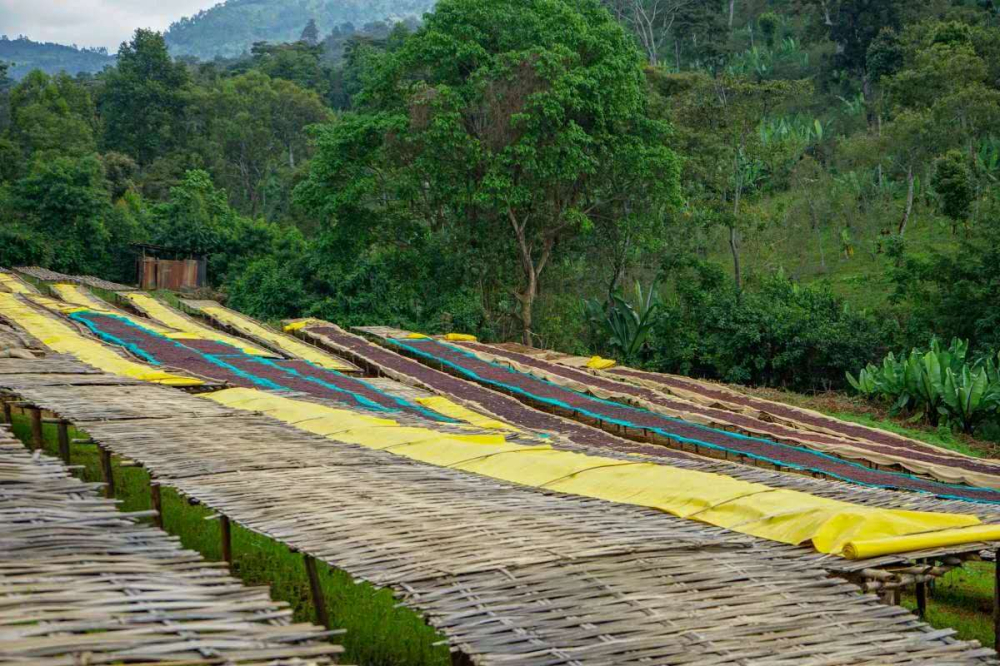
When Front Street does pour-over for coffee beans corresponding to light, medium, and dark roast levels, it uses a Chinese standard No. 20 sieve to determine the grind size by sieving. The passing rate is 80% for light-roasted beans, 75% for medium-roasted beans, and 70% for dark-roasted beans.
[Water temperature]
According to the principles of molecular thermodynamics, the higher the temperature, the more active the molecular movement. Similarly, when the water temperature rises, the activity between hot water and the substances in the coffee grounds becomes more intense, meaning more substances will be extracted.
When brewing dark-roasted coffee beans, Front Street Coffee uses a water temperature of 86 to 88°C; for light-roasted and medium-roasted beans, it chooses 90 to 93°C.
[Dripper]
Front Street's baristas use two kinds of drippers when making pour-over coffee: Hario V60 and KONO.
The V60 dripper has 12 long ribs and 12 short ribs, is shaped at a 60-degree angle, and with a large hole at the bottom, its flow rate is relatively fast.
The KONO dripper has 12 short ribs at the bottom, and its wall is smooth. During brewing, the filter paper fits closely against the wall, air flow is restricted, and the flow rate is relatively slow.
Considering roast level, grind size, and water temperature together, darker-roasted beans such as Brazil Queen are paired with the KONO dripper to extend the contact time between hot water and coffee grounds, extract more substances, and give a fuller mouthfeel.
For light-roasted beans such as Goddingding, because high-temperature water and a fine grind are already used, the faster-flowing Hario V60 dripper is chosen to avoid over-extraction and bitterness.
[Coffee-to-water ratio]
If you ask a barista what coffee-to-water ratio is suitable for pour-over coffee, the most commonly heard answer is usually 1:15. After many pour-over experiments, Front Street found that when the coffee-to-water ratio is 1:15, the final concentration is mostly concentrated between 1.30% and 1.36%, and the calculated coffee extraction yield is between 17.86% and 18.69%. When tasting, you can also feel that the coffee flavor is well presented.
When mentioning the coffee-to-water ratio, one cannot fail to mention the SCA Golden Cup extraction theory. Within the shaded area, the Golden Cup range is located in the small square in the very middle, with concentration between 1.15% and 1.45% and extraction yield between 18% and 22%. If the ratio is increased, the flavor will be further diluted, and bitterness may even appear. If the coffee-to-water ratio is reduced, the flavor becomes more concentrated.
Every pot of pour-over coffee is unique, and it is difficult to reproduce a pour-over coffee with exactly the same concentration and extraction yield as the previous pot. The data provided by the Golden Cup theory is not absolutely important for most people; it is merely a reference. After all, every man has his hobbyhorse.
For more coffee bean information, please follow Coffee Workshop (WeChat public account cafe_style)
For professional coffee knowledge exchange, please add WeChat ID kaixinguoguo0925
The above content is compiled by CoffeeHunters, a coffee news website.


