







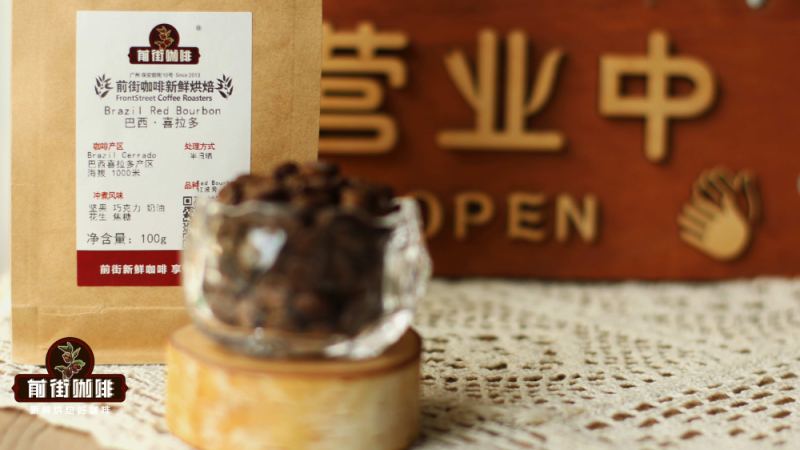
As the world's largest coffee producer, Brazil supplies about 45% of the world's green coffee beans, and fluctuations in its output directly affect international coffee price trends. However, Brazil has numerous coffee-producing regions with uneven quality, making grading especially complex. Front Street Coffee takes you deep into Brazil's green bean grading system—from the flatland growing environment at altitudes of 600 to 1,200 meters, to the flavor differences among seven major regions including Minas Gerais and São Paulo, and further to the multiple grading standards centered on defect-deduction points, screen size specifications, and cupping flavors. The article will also introduce the origin information and flavor performance of Front Street Brazil Queen Estate Yellow Bourbon Coffee and Cerrado Coffee, helping you fully understand the specialty potential of this representative country of neutral coffee.
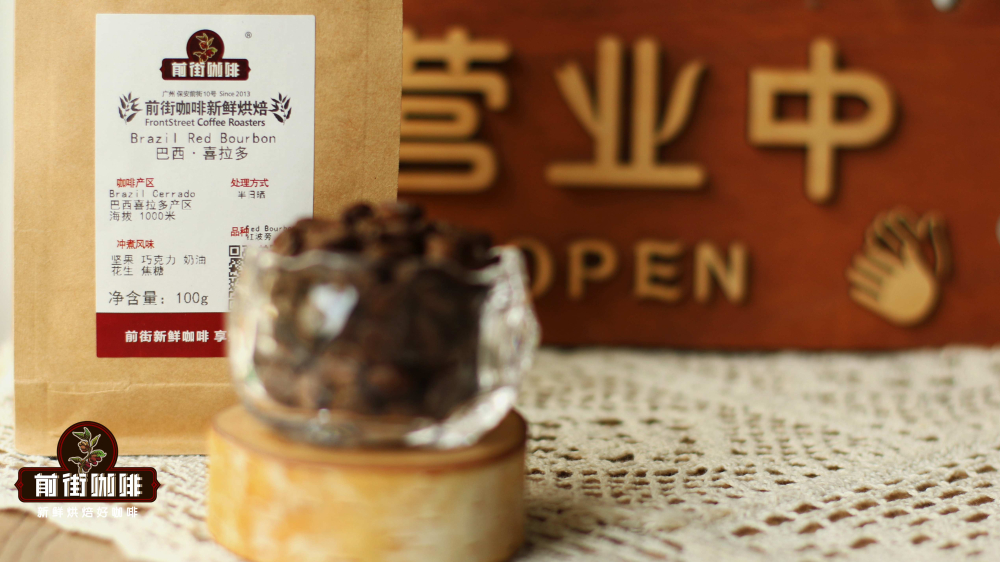
The management models of different coffee origins vary: some are made up of farms of different sizes, while others are uniformly operated by professional business owners. Even within the same region, coffee quality and flavor may differ noticeably. To distinguish coffee quality levels and also make the buying and selling process smoother, the coffee grading system came into being. This time, Front Street will discuss the green bean grading system of Brazil, a major coffee-producing country.
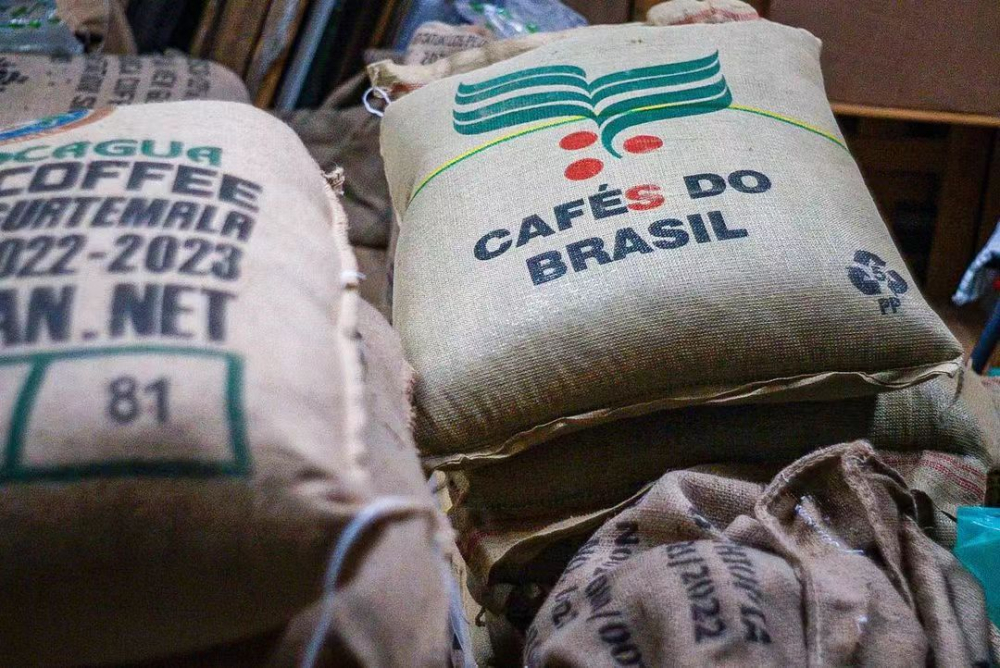
Brazilian coffee beans are round and plump in shape, with a mild aroma and an overall balanced, smooth taste, making them a typical representative of neutral-flavor coffee. They can be enjoyed as single-origin coffee extracted by methods such as pour-over, and they are also suitable for blending with other beans to make espresso. Brazil occupies a core position in global coffee production, with about 45% of green coffee beans coming from this country, so any factor affecting Brazil's coffee output will influence fluctuations in global coffee prices.
The growing altitude of Brazilian coffee is usually between 600 and 1,200 meters, noticeably lower than that of neighboring Colombia. The local terrain is mainly low-altitude plains, with a small portion of the Brazilian Highlands. The flatland topography is very conducive to large-scale cultivation and daily management of coffee trees. During the harvest season, most coffee farms use mechanical harvesting, directly stripping the fruit from the same section of branch all at once.
Brazil's coffee-producing regions span 7 states, among which Minas Gerais in the southeast has the highest output and contains four sub-regions. The Cerrado region was Brazil's first coffee area to obtain origin certification, and almost all the coffee it produces belongs to the arabica species with relatively good flavor. As a mature producing region, Cerrado was also the first place in Brazil to realize coffee commercialization, and many exporters have established large coffee plantations there.
São Paulo state is home to Latin America's largest coffee export port—the Port of Santos—and is also the oldest coffee-producing region. What we often hear of as Santos and Mogiana both come from São Paulo. The Mogiana region has abundant red volcanic soil, higher altitude, and a mild climate; together these conditions improve the quality of local coffee, and most coffee from local estates reaches specialty-lot standards. The Front Street Brazil Queen Estate Coffee on Front Street's bean list comes from Mogiana, selected from the refined-flavor Yellow Bourbon variety, with a mellow body and aromas of dark chocolate and creamy peanut.
Front Street Brazil Queen Estate Yellow Bourbon Coffee Beans
Region: Brazil, Mogiana
Estate: Queen Estate
Altitude: 1,400 meters—1,950 meters
Variety: Yellow Bourbon
Processing method: Natural
Flavor: Chocolate, nuts, cream, peanut, caramel
Because Brazil has a huge coffee output and many producing areas, grading work is quite cumbersome and cannot apply a single standard. Therefore, Brazilian coffee has multiple grading methods, with defect bean ratio, screen size, and cupping flavor all taken into consideration. Locally, a "deduction" method is used to classify grades: specifically, defect beans are picked out from a 300-gram green bean sample, and the grade is determined according to the defect ratio.
Take the Front Street Brazil Cerrado green coffee beans previously purchased by Front Street as an example. Its packaging bag is printed with "Brazil NY.2SC – 17/18 FC Cerrado".
NY.2 means that according to the New York grading standard, it can be divided by defect ratio into NY2, NY2/3, NY3, NY3/4, etc. The smaller the number, the lower the defect rate and the higher the grade. Lots with deductions below 4 points belong to NY2, the highest grade. Since NY.1 requires not a single defect bean, such selected lots are difficult to supply consistently, so Brazil sets NY.2 as the highest grade.
17/18 indicates that the green bean size specification is between 17 and 18 screen sizes (1 screen equals 1/24 inch).
Flavor and mouthfeel also have corresponding standard classifications, with multiple descriptions based on cupping performance: Strictly Soft, Soft, Softish, Hard, Rioy. Among them, SC means Strictly Soft, with the best mouthfeel.
Cupping flavors are divided into Fine Cup, Good cup, Fair cup, Poor cup, Bad cup. Among them, Fine Cup has the best flavor and the highest quality, followed by Good cup.
Of course, in addition to the above green bean standard grading, many specialty-grade coffee beans also come with more traceability information, such as green bean producing region, altitude, processing method, variety, and estate information.
The above content is compiled by CoffeeHunters, a coffee news website.


