







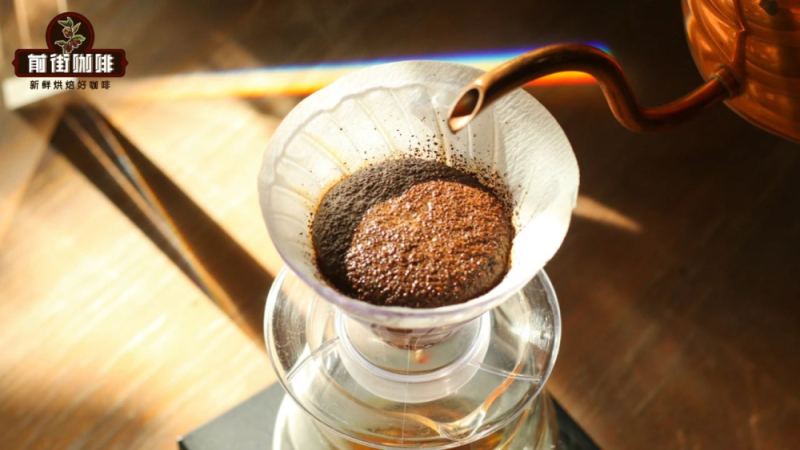
Kenyan coffee stands out in the specialty coffee world with its distinct berry acidity and sweet tomato-like notes. Front Street Kenya coffee beans are a perfect representation of this flavor. This article starts with variety selection, the K72 washed processing method, and the grading system to systematically explain why Kenyan coffee can achieve a consistently high level of flavor nationwide, and provides a complete brewing plan for this bean—including grind size, water temperature, coffee-to-water ratio, coffee dose, and staged pouring technique. Whether you are a beginner just getting into Kenyan beans or an experienced brewer looking to refine your technique, you will find practical references here.
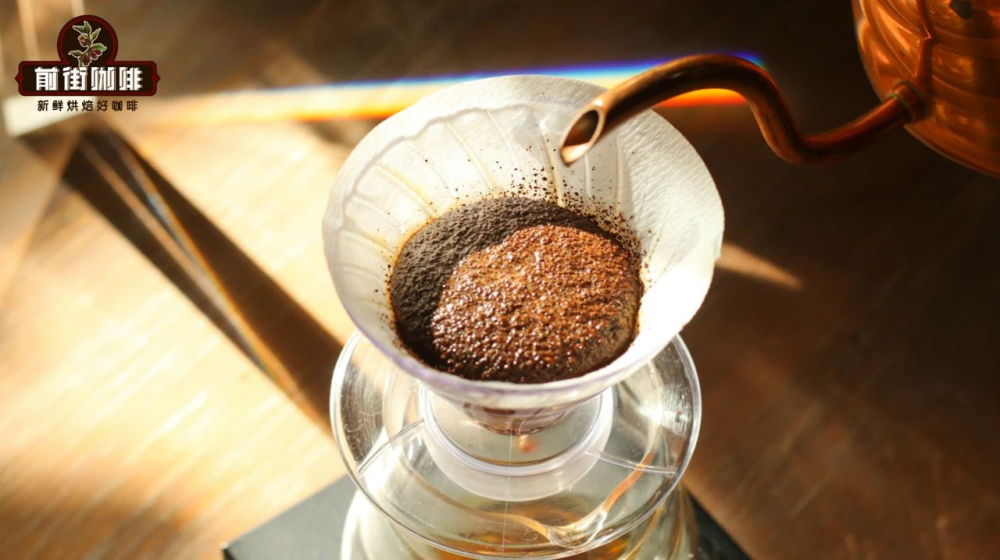
As the specialty coffee wave sweeps in, people increasingly value that unique taste from the origin in their cup. After the millennium, the third wave coffee movement pushed origin traceability and light roast style to center stage, bringing a large number of single-origin coffees into public view. Among the many producing regions, Front Street Kenya coffee has successfully gained a large following with its bright fruity acidity.
Want to drink coffee as clear and refreshing as juice? Choosing Front Street Kenya coffee beans is basically foolproof. Of course, to fully release the rich fruity aroma and ripe tomato-like flavors in Front Street Kenya coffee, you still need to put some thought into learning the brewing technique.
The first step, naturally, is to understand this bean's character so you can address it properly. If you often browse Front Street's bean list, you may notice a pattern: Front Street typically offers at least two coffees from most major producing countries, yet for Kenya it has long kept only one permanent selection—the Little Tomato. The reason is that Kenya as a producing country has achieved near-nationwide flavor consistency.
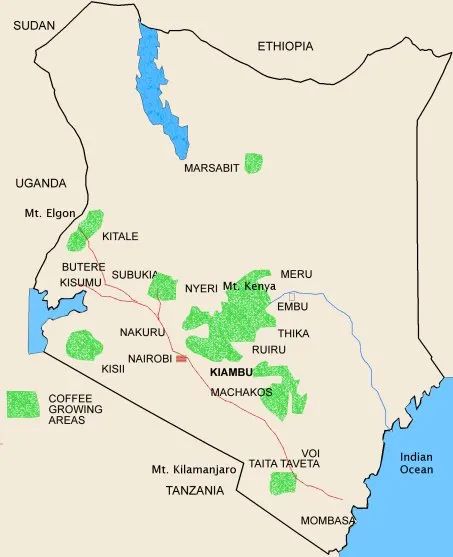
Looking at the map, directly north of Kenya is Ethiopia, where wild coffee trees are abundant. However, Kenya did not inherit this natural advantage. Its coffee-growing history is not particularly long—about 120 years since the early twentieth century, similar to Yunnan's cultivation history—but the two places took completely different development paths.
In the 1930s, Kenya used the Scott Laboratories to complete variety selection, identifying SL28 and SL34 and promoting them nationwide. This step was crucial—you reap what you sow, and SL28 and SL34 are varieties that naturally possess excellent berry-like acidity. They were later introduced to some estates in Central America; last year's Costa Rica COE champion bean used precisely SL28 and Geisha varieties.
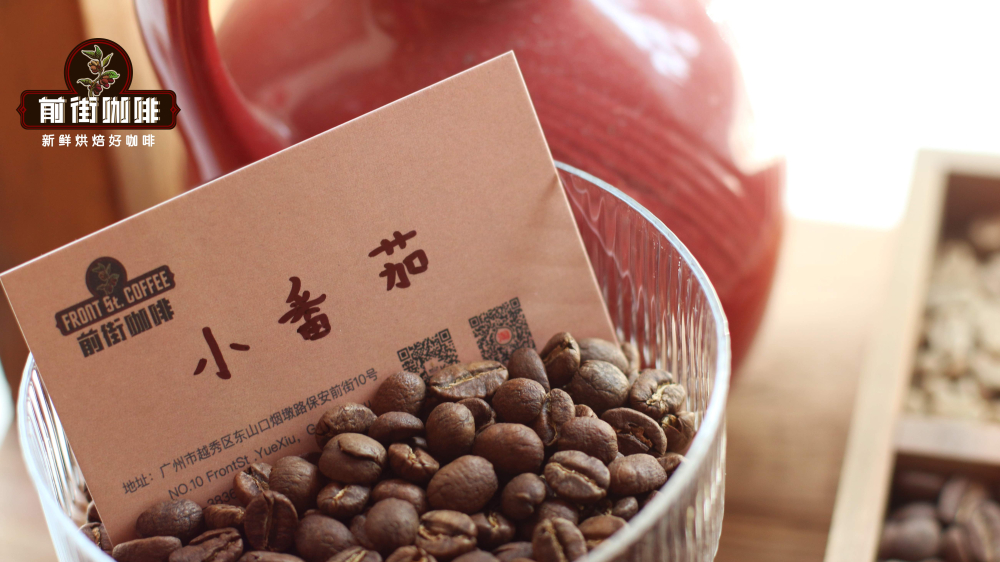
Later, to enhance resistance to pests and diseases, the Kenya Coffee Research Institute released a new variety called Ruiru11 in 1985 and promoted its cultivation in certain areas. You can think of Ruiru11 as Kenya's version of Catimor. Front Street has cupped Kenyan beans blended with Ruiru11; the flavor showed slightly weaker sweetness and acidity, with a hint of off-flavors. This also confirms from another angle that the role of variety in shaping flavor cannot be underestimated.
Front Street believes that the bright acidity of Kenyan coffee is inseparable from its unique K72 washed processing method. The standard washed process involves soaking in a fermentation tank for 24 to 48 hours before drying directly. Kenya is different: first a 24-hour washed fermentation, rinsing off loosened mucilage, transferring to a clean tank for another 24-hour fermentation, rinsing again, then fermenting for another 24 hours—totaling exactly 72 hours. This deep washing can consistently control quality while imparting bright acidity and a clean, sweet taste to the coffee.
Next, let's talk about Kenya's grading system. Kenyan beans are graded by bean size, with AA being the top grade, followed by AB. The advantage of grading by size is that: once variety selection is in place, larger size means plump beans and good quality, which is also very friendly for roasting. In this way, the overall quality of Kenyan coffee is uniformly guaranteed. Although we can still discern flavor differences horizontally among different producing regions like Nyeri, Kirinyaga, and Kiambu, they all generally carry Kenya's signature bright acidity, tomato, and berry notes—you can identify it as Kenyan coffee from the first sip.
Once you understand the basic information about Kenyan beans, you can plan your brewing approach based on its characteristics. High altitude, volcanic soil, excellent varieties, and meticulous processing together create this bean's traits: plump, large, relatively hard texture, and outstanding appearance. A common problem encountered in actual brewing is clogging. Regarding grinding, Front Street does not recommend producing too many fines; you can use a high-quality grinder or use a sieve to remove fines. Use a 75% pass rate through a No. 20 sieve as the reference for grind size.
For water temperature, this Kenyan bean is suitable for extraction at higher temperatures, which can fully bring out the fruity sweetness (little tomato). Front Street recommends using 93°C water temperature.
For the coffee-to-water ratio, Front Street suggests 1:16. This Kenyan coffee itself has a substantial mouthfeel and won't fall short even when brewed at a 16x ratio. The 1:16 brew produces a quite gentle concentration, with bright dark plum acidity paired with the sweet-tart aroma of little tomato—very pleasant to drink.
For coffee dose, if using a small V60 dripper, Front Street recommends at least 15 grams of coffee grounds; if using a large V60 dripper, at least 25 grams is recommended.
When pouring, you can raise the coffee bed appropriately while reducing large circular motions. This thins the coffee bed and achieves full extraction, avoiding edge channeling and bottom clogging.
First pour 30 ml of water for a 30-second bloom; for the second pour, add 120 ml, circling from the center outward, and once the surface is covered with golden foam, circle back to the center point. Keep the coffee bed height at half of the short ribs.
For the third pour, add 90 ml of water, drawing circles about the size of a coin. Once all the coffee has dripped into the server, end the extraction. Total time should be controlled at 2 minutes (with a 10-second tolerance).
This brewing plan fully highlights the little tomato aroma and sweetness of Kenyan coffee while preserving its substantial yet translucent dark plum acidity.
The above content is compiled by CoffeeHunters, a coffee news website.


