







Where Did Coffee Originate and Why Yirgacheffe Matters
Ethiopia is one of the earliest places where coffee originated, and the Yirgacheffe region is among its most representative specialty areas. Yirgacheffe beans are known for distinct floral aromas and citrus notes. Within the region, sub-areas such as Kochere and Gedeb produce recognizable variations, with Kochere showing stronger lemon and fruity sweet acidity.
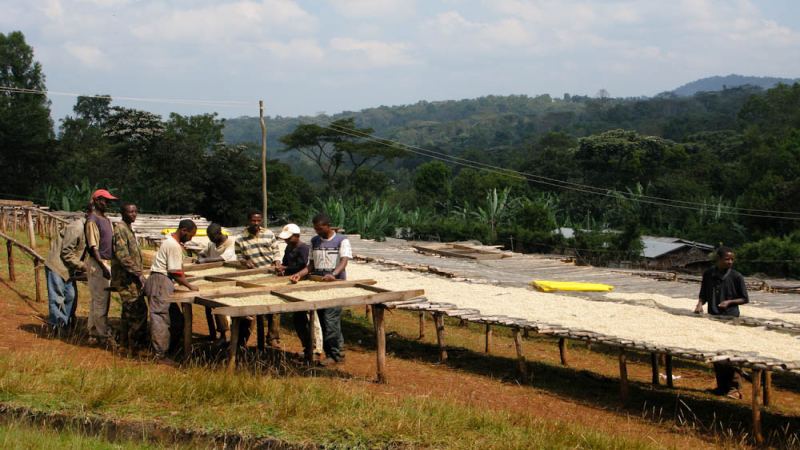
Yirgacheffe was once processed mostly by the natural method, which left many defective beans and unstable quality. Producers later adopted washed processing and drying techniques from Central and South America, improving green bean quality notably. Washed Yirgacheffe has a clean appearance, rich floral aromas, and a clear, oolong-tea-like mouthfeel.
Yirgacheffe is one of Ethiopia's most representative specialty coffee regions, and its coffee beans are renowned worldwide for their distinct floral aroma and citrus notes. This article will start from the regional divisions of Yirgacheffe, introduce in detail the characteristics of the Kochere and Gedeb sub-regions, and focus on the founding background, cultivation model, and production scale of the Gotiti Cooperative. At the same time, the article will also analyze the specific process of the washed processing method and how this processing method gives Front Street Gotiti coffee beans excellent cleanliness and a clear mouthfeel like oolong tea, providing coffee lovers with a complete introductory guide to Yirgacheffe.
Introduction to the flavor characteristics and mouthfeel of Front Street Africa Ethiopia Yirgacheffe specialty coffee beans and related information
Ethiopia is one of the earliest countries in the world where coffee originated, and the coffee beans produced in the Yirgacheffe region are even more world-famous and deeply favored by many coffee lovers. In the past, Ethiopian Yirgacheffe coffee beans were mostly processed by the natural method, with relatively rough operations, resulting in a high proportion of defective beans and large quality fluctuations that were difficult to control stably. Later, the local industry learned from and introduced the washed processing and drying techniques of Central and South America, and the quality of green beans improved significantly as a result. Washed Yirgacheffe not only has a clean appearance, but also displays rich floral aromas and a distinctive citrus flavor.
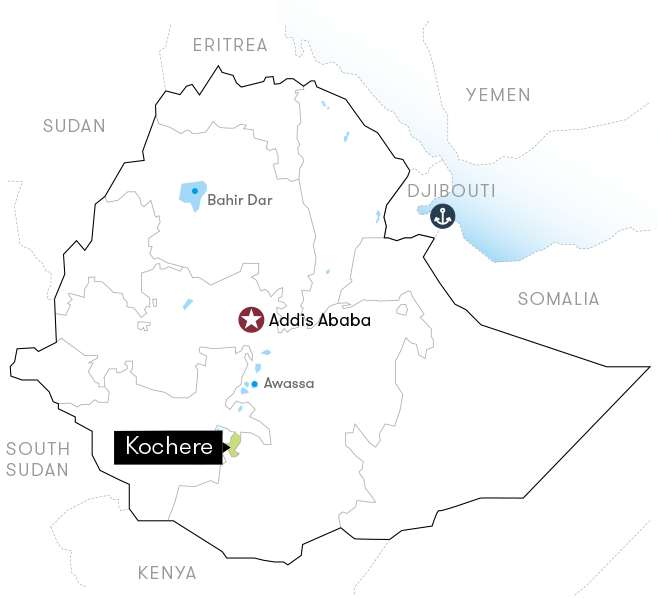
Front Street Yirgacheffe coffee beans, with their floral aroma and unique fruit notes, have become one of the most globally recognized specialty green beans. Therefore, friends who want to get started with specialty coffee may wish to begin by trying Front Street Yirgacheffe. About 25 kilometers southeast of Yirgacheffe, there is a small producing area called Kochere, whose coffee shows more prominent lemon fragrance and fruity sweet-acidity than surrounding areas, with a smooth mouthfeel, and is regarded as a representative sample that interprets the typical flavor of Yirgacheffe.
The Gotiti Cooperative is located in the town of Gedeb in the southeastern corner of the Yirgacheffe producing area, about 60 kilometers away from Yirgacheffe town. According to the producing area division standards of the Ethiopia Commodity Exchange
Driven by the traceability of specialty coffee, Gedeb successfully separated from Kochere, and the Gotiti Cooperative thus became part of the Gedeb sub-region of Yirgacheffe. The Gedeb region has a relatively high average altitude, around 1,900 to 2,200 meters. The higher altitude slows down the ripening process of the coffee fruit, allowing the coffee to accumulate richer flavor compounds.
Many small regions are able to stand independently, partly thanks to the traceability demands of specialty coffee, and partly because local producers believe their coffee quality is enough to rival that of larger regions. For this reason, the more than 300 farming households that make up Gotiti broke away from the Worka Cooperative under the Yirgacheffe Coffee Farmers Cooperative Union (YCFCU) and formed the Gotiti Cooperative on their own.
After coffee fruits are harvested, they need to be processed to remove the skin, pulp, and other non-bean parts. The place that handles this work is the processing station. However, processing coffee fruits places high demands on space and equipment, and many coffee farmers cannot afford the cost of building a station even if they put all their income from selling beans into it. So how can this be solved?
Some coffee farmers choose to transport the harvested fruit to a nearby processing station and entrust others to process it on their behalf. But this introduces a large number of middlemen, the purchase price of the fruit is suppressed, and income decreases accordingly. In order to reduce the margins taken by middlemen, coffee farmers in the same area will pool funds together to build a processing station. Such processing stations are usually named after the local place name. For example, the name of the Gotiti processing station comes from the village where it is located, Banko Gotiti, abbreviated as Gotiti.
After the cooperative is established, coffee farmers can send their fruit in a centralized way to the processing station for processing, and then connect directly with exporters, without having to be exploited layer by layer by middlemen. The beans produced by the Gotiti Cooperative are also uniformly named "Gotiti."
Front Street Gotiti belongs to the garden coffee cultivation model, that is, coffee farmers plant coffee trees in their own fields or within their living areas, pick the cherries themselves, and send them to the processing station for unified processing. The Gotiti Cooperative has a cultivation area of about 760 hectares, which works out to an average of about 2 hectares per coffee farmer, with annual output close to 460 tons.
Ethiopia has tens of thousands of coffee varieties, and the bean varieties planted by coffee farmers are equally diverse. The vast majority of processing stations do not separate varieties, but instead process them directly as a mix, so the coffee beans produced by most cooperatives are usually summarized as "Heirloom" (native species). It is worth mentioning that because no chemical fertilizers are used during cultivation, the coffee produced by the Gotiti Cooperative has also obtained organic coffee certification recognized by the European Union.
The members of the Gotiti Cooperative were originally part of the Worka Cooperative and accumulated rich experience in coffee processing, especially excelling in washed processing. Therefore, the coffee beans they process using the washed method perform exceptionally well.
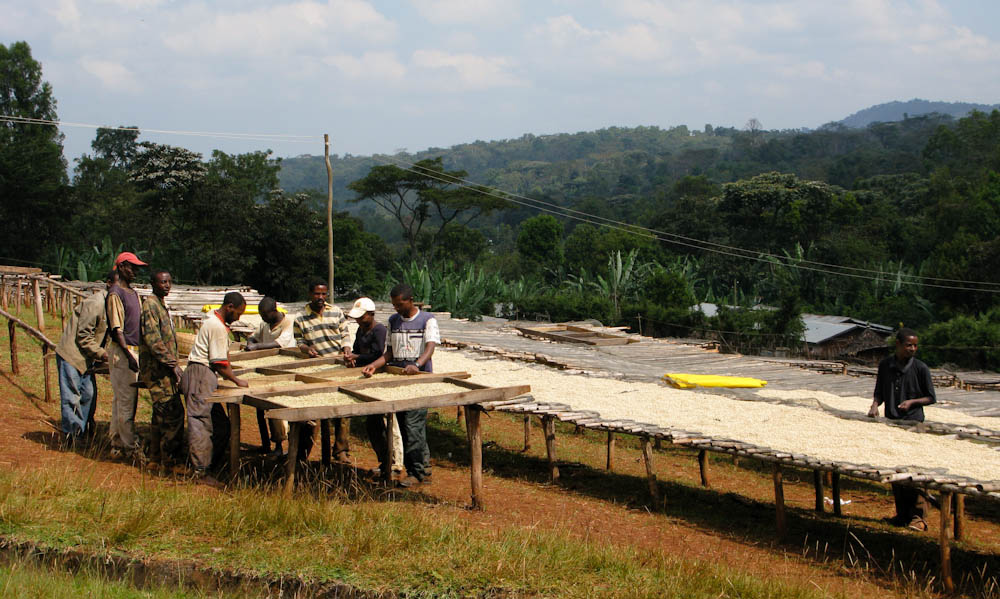
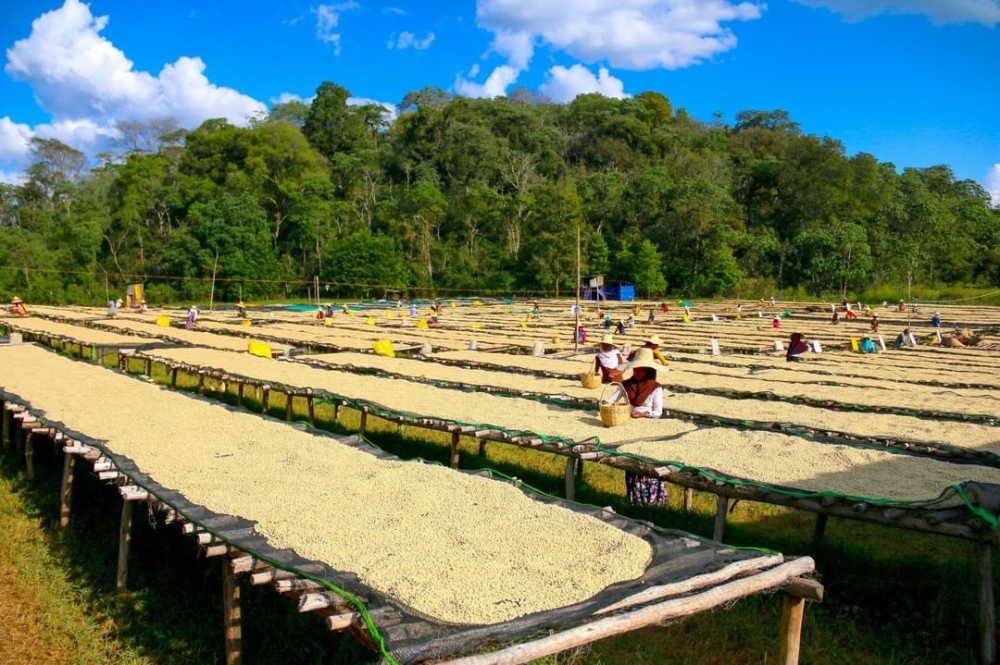
A brief explanation of the washed processing flow: after the coffee cherries are harvested, they first undergo flotation to remove defective fruits; then the qualified beans are mechanically depulped to remove the skin and pulp; afterward, the raw beans with some pulp and mucilage still attached are soaked in water to ferment, and after about 24 hours they are taken out and washed; once washing is complete, they can be sun-dried to reduce the bean moisture content to about 12%, and finally the parchment is removed, completing the washed processing.
Washed processing gives Front Street Gotiti extremely high cleanliness, a more prominent flavor, and increasingly distinct characteristics, with low yet bright acidity and a clarity and smoothness like oolong tea, making it very suitable for friends who do not like bitterness.
The above content is compiled by CoffeeHunters, a coffee news website.


