







Geisha is hailed by many coffee lovers as the "ceiling of the coffee world." With its elegant white floral notes and bright orange-blossom honey sweetness, it has repeatedly taken top honors in competitions, and its price has climbed year after year. In this article, Front Street Coffee will take you back through Geisha's legendary journey from the Kaffa forests of Ethiopia to Hacienda La Esmeralda in Panama, explain why its yields are so scarce and its flavor so unique, and detail the differences between the Red Label and Green Label grades. Front Street will also share the brewing parameters and techniques for Esmeralda Geisha, so you can experience that captivating flavor like a cup of floral-fruity tea right at home.
For more specialty coffee knowledge, please follow our WeChat official account: Front Street Coffee (FrontStreet Coffee)
Geisha is an extremely precious coffee variety, with elegant white floral notes and bright orange-blossom honey sweetness. Its outstanding flavor performance has kept it dominant in coffee competitions, and its price has risen year after year, which is why Geisha is always described as the "ceiling of the coffee world." In this article, Front Street will walk you through Geisha's history and the source of its charm.
In 1931, Geisha was first collected in the wild Kaffa forests of southern Ethiopia, at the time as part of a search for new disease-resistant varieties, and it was named after the nearby Geisha Mountain. It was later sent to research stations in Kenya, Uganda, Tanzania, and elsewhere for trial planting. In 1953, Geisha arrived at CATIE, the Tropical Agricultural Research and Higher Education Center in Costa Rica, and was recorded as T2722. There are planting records at several local farms; however, Geisha's branches are fragile and its yields are low, so it was not favored by farmers and was not widely planted.
Starting in the 1960s, CATIE distributed T2722 Geisha to coffee farmers in Panama, and Geisha truly began to set foot in this promised land. In the 1990s, the Peterson family, owners of Hacienda La Esmeralda, began to focus on coffee production and bought a new high-altitude farm, Jaramillo. Many coffee trees on the farm had leaf rust, but Daniel Peterson noticed that the Geisha trees were not seriously affected, so they decided to transplant the Geisha that had originally been interplanted with other varieties to more areas of the farm, while also raising its growing altitude.
In 2003, the Peterson family finally discovered Geisha's potential. When they cupped it for the first time, it showed a remarkably intense white flower aroma, an extremely clean mouthfeel, and a finish reminiscent of berries, citrus, and bergamot, forming what is now the very typical Panama Geisha flavor profile. Astonished, they decided to enter it in the 2004 BOP (Best of Panama) competition and named it "Geisha." Therefore, today's astonishing Panama Geisha coffee is the T2722 variety from back then.
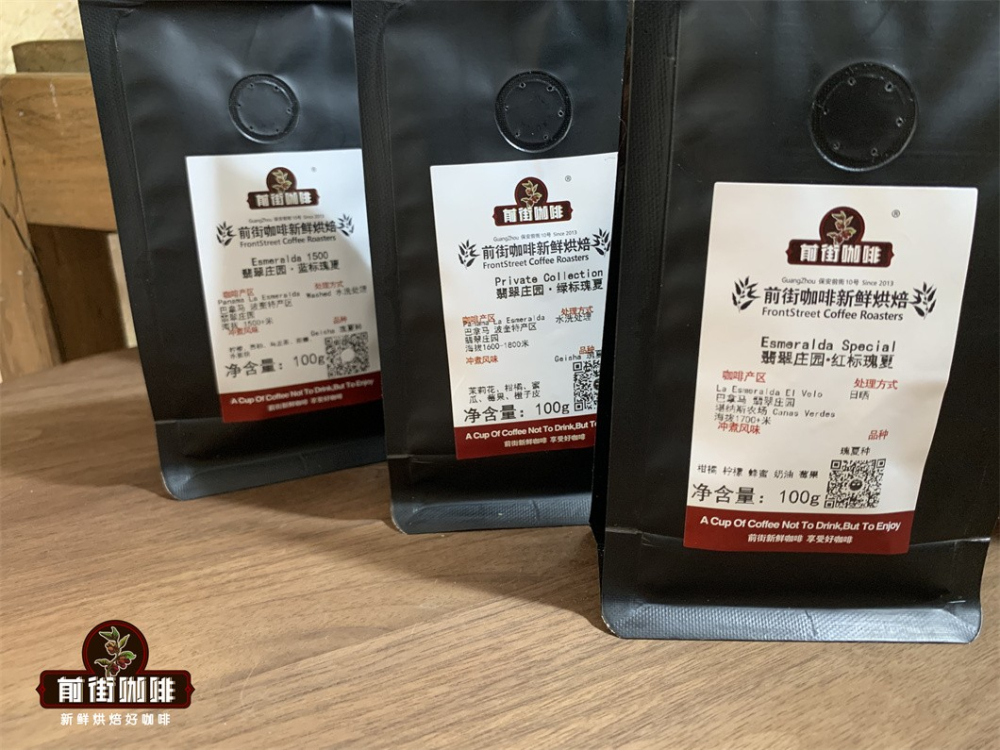
What makes Geisha so beloved by coffee people is that, unlike the traditionally imagined strong black coffee, it is more like a fresh cup of floral-fruity tea. With rich fragrance and complex fruit flavors, it brings to mind a whole series of unusual aromas. At different temperatures, you can perceive a delicate texture and sweet-tart fruitiness filling the entire mouth. Geisha's extraordinary flavor characteristics are enough to make it the "ceiling" in the eyes of many coffee people. And what earned Geisha such great popularity is Geisha coffee's "talent scout"—Hacienda La Esmeralda in Panama. Front Street's bean list always keeps two popular Esmeralda offerings, "Red Label" and "Green Label," so everyone can enjoy the "ceiling" of specialty coffee in daily life.
Guests who come to Front Street and try Esmeralda Geisha coffee for the first time often ask, "Why is Esmeralda's Geisha so expensive?" As Front Street has mentioned in many articles, coffee is an agricultural product, and its flavor expression is always closely tied to factors such as variety, climate, altitude, soil, and management. The taste of coffee is a natural, authentic reflection of the variety and local terroir, and post-harvest processing and roasting should aim to preserve, restore, and present the bean's truest flavor to the greatest extent possible. The excellence of Esmeralda's Geisha would not be possible without the combination of all the above factors.
Compared with other Arabica varieties, Geisha not only has low fruit yields, but the plant is also especially fragile and quite picky about its growing environment. It needs high altitude, fertile soil, and cloud cover or shade from other plants; it cannot be directly exposed to the sun. The leaf surface system of the Geisha coffee tree is very thin, meaning the efficiency of photosynthesis is very low, and the root system is also very fragile, so the absorption of water and nutrients is very slow. As a result, coffee yields are very small, and combined with the high-altitude growing environment, the fruit also ripens relatively late. A single Geisha coffee tree produces only half the fruit of a Caturra variety, which is one of the reasons Geisha is so valuable.
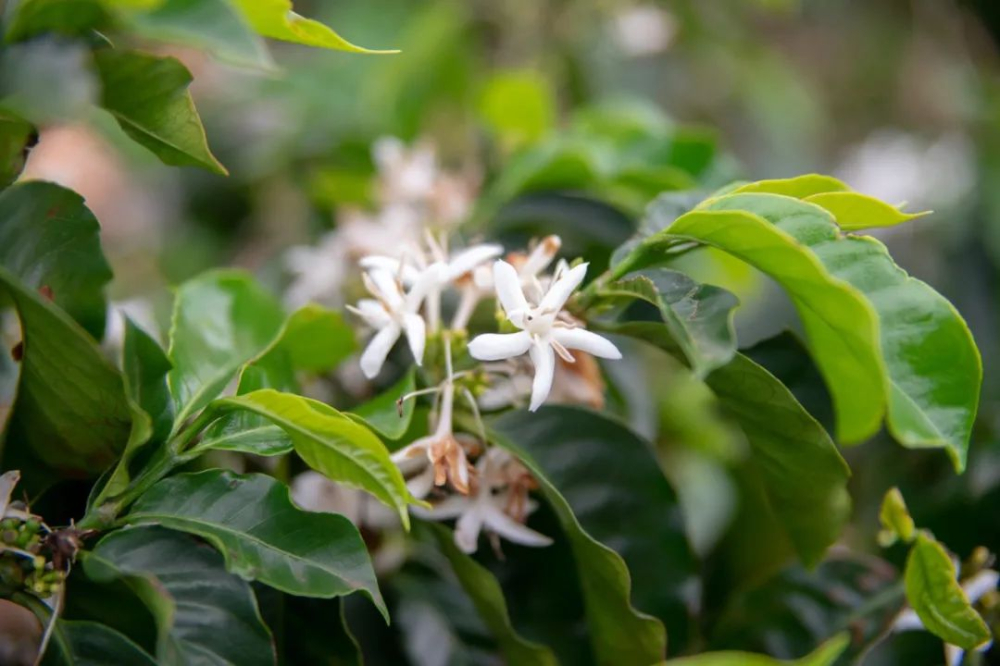
As the saying goes, rare things are precious. Geisha coffee's output is extremely scarce. Panama's annual coffee production is about 10,000 tons, while the famous Hacienda La Esmeralda produces only 150 bags of green beans each year, about 9,000 kilograms. Calculating on the basis that Geisha accounts for only 3% of production, that is only 270 kilograms. Add to that the publicity and hype about Geisha's flavor across various media, and everyone's enthusiasm for Geisha only keeps growing, so Geisha coffee's price naturally remains high.
Come to Front Street. If it's your first time drinking Geisha, the baristas at Front Street Coffee (FrontStreet Coffee) will recommend Esmeralda's naturally processed Red Label or washed Green Label to you. The so-called Red Label is the Esmeralda Special grade (including auction lots), while Green Label refers to the Private Collection grade.
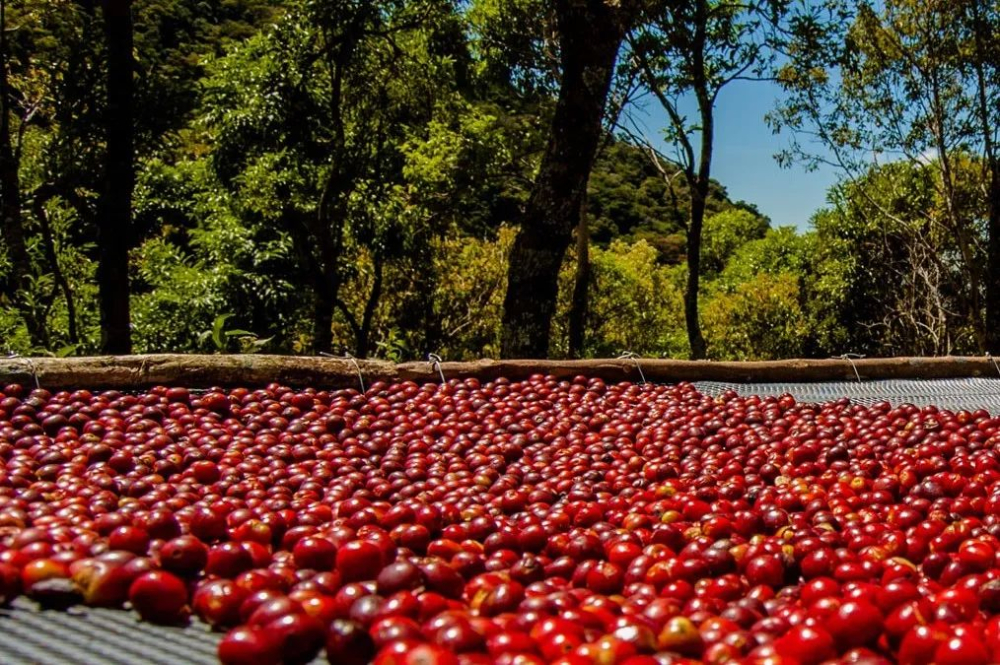
The highest-grade Red Label is picked from coffee cherries of high-altitude Geisha (1,600–1,800 meters), scores over 90 points in cupping, and mainly comes from the two farms Jaramillo and Cañas Verdes. Although the altitude brings challenges in cultivation and harvest, the floral and fruity charm of Geisha is most prominent in the Boquete production area. Hacienda La Esmeralda holds an independent auction event; among the divided plots, the Red Label lots put forward for competition are called auction lots. Auction lots have a unique number, and each number corresponds to an entire lot from one plot. The one we hear about most often is probably the Mario plot of Jaramillo farm. The Esmeralda Red Label Geisha coffee beans Front Street offers come from the Mario plot and are naturally processed.
In addition, Front Street offers a washed Green Label Geisha, whose cupping performance shows fresher, more natural flavors of lemon, berries, pomelo, and Tieguanyin tea. Green Label is selected from micro-lots grown at 1,600–1,800 meters and sourced from Jaramillo, Cañas Verdes, and other areas without distinguishing specific plots. Green Label does not participate in the auction. Although its grade is not as high as Red Label, it mainly showcases the signature classic flavor of high-altitude Geisha.
As Front Street mentioned above, Geisha's flavor belongs to the floral-and-fruity-acidity type, so the roast level is generally not too dark. In order to preserve more elegant acidity, Front Street chooses a medium-light roast. The coffee beans are relatively hard and require hotter water to release more aroma, and the grind also needs to be finer. Paired with a Hario V60 dripper and a multi-pour pouring technique, Geisha's flavor layers become even more pronounced.
Dripper: V60
Water temperature: 91–92°C
Dose: 15g
Coffee-to-water ratio: 1:16
Total poured water: 240g
Grind size: fine granulated sugar size (80% passing through a No. 20 sieve)
Three-stage extraction: First, pour 15 grams of ground coffee into the dripper and tare the scale. For the first stage, pour 30g of water to bloom for 30 seconds, and start the timer at the same time. Throughout, pour with a small stream from the center point and then spiral outward, making sure to wet the entire coffee bed.
For the second stage, use a slightly larger stream to pour 120g of water, with the aim of raising the entire coffee bed. The stream should be poured vertically and evenly. At this point the timer scale shows 150g, and the pour is finished in about 55 seconds.
When the liquid level drops to the halfway point, begin the third stage, pouring 90 grams with a small stream in a small spiral. Try to keep the stream from circling too widely, as it can easily disturb the coffee bed and cause under-extraction. The final total poured water is 240 grams, and the drip finishes in about 2 minutes 10 seconds. After removing the dripper, swirl the coffee in the server to even it out, and it is ready to taste.
After grinding Red Label Geisha, you can already smell an intense rose aroma. On the palate there is mango and tropical fruit, and the mouthfeel is smooth like cream—not at all like drinking a cup of coffee, but more like a cup of floral-fruity tea. Green Label Geisha's flavor is clearer, with jasmine aroma, the sweet-tart taste of berries and lemon, and a long-lasting green tea finish.
The above content is compiled by CoffeeHunters, a coffee news website.


