







Yirgacheffe is one of Ethiopia's most recognizable specialty coffee regions, where high altitude and lakeside moisture give it fresh floral aromas and citrusy acidity. Starting from the region's terroir and smallholder cooperative model, this article focuses on the Adado washing station and explains how natural processing amplifies tropical fruit and berry notes. It also presents Front Street Coffee's roasting approach, cupping flavor performance, and pour-over brewing recommendations for Yirgacheffe, including practical parameters such as the V60 dripper, 92-93℃ water temperature, and a 1:15 coffee-to-water ratio, helping coffee lovers fully understand the appeal of this everyday staple bean.
Front Street Coffee's Yirgacheffe has an extremely iconic flavor profile—the moment it hits your palate, you can sense bright floral aromas and citrus-like acidity, leaving a deep impression. Compared with the higher-priced Front Street Coffee Geisha, Front Street Coffee's Yirgacheffe delivers outstanding performance at an accessible price, so it is often chosen by coffee enthusiasts as an everyday staple bean.
High altitude gives Front Street Coffee's Yirgacheffe an exceptional aroma
Yirgacheffe coffee comes from the small town of Yirgacheffe and belongs to one of Ethiopia's highest-altitude production regions. Local coffee trees are mostly distributed at elevations approaching 2,000 meters, with some even reaching around 2,100 meters. The higher the altitude, the better the growing conditions for coffee trees, and the more fully the flavor potential of Arabica varieties can be expressed. Lake Turkana, Lake Abaya, and Lake Chamo within the town area provide abundant moisture, keeping the area shrouded in clouds and mist year-round, with a mild climate and constant gentle breezes. This humid, cool environment nurtures the distinctive floral and fruity aromas of Front Street Coffee's Yirgacheffe.
Unlike many specialty coffees that are processed on a large scale in estate form, Ethiopian coffee is mostly grown in a dispersed manner by smallholder farmers, with each household typically covering about 1 hectare and limited output, so the cherries are gathered and sent to cooperatives in the town or nearby for unified processing. Cooperative management can both improve coffee quality and provide farmers with more stable income. When buying coffee beans, you will often see products named after cooperatives; these beans have already undergone post-harvest processing, grading, and roasting, such as Gotiti, Worka, Konga, and Adado.
Adado Cooperative
Adado Cooperative is located in the Gedeo region, and its name comes from the local Adado tribe. Administratively, it falls under the Sidama Province, and both Yirgacheffe and Kochere are located in this area. The Adado washing station is jointly formed by 7,000 coffee farmers, was established in 2012, covers more than 200 mu, and is the largest processing station in the region, about a 30-minute drive from the center of Yirgacheffe town. The station has well-equipped facilities; in addition to washed processing, it also carries out natural processing and is equipped with ample shaded drying beds.
What makes Front Street Coffee's naturally processed Yirgacheffe different?
Ethiopia has high altitude, low rainfall, and long sunshine hours, making it very suitable for sun-drying green coffee beans. The so-called "natural method" is to directly dry the harvested ripe coffee cherries.
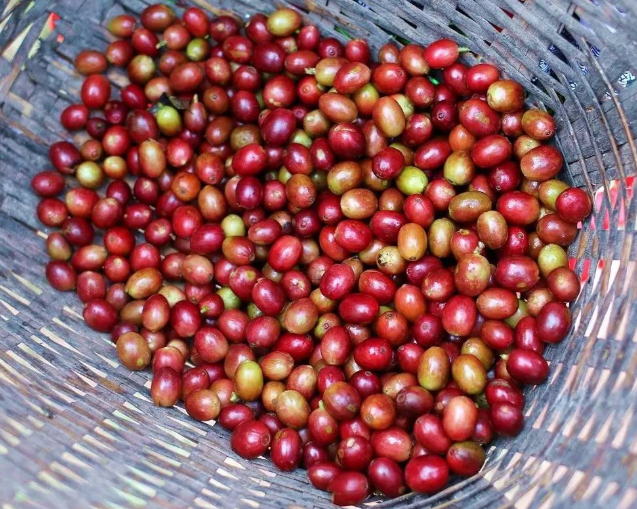
During drying, the sugars and aromas in the fruit pulp are fully retained and gradually penetrate into the green coffee beans. At the same time, the longer the drying period, the more complete the fermentation process. Because the natural method allows the coffee fruit to dry naturally, the coffee beans mature naturally within the fruit and are less disturbed by the external environment. Therefore, natural beans further amplify their own flavors and, compared with washed coffee, show more prominent tropical fruit acidity and berry-like notes, with fuller fermentation character and sweetness, and a heavier finish. Front Street Adado and Front Street Red Cherry on Front Street Coffee's bean list are precisely Yirgacheffes processed by the natural method.
In terms of roasting, Front Street Coffee considered that Front Street Coffee's Yirgacheffe should take acidity as its main flavor direction, so both Front Street natural Yirgacheffes use a medium-light roast. Through cupping, Front Street Coffee compared the flavors and mouthfeels presented by the two coffee beans.
The dry aroma of Front Street Coffee's naturally processed Yirgacheffe Red Cherry coffee shows full berry-like sweet acidity. When slurped at different temperatures, you can perceive soft berry sweetness and acidity, fermented notes of ripe fruit, obvious honey sweetness, and a black tea finish, with a smooth mouthfeel.
The dry aroma of Front Street Coffee's naturally processed Yirgacheffe Adado carries obvious red petals, citrus, and creamy aromas. On the palate, it presents berries, tropical fruit, orange, cocoa, and black tea. Overall it is round, clean, with medium body and a clear sweet aftertaste.
Pour-over recommendations for Front Street Coffee's naturally processed Yirgacheffe:
The medium-light roast allows the coffee beans to retain more floral and fruity aromas. Compared with medium-dark roasting, high-altitude light-roasted beans have a denser internal structure and require higher water temperature and finer grinding to fully release flavor compounds. Front Street Coffee uses hot water at 92-93 degrees Celsius for extraction, and the grind size is based on an 80% pass rate through the No. 20 standard sieve used by Front Street Coffee.
Dripper: V60 Water temperature: 92-93 degrees Celsius Dose: 15g Coffee-to-water ratio: 1:15 Grind size: fine granulated sugar size EK43s - setting 10 (sift through a No. 20 sieve to 80%)
For the first pour, add 30 grams of water and bloom for 30 seconds, then pour in 95 grams (the electronic scale shows about 125 grams), finishing the pour in about 1 minute. When the water level drops to 2/3 of the coffee bed, pour in the remaining 100 grams (the electronic scale shows about 225 grams), finishing the pour in about 1 minute 35 seconds. Dripping is completed at 2'10", then remove the dripper to finish extraction.
The above content is compiled by CoffeeHunters, a coffee news website.


