







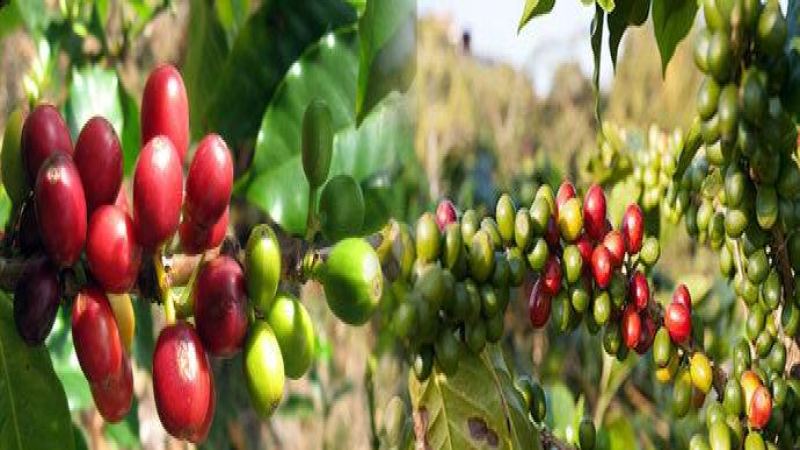
Mandheling is the most iconic coffee of Sumatra, Indonesia, and behind its name lies a misunderstanding from World War II. It is roasted on the darker side, carrying spicy and herbal notes, with a thick, bitter, full-bodied taste—some people can't get enough of it, while others find it hard to adjust to. What exactly creates this distinctive flavor? This article sorts through the origin of the name Mandheling, the terroir of its producing regions, its varietal composition, and its wet-hulling process, introduces Front Street PWN Golden Mandheling and Lintong Mandheling as everyday bean options, and finishes with a moka pot brewing demonstration.
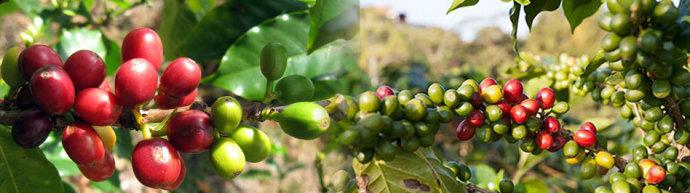
\n\nHow did Mandheling coffee\nget its name\n\nLooking across the single-origin coffees on the market, most names come from the producing region, estate, variety, or green bean trader, but the origin of "Mandheling" is rather unusual—behind it is a story born of a misunderstanding.\n\nDuring World War II, Japanese troops entered the Indonesian island of Sumatra, and Japanese soldiers were a common sight locally. It is said that a Japanese soldier walked into a small eatery to drink coffee, was struck by its mellow, rich taste, and asked the proprietor what coffee this was. The proprietor mistakenly thought the man was asking where he was from, and casually answered "the Mandailing people." After the war ended, this Japanese soldier recalled the coffee he had drunk in Indonesia, remembering only that it was called "Mandheling," so he asked someone to ship a batch of beans from Sumatra back to Japan, and unexpectedly it became hugely popular.\nThe name Mandheling coffee\nspread in this way.\n\n
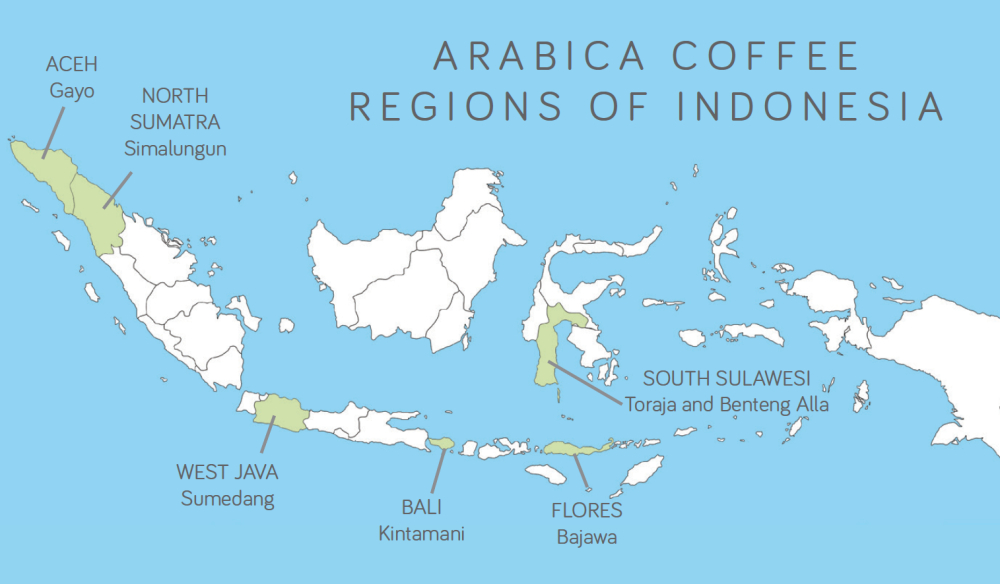
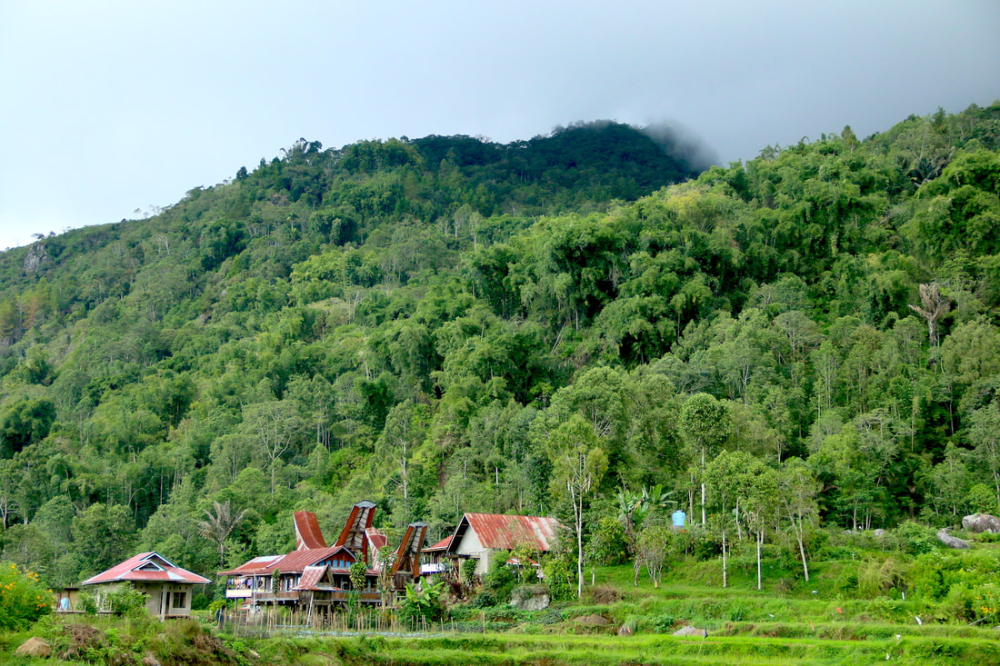
\n\nWhat are the characteristics of Mandheling coffee\n\nCustomers who have visited Front Street's stores and ordered\nMandheling coffee\nprobably remember that this bean is roasted on the darker side, giving off a distinctive spicy and herbal aroma, with a thick bitterness on the palate—some can't get used to it, while others happen to love exactly this taste. Next, Front Street will explain what makes\nMandheling coffee\ndisplay such a character.\n\nWhat is usually called Mandheling coffee refers to Arabica beans produced in the mountains around Lake Toba on the island of Sumatra. Sumatra is Indonesia's largest island, with a tropical rainforest climate, hot and humid year-round, and coffee trees are mostly planted among the mountain forests. Among these, the coffee produced in the Gayo mountain area of the Aceh region can be called the finest representative of the entire Sumatra region, mostly made up of old tree varieties. Front Street's\nFront Street PWN Golden Mandheling coffee beans\ncome precisely from the Gayo mountain range in Aceh.\n\n
\n\nSumatra has the fertile volcanic soil shared by many well-known producing regions, and the soil is rich in minerals, which helps the coffee fruit accumulate more nutrients and aroma. Local farmers habitually plant coffee trees in mid-elevation areas, roughly between 600 and 1,200 meters. The relatively low elevation, combined with the tropical rainforest climate conditions, means the fruit's ripening cycle is shorter, making it hard to develop rich acidity, so the coffee here displays more herbal and spicy notes.\n\nNear Lake Toba in northern Sumatra there is a mountainous area called the Lintong highlands, and the Mandheling coffee beans produced there are relatively large and hard in texture; because there are many defects, roasters need to go through strict selection during processing. Lintong Mandheling green beans are often unsorted, commonly varying in size, and the taste is more intense.\n\n
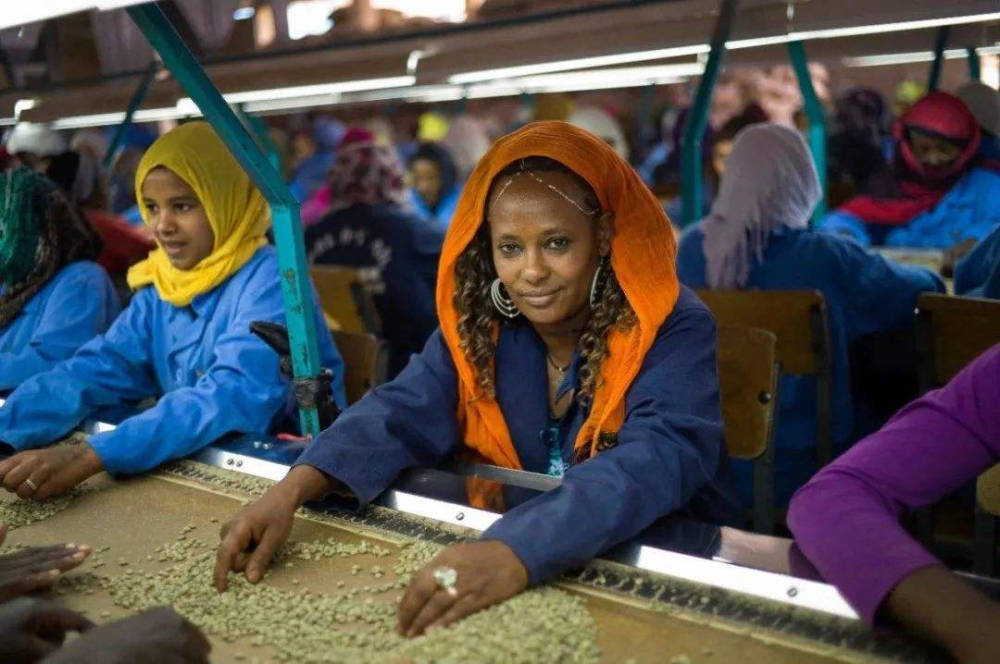
\n\nFront Street PWN Golden Mandheling coffee beans\n\nOn the Indonesian side, green beans are graded according to the number of defects and bean size, with the highest grade being G1, meaning fewer than 3 defective beans in a 300-gram sample, with green bean specifications of screen size 18 and above.\n\nFrom the Mandheling story mentioned earlier, it can be seen that the Japanese were especially fond of Mandheling coffee and hoped to drink higher-quality lots, so when cooperating with Indonesian green bean traders they established strict screening standards; the processed green beans must undergo density and color sorting and four rounds of hand picking, ensuring the Mandheling coffee beans are uniform in color, shape, and size. This kind of Mandheling tastes cleaner and more transparent on the palate, with more prominent body and sweetness.\n\n
\n\nIndonesia's PWN company saw this business opportunity early on and was the first to register the "Golden Mandheling" trademark; that is to say, only Golden Mandheling produced by PWN counts as true "Golden Mandheling." PWN places considerable importance on the quality of Mandheling coffee and has taken in almost all of Sumatra's high-quality Mandheling coffee lots; the beans it purchases, on top of Indonesia's highest green bean grade\nG1, are\nfurther subjected to strict hand sorting, and the final output of specialty Golden Mandheling is limited in quantity. Imitation "Golden Mandheling" coffees often appear on the market; the Golden Mandheling green beans Front Street obtains come with\na certification certificate provided by\nPWN, and the burlap sacks of Front Street PWN Golden Mandheling green beans also clearly bear the PWN company logo.\n\n
\n\nWhat variety does Mandheling coffee belong to\n\nBecause of the local naming habits of Indonesians, the names of Mandheling's coffee varieties often feel unfamiliar, but in fact it is merely a different label.\n\nTim Tim\n\nThe leaf rust crisis of 1877 dealt a heavy blow to Indonesia's coffee industry, and the Indonesian government began introducing various disease-resistant varieties from elsewhere, including Robusta, Timor, Catimor, and the Indian variety Jember.\n\nThe variety formed by the natural cross between the Arabica variety Typica and Robusta on the island of Timor is Timor. It inherited Robusta's high yield and disease resistance, began to be widely planted in the 1950s, and after being introduced to Indonesia was called Timor Timur, also known as Tim Tim.\n\n
\n\nThe Ateng\nseries\n\nBesides Tim Tim, Sumatra also has a common local variety, Ateng, which is what we commonly call Catimor; because it was discovered in the central Aceh region of Aceh Tengah, it was named after the place. Ateng is a hybrid descendant of the Arabica Bourbon variant Caturra and Timor, has several subtypes, carries one-quarter Robusta blood, has extremely strong disease resistance, and is widely planted in Sumatra and other Indonesian small islands. The Golden Mandheling coffee of Front Street uses the Ateng variety.\n\nWet-hulled Mandheling coffee\n\nMandheling's low acidity and full body are inseparable from the region's most distinctive wet-hulling method.\n\nSumatra's weather is changeable, with frequent typhoons, so it does not have the sun-drying processing conditions of African countries; moreover, local growers are unwilling to invest too much cost in green bean processing, and washed processing is also hard to maintain. To balance efficiency and low cost, the locals adapted to local conditions and invented the wet-hulling method.\n\n
\n\nAfter the coffee fruit is picked, the skin and pulp are first removed by machine, then it is placed in a pool to ferment for three hours; the green beans still retaining parchment are sun-dried for 2 to 3 days, and when the moisture content drops to 20-24%, the parchment is removed. At this point the coffee beans are still relatively soft and will be pressed slightly out of shape, which is why the Mandheling green beans we see have a goat-hoof shape. Finally they are placed indoors under constant temperature and humidity to dry, and once the moisture content drops to 12-13% they can be bagged and stored.\n\nThe wet-hulling method takes much less drying time than the sun-dried and washed methods, and costs less than washed processing. During the wet-hulling process,\nfermentation time is very short while drying time is longer, thus forming a low-acidity flavor.\n\nHow to drink Mandheling coffee\n\nCurrently Front Street's two best-selling Mandheling coffees are the Lintong Mandheling everyday beans and the specialty Front Street PWN Golden Mandheling coffee beans.\n\n
\n\nIf you are a coffee enthusiast just starting out and want to get to know each classic producing region from the basics, Front Street suggests starting with our everyday bean series. Front Street has selected the coffees most representative of each major producing region's original flavor, listed in 100-gram small packages, hoping that coffee lovers can taste the basic flavor of each producing region at high value for money. One of the 7 everyday beans, Lintong Mandheling coffee beans, is precisely the face of Indonesian coffee, with its unique wet-hulling method bringing a full-bodied, intense spicy flavor.\n\n
\n\nFrontStreet Coffee: Indonesia Lintong Mandheling coffee beans\n\nProducing region: Sumatra, Indonesia\n\nGrade: G1\n\nAltitude: 1100m—1600m\n\nVariety: Ateng TimTim\n\nProcessing method: Wet-hulled\n\nFlavor: Nuts, spices, chocolate, caramel\n\nAnd if you pursue a purer herbal and spicy flavor in Mandheling, hoping to drink a clean yet rich Mandheling taste, Front Street believes Front Street PWN Golden Mandheling is most suitable.\n\n
\n\nFrontStreet Coffee: Front Street PWN Golden Mandheling coffee beans\n\nProducing region: Sumatra, Indonesia\n\nGrade: G1, three times hand-picked\n\nAltitude: 1100m—1600m\n\nVariety: Ateng\n\nProcessing method: Wet-hulled\n\nFlavor: Nuts, spices, herbs, caramel\n\nThe flavor of Mandheling coffee has a nutty, chocolate, and spicy profile, and Front Street's roaster chooses a dark roast to present this coffee's deep taste. In terms of extraction, FrontStreet Coffee's baristas have a variety of brewing methods, among which the moka pot is favored by many home coffee enthusiasts for being\nrich, solid, full-bodied, and convenient. Below, Front Street will use the store's standard\nFront Street PWN Golden Mandheling coffee beans as an example to demonstrate how to make a delicious cup of moka pot coffee\n.\n\nFrontStreet Coffee moka pot usage suggestions:\n\n1. First, grind 20g of coffee beans into powder.\n\n
\n\n2. Separate the moka pot's upper and lower chambers, pour water into the lower chamber, and make sure the water level does not exceed the lower chamber's pressure release valve.\n\n
\n\n3. Place the coffee powder into the metal filter screen (filter basket), and use a measuring spoon to gently tap and compact the coffee powder a little (gently, do not press hard).\n\n
\n\n4. Fit the filter basket onto the lower chamber, then screw the upper chamber on tightly. (Be sure to screw it on tightly, and confirm that the upper and lower chambers are truly connected together.)\n\n
\n\n5. With the lid open, heat over a direct flame, controlling the heat so that the flame does not extend beyond the bottom of the pot. (Because it may boil over and overflow, it is recommended to do this with the lid open until you have mastered the knack. If the gaps in the gas stove's grate are too wide and the moka pot cannot sit stably on top, please add a mesh and then heat over a direct flame.)\n\n
\n\n6. Once the hot water boils and begins extracting the coffee, turn off the heat. When extraction is complete, to avoid over-steeping, pour the coffee into a cup as soon as possible.\n\n
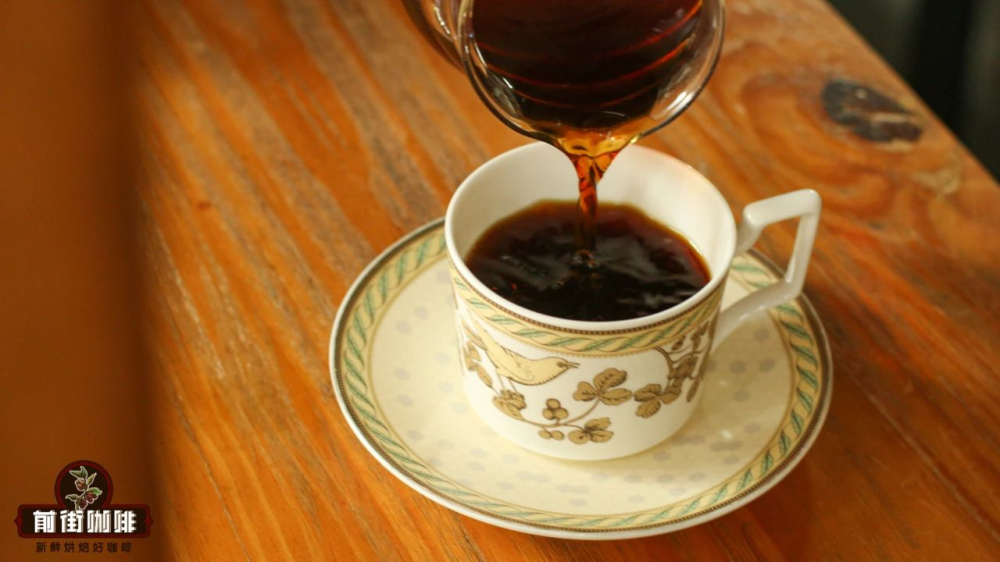
\n\n7. Finally, you can blend a delicious cup of moka pot coffee. If you usually like a refreshing taste, you can add 150ml of warm water and stir before drinking; if you like the sweetness of milk, Front Street suggests adding 150ml of fresh milk and enjoying it together, for a very full-bodied taste.\n\nFor professional coffee knowledge exchange and more coffee bean information, please follow Coffee Workshop (WeChat public account cafe_style)\n\nFor more specialty coffee beans, please add the personal WeChat of FrontStreet Coffee, WeChat ID:\nqjcoffeex
The above content is compiled by CoffeeHunters, a coffee news website.


