







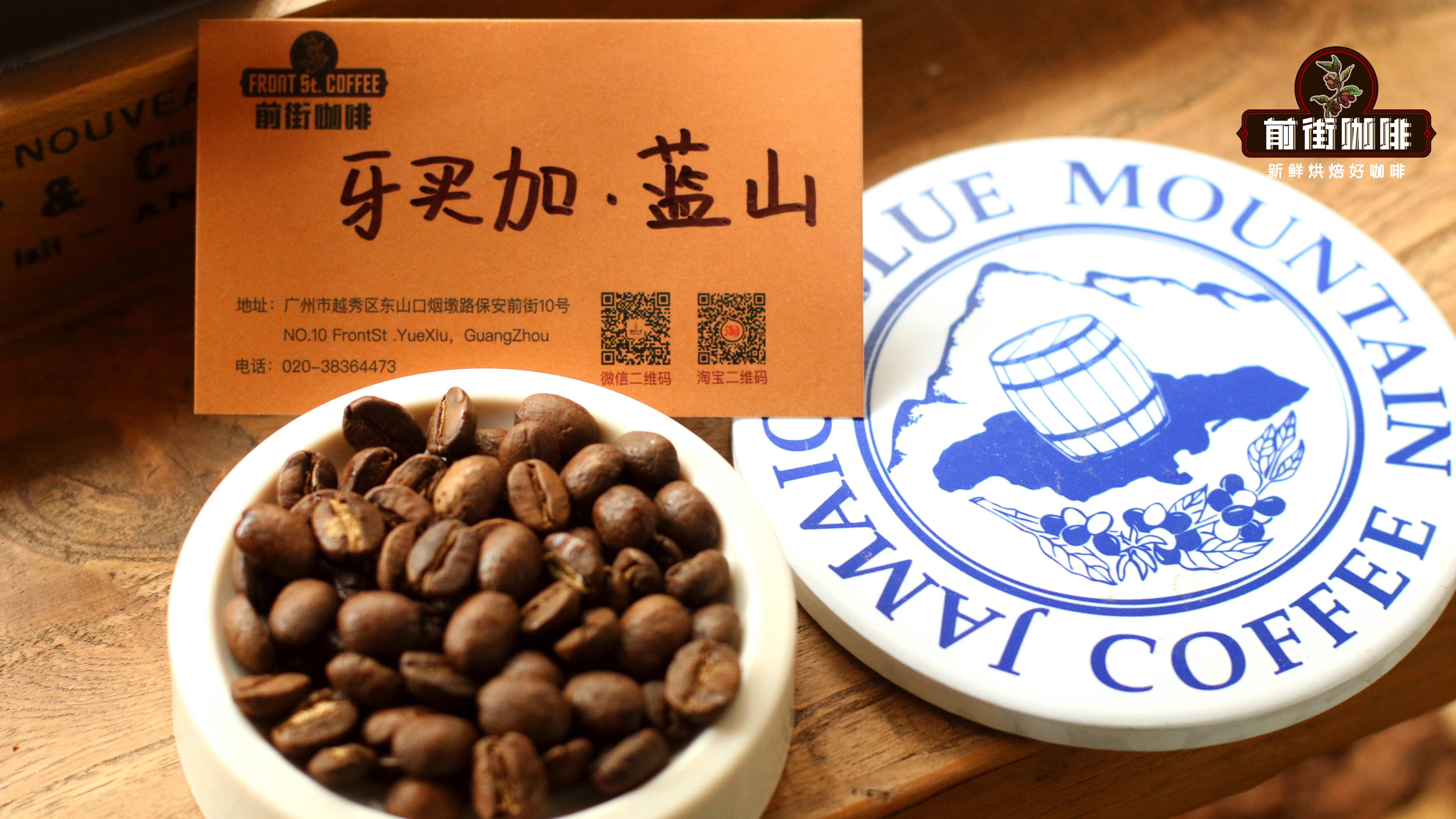
As specialty coffee becomes part of everyday life, more and more enthusiasts are no longer satisfied with simply ordering at a café—they want to brew a great cup of coffee at home with their own hands. Blue Mountain coffee is famous for its rich body and balanced flavor, but to truly show its strength, you need to make the right choices regarding water temperature, grind size, coffee-to-water ratio, and pouring technique. Drawing on the practical experience of Front Street Coffee, this article introduces the origin background, variety, and processing methods of Jamaican Blue Mountain coffee, and provides specific pour-over parameters for medium-dark roasted Blue Mountain No. 1: 88°C water temperature, 1:15 coffee-to-water ratio, 15g dose, 75% pass rate through a No. 20 sieve, and a three-stage pouring process after a 30-second bloom, helping readers consistently reproduce its nutty, cocoa, and creamy smooth flavors.
\n\nTo learn more about specialty coffee, follow our WeChat official account: Front Street Coffee (FrontStreet Coffee).\n\nAs specialty coffee continues to gain popularity, the scenarios in which people drink coffee are no longer limited to cafés—more and more people are starting to try brewing at home themselves. The demands on single-origin beans have risen accordingly, and more people are turning their attention to specialty-grade coffee. Front Street has mentioned before that any coffee bean can be used for pour-over; the key is controlling time, water temperature, coffee-to-water ratio, and pouring technique properly, which gives you a chance at a delicious cup of coffee.\n\nSo today Front Street will talk about how to present Blue Mountain coffee—hailed as the most aromatic and smooth in the world—using the pour-over method. And what should be done to fairly completely bring out the flavors of Blue Mountain coffee?\n\n
\n\nFirst, let's get to know Blue Mountain coffee.\n\nThere are currently many products on the market labeled "Blue Mountain coffee," but not every one of them comes from the true Blue Mountain region. Only coffee grown in Jamaica's Blue Mountains can be called Jamaican Blue Mountain coffee.\n\n
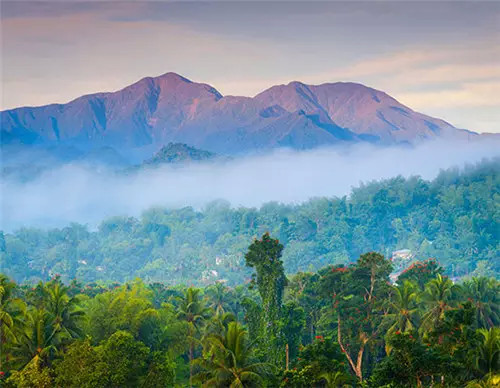
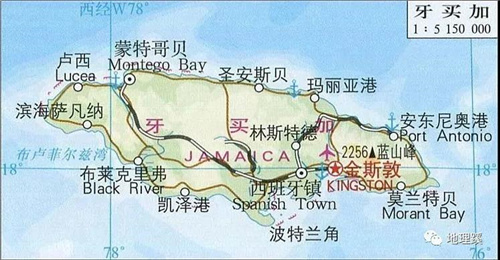
\n\nThe Blue Mountain region has only 6,000 hectares of cultivation area—not a large scale—so it's impossible for all coffees bearing the "Blue Mountain" name to come from here. Another 12,000 hectares of land are used to grow two other categories of coffee (non-Blue Mountain coffee): High Mountain Supreme and Jamaica Coffee. The highest elevation of the Blue Mountains reaches 2,256 meters; coffee is usually grown below 1,700 meters, and above that is an ecological reserve. It is precisely because of local environmental protection that the Blue Mountains are also a well-known tourist destination. Jamaica is located in the tropics, and coffee trees are distributed across the Blue Mountains; the Blue Mountains are located in the eastern part of the island of Jamaica, surrounded by the Caribbean Sea. On clear days, sunlight shines directly on the azure sea, and the peaks reflect a sea-like blue glow—hence the name Blue Mountain.\n\n
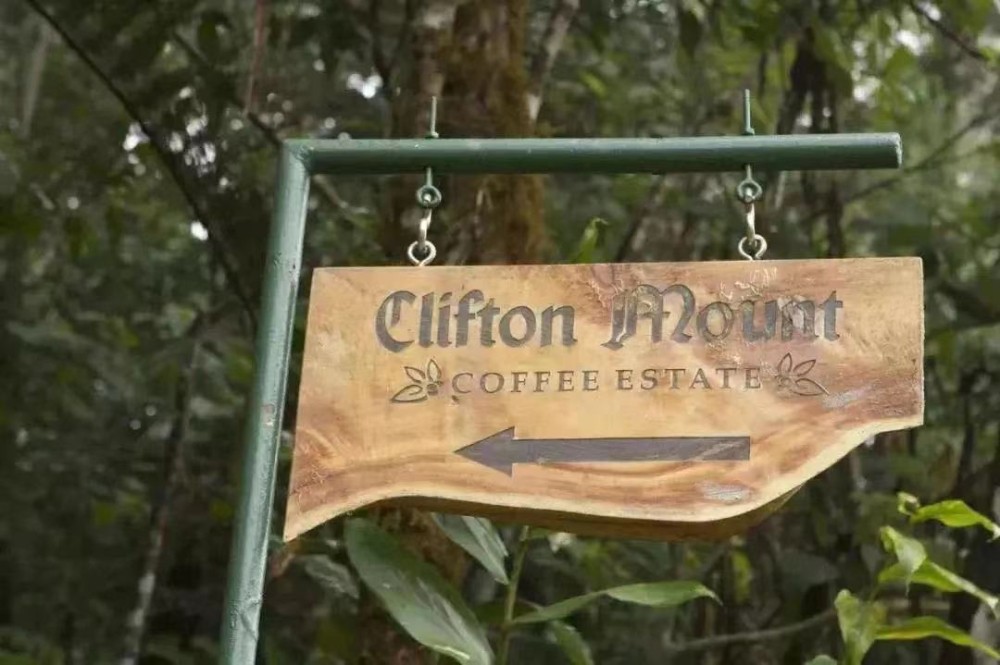
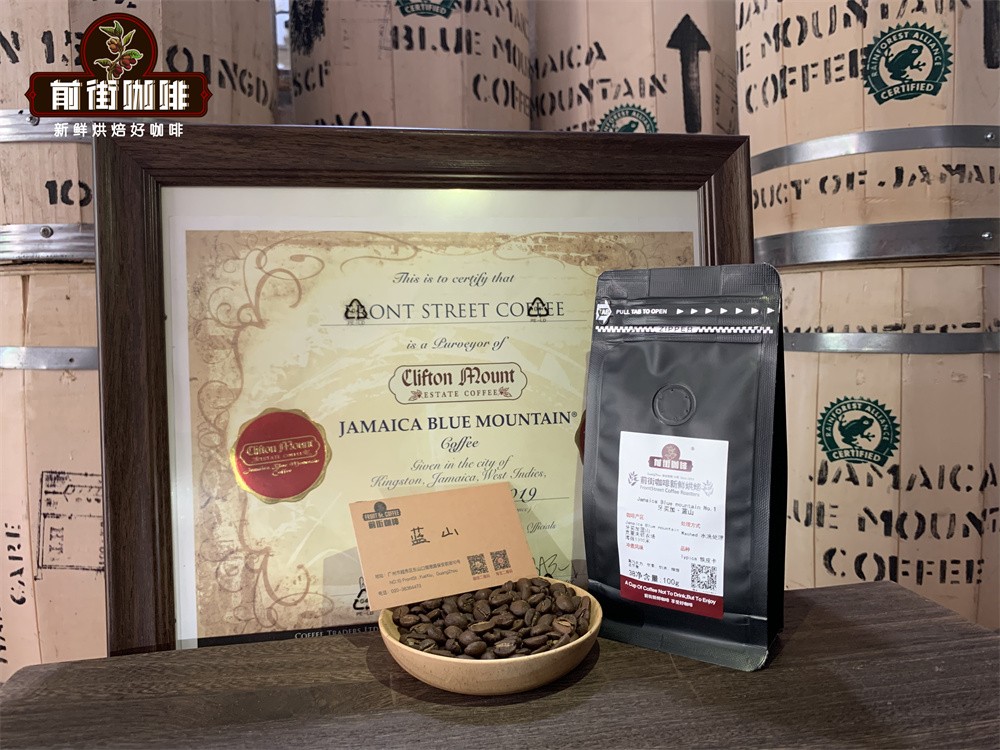
\n\nThe Jamaican Blue Mountain No. 1 coffee introduced by Front Street Coffee (FrontStreet Coffee) comes from Clifton Farm. Clifton Farm is the largest estate in the region, but by international standards it is still small-scale cultivation. Many estate owners locally are small landholders whose families have farmed this land for two centuries. After comparison, Front Street Coffee (FrontStreet Coffee) believes that Clifton Farm's Blue Mountain No. 1 performs quite outstandingly and can serve as one of the excellent representatives of Blue Mountain coffee.\n\nThe variety of Blue Mountain coffee\n\nA coffee's flavor expression cannot be separated from its variety. Blue Mountain coffee beans belong to the Typica variety, one of the oldest extant Arabica varieties. Typica has bronze-colored top leaves, oval or slender-pointed beans, a taller tree body, and slightly inclined branches at about 50–70 degrees. It has elegant flavor, but the plant is somewhat weak, has poor disease resistance, and very low yield per tree with few cherries. However, its flavor is excellent, with outstanding acidity and aroma.\n\n
\n\nThe processing methods of Blue Mountain coffee\n\nIn the early days, Blue Mountain coffee only used the washed processing method; later, sun-dried processed coffee beans also appeared. Front Street currently has both sun-dried and washed Blue Mountain coffee.\n\n
\n\nNowadays more and more people are passionate about exploring coffee's wonderful flavors, and their pursuit of coffee no longer stops at cafés—rather, they enjoy the pleasure of the brewing process more at home. Front Street wants to say that brewing a good cup of coffee still involves quite a few details. Pour-over seems simple, but just controlling flow rate, time, and water temperature requires extra attention. However, brewing pour-over at home is originally about enjoying life and the pleasure of coffee—there's no need to be as meticulous about parameters as a professional café. The key is simply being able to brew a delicious cup of coffee.\n\n
\n\nHow to properly brew Blue Mountain coffee beans as pour-over?\n\nFront Street Coffee (FrontStreet Coffee) believes that to brew a good pot of coffee, you mainly start from four aspects: water temperature, grind coarseness, coffee-to-water ratio, and brewing technique.\n\n1. Water temperature\n\nFront Street Coffee (FrontStreet Coffee) chooses different water temperatures depending on the roast level when doing pour-over. During roasting, the substances contained in coffee beans are lost as the roast deepens, so to avoid extracting too many off-flavors from dark-roasted beans, the water temperature is lowered. For medium-light roasted beans, Front Street Coffee (FrontStreet Coffee) recommends 90–91°C; for medium-dark roast, 88–89°C is recommended.\n\n
\n\nFor this Blue Mountain coffee bean, the flavor is known for its rich body and balanced performance, and Front Street Coffee (FrontStreet Coffee), in order to highlight Blue Mountain coffee's richness, uses a medium-dark roast to process it.\n\n2. Grind size\n\nCoffee grind size is also related to roast level. Grind size refers to the size of coffee particles, because particle size affects the contact time between coffee and water. The finer the coffee grounds, the more substances water can extract in the same amount of time, but grinding too fine easily leads to over-extraction; conversely, the coarser the grind, the fewer substances are extracted in the same amount of time, but under-extraction also easily occurs.\n\n
\n\nOn top of that, everyone has a different grinder, so the parameters will also differ. Here Front Street suggests buying a No. 20 cupping calibration sieve with a 0.85mm aperture. Take 10g of coffee beans, first adjust to a rough grind setting and grind into coffee powder, then pour it into the sieve and sift, and weigh the sifted coffee powder (be sure to sift until no more coffee powder can pass through).\n\nA pass rate of 70%–75% (7–7.5g sifted from 10g of powder) is the most suitable grind size. Regarding pour-over grind size: light roast is 80%, and medium-dark roast pour-over grind size is 75%. If it exceeds the appropriate sifting rate, adjust the grind coarser appropriately; if it doesn't reach the appropriate sifting rate, adjust the grind finer appropriately.\n\n3. Coffee-to-water ratio\n\nThis is the pour-over coffee water-to-coffee ratio extraction parameter and taste differences that Front Street Coffee (FrontStreet Coffee) derived based on the SCAA Golden Cup extraction theory.\n\n
\n\n【Bold taste】1:10–1:11, i.e., 1:12.5–1:13.5 under the Golden Cup standard\n【Moderate taste】1:12–1:13 (i.e., 1:14.5–1:15.5 under the Golden Cup standard)\n【Light and fresh】1:14–1:16 (i.e., 1:16.5–1:18.5 under the Golden Cup standard)\n\nWhen the ratio of coffee bean grams to brewing water volume is between 1:14.5 and 1:15.5, it is easiest to reach the golden range of 18%–22% Golden Cup extraction yield and 1.15%–1.35% concentration.\n\nSo, Front Street Coffee (FrontStreet Coffee) suggests that when brewing this Blue Mountain coffee bean, you might as well use the foolproof 1:15 coffee-to-water ratio.\n\n4. Brewing technique\n\nFinally, the pour-over technique is also very important. Common ones include the three-stage method, one-cut flow, and drip method, etc. Here Front Street Coffee (FrontStreetCoffee) suggests beginners use the three-stage pouring method to brew, because this technique is suitable for light-roasted, medium-light, and medium-dark roasted coffee beans. The staged extraction of three-stage pouring can clearly define the flavors of the coffee's front, middle, and back sections, and can relatively ensure the coffee's flavor presentation. Next, Front Street Coffee (FrontStreet Coffee) will teach everyone how to do three-stage pouring for pour-over coffee.\n\n
\n\nThree-stage brewing technique:\n(Front Street's three-stage brewing method for Blue Mountain coffee)\n\nFront Street believes that Blue Mountain coffee's quality flavors lie in balanced acidity, sweetness, and bitterness, high body, and full aroma. For roasting, Front Street chose medium-dark roast, which can highlight the coffee beans' nutty and cocoa aromas. Using a KONO dripper gives better body. Water temperature 88°C, coffee-to-water ratio 1:15, dose 15g, grind size (75% pass rate through China's No. 20 standard sieve).\n\nFirst pour: Bloom (helps degassing)\n\nFirst wet the KONO dripper, which allows the filter paper to fit the coffee dripper more closely. Pour out the water in the server, and at the same time add 15g of coffee powder, and bloom with 30g of water for 30s. Many coffee enthusiasts don't know why pour-over coffee needs blooming. Actually, blooming is because coffee beans undergo a series of chemical reactions and physical changes during the roasting process from green beans to roasted beans. After reaching a certain degree of roasting, a large amount of gas (mostly carbon dioxide) accumulates inside the coffee beans.\n\n
\n\nGenerally speaking, the fresher the beans and the closer to the roast date, the more bubbles usually appear during blooming. But in fact, dark-roasted beans generally release more gas during blooming than light-roasted beans, so if you pursue a "perfect dome," Front Street suggests choosing fresh dark-roasted coffee. Front Street deeply understands this principle, so it generally suggests customers rest the beans for three days first, letting the coffee beans release carbon dioxide first, which avoids problems of instability and under-extraction during brewing.\n\nAfter the bloom releases gas, the coffee particles can absorb water evenly, which allows later extraction to be more uniform. A good bloom can make the coffee powder quickly, fully, and evenly degas, and at the same time can also make the coffee powder fully and quickly contact water, helping the coffee powder be evenly extracted. These are precisely the purpose and significance of blooming in pour-over coffee.\n\nSecond pour\n\nAfter blooming for 30s, proceed to the second pour, starting with a small flow in a circular motion around the center until reaching 125g, then stop. To keep the water stream's penetrating force concentrated, the circular movement range should be small—about the size of a one-yuan coin—and then spiral outward. From the start of the second pour, pay attention to the water amount, and try not to exceed the height of the coffee bed; that is, when the water stream circles close to the filter paper, you can stop pouring.\n\n
\n\nThird pour\n\nWait until the coffee bed drops to half the height of the dripper, then begin the second stage using the same technique until 225g. Once all dripping is complete, remove the dripper.\n\nStarting from the third pour, observe the extent of the water level dropping. Similarly, start pouring in a circle from the center, and do not let the water amount exceed the height of the coffee bed. At this point you will also observe that the foam ratio has filled the surface. The third pour should increase the tumbling of coffee particles, letting all settled particles tumble so as to dissolve soluble substances.\n\n
\n\nThe rolling particles will begin to settle once watering stops. At this point, the flow rate caused by the dropping water level is what makes the coffee particles rub against each other. So once watering stops, the coffee particles sink downward, causing clogging, so pay special attention to the rhythm of pouring. If you pause too many times, it is equivalent to letting the coffee particles sit in water the whole time, which will cause the tail-end extraction to produce astringency and off-flavors.\nTime the extraction from the start of pouring; the extraction time is 2'00". Next, pick up the whole cup of coffee and shake it evenly, then pour it into a cup for tasting.\n\nThe above are the steps for Front Street Coffee (FrontStreet Coffee) to brew Jamaican Blue Mountain coffee beans.\n\nFront Street's coffee brewing suggestions:\n\nRegarding coffee brewing, Front Street has always believed that the freshness of coffee beans is a very important part. Fresh coffee beans let you experience coffee's rich flavors to the greatest extent. The coffee beans shipped by Front Street Coffee (FrontStreet Coffee) are all within 5 days of roasting time, because Front Street deeply understands that the freshness of coffee beans greatly affects flavor. Front Street's roasting philosophy is "freshly roasted good coffee," so that every customer who places an order receives the freshest coffee. The bean resting period is about 4–7 days, so when customers receive it, it is exactly at its best flavor.\n\n
\n\nOf course, some customers need Front Street to help grind the coffee, and that's fine too, but Front Street must remind you: once coffee beans are pre-ground, there is no need to rest the beans anymore, because during transport, the pressure generated by carbon dioxide inside the package can also make the coffee flavor rounder, so you can brew a cup immediately upon receiving the ground coffee. But ground coffee needs to be brewed promptly, because after contact with air it oxidizes relatively quickly—that is, the coffee's flavor dissipates relatively quickly and the coffee won't taste as good. So Front Street suggests buying whole beans and grinding fresh right before brewing, so you can better taste the coffee's flavor.\n\n
\n\n【Front Street Sun-Dried Blue Mountain Coffee】\nSlight berry acidity, reminiscent of smoked plum and mulberry; overall balance is good, with rich dark chocolate and nutty flavors and a slight fermented note.\n\n【Front Street Washed Blue Mountain Coffee】\nRich dark chocolate and nutty flavors, creamy smooth body, balanced acidity, sweetness, and bitterness.\n\nFront Street believes that if you want to brew a delicious cup of coffee, you need to practice more! Front Street has many economical and affordable everyday beans for everyone to practice with! These seven everyday beans also represent the most iconic coffee flavors of their respective producing countries! Of course, there are also more than fifty kinds of single-origin coffee beans from different producing countries for everyone to choose from!\n\nFor professional coffee knowledge exchange and more coffee bean information, please follow Coffee Workshop (WeChat official account: cafe_style).\n\nFor more specialty coffee beans, please add the private WeChat of Front Street Coffee (FrontStreet Coffee), WeChat ID: qjcoffeex.
The above content is compiled by CoffeeHunters, a coffee news website.


