







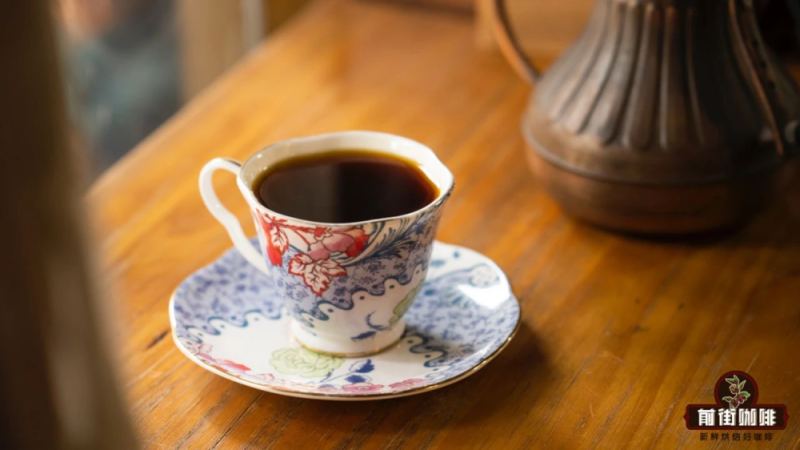
Mandheling coffee is known for its rich, smooth body and low acidity, making it the top choice for many who prefer a bold cup. It originates from Sumatra, Indonesia, where the region's unique wet-hulling process creates its signature flavor. This article covers the origin of the Mandheling name, the trademark story behind PWN and Golden Mandheling, and Front Street Coffee's recommended brewing recipe for PWN Golden Mandheling, offering a complete overview of this single-origin coffee's aroma characteristics and key facts to help coffee lovers better understand Sumatra Mandheling.
For more specialty coffee knowledge, please follow: Frontsteet Coffee
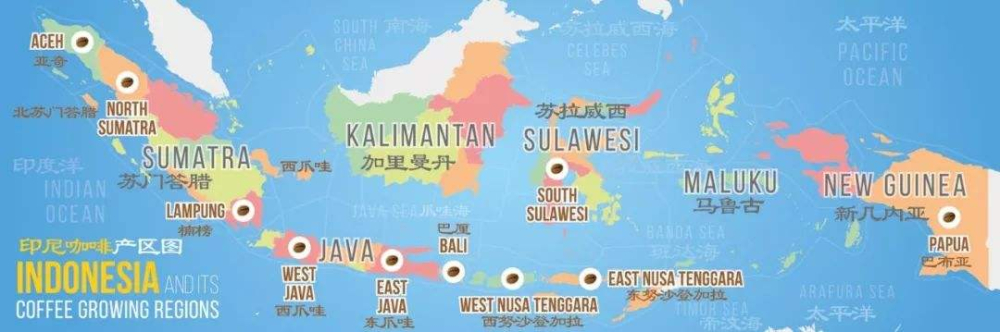
For those who dislike acidic coffee, Mandheling is often the first option that comes to mind. It has a thick body, smooth texture, and low acidity. This coffee originates from the island of Sumatra, Indonesia.
Sumatra is the sixth-largest island in the world, yet it is also home to high-altitude mountain ranges. The Barisan Mountains run the length of the island, splitting the terrain in two, stretching over 3,800 meters. The highest peak in the central section of the range is Mount Kerinci, standing at 3,800 meters and classified as an active volcano. Most Arabica coffee trees on the island are planted at higher elevations than Robusta, and the growers are predominantly smallholder farmers.
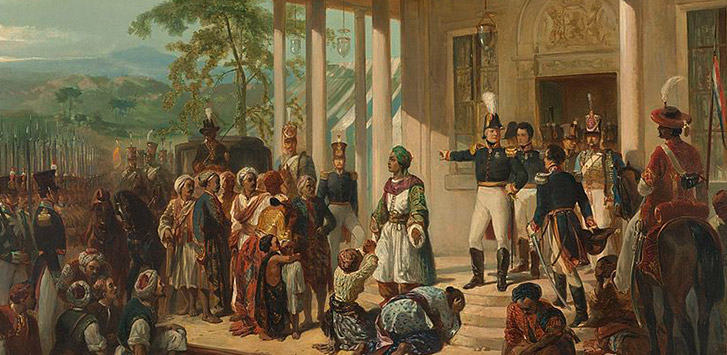
Indonesia's coffee-growing history dates back to 1696, when the Dutch sent coffee seedlings here from Malabar, India. After successful trial planting in 1699, coffee gradually spread to other islands, including Sumatra. However, coffee from this region did not reach export scale until the early 19th century. As production rose, exports increased in tandem, exceeding 12 million pounds by 1840. Production peaked in 1860 at 21 million pounds, after which coffee leaf rust destroyed most of the Arabica trees. By 1900, large areas of Arabica had been replaced by rust-resistant Robusta. Today, Sumatra remains the highest-producing coffee region in Indonesia.
On the island of Java, Robusta replaced almost all Arabica, so by the early 20th century, Sumatra coffee—which still retained some Arabica production—actually surpassed Java coffee in reputation. At the same time, the name "Mandheling" also gained fame. Interestingly, Mandheling is not a place name but the name of an ethnic tribe.
How did a tribal name become a coffee name? There is an anecdote behind this. The Japanese love coffee, especially favoring full-bodied types. During World War II, a Japanese soldier drank a very full-bodied cup of coffee in Sumatra and loved it so much that he asked the shop owner what the coffee was called. The owner misunderstood and gave his own place of origin instead. Combined with the fact that "Mandailing" sounds very close to "Mandheling" in Japanese, the soldier recorded it as "Mandheling." After the war, back in Japan, the soldier could never forget that cup of coffee, so he asked a Japanese merchant friend to find a local Indonesian trader and import "Mandheling" coffee beans. Later, because Mandheling's body was truly outstanding, it quickly became popular in the Japanese market and went on to become world-famous.
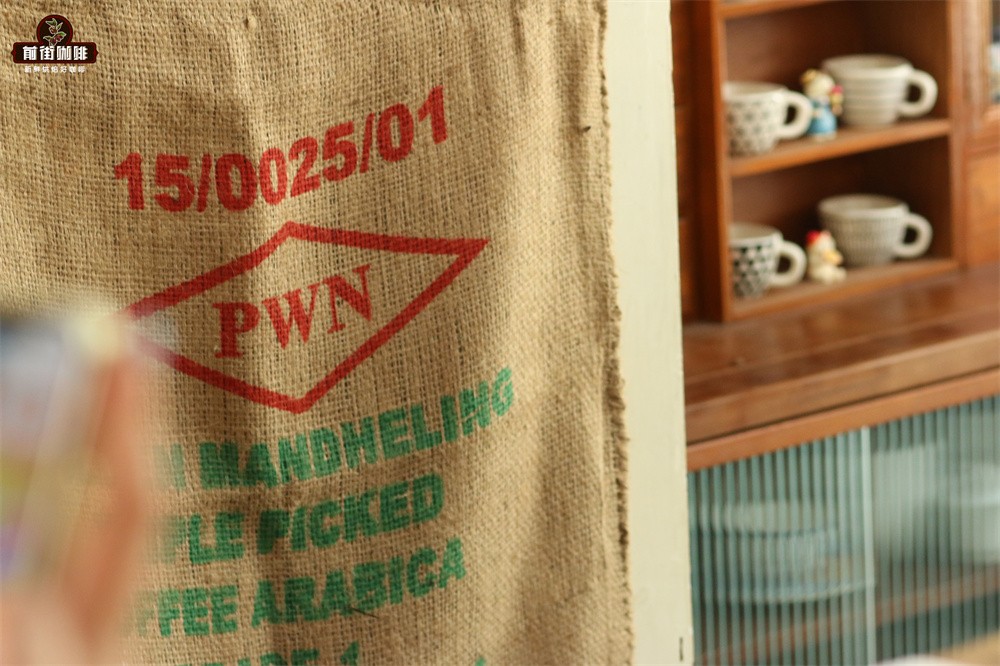
That local Indonesian trader was none other than the now-renowned PAWANI company (PWN). PWN registered "Golden Mandheling" as a trademark very early on; the Japanese side was not to be outdone and registered "Teiue Golden Mandheling." Therefore, only Golden Mandheling coffee beans produced by PWN qualify as true Golden Mandheling. However, the two beans differ in product name, brand, and marketing strategy, so which is better can only be judged on an individual basis.
FrontStreet Coffee's bean list features only one Golden Mandheling, and it comes from Indonesia's PWN company. This Front Street PWN Golden Mandheling has large, uniform green beans, with fewer than 3 defects per 300-gram sample, placing it in the highest grade, G1. PWN has very strict production requirements for Golden Mandheling: first, machines screen out large, high-density premium green beans, then they undergo three rounds of hand sorting to ensure defective beans are thoroughly removed, thereby enhancing the final cleanliness and sweetness.
After cupping multiple Golden Mandhelings, Front Street found that Front Street PWN Golden Mandheling has a clean mouthfeel and prominent sweetness that other Golden Mandhelings find hard to replicate. So how do you confirm that the Golden Mandheling you bought actually comes from PWN? Typically, when PWN Golden Mandheling is sold, the burlap sacks holding the green beans are printed with a clear PWN company logo; in addition, PWN provides buyers with a factory certificate. The burlap sacks and certificates for the Front Street PWN Golden Mandheling sold by Front Street can both be seen at FrontStreet Coffee's stores.
FrontStreet Coffee: Front Street PWN Golden Mandheling Coffee Beans
Region: Sumatra, Indonesia
Altitude: 1,100m–1,600m
Variety: Ateng
Processing Method: Wet-Hulled
The reason Front Street Mandheling coffee has such a unique flavor is related to its equally unique post-harvest green bean processing method. Indonesia has frequent rainfall and short sun-drying windows, and given the local economic constraints, washed processing was not feasible, so Sumatra's distinctive semi-washed method—wet-hulling—came into being.
After farmers pick coffee cherries at just the right ripeness, they first use a depulper to remove the skin and fruit pulp, then place the parchment beans with mucilage still attached into a water tank to ferment, rinse off the mucilage with clean water, and then spread the dripping wet parchment beans out in the sun to dry until they reach a semi-dry, semi-wet state.
At this stage, farmers collect the parchment beans and sell them to local green bean processing stations. After receiving these semi-wet, semi-dry green beans, the processing stations remove the parchment layer first and then sun-dry them in order to drastically shorten the drying time. Drying lasts about 3 to 4 days, bringing the moisture content down to around 13%.
Sumatra's unique wet-hulling method is the reason Front Street Mandheling coffee has a viscous, smooth mouthfeel and distinctive flavor. Mandheling coffee's unique flavor has also made wet-hulling more famous. It can be said that Mandheling coffee and the wet-hulling method complement each other.
After FrontStreet Coffee's roasters receive the PWN Golden Mandheling, they use a medium-dark roast to highlight Mandheling coffee's rich body. For brewing, Front Street recommends using a lower water temperature, a coarser grind, a slower-flow dripper, and a three-pour method.
Dripper: KONO dripper
Water temperature: 88°C
Coffee dose: 15g
Coffee-to-water ratio: 1:15
Grind size: 70% passing through a No. 20 sieve
First, rinse the KONO dripper with hot water so the filter paper adheres better to the dripper, discard the water in the server, and add 15g of coffee grounds. After blooming with 30g of water for 30s, start pouring in a small stream in circles from the center, and begin分段 at 125g; wait until the coffee bed drops to the halfway point of the dripper, then pour the second stage using the same technique until reaching 225g. Once all the dripping is complete, you can remove the dripper.
After brewing, Front Street PWN Golden Mandheling presents a rich nutty flavor. As the temperature drops slightly, herbal and spice notes emerge, with a pronounced caramel sweetness in the finish and a clean, gentle mouthfeel.
The above content is compiled by CoffeeHunters, a coffee news website.


