







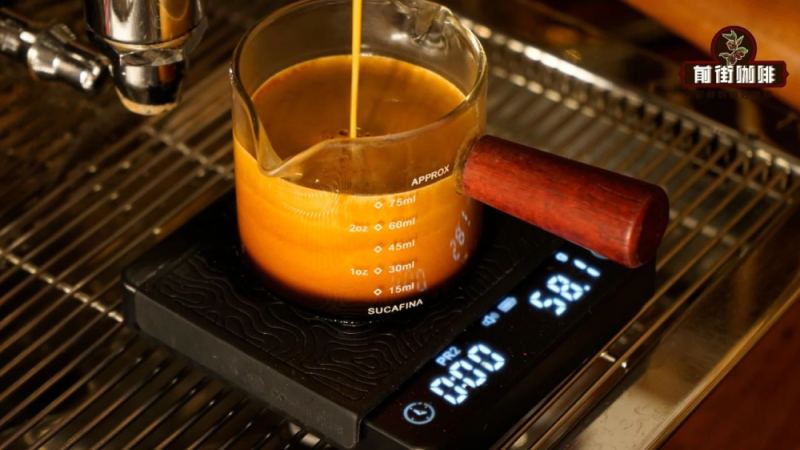
In the Italian coffee system, Lungo is a unique presence—it belongs, along with Espresso and Ristretto, to the category of drinks extracted directly from an espresso machine, yet it has a distinctly different flavor due to the largest extraction volume. This article will analyze the definition of Lungo from the perspectives of extraction yield and concentration, compare its differences with Ristretto and Espresso in terms of brew ratio and flavor, and trace back to the social context of 1950s Italy to explain why this cup of coffee—"more volume at no extra cost"—came into being. Front Street Coffee will also share the true taste performance of Lungo through actual extraction tests, and explore the possibilities of the espresso machine beyond espresso.
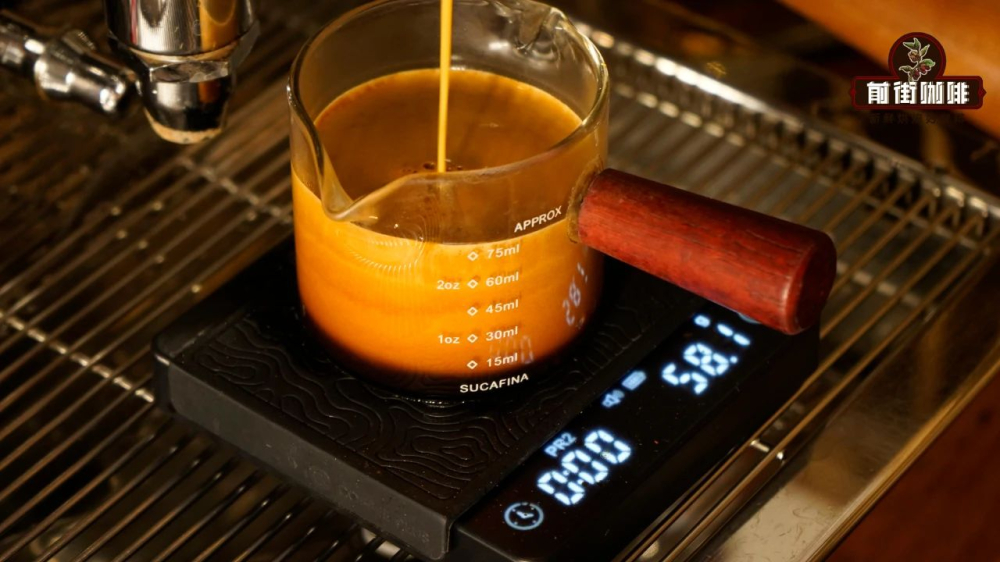
In the family of Italian coffee, Lungo occupies a special position, its status even higher than many common Italian drinks. Like Espresso and Ristretto, Lungo is also an authentic product extracted directly from an espresso machine, but if viewed through today's aesthetic, the reason for its existence seems somewhat puzzling.
First, let's clarify what kind of coffee Lungo actually is. The coffee liquid extracted in the conventional way using an espresso machine is called "Espresso," and the machine itself is also called an "Espresso machine." If we do the opposite, compressing the extraction volume to make the coffee liquid more concentrated, that is "Ristretto," meaning "restricted"; conversely, extending the extraction time and increasing the total amount of coffee liquid, ultimately obtaining a large cup of coffee, is called "Lungo," meaning "extended."
If we introduce the concepts of extraction yield and concentration to interpret this, the three use exactly the same amount of coffee grounds, grind size, and tamping pressure before extraction; the only difference lies in adjusting the extraction yield and concentration through ratios. Ristretto and Lungo are both relative to Espresso. Assuming Espresso is in the ideal "Golden Cup" extraction range, then Ristretto is equivalent to an "under-extracted" Espresso—by reducing the coffee liquid to increase concentration, the extraction yield is also lower than Espresso. Although this flavor is impactful, it is fleeting. However, Ristretto is often used as the base for drinks like Flat white.
Lungo is the opposite: it lowers the overall concentration by extracting more coffee liquid, so the entire cup is not too harsh, but the increased extraction liquid also means the extraction yield is pushed higher, and it can be regarded as an "over-extracted" Espresso.
Lungo also differs from the previous two in another way: Ristretto and Espresso, due to their high concentration, are often used as the base for other Italian drinks, while Lungo is a terminal drink that can be consumed directly. If extracting 30 ml of coffee liquid from 7-9 grams of coffee grounds is considered 1 serving of Espresso, then Lungo's volume is about 120 ml. If a 1:2 brew ratio is considered the standard ratio for Espresso, Lungo's brew ratio is approximately 1:4 to 1:5.
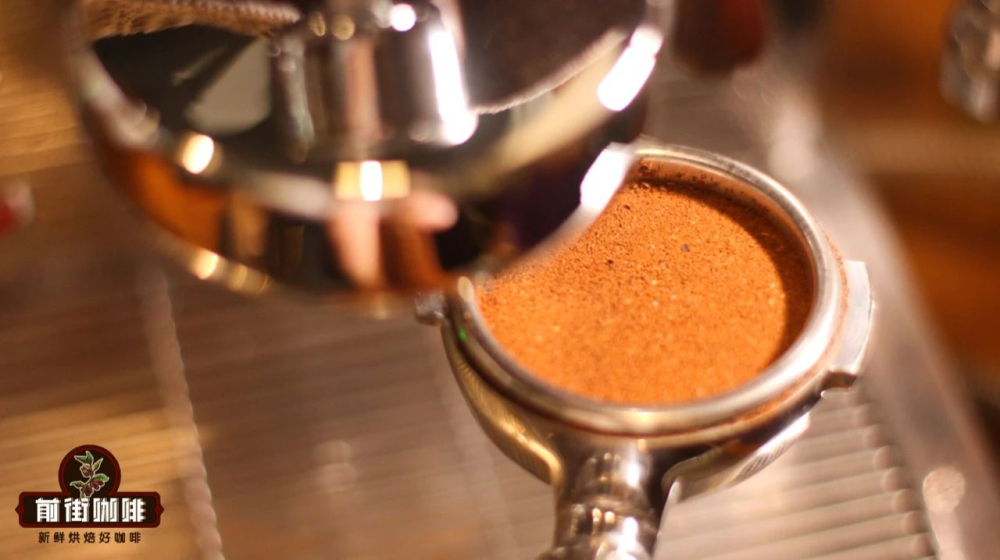
So how does Lungo actually taste? Front Street specifically made a cup for testing: using 20 grams of coffee grounds to extract 100 grams of coffee liquid, taking 62 seconds. In fact, after 35 seconds, the coffee liquid flowing out was already as thin as water. Upon tasting, the concentration was acceptable, the harshness far less than espresso, the flavor relatively mild, but overall it did not belong to the category of being delicious, especially the burnt bitterness in the tail section lingered in the throat for a long time, difficult to dissipate.
Examining Lungo from today's perspective, it is not hard to understand why it is a cup of coffee that is not very likable. But if we look back to 1950s Italy, we might be able to understand where Lungo's advantages lie. The recipe we often mention today—"7 grams of grounds, 30 seconds to produce 30 ml of espresso"—was finalized in the 1950s. It was only in 1938 that a true 9-bar coffee machine appeared, capable of extracting a serving of Espresso within 30 seconds, but the related patent was not sold to Faema until 1948. It was not until the 1950s that espresso changed from a luxury item to a daily necessity, and only then could ordinary working-class people afford to drink it.
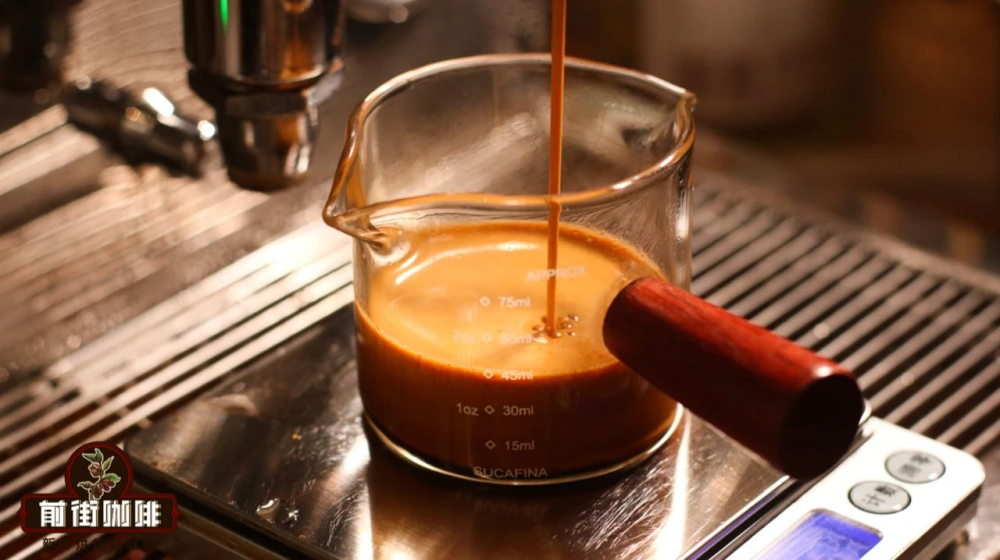
Lungo appeared precisely during this period, and the reason is quite straightforward: more volume at no extra cost. A serving of Espresso is only 30 ml, finished in two or three sips, always feeling unsatisfying, and ordering another cup would cost another serving's money. The easiest solution was to directly extend the extraction volume to get a cup of standard cup size. You might ask, won't the coffee become burnt and bitter? But at that time, that was exactly what coffee should taste like. For a long period, bitterness and coffee flavor were equated; whether your coffee was flavorful enough was equivalent to whether it was strong enough and bitter enough. (Early 1.5-bar espresso machines required 1 minute to extract coffee, had no crema, and had a heavy burnt bitterness.)
Perhaps you also want to ask, why didn't they add water to the Espresso? From a God's-eye view, Americano is indeed easier to drink than Lungo. But at that time, adding water to coffee was considered cutting corners. A similar situation is like going to a shop now to drink pour-over, and the barista adds water to the coffee in front of you, then tells you this is bypass, which will make the coffee easier to drink and tastier.
Although Italians performed mediocrely on the battlefield, they stood proud in food culture. How could they possibly align themselves with the "Yankees," whose food culture was regarded as a "desert." So Lungo could be considered a good drink in Italy.
And today, flavor is discussed everywhere, from pour-over all the way to espresso, and at this point, if an authentic Lungo suddenly appears, you would mostly think it is a scam. Of course, Lungo also provides a way of thinking: an espresso machine does not only have to produce espresso; try grinding the coffee coarser and increasing the brew ratio, and you might just get a cup of coffee with a good flavor.
The above content is compiled by CoffeeHunters, a coffee news website.


