







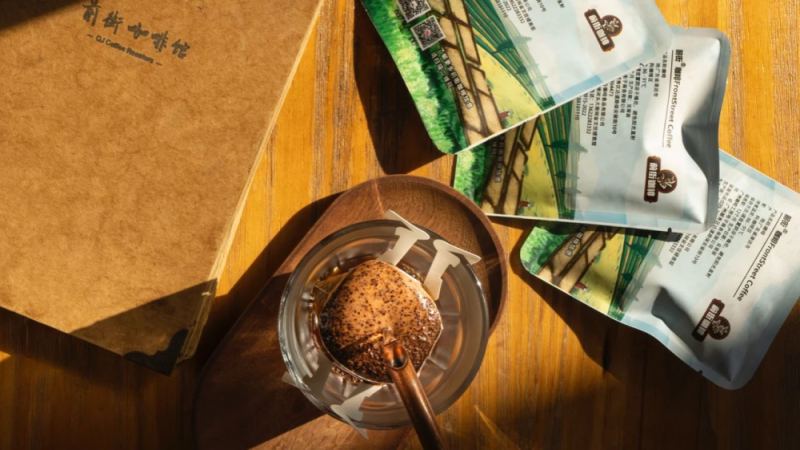

Drip coffee bags are a very convenient way to brew coffee. All you need is a drip bag, hot water, and a cup, and you can get a delicious cup of black coffee. You might ask, "Why is a drip coffee bag compared to a simplified version of pour-over coffee?" Because drip coffee is made by grinding fresh coffee beans into suitable coffee grounds, immediately putting them into filter paper bags, and then packaging them into individual small portions.
The drip coffee bag series sold by Front Street Coffee comes in flavors from multiple regions. Such as: Front Street Indonesia PWN Golden Mandheling coffee beans,Front Street Yirgacheffe coffee beans, Front Street Honduras Sherry coffee beans, Front Street Brazil coffee beans, Front Street Kenya coffee beans, Front Street Sidamo Huakui coffee beans, etc. Of course, we also have other flavor types of coffee beans; if customers want them made into drip coffee, Front Street will also make them according to demand.

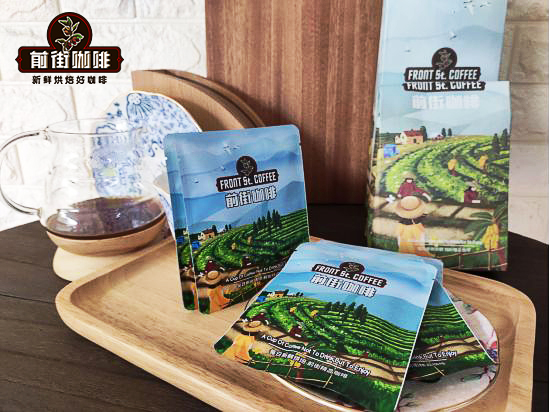
In fact, everyone can pay close attention: the gram weight of each coffee shop's drip coffee bag packaging will vary. For example, the drip coffee bags produced by Front Street Coffee (FrontStreet Coffee) generally weigh 10 grams, which is very convenient to carry. So, how exactly should you brew a drip coffee bag correctly to make it taste good?
Next, Front Street Coffee (FrontStreet Coffee) will share in detail the brewing techniques for drip coffee with everyone!
【Front Street Coffee (FrontStreet Coffee): Drip Coffee Bag Brewing Notes】
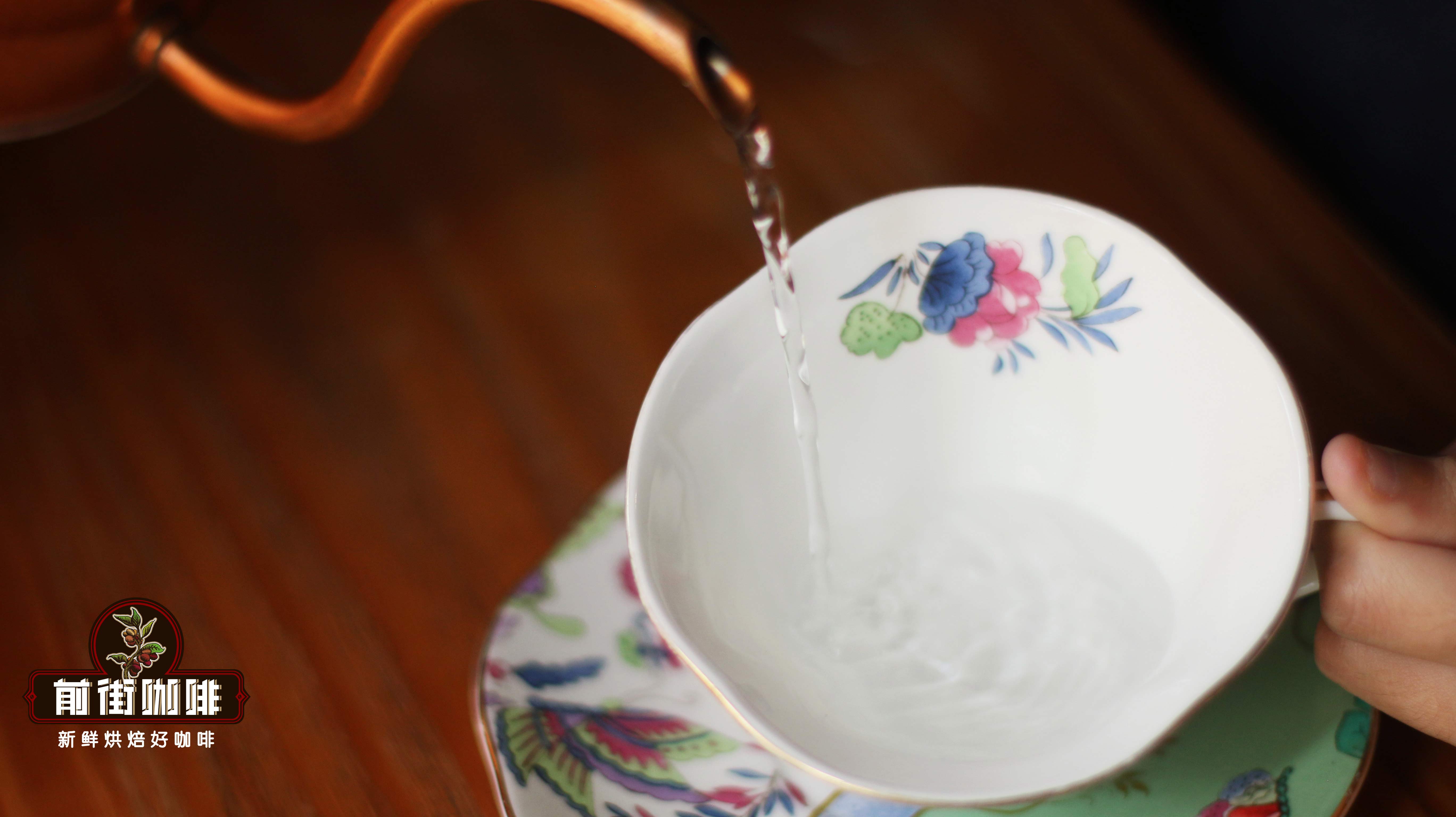
/1 Warm the cup
Prepare the cup and first pour in some hot water to warm it. The purpose is to keep the brewed coffee from cooling too quickly. Coffee's flavor keeps changing as the temperature drops; if it cools too quickly, you will miss many different taste experiences.
/2 Water temperature
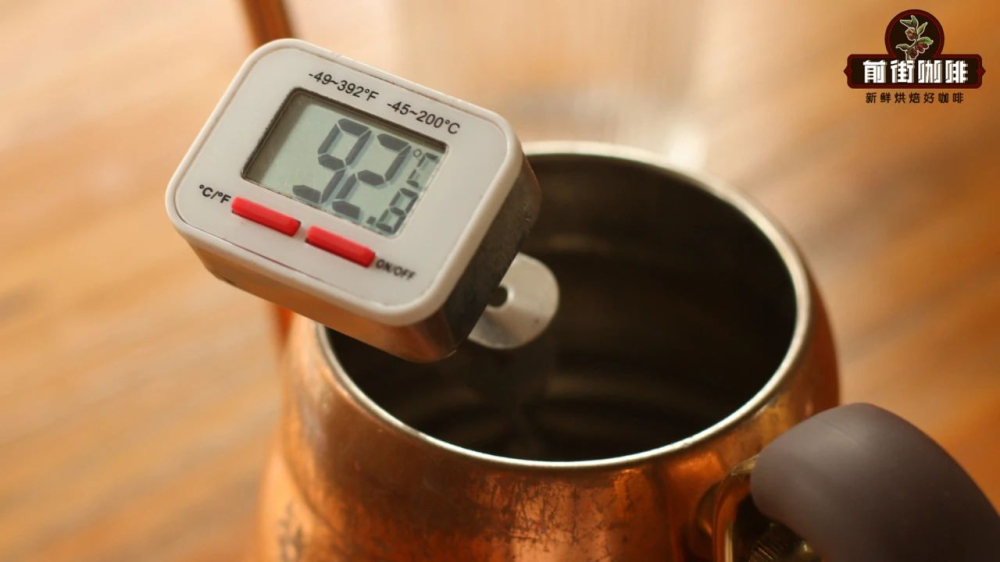
The brewing water temperature is very important. It is recommended to be between 90 and 95 degrees. If the brewed coffee is too bitter, you can try lowering the water temperature. Conversely, if it is too weak or too astringent, you can raise the water temperature. But if you want the brewed coffee to have aroma, it is not recommended to use water that is too low in temperature. For example, the boiling mode on a water dispenser is not hot enough, and the coffee can easily taste thin.
/3 Hang the coffee bag
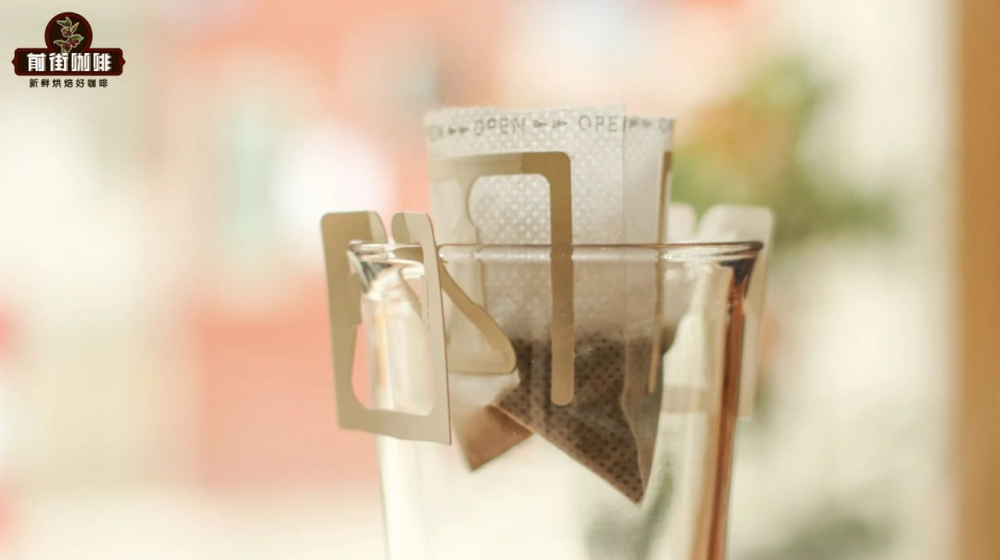
It is recommended to shake the drip bag gently first so the coffee grounds settle, then tear open the inner bag. This is to avoid coffee grounds scattering everywhere when tearing it open. After tearing open the seal strip on the drip bag, open the "ears," shake to level the coffee grounds, and finally hang it on the rim of the cup.
/4 First pour, pre-wetting
The amount of the first pour should just wet the coffee grounds. Too much or too little will affect the flavor; then we wait about 20 seconds to let the coffee grounds fully absorb the water. The strength of the coffee can be adjusted by the pre-wetting time. Extending it to 40 seconds can produce a stronger coffee.
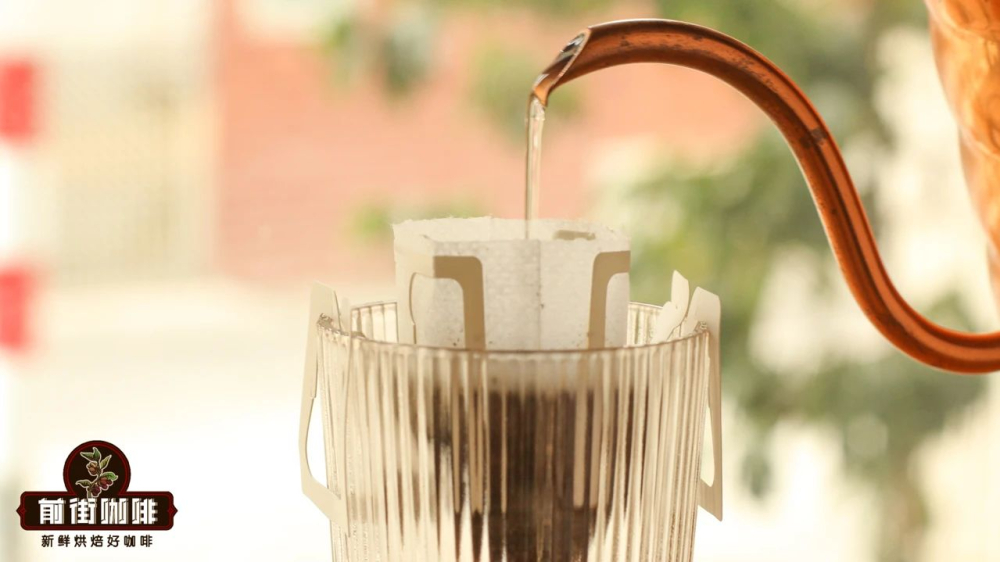
/5 Second pour
For the second pour, you can pour until the filter paper is eight-tenths full. It is best to use a thin, slender stream of water. After the water level drops to the pre-wetted height, you can continue pouring to eight-tenths full, until it reaches 150 or 180 ml. Once extraction is complete, there is no need to wait for all the water in the filter paper to flow out; just discard it directly. If you like it strong, add less water; if you like it mild, add more water. The ratio can be adjusted according to personal taste.
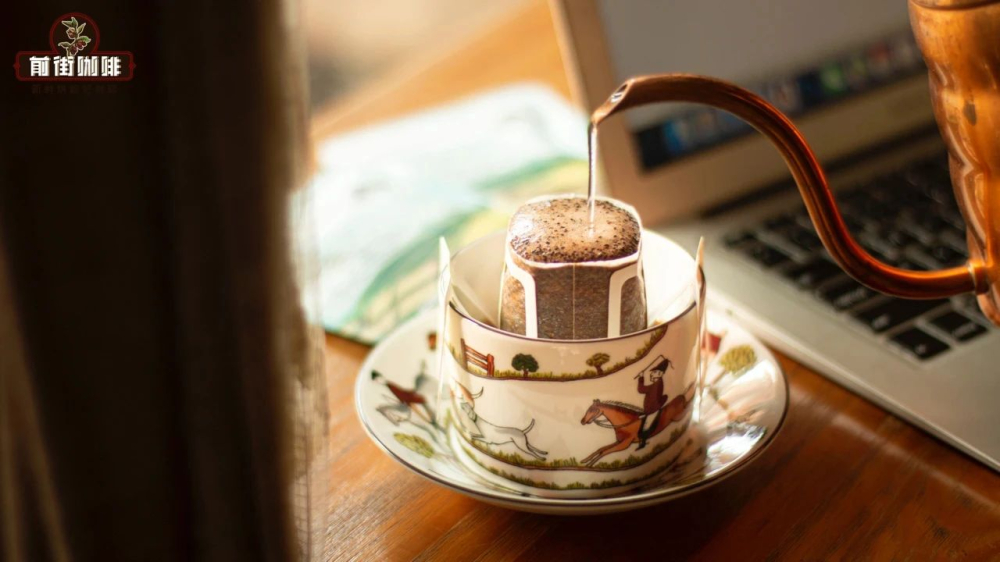
【Front Street Coffee (FrontStreet Coffee) Drip Bag Coffee Bean Recommendations】
If Front Street were to recommend 2 coffees suitable for making drip bags, Front Street Coffee (FrontStreet Coffee) would recommend the Front Street Honduras Sherry coffee beans and Front Street Honduras Lychee Orchid coffee beans from its bean list. These are two relatively distinctive beans on the Front Street Coffee (FrontStreet Coffee) bean list. So that everyone can also drink them in daily life, Front Street Coffee (FrontStreet Coffee) decided to make these 2 Front Street Honduras coffees into coffee drip bags, making them convenient for everyone to drink daily~

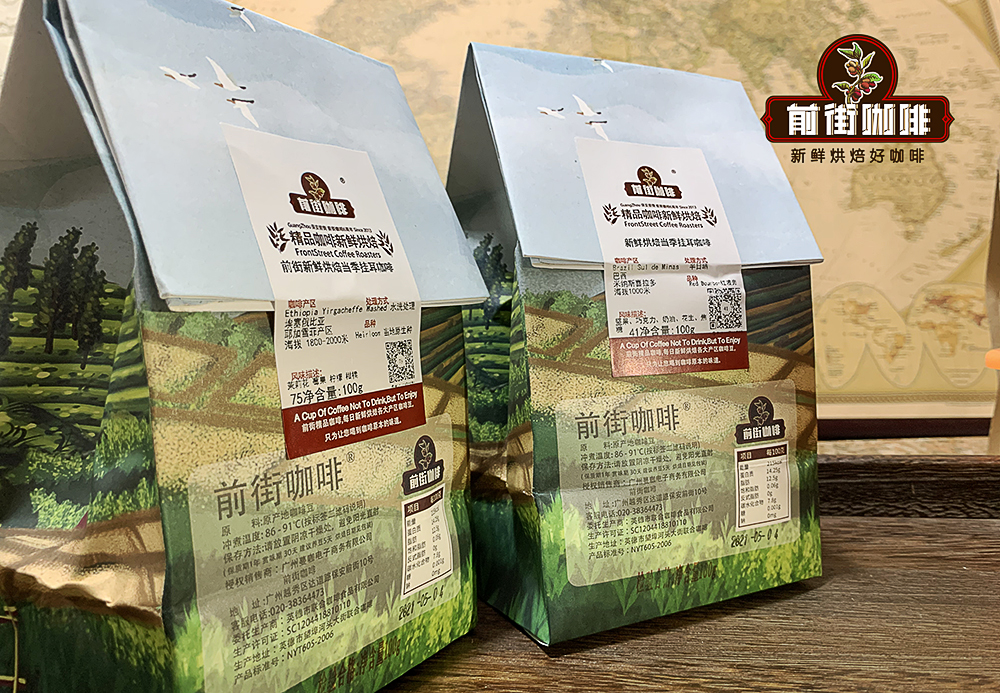
First, let's talk about the story behind the beans. Honduran coffee beans are known for their balanced flavor. They can be used to blend composite coffee, and can also be brewed as single-origin coffee. In Honduras alone, this coffee-producing country has six major coffee-producing regions.
Before selecting new beans to put on the shelf, Front Street Coffee (FrontStreet Coffee) conducts extensive research on coffee origin information in the country concerned. Through repeated adjustments to the coffee bean roasting curve, as well as evaluation through multiple steps such as cupping and pour-over, Front Street ensures that this coffee bean matches the local coffee flavor and that the beans can achieve the most ideal taste before putting them on the shelf for sale.
【Front Street Coffee (FrontStreet Coffee) · Honduras Sherry Coffee Beans & Honduras Lychee Orchid Coffee Beans Introduction】
These are two coffee beans from the same estate in Honduras, with different processing methods, different bean varieties, and different flavors.
Honduras is located in northern Central America, between the Pacific Ocean and the Caribbean Sea. It is a typical two-ocean country. Because the country is mountainous, it is very favorable for growing coffee and bananas. Although compared with neighboring countries Guatemala and Nicaragua, Honduras's coffee industry developed later, this does not affect the subsequent development of Honduras's coffee industry, given its inherently superior geographical environment for growing coffee.
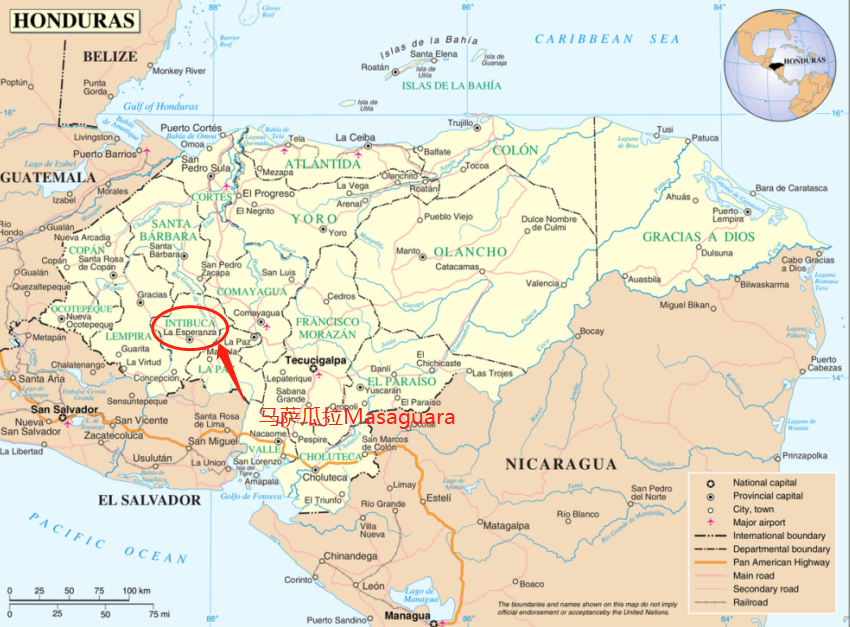
The producing region of Honduras Sherry coffee beans is located in Masaguara, a city in the Intibucá department in southwestern Honduras. Among them, there is a Moca estate that is the source of this wine-aroma-flavored coffee.
Because the quantity of green beans for Front Street Honduras Sherry coffee beans is very small, and the processing method uses the fermentation processing method that has become more popular in recent years, it has become one of the more distinctive coffee beans of Front Street Coffee (FrontStreet Coffee).

Honduras Sherry coffee beans are grown at an altitude of 1500-1700 meters. Front Street Honduras Sherry coffee beans are a single blended variety: Caturra, Catuai, and Pacas.
【Front Street Coffee (FrontStreet Coffee) · Honduras Sherry Coffee Beans Processing Method Introduction】
It uses whiskey barrel fermentation + refined washing (whiskey production must undergo oak barrel aging; after aging is completed, the oak barrels have absorbed the whiskey flavor and retain a rich wine aroma).

First, freshly picked coffee cherries are refined-washed, then placed into barrels that previously aged sherry wine for low-temperature fermentation for 30-40 days (at about 15-20℃), and then shade-dried.
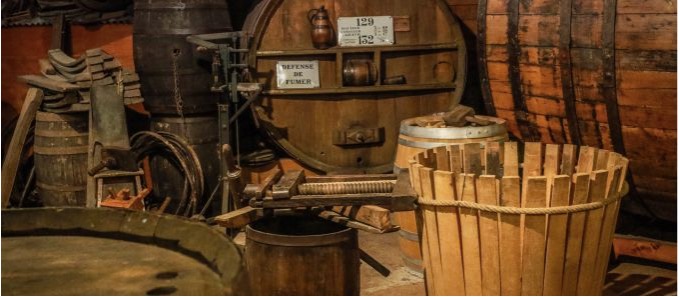
Coffee beans fermented in sherry barrels naturally carry the flavor of sherry wine, forming an intoxicating and unique taste, and have been very popular in recent years.

Front Street Coffee (FrontStreet Coffee) · Honduras Sherry Coffee Beans
Country: Honduras
Region: Masaguara
Estate: Moca Estate
Altitude: 1500-1700m
Variety: Caturra, Catuai, Pacas
Processing method: Refined washed whiskey sherry barrel fermentation

Front Street Coffee (FrontStreet Coffee) · Honduras Lychee Orchid Coffee Beans
Region: Masaguara
Estate: Moca Estate
Altitude: 1500-1700m
Variety: Caturra and Catuai
Processing method: Refined washing and brandy barrel processing method
【Front Street Coffee (FrontStreet Coffee) · Honduras Lychee Orchid Coffee Beans Flavor Description】
Chocolate, berries, honey, lychee. On the palate, the berry acidity is obvious. As the temperature changes, sipping reveals a faint wine aroma. The finish shows solid chocolate flavor, leaving a deep impression.
【Front Street Coffee (FrontStreet Coffee) · Honduras Lychee Orchid Coffee Beans Introduction 】
The growing altitude of Front Street Honduras Lychee Orchid coffee beans is 1500-1700m. After the Caturra and Catuai varieties are processed with brandy barrel fermentation, the beans have a soft sweetness of lychee and honey, with a touch of brandy aroma and oak barrel aroma. Both Front Street Honduras Sherry and Front Street Lychee Orchid coffee beans belong to the Moca Estate in Masaguara, Honduras.
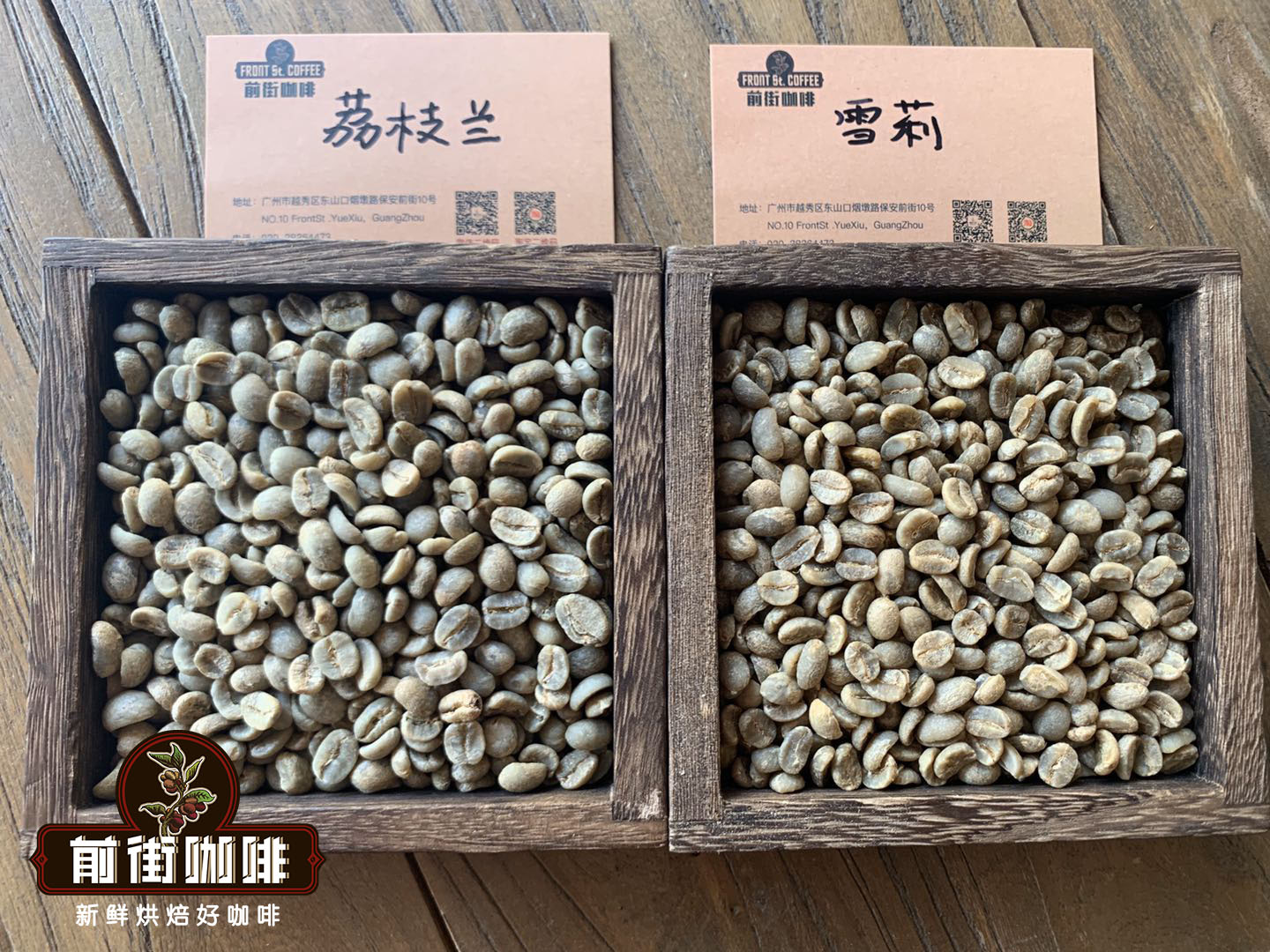
In terms of coffee varieties, the varieties of Front Street Honduras Sherry coffee beans are: Caturra, Catuai, and Pacas. The varieties of Front Street Honduras Lychee Orchid coffee beans are: Caturra and Catuai. In terms of bean varieties, Front Street Sherry coffee beans have one more variety, Pacas, than Front Street Lychee Orchid coffee beans. In terms of processing method, Front Street Honduras Sherry coffee beans use sherry barrel fermentation, while Front Street Honduras Lychee Orchid coffee beans use brandy barrel fermentation. In terms of flavor, Front Street Honduras Sherry coffee beans are more balanced, with acidity that is not too prominent, obvious wine charm and dark cocoa, just like a wine-filled chocolate. Meanwhile, Front Street Honduras Lychee Orchid coffee beans, in addition to the wine charm, also have a lasting fermented feel. As the temperature drops, it becomes lychee and grape in tone, refined and elegant.

【Further Reading — Front Street Coffee (FrontStreet Coffee) Drip Coffee Bag Brewing Techniques】
1/ Control the water amount!
The package is a 10g drip coffee bag. It is recommended to brew with 150ml-180ml of water.
* The flavor of a delicious cup of coffee is intoxicating; if there is too much water, the coffee will become tasteless and turn into an unpleasant cup.
2/ Control the water temperature!
The recommended temperature for brewing drip coffee bags is around 90℃.
* If you brew directly with boiling water, the coffee will taste burnt and bitter.
3/ Control the process!
Proper "blooming" of a drip coffee bag will make the coffee flavor better.
* This means first pouring about 20-30ml of water to fully wet the coffee grounds, then waiting quietly for 10-20 seconds, and then pouring gently until the appropriate amount of water is reached.
In addition, Front Street Coffee (FrontStreet Coffee) has also met many customers who ask whether segmentation is needed. Actually, just pour directly in a small stream in a circular motion until 150ml. What drip coffee bags are about is simplicity and convenience, with no need for too many requirements.

Ok, you've learned how to brew it.
So next, Front Street Coffee (FrontStreet Coffee) will list a few questions you are sure to care about.
【How many times can a drip coffee bag be brewed?】
Many people think that drip bags, like tea bags, can be brewed several times until there is no flavor left. Actually, this is inaccurate. A drip bag is actually like pour-over coffee: it can only be brewed once. Never re-brew a drip bag that has already been brewed. The remaining substances in the used coffee grounds are all undesirable flavors.

【Can drip coffee bags be brewed repeatedly?】
Whether it is pour-over coffee or drip coffee bags, Front Street believes they are only suitable for brewing once. What we usually refer to as "brewing coffee" means "extraction." Water is the solvent in the extraction process. Through contact between water and coffee grounds, the flavor substances in the coffee are dissolved into the water, and at this point the water becomes the coffee we drink.
Calculated by the weight of coffee, only about 30% of coffee can be extracted, while the remaining about 70% is non-extractable fiber. So no matter how you increase extraction, at most only about thirty percent of the coffee can be extracted. Just as tea becomes weaker after being brewed many times, the same is true for coffee.
【Things to Note When Buying Drip Coffee Bags】
Everyone should know that pour-over coffee is made by grinding beans only before brewing, while the drip coffee bags everyone buys have already been ground into powder during the production stage. Therefore, the best-tasting period of drip coffee bags is relatively short. Even if the drip coffee is freshly ground coffee powder, the flavor will be lost as storage time lengthens.

Therefore, when buying drip coffee, everyone should pay attention to the production date. Although the shelf life of drip coffee bags is 6-18 months, this is only the coffee's shelf life. What matters most for coffee is the coffee's best-tasting period, and the best-tasting period of drip coffee bags is generally two weeks. Front Street suggests that when buying drip coffee, just choose an amount that can be used up in exactly two weeks.
For more coffee bean information, please follow Coffee Workshop (WeChat public account cafe_style)
For professional coffee knowledge exchange, please add WeChat ID kaixinguoguo0925
The above content is compiled by CoffeeHunters, a coffee news website.


