







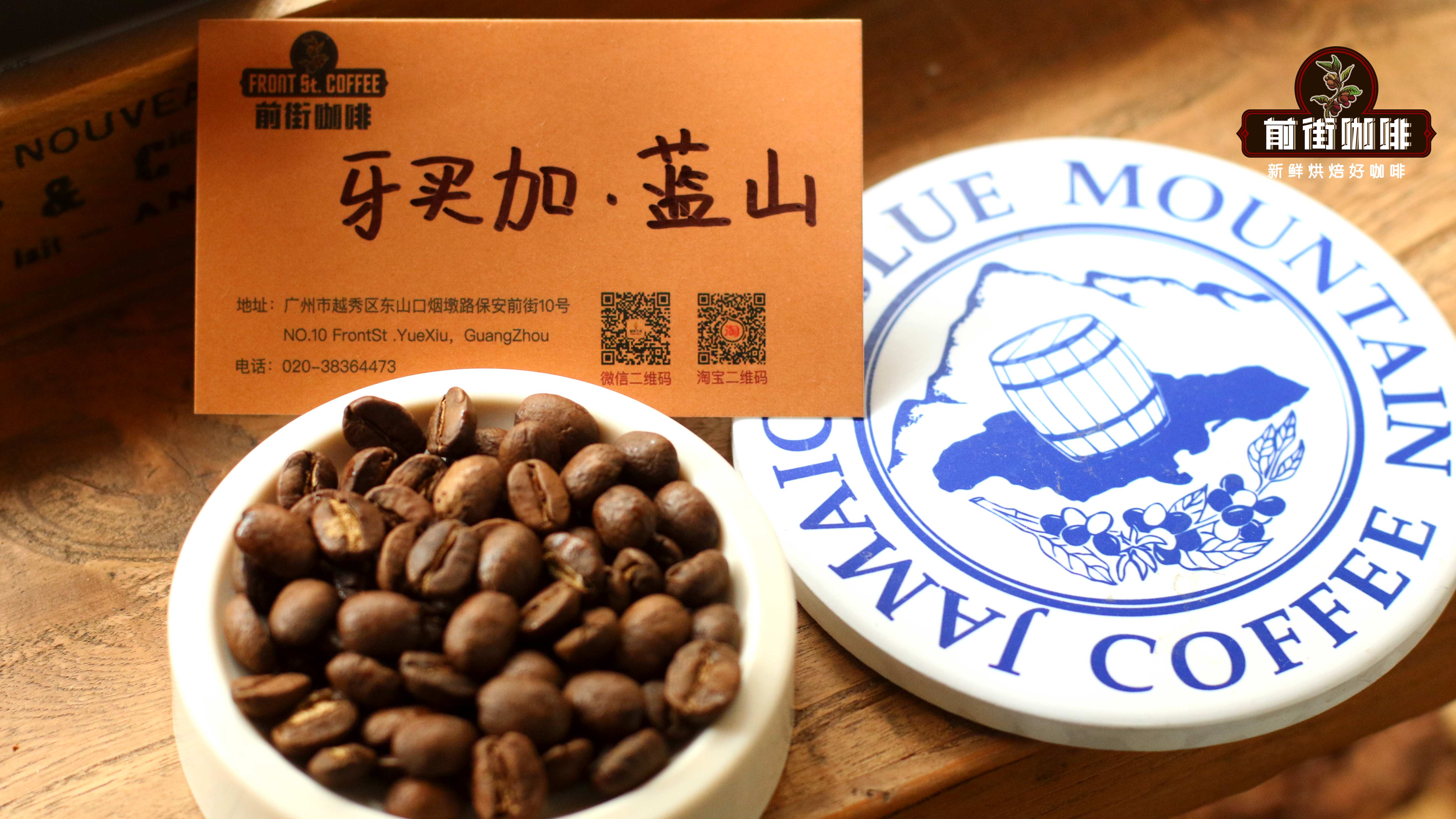
Blue Mountain coffee has long enjoyed the reputation of "King of Coffee," and its balanced taste and clean flavor captivate countless coffee lovers. This article takes Front Street Jamaica Blue Mountain No. 1 coffee beans as an example to introduce in detail the origin background, brewing parameters, and three-pour technique of this bean, and to guide you deeper into the cultivation history, grading system, and flavor formation of Jamaican Blue Mountain coffee. From Clifton Farm's Rainforest Alliance certification, to the stable quality of washed Typica, to the balanced tasting experience of acidity, sweetness, and bitterness, this article explains the past and present of Blue Mountain coffee in one read.
Front Street Jamaica Blue Mountain No. 1 Coffee Beans
Region: Jamaica Blue Mountain
Estate: Clifton Farm
Altitude: 1,310 meters
Processing method: Washed processing
Variety: Typica
Roast level: Medium-dark roast
Flavor: Chocolate, nuts, cream, with relatively balanced acidity, sweetness, and bitterness.
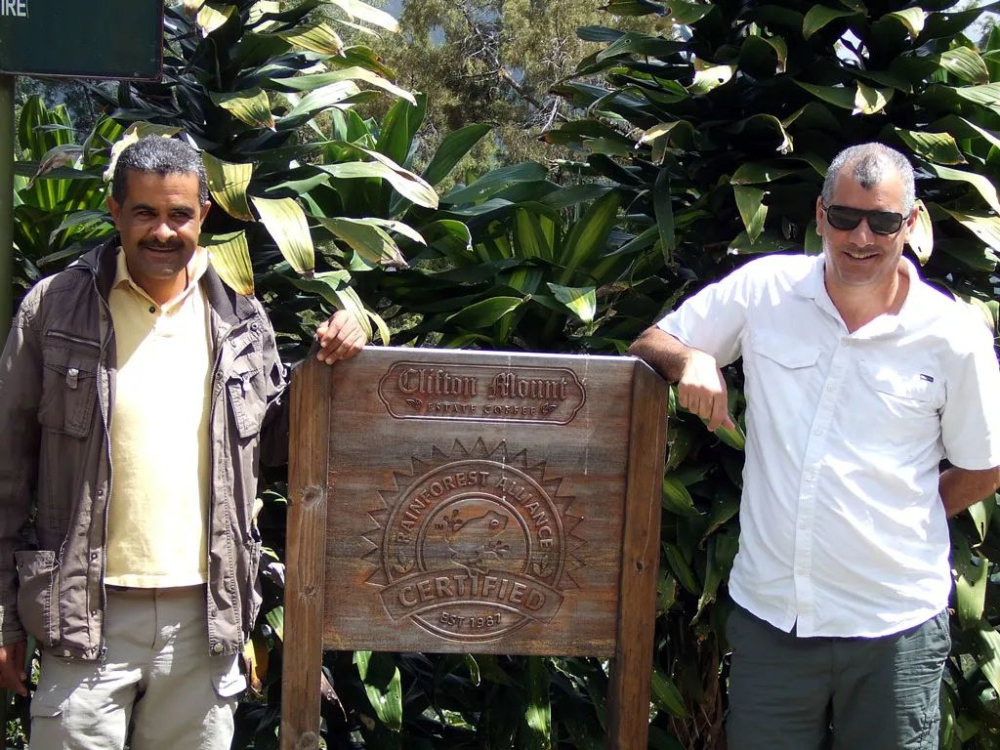
Clifton Mount has the longest history among all coffee-producing sites still in operation in Jamaica, and Clifton Farm is the only estate in Jamaica to obtain the Rainforest Alliance certification mark. The Blue Mountain production area covers only 6,000 hectares, not a large range, so not all coffee marketed under the "Blue Mountain" name truly comes from this land.
Although Clifton Farm is the largest in the region, by international standards it is still a small-scale planting operation, and many estate owners are merely small landholders whose families have worked this land for two hundred years. This area is widely recognized as the core producing region of world-class premium Blue Mountain coffee.
Water recommendation
Front Street chooses fresh, clean soft water such as C'estbon mineral water for extraction, avoiding water with excessively high hardness, and does not recommend using unfiltered tap water directly, because it is difficult to brew delicious coffee with poor water quality.
Brewing parameters: 15 grams of coffee powder, powder-to-water ratio of 1:15, water temperature 88°C, grind size: medium-coarse, with a 60% passing rate through a No. 20 standard sieve.
Three-pour steps
When brewing, Front Street first pours 30 grams of water for a 30-second bloom. During the bloom stage, the action should be gentle, circling from the center outward with a small stream of water, which gives the best bloom effect.
The second pour is carried out after the bloom ends, slowly circling from the center outward with a small stream of water until reaching 125 grams.
For the third pour, wait until the coffee bed drops to the halfway position, then switch to a larger stream and pour until reaching 225 grams. In other words, 15 grams of coffee powder corresponds to 225 grams of water, a ratio of 1:15. After all the coffee liquid in the drip cup has flowed into the server, remove the drip cup and the extraction is complete.
The Blue Mountain coffee brewed by Front Street Coffee with these parameters has a faint citrus acidity, is balanced overall, smooth on entry, shows nutty notes in the middle, and finishes with a hint of dark chocolate.
Tasting Blue Mountain coffee can begin with smelling its aroma, where you will catch notes of nuts and caramel, then take a sip to feel its full body, the balanced flavors of acidity, sweetness, and bitterness, and the sweet aftertaste that rises after swallowing. Next, while reflecting on the Blue Mountain flavor, let us step into the island country of Jamaica and explore further.
Jamaica's coffee cultivation is concentrated in the eastern Blue Mountain range. The name Blue Mountain comes from a local wonder: the Caribbean Sea surrounds the mountains on all sides, and when the weather is clear and sunlight is strong, the blue glow reflected from the sea shines upon the peaks, giving Blue Mountain its name.
The Blue Mountain range lies exactly within what we often call the coffee belt. It not only has a suitable altitude but also fertile volcanic soil, which is extremely favorable for coffee cultivation and production. In addition, the microclimate of the Blue Mountains is also one of the key factors behind Blue Mountain coffee—the region is humid overall, with frequent fog and rain year-round, and annual rainfall can reach 1,980 millimeters.
History of Blue Mountain coffee cultivation
Blue Mountain coffee comes from Jamaica, and Jamaica's history of coffee cultivation can be traced back to the 18th century. In 1717, King Louis XV of France ordered coffee to be planted in Jamaica; afterward, the governor of Jamaica introduced Arabica varieties from Martinique and vigorously promoted them, and coffee took root in Jamaica from then on.
In 1717, King Louis XV of France ordered coffee to be planted in Jamaica. In the mid-1720s, Jamaica's governor Sir Nicholas Lawes imported Arabica seeds from Martinique and began promoting cultivation in the St. Andrew area. To this day, St. Andrew remains one of the three major production regions of Jamaican Blue Mountain coffee, the other two being Portland and St. Thomas. Within the following eight years, Jamaica exported more than 375 tons of pure coffee.
In 1932, coffee production reached a peak, with a harvest exceeding 15,000 tons. In 1950, the Jamaican government established the Jamaica Coffee Industry Board, which sets quality standards for Jamaican coffee and supervises their implementation to ensure coffee quality. The board issues a special official seal for exported green beans and roasted beans, making it the highest-level national coffee authority in the world.
At present, there are six marks that can represent the place of origin of Blue Mountain coffee, respectively from the Mavis Bank Central Factory (MBCE), Blue Mountain Coffee Cooperative (MHCCT), Portland Blue Mountain Coffee Cooperative (PXXSH), Coffee Industry Association (Wallenford), Coffee Industry Association (St. John's Peak), and Jablum (JAS). In 1969, with Japanese loans to improve production quality, the market was assured and the situation improved. Today, this coffee has reached a level of fanatical popularity.
In 1981, Jamaica cleared about 1,500 hectares of land for coffee planting, and subsequently invested in developing another 6,000 hectares of coffee land. In fact, today's Blue Mountain area has only 6,000 hectares under cultivation, so it is impossible for all coffee labeled "Blue Mountain" to come from there.
Jamaica is also the last country that still packages and transports coffee in wooden barrels. Only after passing a series of strict standards assessed by the Jamaica Coffee Industry Board (C.I.B) can coffee obtain a government-issued certificate and formally be crowned with the name "Blue Mountain."
Blue Mountain coffee flavor
Blue Mountain coffee is so famous—what exactly is special about its flavor?
The outstanding quality of Blue Mountain coffee beans creates a clean cup. Under medium-dark roasting, Blue Mountain coffee usually shows a balance of acidity, sweetness, and bitterness, with faint nutty and chocolate notes, and the aftertaste after drinking is very pleasant. It represents the highest coffee quality of an era and is truly the king of coffee.
The reason Blue Mountain coffee's taste has maintained high quality for so long is strict control over export standards over many years. Until the past two decades, the Blue Mountain coffee we passed down by word of mouth was actually a washed Typica variety coffee. Unlike other processing methods, washing is the most stable and efficient of the traditional methods: after the coffee fruit is harvested, it is immediately floated, the skin and pulp are removed by machine, and then the pectin layer is removed through fermentation. After the pectin is removed, the moisture content of the coffee beans drops significantly, the required sun-drying time is shorter, and the defect rate is also lower.
At the same time, the mature washing process gives Blue Mountain coffee a cleaner cup and higher acidity. In addition to insisting on washed processing, maintaining the Typica variety is also the reason Blue Mountain coffee's flavor remains stable and consistent. Typica may be one of the oldest Arabica varieties, with a flavor more refined than other varieties, but its drawbacks are also prominent—poor resistance to disease and pests, and extremely low yield. In other American producing countries that pursue yield, Typica would quickly be replaced by high-yield varieties such as Caturra and Catuai.
Types of Blue Mountain coffee
In terms of the grading system, Blue Mountain is 2,256 meters above sea level, of which areas above 1,700 meters are a natural ecological reserve where coffee cultivation is prohibited. Under the CIB classification, only coffee between 910 meters and 1,700 meters above sea level can be called "Jamaica Blue Mountain Coffee"; coffee between 460 meters and 910 meters can only be called "Jamaica High Mountain Coffee"; and coffee below 460 meters is called "Jamaica Prime Coffee."
Therefore, Jamaican coffee is not equivalent to Blue Mountain coffee. Until now, only coffee produced from the 6,000 hectares of land in the Blue Mountain range (above 910 meters) can be called Blue Mountain coffee beans, while the other roughly two-thirds of coffee-producing areas in the Blue Mountain range can only be classified as High Mountain coffee or Prime coffee.
Coffee from Jamaica's Blue Mountain region is divided into three grades: Blue Mountain Coffee, Jamaica High Mountain Supreme Coffee Beans, and Jamaica Prime Coffee Beans. Among them, Blue Mountain coffee and High Mountain coffee are each further divided into two grades. From highest to lowest quality, they are: Blue Mountain No. 1, Blue Mountain No. 2, High Mountain No. 1, High Mountain No. 2, and Jamaica coffee. The Blue Mountain that Front Street obtained is precisely Blue Mountain No. 1, the highest grade.
The above content is compiled by CoffeeHunters, a coffee news website.


