







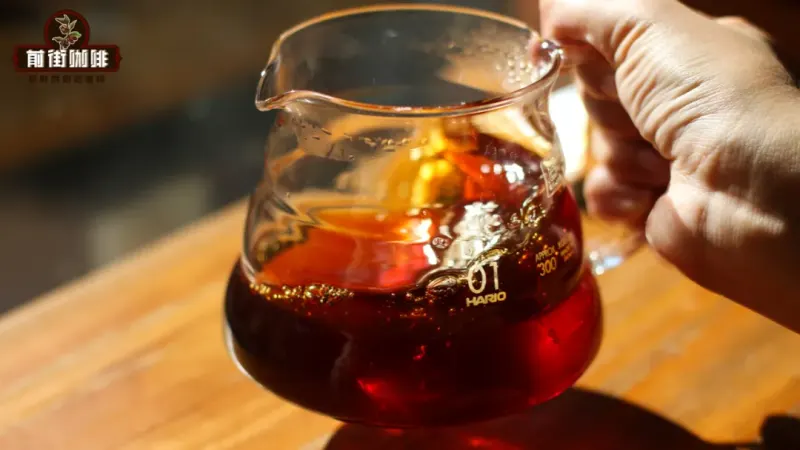
Many friends who are just getting into specialty coffee, when faced with a cup of coffee, often only know how to say "tasty" or "it tastes like coffee," while those around them can talk endlessly about floral notes, fruity acidity, body, and other professional terms. In fact, coffee tasting is not a talent—it is a methodical approach that can be learned. This article, drawing on Front Street's practical experience, systematically explains the five key steps of coffee tasting—aroma, taste, flavor, mouthfeel, and aftertaste—to help you build a complete tasting framework, learn to translate sensory experiences into precise language, and never be at a loss for words again, truly understanding every layer of expression in your cup.
For more specialty coffee knowledge, please follow: Front Street Coffee (Frontsteet Coffee)
Front Street believes that many people, when first stepping into the world of specialty coffee, feel that a café is simply a gathering place for refined intellectuals. Whether it's customers in the shop or friends around them, they can pick up a cup of coffee and go on and on eloquently. And when Front Street first encountered coffee, the highest praise we could give a cup was nothing more than: tasty… sweet… or: this cup of coffee really tastes like coffee…
Actually, Front Street has discussed this phenomenon a few times before. The root of the problem is not that we lack vocabulary, but that at the time we had not yet mastered the method of "coffee tasting," and therefore could not find the way to describe coffee.
Coffee tasting sounds like it has a high barrier to entry, but in practice it is not complicated. This is because there is a universal logical framework, and as long as you follow it, you can judge the quality of a cup of coffee. At the same time, by turning the feelings gained during tasting into words or speech, you can describe a cup of coffee in an organized way. Below, Front Street will discuss the five steps of coffee tasting, hoping to help everyone advance more quickly to become a master of coffee tasting and description.
Step One of Tasting: Aroma
During roasting, coffee produces a large number of aromatic compounds through chemical reactions, and these substances are not released only through water. The moment coffee beans are ground into powder, as the bean structure is broken down, a large amount of aromatic components escapes. So coffee tasting actually begins at the grinding stage. The first thing we need to do is use orthonasal olfaction, inhaling to capture and experience the aromas filling the air. Simply put: smell the aroma.
Aroma can roughly be divided into two stages: dry aroma and wet aroma. Dry aroma refers to the scent released by coffee beans in a dry state after being ground into powder and before water is added; at this stage the aroma concentration reaches its peak. Wet aroma is the scent released after coffee grounds come into contact with hot water. Compared with dry aroma, wet aroma is noticeably weaker in intensity, but precisely because the concentration is lower, we have the opportunity to identify different layers of aroma.
Generally speaking, medium-light roasted beans have aromas mainly in fresh notes such as floral and fruity, with representative coffees including Front Street Dingding, Front Street Huakui, Front Street Geisha, etc.; medium-dark roasted beans tend toward steady types such as roast, chocolate, and spice, with representative coffees including Front Street Golden Mandheling, Front Street Huilan, Front Street Queen's Estate. Once the aroma type is determined, we can pair it with corresponding adjectives to form a complete description. Taking floral aroma as an example, there are many available adjectives, such as rich, elegant, and so on; choose according to the specific character of the aroma.
Step Two of Tasting: Taste
After smelling the aroma, we enter the most critical stage: drinking. We need to experience the coffee's performance after it enters the mouth from three different dimensions. Since these sensations occur simultaneously, Front Street will explain them one by one in order. The first thing to discuss is the taste of coffee. In coffee, there are four tastes we can perceive: sour, sweet, bitter, and salty.
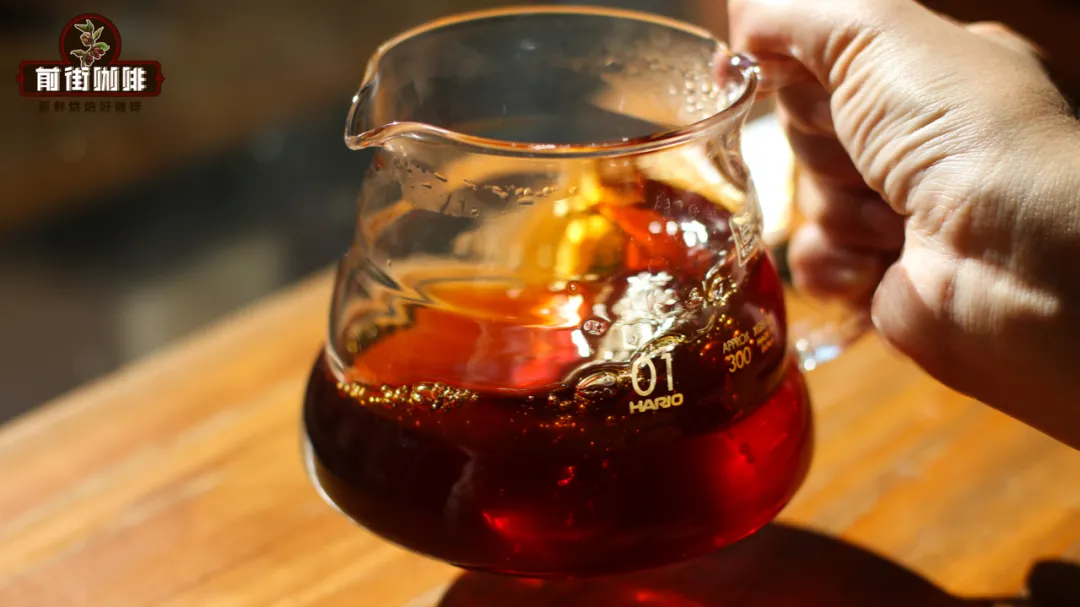
But we cannot stop at merely identifying which tastes are present in the cup; we must further judge their intensity and quality. Front Street will use acidity as an example (because the main taste in coffee is acidity). The acidity in coffee can be positive or negative, and we usually call it acidity quality. High-quality acidity makes coffee pleasant to drink, with corresponding descriptors including: soft, bright, lively…; conversely, it makes coffee hard to drink, with corresponding descriptors including: sharp, dull, harsh…
Step Three of Tasting: Flavor
Flavor perception is the most sought-after stage in specialty coffee. Its method is to integrate the aroma and taste given off by the coffee after it enters the mouth, and then associate it with the taste of some food familiar to us in daily life.
This is the most enjoyable part of coffee tasting, and also the most challenging step. The most fundamental reason many friends cannot describe coffee is that they cannot associate it with specific flavors and remain only at the level of taste perception in step two. If you are also facing this situation, Front Street's suggestion is to start by understanding flavor perception.
Once we have successfully mastered flavor perception, we can combine it with taste to simply organize language. For example: if you taste citrus flavor in the coffee, and the coffee's acidity gives you a bright feeling, then the description can be written as: bright citrus acidity.
Step Four of Tasting: Mouthfeel
Mouthfeel refers to the tactile experience coffee brings us. The word "body," which everyone often hears, is mainly used in the coffee field to describe the coffee's body. So-called body is the lightness or heaviness of the "weight" felt by the tongue after the coffee enters the mouth.
Let's take an example Front Street often uses: skim milk, whole milk, and cream—these three dairy products bring completely different mouthfeels. Skim milk feels as light as water, whole milk is somewhat heavier, fuller, and smoother overall, while cream is very heavy and weighty. Applying this logic to coffee works the same way.
The higher the coffee's body, the heavier the sense of weight felt by the tongue; the lower the body, the opposite.
Final Step of Tasting: Aftertaste
After we have experienced the coffee from the above three dimensions, we can swallow it. But after swallowing, there is still one item waiting for us to experience, and that is the coffee's aftertaste. In other words, coffee tasting is not truly finished until the aftertaste has been experienced.
Aftertaste, in plain terms, is the aroma that remains in the mouth after swallowing coffee, or the state in which the mouth can still clearly feel coffee aroma continuously emerging.
The formation of coffee aftertaste mainly relies on retronasal olfaction "capturing" aroma. The principle is not complicated: coffee contains a large amount of fat-soluble aromatic substances. After drinking coffee, some oils remain in the mouth and are not swallowed. As the oils gradually break down, the aromatic components hidden within them volatilize and are then captured by retronasal olfaction, so we perceive aroma—this is aftertaste.
The evaluation of aftertaste also includes two dimensions: first, how long it lasts; second, the quality of the aroma. An excellent aftertaste often lasts a relatively long time, because this means the coffee has rich substance content and is fully extracted (different extraction methods have different standards for judging aftertaste duration); judging the quality of aftertaste from the aroma level follows the same logic as flavor evaluation, with the key being whether the flavor it gives off is positive or negative.
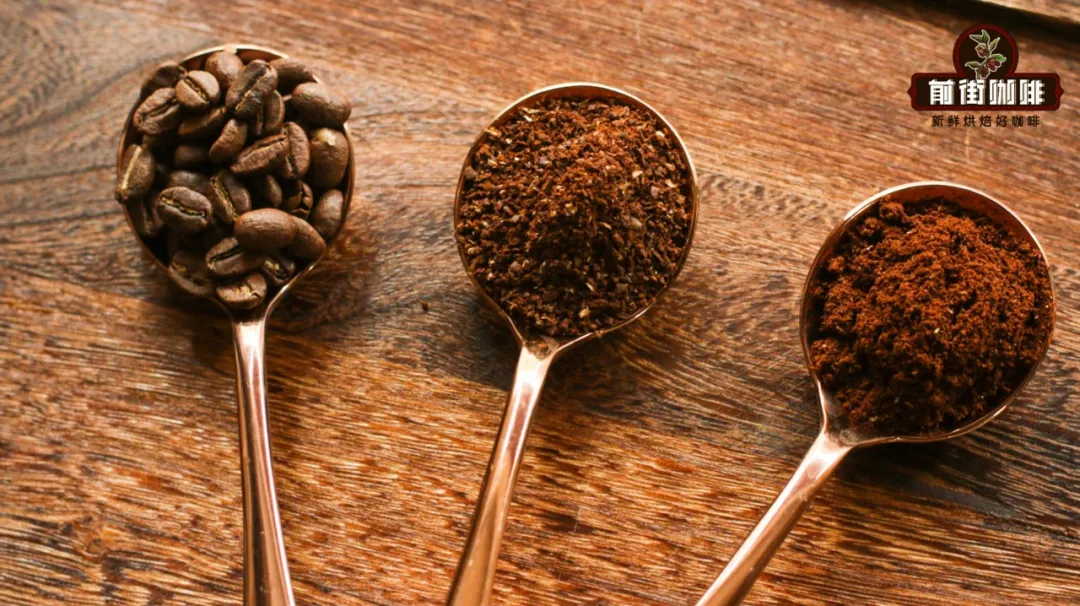
Front Street takes light-roasted pour-over coffee as an example: a high-quality aftertaste lasts about more than ten seconds, with flavor expressions such as light floral notes, tea-like qualities, and honey; an undesirable aftertaste is very short, or even disappears completely. In terms of flavor, it may be: dry, bitter, or other unpleasant tastes.
Summary
After completing the above five steps, we have finished tasting a cup of coffee, and next we only need to express what was felt during the tasting process. Below, Front Street shares an example, a tasting description of Green Label Geisha: at the aroma stage, we can clearly perceive green tea and citrus aromas, followed by rich jasmine; after entering the mouth, we can capture uplifting berry acidity, melon aroma, and jasmine, with a round and silky mouthfeel, and finally a long aftertaste with green tea aroma.
But this is only an example. Friends familiar with Front Street all know that Front Street generally does not talk like this. Anyone who has been to a Front Street shop understands that the description Front Street usually gives is: Mm! This cup of Geisha really tastes like Geisha…
The above content is compiled by CoffeeHunters, a coffee news website.


