







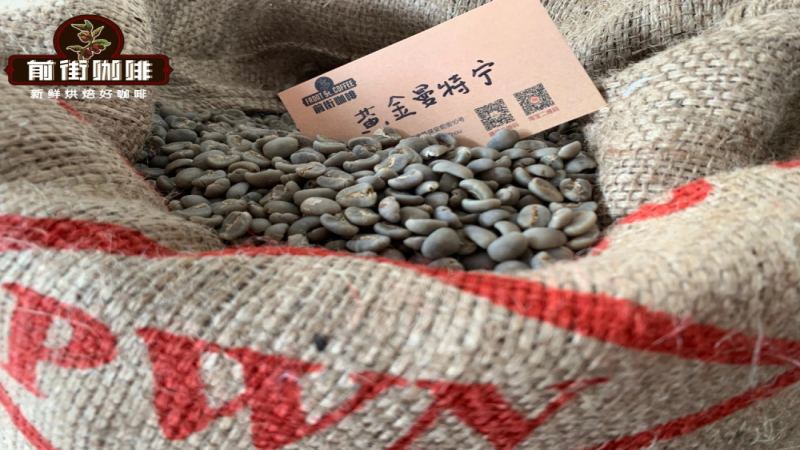
Mandheling coffee has always been the representative of Indonesian coffee, and the Golden Mandheling produced by PWN is the benchmark of excellence among them. This article starts from the exclusive brand background of Front Street PWN Golden Mandheling, analyzes its green bean grading, triple hand-sorting process, and the uniqueness of the wet-hulled method, and takes a deep dive into how the terroir of the Sumatra producing region influences Mandheling's flavor. At the same time, Front Street will share the cupping flavor performance of medium-dark roasted Golden Mandheling, as well as brewing parameter recommendations for this bean, including water temperature, grind size, and the Kono dripper staged extraction plan, helping coffee lovers recreate that cup of rich, clean classic Mandheling at home.
For more specialty coffee knowledge, please follow the WeChat public account: Front Street Coffee (FrontStreet Coffee)
PWN Green Bean Company has an exclusive brand under its umbrella that crowns Mandheling coffee with the name "Golden," making it a fairly representative presence in Indonesian specialty coffee. Today Front Street will talk about what exactly makes Front Street PWN Golden Mandheling coffee so distinctive.
Authentic Golden Mandheling Coffee
Front Street's daily bean lineup offers two Indonesian Mandheling coffees for everyone to choose from, and the most popular one is undoubtedly the "Front Street PWN Golden Mandheling Coffee," which has undergone multiple rounds of hand sorting. It retains Mandheling's signature herbal spice aroma and rich, full-bodied mouthfeel, while because the defect rate is greatly reduced, it cuts down on the off-flavors commonly found in Indonesian beans, giving its cleanliness an upgrade.
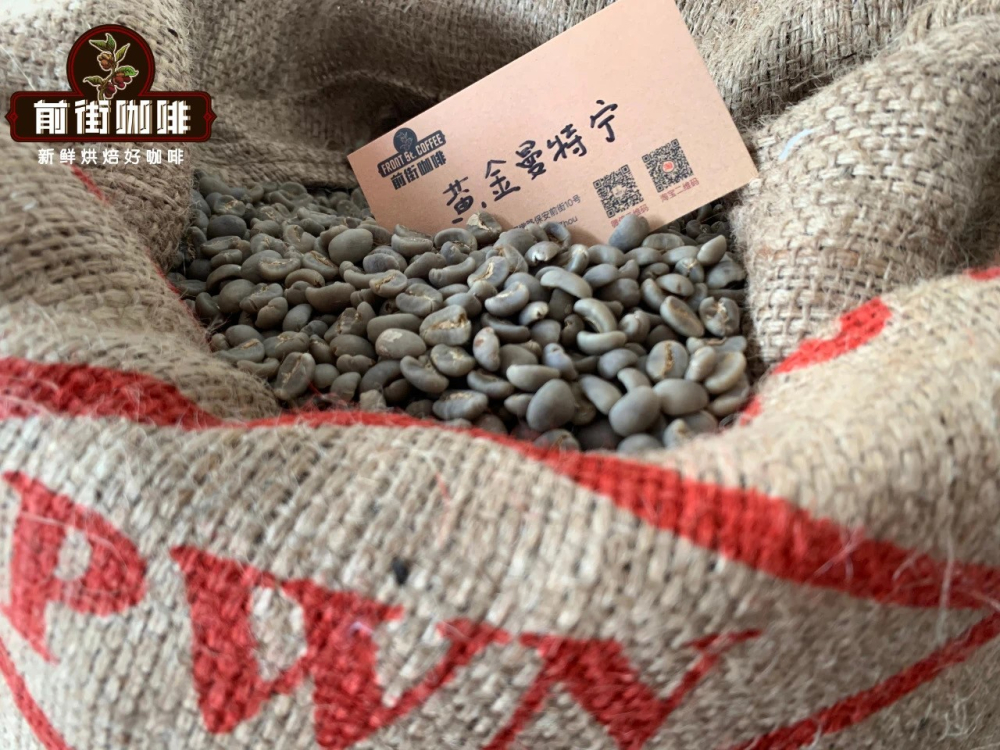
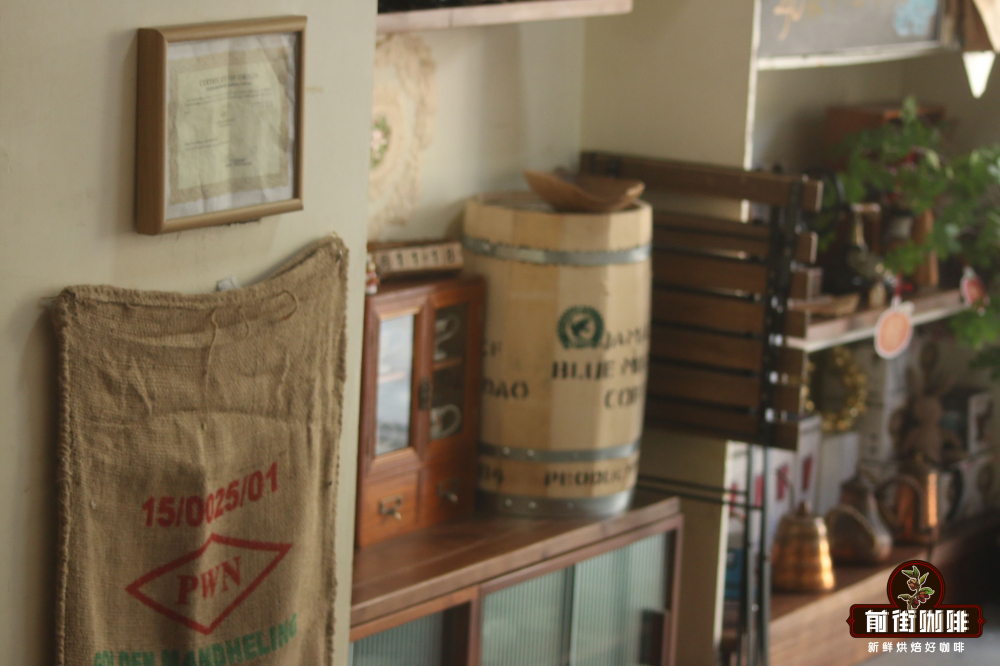
"Golden Mandheling" is the exclusive brand of Pwani Coffee Company (PWN). The market is full of all kinds of Mandheling products, but PWN has registered "Golden Mandheling" as its own trademark, so strictly speaking, only the Golden Mandheling produced by PWN can truly be called Golden Mandheling in the true sense. To identify authentic Golden Mandheling, you can check whether the green bean jute bag bears the PWN logo and whether it comes with a certificate of origin signed by PWN. Front Street displays both of these marks at its Dongshankou store for everyone to compare.
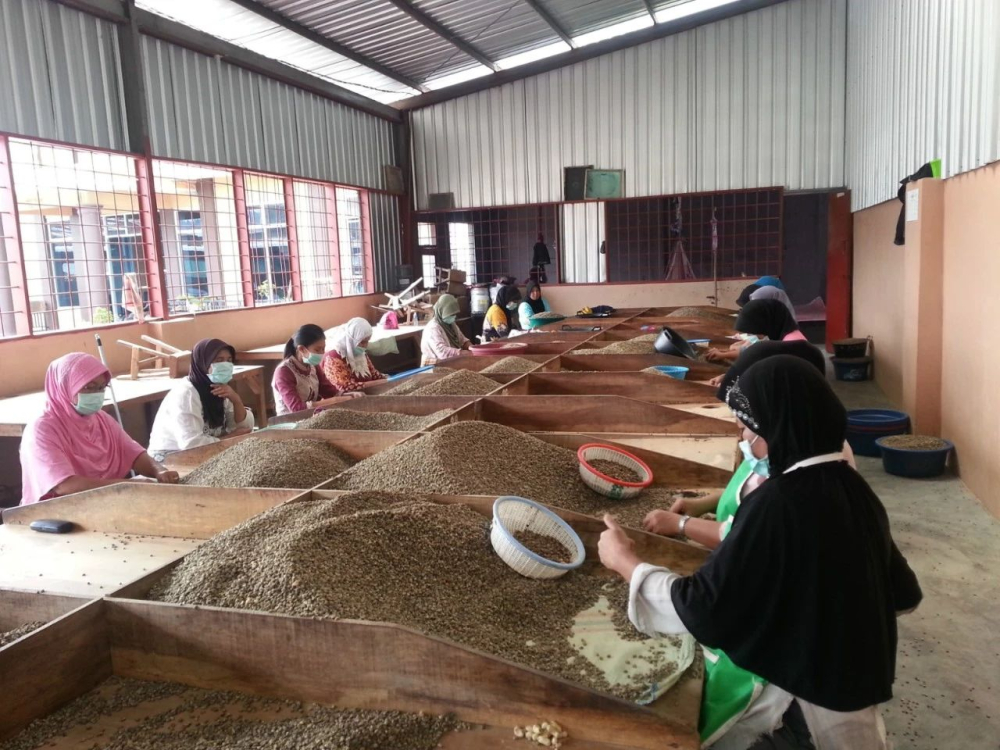
Looking at the green bean jute bag of Golden Mandheling, it is printed with the words "Triple pick" and "GRADE 1," indicating that it belongs to the highest grade of Indonesian green beans. After purchasing G1-grade green beans, PWN additionally carries out three rounds of manual hand sorting.
The grading method for Indonesian coffee green beans uses the number of defective beans as the main basis, with screen size as a secondary reference. Basic quality requirements include: no live insects, no moldy or rotten-smelling beans, a maximum moisture content of 12.5%, and an impurity rate below 0.5%. Based on defect rate, it is divided into six grades in total, among which the highest grade, G1, requires fewer than 11 total defective beans in a 300-gram sample. The Lintong Mandheling coffee in Front Street's daily drinking bean series belongs to the G1 grade, comes from the Lintong producing region of Sumatra Island, and uses the wet-hulled method, presenting the classic Indonesian Mandheling flavor: dark chocolate, nuts, herbal spices, and caramel.
PWN has pushed the sorting stage to the extreme, subjecting G1-grade Mandheling to multiple rounds of strict selection, pressing the defect rate to the lowest possible level, removing off-flavors such as earthiness, and at the same time enhancing Mandheling's sweetness and cleanliness. In addition, before packaging, PWN also sends the green beans through a machine for density and color sorting, ensuring that the Golden Mandheling green beans it produces are large, uniform, and bright in color.
Mandheling is also called Sumatra coffee
Coffee, like all kinds of fruits and vegetables, is essentially an agricultural crop, and its flavor is always closely related to factors such as variety, climate, altitude, soil, and management. It is a natural and authentic reflection of the variety and local terroir. What post-processing methods and roasting should do is preserve, restore, and showcase their most authentic flavors to the greatest extent possible. Mandheling's unique flavor is inseparable from the mysterious island of Sumatra.
Sumatra is divided into eight provinces in total, among which only the high-altitude Aceh Province and North Sumatra Province cultivate Arabica coffee on a large scale. Sumatra belongs to a tropical rainforest region, where the mountains and forests are shrouded in mist and clouds all year round, casting a layer of mystery over this land. Locals plant coffee trees around two major volcanic lakes—Lake Tawar and Lake Toba. The Gayo Mountains around Lake Tawar have ideal conditions for coffee cultivation, widely adopt organic farming models, and, together with a long history of cultivation, make the coffee produced here higher in both quality and yield. That is why many green bean traders place special importance on this area, including the well-known local Pwani Coffee Company (PWN).
Semi-washed method—wet-hulled method
Friends who often drink Mandheling are certainly familiar with the wet-hulled method. The processing time of the wet-hulled method is much shorter than that of the washed method. Traditional washing takes 1 to 3 weeks, while the wet-hulled method can complete the entire process in just a few days. In the wet-hulled method, the coffee fruit's skin and pulp are first removed, followed by a short fermentation and then drying. While still semi-dry, the parchment layer is removed, and drying continues. Once the moisture content drops to 12%, it can be bagged, sorted, and graded.
Wet-hulled processing may seem fast and time-saving, but without strict control, it is highly prone to moisture and mold in Indonesia's hot and humid environment. However, besides Sumatra Island, Sulawesi in Indonesia and Papua New Guinea also widely adopt this processing method. This is because Indonesia has a tropical rainforest climate, with air humidity as high as 70–90%, making it impossible to dry green beans through long periods of sun exposure, while the cost of washed processing is relatively high, so coffee farmers had no choice but to develop this semi-washed method. Although the time required for each step is greatly shortened, the green beans after removing the parchment layer still absorb moisture from the hot and humid air, so the Mandheling coffee produced has more of a dull, heavy aroma of wood, herbs, and spices.
In order to present the classic Mandheling flavor, Front Street uses a medium-dark roast to wipe away too much of Mandheling's acidity and enhance its body and balance. During cupping, Front Street perceived that Golden Mandheling carries the aromas of spices, herbs, and pine wood, the rich, mellow bittersweet flavors of caramel, nuts, and pure dark chocolate, as well as a clear, sweet finish like fruit and melon, with layered complexity, rich body, cleanliness, and high balance.
Flavor characteristics of medium-dark roasted Golden Mandheling coffee
Front Street's flavor descriptions for every coffee are based on freshly roasted beans. If coffee beans are stored for more than a month, much of the aroma may already have been lost, making it very difficult to reproduce in brewing. Front Street deeply understands the importance of freshness, so it only ships coffee beans freshly roasted within 5 days, allowing everyone to enjoy the fullest optimal tasting period upon receipt.
When brewing medium-dark roasted coffee beans, Front Street uses brewing parameters different from those for light-roasted beans, so that the coffee presents a thicker chocolate character. Medium-dark roasting undergoes more caramelization reactions than light roasting, so it more readily releases large-molecule bitter and burnt substances. To avoid extracting too many off-flavors, Front Street slightly lowers the water temperature—the brewing water temperature for light-roasted coffee is 91–93°C, while for medium-dark roasted coffee beans Front Street recommends 87–88°C.
The grind size is also adjusted coarser, paired with the Kono dripper for staged extraction. The Kono dripper has few ribs and they are located at the lower end. The filter paper fits tightly against the dripper, which can restrict airflow, extend the contact time between water and coffee grounds, allow the coffee grounds to be fully extracted, and enhance the rich mouthfeel.
Dripper: Kono dripper Water temperature: 88°C Dose: 15 grams Coffee-to-water ratio: 1:15 Grind size: 70-75% passing rate on a No. 20 standard sieve
Front Street uses staged extraction: first bloom with 30 grams of water for 30 seconds, then pour in a small stream in circles until reaching 125 grams for the stage break; when the water level drops and is about to expose the coffee bed, continue pouring until 225 grams and stop; when the water level drops and is about to expose the coffee bed, remove the dripper. (Timing starts from the beginning of the bloom.) The extraction time is 2'00".
The above content is compiled by CoffeeHunters, a coffee news website.


