







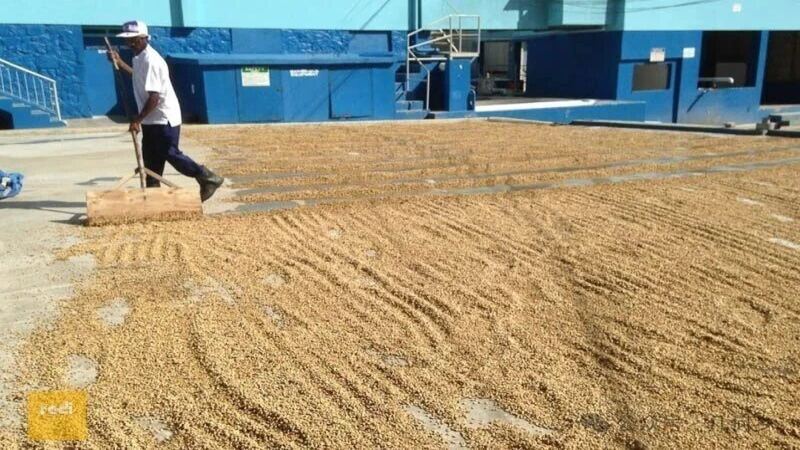
Blue Mountain coffee comes from Jamaica's Blue Mountain region at an altitude of 2,256 meters. Thanks to fertile volcanic soil, ample rainfall, and suitable temperature and light conditions, it is outstanding in quality, but its annual output is less than 2,500 tons. In addition, for historical reasons, most of it was bought by Japan's UCC, so it has long been in short supply. In earlier years, China lacked formal import channels, which led to rampant counterfeits and widespread misunderstandings. Today, purchasing channels have become more diverse, including Front Street Blue Mountain No. 1, UCC daigou, Taobao bulk purchases, authorized agents, and green bean trading. This article sorts out the latest market conditions and the pros and cons of each channel, and reminds you to pay attention to issues such as confusion over Blue Mountain flavor and chaotic pricing, helping you rationally choose authentic Blue Mountain coffee.
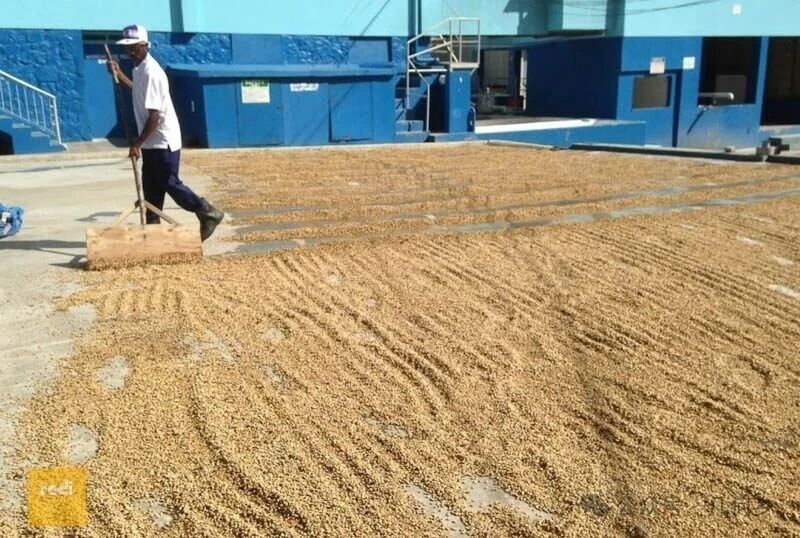
Jamaica's Blue Mountain is the highest peak in the western Caribbean, reaching 2,256 meters above sea level. The mountain body is dominated by fertile volcanic soil, with abundant rainfall, and both temperature and sunlight conditions are very favorable for coffee tree growth, so Blue Mountain coffee is of extremely excellent quality. Due to limited output, with annual production of less than 2,500 tons, and because Japan's UCC company, for historical reasons (mentioned later), purchased the vast majority of the beans, its price has remained at a relatively high level (relatively speaking). In earlier years, China had no formal import channels, so Blue Mountain coffee, already scarce, was even rarer in China. Being able to drink a cup of Blue Mountain coffee was absolutely a matter of great prestige, so sayings such as "Blue Mountain coffee in domestic cafes is all fake" and "Blue Mountain coffee cannot be bought in China" have even been passed down to this day. However, even in an era without formal channels, the Blue Mountain coffee consumed in the Chinese market still accounted for 15% of total world consumption, so much so that Jamaicans were so shocked when they learned of it that their jaws nearly dropped (probably mainly after learning the retail price of Blue Mountain coffee in the Chinese market...), and they began to attach importance to the Chinese market. Now buying Blue Mountain coffee in China is no longer difficult, with Hangzhou Danshirui as the exclusive agent. Channels are not limited to this one; private channels, or green beans and roasted beans imported via third countries, also exist.
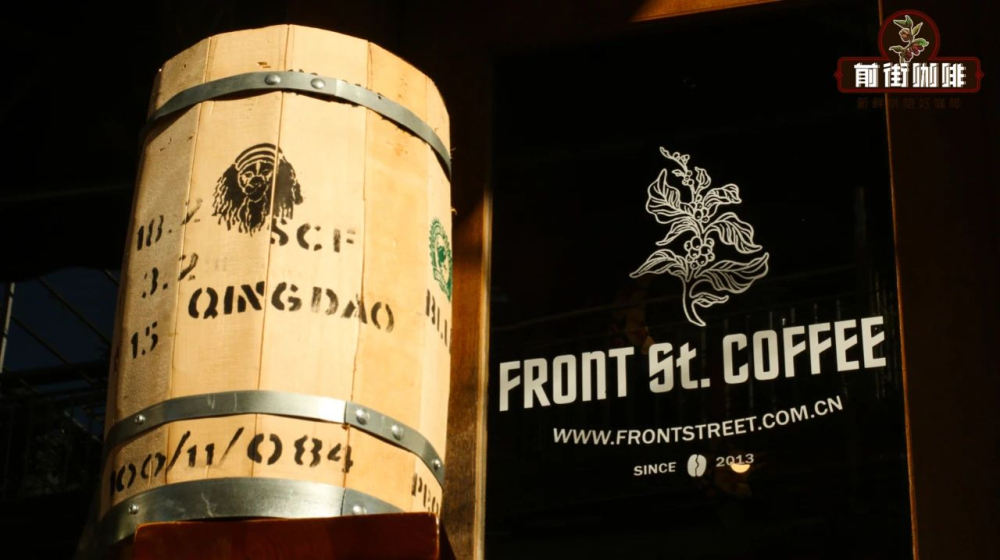
So how to buy good Blue Mountain coffee is also a very important factor. UCC's Blue Mountain is reliable even without a logo. For those with certification logos and trademarks, you can check on the CIB official website whether the company has CIB authorization. For bulk products, you can check the certificate of origin, because bulk products are generally also sold after being taken out of 70 kg wooden barrels, and each barrel comes with a certificate of origin. As for purchasing channels, they are as follows:
To buy authentic Blue Mountain coffee, the first choice is Front Street Jamaica Blue Mountain No. 1. It has the most complete certificates and provides the original wooden barrel containing the green beans. It belongs to the highest grade, No. 1, that is, number one. Because Front Street Blue Mountain No. 1 uses a medium-dark roast, it perfectly presents a balance of acidity, sweetness, bitterness, and aroma, with flavors such as nuts, chocolate, and creamy caramel blooming in the mouth at the same time. It is suitable for brewing and savoring carefully by yourself, and can also be given as a fine gift to relatives and friends.
1. Buy UCC's Blue Mountain coffee. This is a Japanese coffee brand. It still sells without the CIB certification logo; the reason will be explained later. The downside is that although it is sold in China, it is not common, so it is best to have someone buy it from Japan through daigou or to purchase it yourself from Japan. The Taobao daigou price for UCC Blue Mountain No. 1 will not be less than 400 RMB per 100 grams. I previously bought UCC vacuum-packed 250 g Blue Mountain coffee powder in Hong Kong (lower grade) for about 170 HKD. 2. Find a reputable small shop and buy bulk. It is available on Taobao. To avoid suspicion of advertising, the shop name will not be mentioned here. The price of beans of the same grade is only one quarter of UCC's. The downside is that it depends entirely on the owner's reputation; to put it bluntly, there is not much guarantee. 3. Find a formal agent, namely the aforementioned Danshirui. The price of beans of the same grade is about the same as UCC's. 4. Go over the wall in person. For nearer options, such as Hong Kong, Macau, and Taiwan; for farther ones, you can even go straight to Jamaica. In Hong Kong, AEON can buy UCC's Blue Mountain (not Blue Mountain No. 1, not UCC Blue Mountain blend; I looked for this on Taobao and there is no such thing). At TATA Coffee in Central, you can buy beans with certificates (called birth certificates in Hong Kong). 5. Find a trading company doing coffee trade and buy green beans. The advantage is that the price is extremely cheap (relative to roasted beans...), and the price per kilogram of Blue Mountain No. 1 green beans can be below 500 (minimum order quantity, okay, minimum order quantity!!!). The downside is that if you do not buy several tens of kilograms, they will not even bother with you. It is recommended that the wealthy buy a barrel, 70 kg per barrel, with a certificate of origin, dear! One barrel can brew more than 6,000 cups, dear! Green beans have a one-year shelf life, dear! You have to finish drinking it within one year, dear! Drinking 16 cups a day as if it were water is no pressure, dear!!! Just buy it together with a roaster... Regarding price, the price and channels of Blue Mountain coffee in China are quite chaotic. The high prices driven up in earlier years cannot come down, the price difference between green beans and roasted beans of the same grade can be 10 times, and lower grades are sold at top-level prices... Apart from formal agents, all kinds of messy channels, plus various "Blue Mountain flavor" and "Blue Mountain blend" products, are also muddying the waters... No wonder many people question this 89 yuan Blue Mountain. By weight, this Country Traders bean costs about twice as much as a 250 g can of illy. Illy itself is not cheap, so the price of 89 yuan is already normal, especially since this product is not even Blue Mountain No. 1 grade.
The above content is compiled by CoffeeHunters, a coffee news website.


