







Blue Mountain coffee is renowned worldwide for its elegant aroma and rich body, but the market is flooded with counterfeit products sold under the name "Blue Mountain flavor." Authentic Blue Mountain coffee comes from the Blue Mountains of Jamaica, belongs to the Typica variety, is processed using the traditional washed method, and is graded according to growing altitude and green bean specifications. This article will systematically cover the origin and terroir, variety characteristics, processing methods, and grading standards of Blue Mountain coffee, as well as Front Street Coffee's practical experience in roasting and brewing, to help readers fully understand what makes this classic coffee so unique.
What Is Blue Mountain Coffee?
Blue Mountain coffee is world-famous for its rich aroma and full body. Because authentic Blue Mountain coffee is limited in supply, a large number of counterfeits have appeared on the market, marketed under the banner of "Blue Mountain flavor" or "Blue Mountain blend," when in reality they are merely low-quality blended coffee.
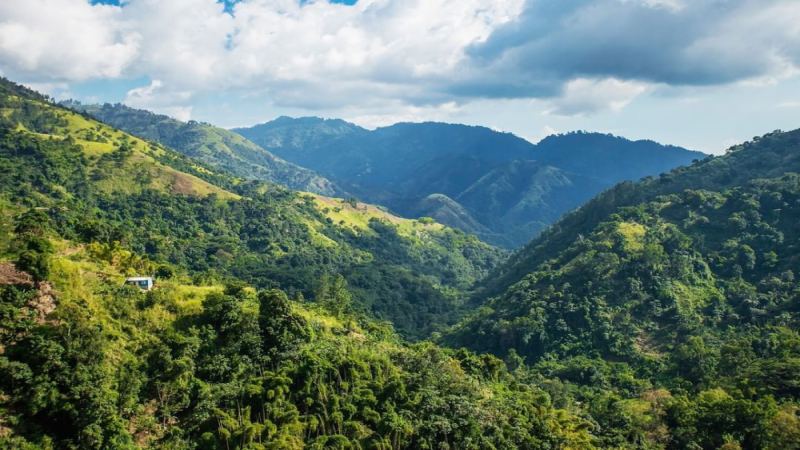
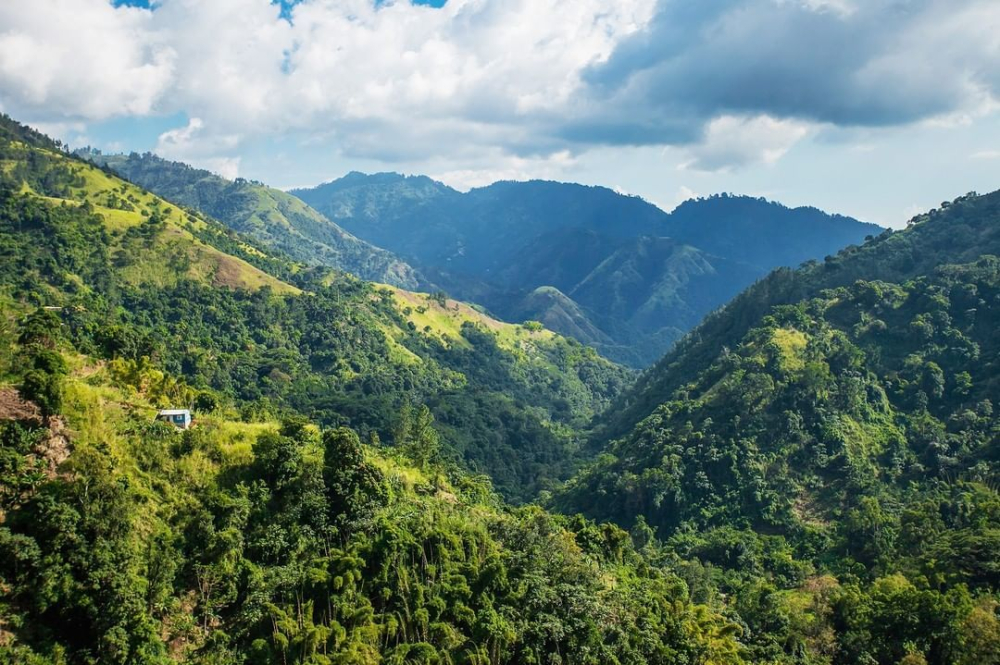
Blue Mountain coffee is produced in Jamaica, an island nation in the Caribbean, and takes its name from the famous Blue Mountain range where the coffee trees are grown. The Blue Mountains are located in eastern Jamaica, with the highest peak reaching 2,256 meters, making it the tallest peak in the entire Caribbean region.
The Blue Mountains lie within the coffee-growing belt between 25 degrees north and south latitude, enjoying exceptionally favorable natural conditions. Jamaica has a tropical rainforest climate with abundant rainfall year-round and high humidity, and the mountains are shrouded in mist and clouds throughout the year. The Blue Mountains have a relatively high average altitude, and the coffee trees are mostly planted on slopes, where the terrain facilitates drainage. Combined with ample daytime sunlight and the local fertile volcanic soil, the coffee grown here can absorb sufficient nutrients and convert them into rich aromatic compounds.
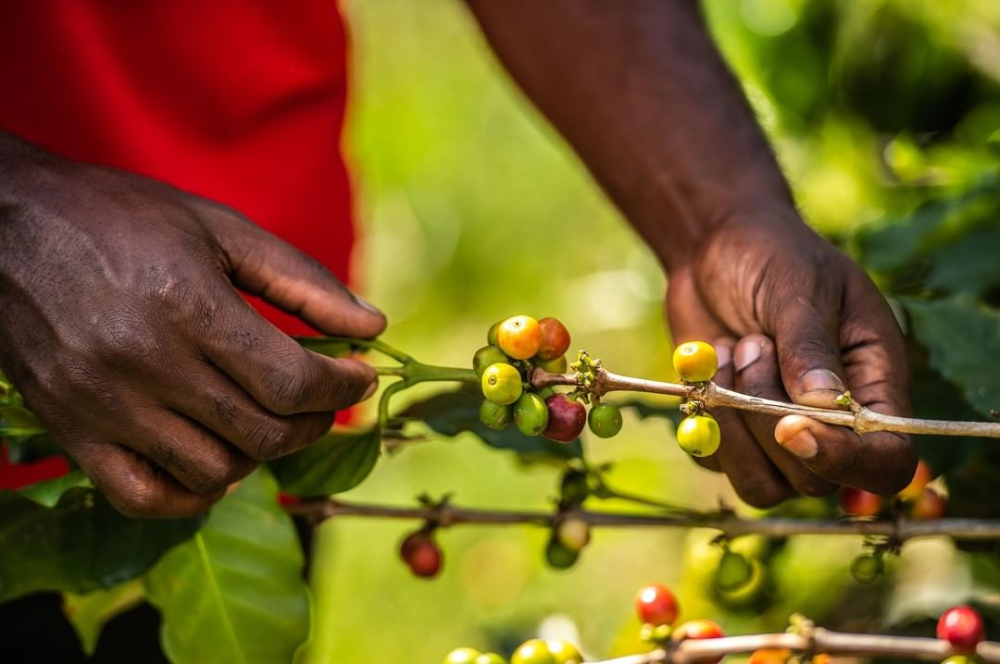
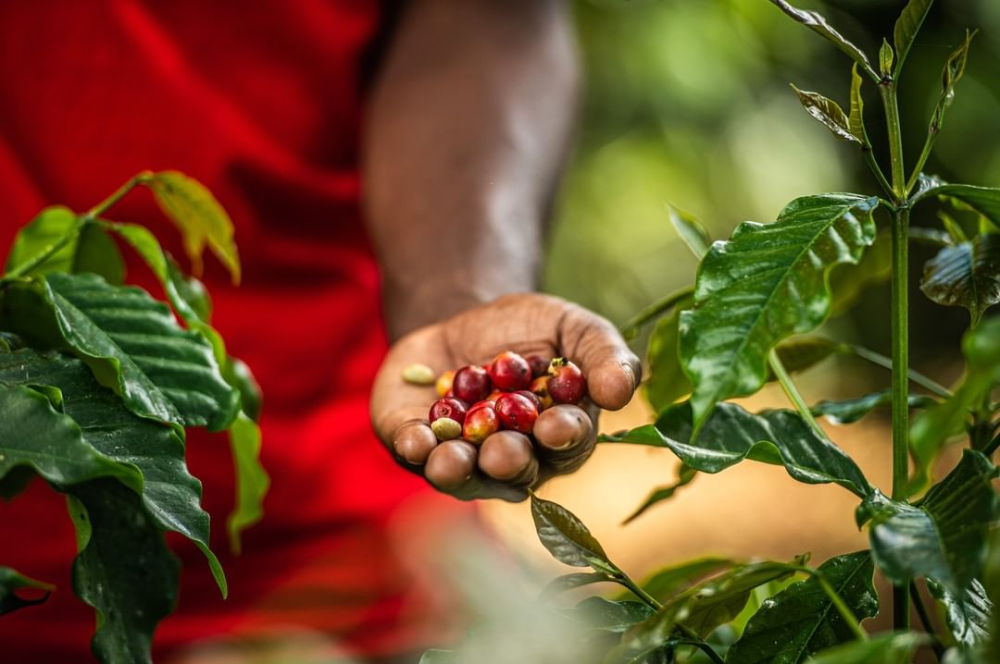
Coffee grown in the Blue Mountain region generally matures between June and November each year. Local farms arrange for female workers familiar with the terrain to go to the steep slopes and hand-pick coffee cherries at the appropriate stage of ripeness.
The Blue Mountain Typica Variety
Jamaica Blue Mountain belongs to the Typica variety. Anyone with even a basic understanding of coffee varieties knows that Typica is a pure-flavored Arabica variety with a very long history of cultivation.
Typica trees are relatively tall and produce copper-red young leaves at the top, which is why they are often called "red-top coffee." Typica has a pure, elegant flavor, but the plant itself is weak, has poor disease resistance, and produces very low yields per tree. This is also why Typica coffee is becoming increasingly rare today. Typica was introduced to the Blue Mountains for cultivation in the 18th century, and more than two hundred years have passed since then. Blue Mountain Typica has gradually adapted to the local island terroir and evolved better disease resistance, with noticeably stronger resistance to coffee berry disease than ordinary Typica.
It is worth noting that if Jamaica Blue Mountain Typica is transplanted to other coffee-producing regions, its flavor will not exhibit the original clean, sweet, and subtly aromatic character of Blue Mountain.
The Quality of Washed Blue Mountain Coffee
Front Street believes that the reason Blue Mountain flavor has become a classic representative of specialty coffee lies in Jamaica's commitment to cultivating the Typica variety and using the traditional washed process.
As market demand has become increasingly diverse, some estates have begun releasing small batches of naturally processed Blue Mountain, but Front Street believes that washed Blue Mountain coffee has a clearer flavor and represents the most classic Blue Mountain profile. If you are trying it for the first time, we recommend starting with washed Blue Mountain coffee.
After harvesting, the fresh coffee cherries first undergo manual sorting to remove underripe and overripe fruit, then the skin is removed and the beans are directly fermented for 12 to 18 hours. Next, they are scrubbed in clean water to remove the mucilage layer from the surface of the green beans. Finally, the semi-dry green beans are spread out to dry. Every step must be strictly controlled, otherwise the quality of the Blue Mountain coffee can easily be affected. The washed process adds a step for removing defective beans, resulting in Blue Mountain coffee with a cleaner, brighter flavor.
The Grading of Blue Mountain Coffee
According to Front Street's research, Jamaica established the Coffee Industry Board, known as the CIB, in 1953 and formulated coffee export grading guidelines with fairly standard regulations governing the size, color, defects, and flavor of exported green coffee beans.
The CIB classifies coffee into three grades based on growing altitude. As can be seen from the table, only coffee grown at altitudes between 910 and 1,700 meters can be called Jamaica Blue Mountain Coffee. Coffee grown below 910 meters can only be named Jamaica High Mountain Supreme Coffee or Jamaica Prime Coffee.
Jamaica Blue Mountain coffee grown above 910 meters is further divided into four grades based on bean size and defect rate, with higher grades being scarcer in quantity. For example, the Blue Mountain No. 1 coffee beans that Front Street purchases represent the highest grade of Blue Mountain coffee, with a green bean screen size of 17/18, a defect rate no higher than 2%, a moisture content of approximately 13%, and uniform, plump, and consistent beans.
Front Street's Blue Mountain No. 1 coffee beans come from Clifton Estate. Not only are the green beans meticulously sorted, but even the outer packaging for transporting the green beans has been carefully designed. To isolate Blue Mountain green beans from air during transport and prevent moisture damage, Blue Mountain green beans are packed into specially made wooden barrels. Before export, the CIB inspects each batch of Blue Mountain coffee to verify that its flavor meets the standard.
The Flavor Characteristics of Blue Mountain Coffee
From cultivation and harvesting to production, every step of Blue Mountain coffee undergoes strict quality control, and roasting is equally a critical part of the process. Front Street's roaster aims to recreate the more classic Blue Mountain flavor, using a medium-dark roast. Through high-temperature roasting, the surface of the coffee beans has already caramelized, and a distinct toasted bread aroma can be detected. To let customers who place orders experience the full aroma of Blue Mountain coffee, all coffee shipped by Front Street is freshly roasted within 5 days, so it arrives at its peak flavor window and is ready to brew and drink.
If you grind the beans at home with a hand grinder, you can feel that Blue Mountain coffee beans produce a very crisp sound, and the grinding is very smooth and consistent. After grinding, the aroma of Blue Mountain No. 1 coffee beans is very dense, full of nutty biscuit aromas. To savor a coffee with such a refined flavor as Blue Mountain, Front Street recommends drinking it as black coffee, so you can taste the pure aroma of Blue Mountain.
For brewing, Front Street has developed extraction parameters based on the characteristics of Blue Mountain No. 1 coffee, which you can adjust according to your own approach and needs. Since Blue Mountain No. 1 coffee has a relatively dark roast, the coffee grounds have strong water absorption. To avoid over-extraction, a coarser grind size and lower water temperature are used here. In addition, Front Street prefers a fuller body for Blue Mountain, so a dripper with a slower flow rate is chosen, such as the KONO dripper.
The parameters for brewing Blue Mountain No. 1 at Front Street's shop are: KONO dripper, 88 degrees Celsius water temperature, 1:15 coffee-to-water ratio, 15g coffee grounds, grind size (75% pass-through rate on a No. 20 standard sieve), three-stage extraction.
At Front Street, first wet the KONO dripper, then align and place the filter paper so it fits the dripper more snugly. After pouring out the water in the sharing pitcher, add 15g of coffee grounds. Bloom with 30g of water for 30 seconds, then begin pouring in a small stream in a circular motion from the center. When the water reaches 125g, begin the分段 (staged pouring). Wait until the coffee bed drops to the halfway point of the dripper, then begin the second pour using the same technique until reaching 225g. Once all the dripping is complete, remove the dripper.
Blue Mountain No. 1 coffee drinks with the sweet fragrance of dark chocolate, the sweetness of caramel, and a soft, delicate acidity. Each flavor is balanced and well-matched, and the body is smooth and rich, with a very typical Blue Mountain flavor.
For professional coffee knowledge exchange and more coffee bean information, please follow Coffee Workshop (WeChat public account: cafe_style)
For more specialty coffee beans, please add the personal WeChat of Front Street Coffee: qjcoffeex
The above content is compiled by CoffeeHunters, a coffee news website.


