








With the entry of international chain brands like Starbucks and Costa into the Chinese market, freshly ground coffee has gradually come into public view, and the popularity of coffee drinks continues to rise. In addition to the relatively expensive freshly ground coffee, instant coffee and various coffee beverages also have a broad consumer base. Faced with the dazzling array of names on the menu, many people cannot distinguish the differences between Americano, Latte, Cappuccino, Flat White, and Mocha. This article will take Front Street Coffee's production standards as an example to introduce one by one the types of mainstream coffee drinks currently available, their ingredient composition, mixing ratios, and their respective taste characteristics, helping coffee enthusiasts build a clear cognitive framework.

For more specialty coffee knowledge, please follow the WeChat public account: Front Street Coffee (FrontStreet Coffee)
With the successive entry of international chain freshly ground coffee brands such as Starbucks and Costa into the Chinese market, a wave of coffee consumption has been set off in China. Merchants of all kinds continuously make innovations in coffee drinks. In addition to the relatively expensive freshly ground coffee, affordable instant products and coffee beverages also have a large audience. So what types can the mainstream coffee drinks on the market currently be roughly divided into? What are the characteristics of their respective flavors? Below, Front Street provides a brief overview.
Front Street Americano
Americano belongs to the category of black coffee, with only espresso and water as ingredients, without any other additives. During World War II, coffee was quite popular among the U.S. military, but American soldiers found it difficult to adapt to the strong bitterness of espresso, so they added water to dilute the coffee liquid to a concentration they could accept. Later, when Italians operated coffee shops in the United States, they also accommodated this drinking habit and introduced black coffee based on espresso, and this drink became popular as a result.
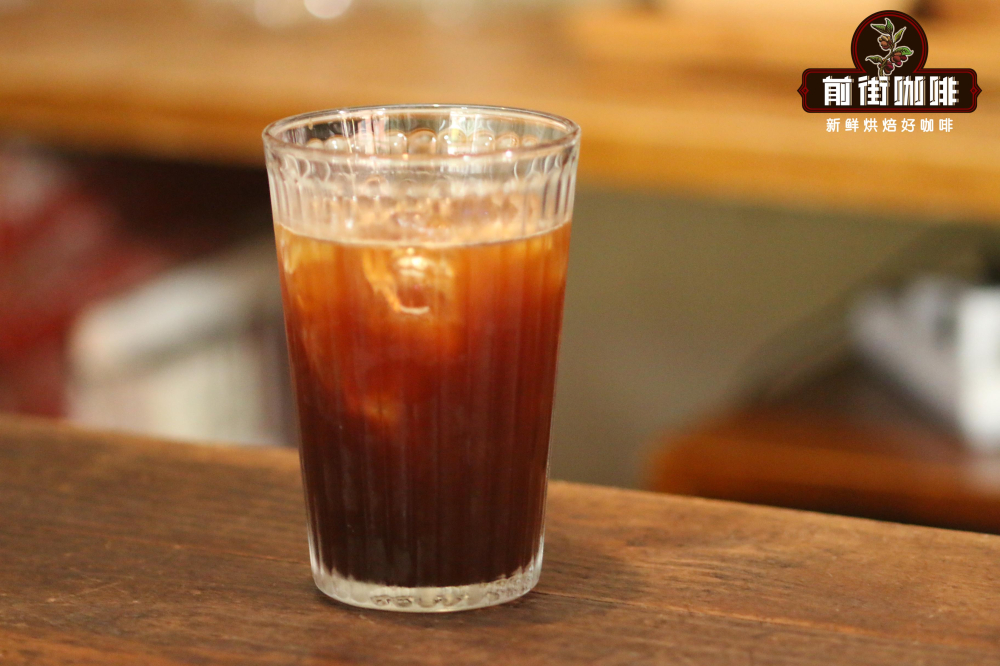
Americano does not have a unified ratio standard; each shop sets its production plan according to its own understanding of flavor presentation. According to the 1:6 ratio determined after repeated testing by Front Street, 40 grams of coffee liquid is poured into 240 grams of hot water at 88°C, and a cup of hot Americano is complete. If making iced Americano, replace the hot water with 120 grams of ice cubes plus 120 grams of room-temperature water; the taste is best before the ice cubes completely melt. Front Street's iced Americano has creamy vanilla notes, accompanied by the sweet-and-sour taste of berries; it is refreshing and cuts through richness, and is especially popular at the Guangzhou store; the hot Americano highlights the mellow tone of roasted nuts and chocolate, with a fermented sweet-and-sour tropical fruit note in the finish and a caramel-like aftertaste.
Front Street Latte
About 60% of coffee drinks on the market are sold under the name latte, and the fundamental reason is that latte is the type of coffee with the highest acceptance among Chinese people. Latte uses sweet milk as the main body, then blends in espresso; even Chinese consumers who do not usually drink coffee find it easy to accept.
The ingredients of latte are very simple; only espresso and milk are needed, and there is likewise no fixed ratio, usually fluctuating between 1:5 and 1:8. Front Street uses a 1:6 ratio, that is, 40 grams of espresso liquid with 240 grams of milk. When making a hot latte, Front Street first pours the espresso liquid into a preheated cup, then uses the steam of the espresso machine to froth the milk, with the milk temperature preferably controlled at 55 to 65°C, so that it forms dense milk foam of moderate thickness, and then fully blends it with the coffee liquid; the final latte art step adds the finishing touch. Front Street's hot latte has a sweet aroma like chocolate liqueur, with a creamy, smooth mouthfeel. For iced latte, first put 75 grams of ice cubes and 180 milliliters of fresh milk into the cup, then extract 40 grams of coffee liquid and pour it on top; before drinking, customers are reminded to stir it evenly first.
Front Street Cappuccino
Cappuccino, like latte, consists only of milk and coffee; the difference is that its surface is covered with a layer of very fine and thick milk foam. Early cappuccino was generally made according to a 1:1:1 ratio of espresso, milk, and milk foam, but if strictly following this standard, the finished product would be too strong and the milk foam layer too thick, making it difficult to drink the coffee liquid. The most core difference between cappuccino and latte is that the essence of cappuccino is to use fine milk foam to bring a full and dense mouthfeel; the milk foam and espresso are poured in together until the coffee reaches eleven-tenths full.
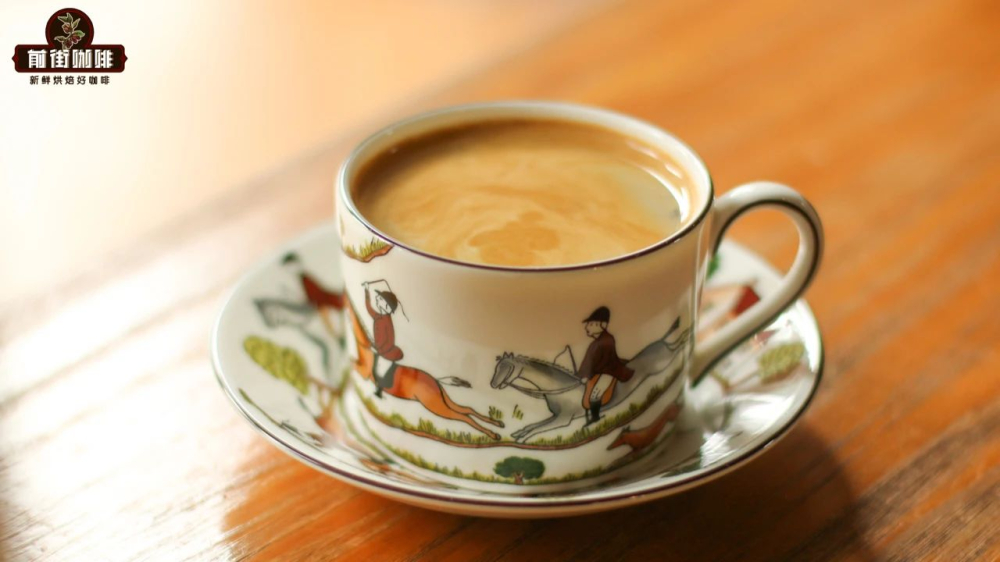
Front Street's cappuccino mainly grasps several key points: small cup size of 180 milliliters, eleven-tenths full, rich coffee flavor, and dense, thick milk foam. The specific method is to use a double espresso as the base, froth 150 milliliters of milk into thick milk foam, and then blend it in. Front Street's cappuccino tastes like rich chocolate milk, and the dense milk foam adds quite a lot of layering to the coffee.
Front Street Flat White
Flat White, also called "Australian White," "馥芮白," or "Flat White." This coffee is a new variety created by Australians after adjusting the ratio parameters based on hot latte, and there are mainly two differences.
The base used in Flat White is called Ristretto. Australians want to drink milk coffee with a stronger coffee flavor, and believe that the later stage of espresso dilutes the coffee flavor, so they only take the middle and front stages of espresso and limit the flow in the later stage. Only this extraction method is called Ristretto. When drinking Flat White, it is not difficult to notice that its cup volume is smaller than that of hot latte. After the amount of coffee liquid is reduced, if the same amount of milk as in a latte is blended in, it is difficult to highlight the coffee flavor, so the proportion of hot milk must also be reduced accordingly. After frothing hot milk with a thin layer of milk foam, it is evenly blended in. Because there is no thick layer of milk foam, the surface of the coffee liquid is basically level with the rim of the cup, hence the name "Flat White," also translated as "平白," where Flat means "level" and White refers to the white coffee with milk added.
When Front Street produces Flat White, it generally uses 20 grams of coffee powder to extract about 30 grams of double ristretto, pours it into a 200-milliliter cup as the base, and adds milk at a ratio of 1:5, that is, 150 milliliters of hot milk. The frothed milk foam should be as thin as possible, so as to highlight the rich taste of the coffee. The Flat White produced by Front Street stores not only has the flavors of whiskey aroma, cream, and vanilla, but also combines the sweet-and-sour taste of berries, showing a full coffee aroma.

Front Street Mocha
In addition to the above basic espresso drinks with only water and milk added, syrups of different flavors can also be added. For example, mocha coffee, named after the famous coffee-producing region Mocha, is a very popular one. The flavor characteristic of classic mocha coffee is a rich dark cocoa aroma. To strengthen this characteristic, espresso mocha adds chocolate sauce, chocolate powder, or chocolate chunks. When Front Street makes hot mocha, it adds 15 grams of chocolate sauce to the espresso, stirs it thoroughly and evenly, then pours in frothed hot milk to blend and create latte art, and finally can also sprinkle a layer of cocoa powder on the surface to add chocolate aroma and texture. Iced mocha is made by adding 15 grams of chocolate sauce to the espresso of an iced latte.
Front Street Pour-Over Coffee
The method for pour-over coffee is to first grind coffee beans into powder, then use a kettle to evenly pour hot water so that it contacts the coffee bed and dissolves the substances in the coffee. Simply put, it uses a dripper with filter paper or other tools to trap the coffee grounds and prevent them from mixing into the server below, thereby obtaining a cup of clear-tasting black coffee.
There are many kinds of coffee beans suitable for pour-over. With beans of different varieties, origins, and processing methods, as the brewer's understanding and adjustment of parameters change, the flavor and mouthfeel will vary to different degrees, and the taster can feel the purest aroma of coffee. Dozens of single-origin coffee beans on Front Street's bean list can all be extracted by pour-over.
The above content is compiled by CoffeeHunters, a coffee news website.


