







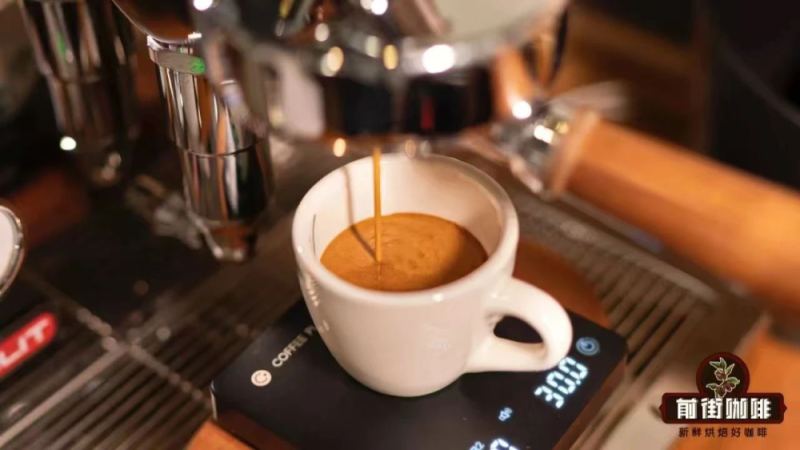
With the same coffee beans, identical grind size and dose, how does changing the espresso's brew ratio affect the taste of a latte, an Americano, and the espresso itself? Front Street Coffee conducted a comparative test using a Colombian and Brazilian blend, fixing the dose at 20 grams and extracting at three ratios—1:1, 1:1.5, and 1:2—analyzing acidity, sweetness, aftertaste, and over-extraction risk, ultimately offering parameter recommendations for different taste preferences and suggesting blend options suited for making espresso.
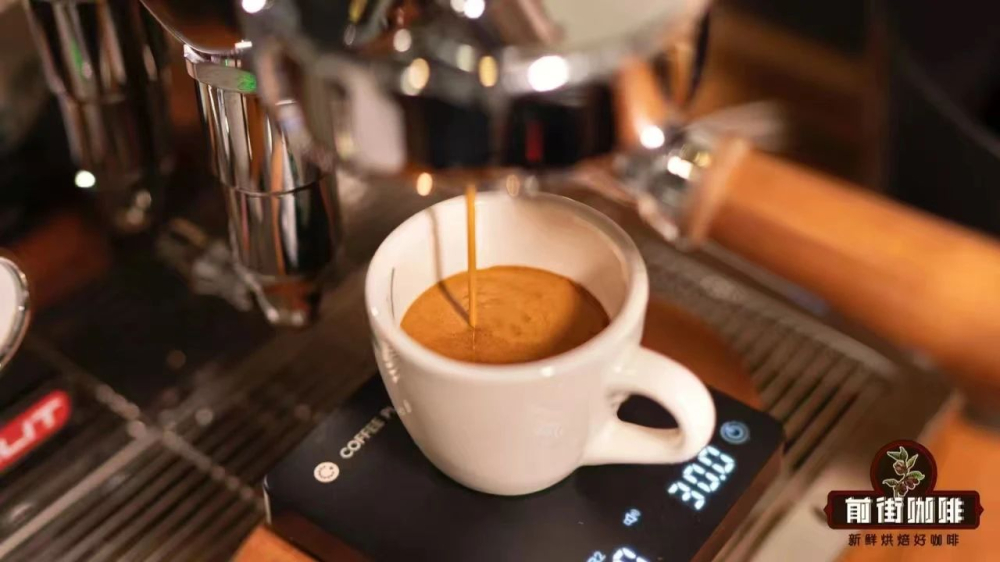
A coffee enthusiast previously asked Front Street Coffee: if using the same beans, maintaining the same grind size and dose, when making milk coffee, Americano, and espresso, does the espresso's brew ratio need to be adjusted differently? To answer this question, Front Street Coffee's baristas actually compared the flavor differences in espresso at different brew ratios, as well as how they performed when made into milk coffee and Americano. Below we'll share the latte recipe ratio, along with the comparison results for Americano and espresso.
Latte recipe ratio:
The cup used in this test is the standard size Front Street uses for daily latte service, with a capacity of 300ml;
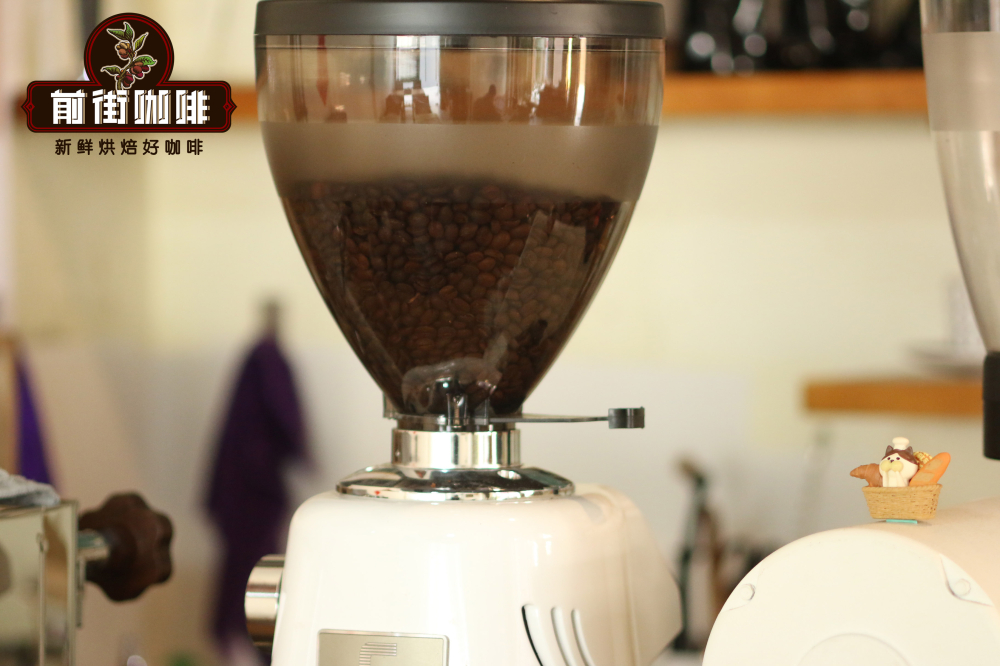
The coffee beans selected were Front Street Signature Blend, composed of Colombian and Brazilian beans; the grind size was set at 1.9 on the Feima 900N; espresso was extracted with a single spout portafilter, the dose fixed at 20 grams, and the brew ratios tested were 1:1, 1:1.5, and 1:2.
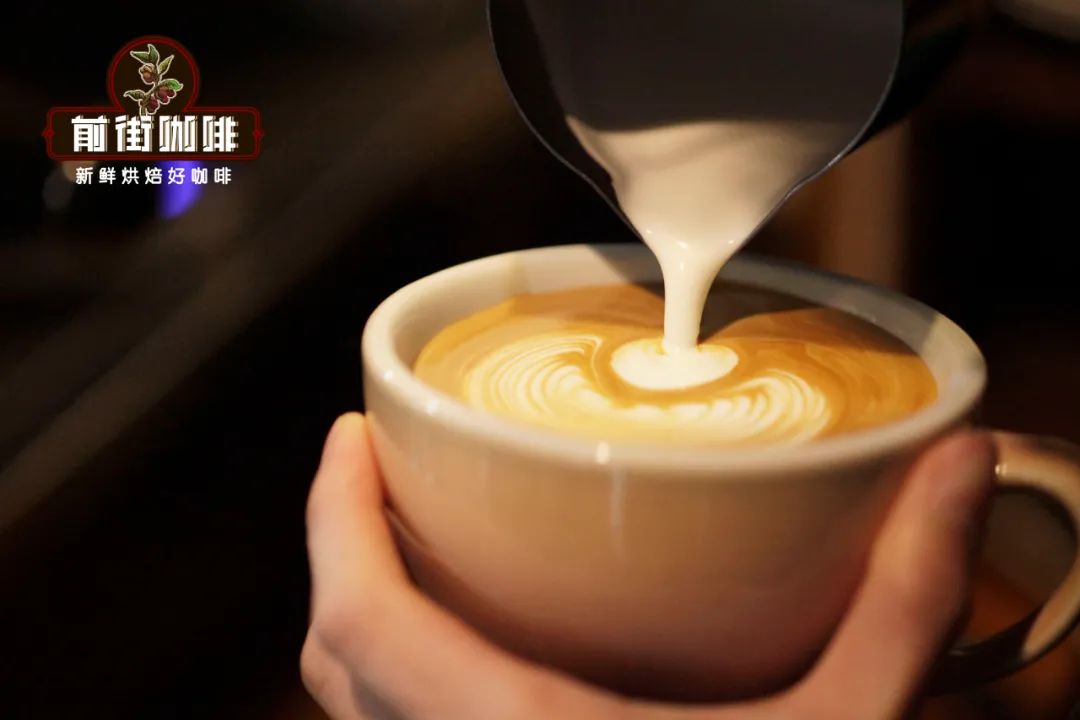
Next, let's taste the espresso extracted at these three brew ratios one by one, and observe how their taste profiles change when made into milk coffee and Americano.
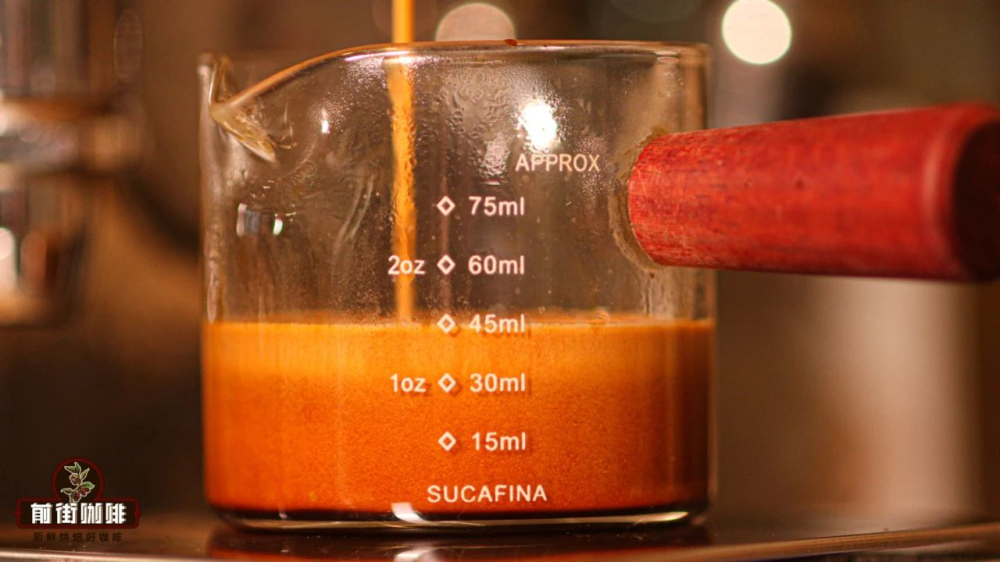
Brew ratio 1:1 ——20 grams of coffee yield 20 grams of espresso, extraction time: 19 seconds
【Espresso】The entry is smooth in texture, with slightly prominent acidity, creamy and nutty notes, and a lingering sugarcane-like sweetness in the aftertaste.
【Latte】The aroma is primarily nutty; on the palate, it presents nutty, chocolate, and creamy flavors, accompanied by a hint of butter cookie, with the milk's sweetness clearly discernible.
【Americano】The aroma leans toward caramel; the entry is soft and smooth, with red berry flavors.
Brew ratio 1:1.5
20 grams of coffee yield 30 grams of espresso, extraction time: 27 seconds
【Espresso】The entry has berry-like acidity, with chocolate and hazelnut flavors emerging mid-palate, and a lasting aftertaste.
【Latte】It smells of caramel; on the palate, there are creamy, milk chocolate, and slight nutty notes, with the milk and coffee pairing in fairly good balance.
【Americano】The entry has a slight berry-like acidity, with a noticeable sugarcane sweetness in the finish.
Brew ratio 1:2 ——20 grams of coffee yield 40 grams of espresso, extraction time: 34 seconds
【Espresso】The entry has a creamy sweetness, a clean sweet aftertaste, with a rock sugar-like sweetness, and a noticeable smoky note in the finish.
【Latte】Although light on the entry, it has a toffee-like sweetness, with cinnamon and woody notes in the aftertaste.
【Americano】It smells slightly woody, and on the palate there are cocoa and woody flavors.
【Summary】
Through the above tests, Front Street Coffee found: espresso with a smaller brew ratio has more pronounced acidity when drunk directly, but after adding milk it actually becomes very sweet, and as an Americano it also presents a soft mouthfeel. Front Street believes this is mainly because the espresso's extraction ratio is reduced and the extraction time is shortened, essentially extracting only the early-stage compounds, making over-extraction unlikely. At the same time, with less espresso liquid, the amount of milk increases accordingly when the total serving volume remains unchanged, so the sweetness becomes more prominent.
The espresso with the larger brew ratio was on the light side on the entry, with noticeable sweetness, but woody and smoky notes appeared quickly; made into a latte it was similar—light and sweet on the entry, yet the woody taste also surfaced quickly; made into an Americano, the very first sip presented an obvious over-extracted woody taste.
The espresso and Americano at a 1:1.5 brew ratio were relatively rich in flavor layers, and when made into a latte the milk and coffee flavors were also fairly balanced—the coffee wouldn't overpower the milk, nor would the milk steal the coffee's spotlight, giving an overall balanced performance.
A previous article by Front Street Coffee also mentioned that the espresso obtained in the early stage of extraction has higher acidity and concentration, and from the middle stage onward the sweetness gradually becomes more pronounced while the taste grows lighter. Therefore, when the brew ratio is widened, the espresso is more prone to over-extraction.
Taking the Front Street Signature Blend beans and parameters used by Front Street in this test as an example, without changing the grind size, if you want a latte with prominent sweetness or an Americano with a soft mouthfeel, you can try espresso at a 1:1 brew ratio; if you want an espresso or Americano with rich layers, or a latte with better balance, you might try espresso at a 1:1.5 brew ratio.
What coffee beans to use for espresso?
From the above, it's clear that making these three coffees all relies on espresso, so what coffee beans extract espresso with better flavor?
For those who are devoted to espresso, Front Street Classic Espresso Blend is recommended. This is a recipe composed of beans from three origins—Brazil, Indonesia, and Vietnam—using a dark roast, which maximizes the coffee's rich aroma and also allows everyone to easily extract abundant and creamy crema. It's very suitable whether for making an Americano diluted with water or a latte paired with milk, and can be purchased at the Front Street Taobao store or the Front Street Tmall flagship store.
So this is also one of the reasons why espresso is so loved by coffee fans: because the coffee cherry is always an agricultural product, and each year climate and environmental issues can cause the flavor of the coffee cherries to be unstable—perhaps sweeter this year and less sweet the next. Blending several kinds of coffee beans together can solve this problem very well, at least ensuring that the coffee flavor tasted each year remains consistent.
The above content is compiled by CoffeeHunters, a coffee news website.


