







Ethiopia, as the birthplace of coffee, has contributed countless exceptional single-origin coffees to the world for centuries. From the mysterious legend of Kaldi the shepherd, to the unique Jebena clay pot brewing ritual; from the innovation of Yirgacheffe washed processing, to the championship legend of Sidamo Flower Queen coffee—this highland has always conquered coffee lovers' palates with citrus, jasmine aromas, and bright acidity. This article will guide you through Ethiopia's coffee-growing traditions, decode the flavor secrets of two major specialty regions—Yirgacheffe and Sidamo—and include Front Street Flower Queen coffee bean pour-over parameter recommendations.
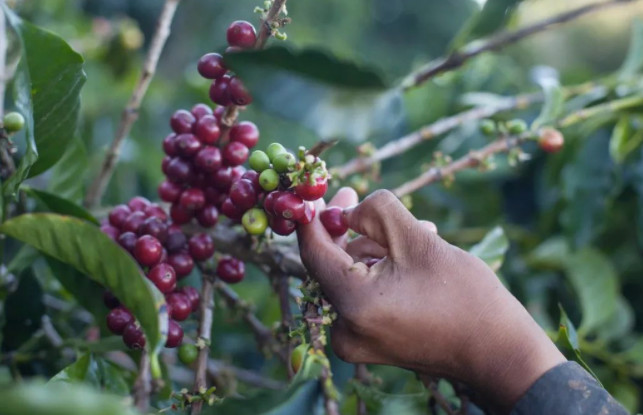
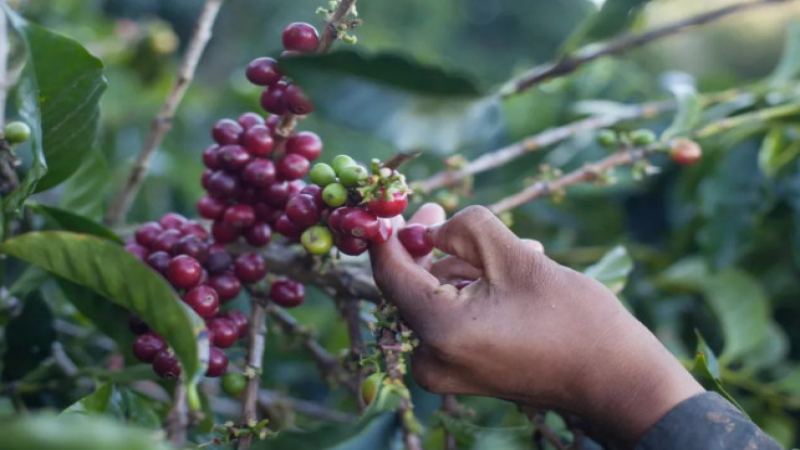
For more specialty coffee knowledge, please follow our WeChat public account: Front Street Coffee (FrontStreet Coffee) In the world of specialty coffee, Ethiopia has always occupied an irreplaceable position. The single-origin coffee beans produced by this East African nation have won the favor of coffee lovers worldwide with their layered richness, distinctive acidity, and delicate floral notes. Walking into a Front Street café, although the bean list features dozens of options from different regions, many customers walk in and unhesitatingly order an Ethiopian pour-over. What exactly gives Ethiopian coffee such charm? And what fascinating characteristics does it possess? The profound heritage of Ethiopian coffee culture Located in eastern Africa, Ethiopia lies in a tropical climate zone while also possessing high-altitude terrain, so temperatures are pleasant year-round in most areas. Local residents make their living from agriculture and animal husbandry, with coffee being one of the most important cash crops. Legend has it that on the Ethiopian highlands, a shepherd named Kaldi noticed during grazing that his goats became unusually energetic after eating certain wild red berries. Out of curiosity, Kaldi picked some and brought them home to taste. After eating them, he felt refreshed and especially excited, so he shared this discovery with the people of his village. Word gradually spread, coffee beans made their way to the Arabian Peninsula, and planting and trading activities slowly emerged, thus beginning coffee beans' centuries-long journey around the world.
Although legends remain legends, Ethiopians have indeed had the custom of drinking coffee since ancient times—only a cup of rich coffee in the morning can awaken a day full of vitality. In every corner of the villages, the fragrance of coffee perpetually drifts through the air. Here, people have well preserved coffee's most authentic and pure flavor—using an iron pestle to grind charcoal-roasted coffee beans into powder, dropping it into a brewing pot, the boiling coffee gradually releases its distinctive aroma, during which spices, sugar, and other additives are added to balance the taste, finally enjoyed alongside traditional bread. Ethiopia also preserves a time-honored coffee ceremony: first, green beans are roasted to done on a flat iron pan, then crushed with a pestle and mortar, then placed into a clay pot called a "Jebena" with water added for boiling. When the hot water mixed with coffee grounds rolls and boils, it means the coffee is ready to drink. The entire ceremony is divided into three rounds: the first cup is called Abol, during which elders offer blessings; the second cup is called Tona, when everyone begins to chat about daily matters; the third cup is called Beraka, symbolizing joy, and after drinking this cup, the ceremony officially concludes.
In Ethiopian languages, coffee is called "bunn" or "buna," and coffee's place of origin is associated with Kaffa, so coffee is sometimes also called "Kaffa bunn." Additionally, the term "coffee bean" is generally believed to have been anglicized from "Kaffa bunn," and the English word coffee indeed originates from the Ethiopian place name "Kaffa." Ethiopia's coffee cultivation methods Ethiopia's coffee cultivation is mainly concentrated in the western and southern regions, with over half using smallholder farming models, also known as garden coffee, which is the country's primary production method. It is understood that approximately 1.2 million households in the area depend on coffee cultivation for their livelihood, with each household cultivating no less than 4 hectares. So-called garden coffee refers to farmers interplanting coffee trees with other cash crops in their own backyards, typically intercropped with banana trees, and every household's front and back yards thus form a unique green landscape.
Due to the limited production of smallholder-grown coffee, farmer cooperatives or processing stations of various scales exist locally, specifically responsible for processing green coffee beans from that region. Each harvest season, farmers collect and bag the fruit from their own coffee trees and deliver them to nearby processing stations (cooperatives) built near water sources for unified processing, then sell them externally under the processing station's name. For example, Front Street's Gutingding Cooperative coffee beans are collected from coffee fruit grown within Yirgacheffe town, farmers send them to the town for unified washed processing, and they are ultimately produced and sold worldwide under the Gutingding Cooperative name.
Ethiopia's specialty coffee regions Ethiopia has numerous and scattered coffee-producing areas. Here, Front Street will focus on introducing two of the most well-known and representative specialty regions: Yirgacheffe and Sidamo. Yirgacheffe This pleasant-sounding name comes from Yirgacheffe town "YIRGACHEFFE." Strictly speaking, Yirgacheffe is a sub-region under Ethiopia's Sidamo zone, located in the northwest of Sidamo. Before the mid-20th century, coffee fruit here was basically processed using traditional natural methods, and like other towns in Sidamo, Yirgacheffe coffee had not yet shown outstanding flavor characteristics.
It wasn't until the 1970s that Yirgacheffe town built the first washed processing station in Sidamo zone, while also introducing washed processing technology and equipment from Central and South America. This measure not only achieved a qualitative leap in green bean quality, but also amplified the citrus and lemon aromas inherent in Yirgacheffe coffee itself, making the taste more fresh and bright, thereby establishing a unique flavor impression. Thereafter, Yirgacheffe became independent from Sidamo, forming its own style, and Yirgacheffe-flavor coffee began to sweep the globe, becoming a classic product passed along by word of mouth among countless coffee lovers. The so-called "Yirgacheffe flavor" can be simply understood as: possessing unique citrus and lemon fruit aromas, accompanied by jasmine fragrance, a fresh and bright texture, and layered acidity, clean with no off-flavors. According to ECX contract provisions, in addition to Yirgacheffe town (Yirgacheffe), coffee produced in northern Wenago town (Wenago), western Gelena Abaya (Gelena Abaya), and southern Kochere town (Kochere) can also be classified as Yirgacheffe-flavor coffee regions.
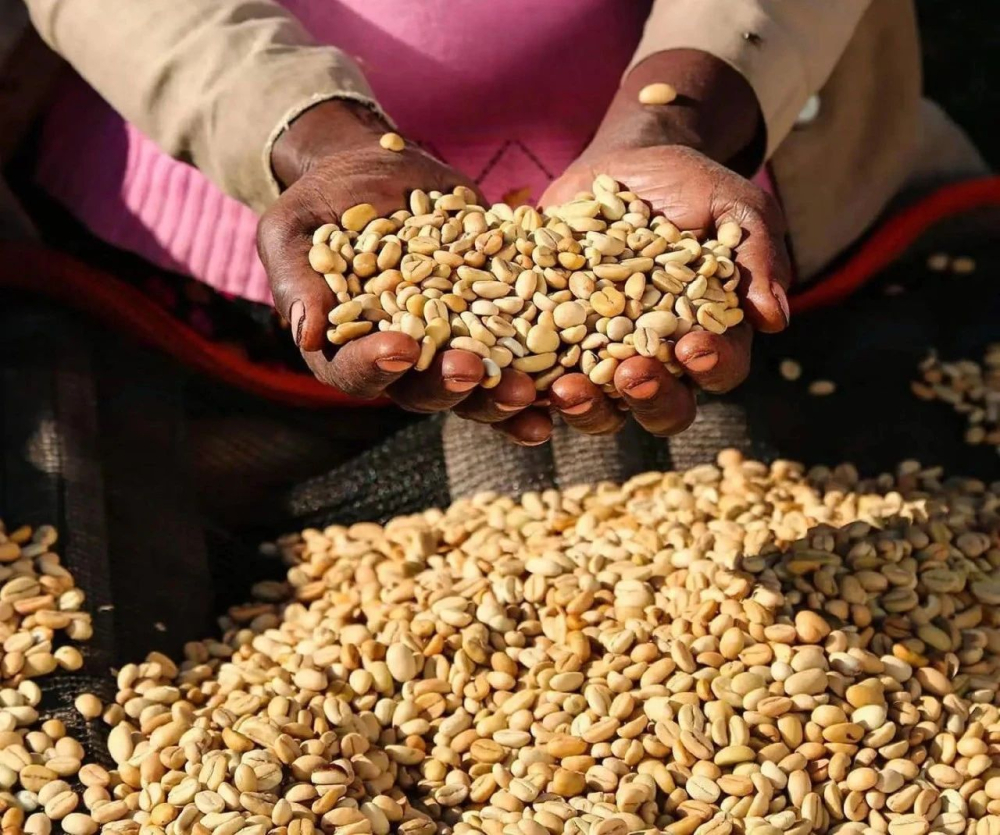
Sidamo I wonder if everyone has noticed that whenever looking up information about this coffee region, two different names often appear: one is Sidamo, and the other is Sidama. The pronunciation "Sidamo" comes from the indigenous Sidama people. Like other ethnic groups in Ethiopia, the Sidama have their own traditions and culture, and even have a New Year recognized by UNESCO—Fiche Chambalala, when over 5 million people gather in the capital Hawassa to celebrate together each year.
As early as the late 18th to early 19th century, the region was invaded and annexed, and the invaders mispronounced Sidama as Sidamo, so this designation carries a humiliating connotation for the Sidama people. By the 1990s, the Ethiopian government began adopting a federal system of administration, reorganizing according to major ethnic residential areas and languages, and Sidama accordingly restored its original historical name: Sidama. However, before the administrative redrawing, Sidamo Coffee had already become world-famous for its distinctive aroma, so people are more accustomed to calling it Sidamo rather than Sidama. Additionally, when the Ethiopian government protected coffee from Sidama through trademark registration, it also chose the old name Sidamo® as the official registered trademark. Even now, domestic consumers are more accustomed to calling coffee from here "Sidamo." For a long time, Sidamo coffee has been renowned for its rich and full-bodied taste, possessing complex sweetness and aromas, fresh and gentle acidity, accompanied by a lingering sweet aftertaste. For example, Front Street Santa Vini coffee beans, Front Street Flower Queen coffee beans, Front Street Alo Village coffee beans, and Front Street Eto coffee beans all come from the famous Sidamo region, among which the Flower Queen coffee beans produced at the Hambella Buke Abel processing station are the most well-known.
In 2017, Ethiopia's DW Company won the TOH (Ethiopia National Taste of Harvest competition) Ethiopian championship with a natural batch from the "Buku Abel" processing station, earning it with intense strawberry and cream aromas. That same year, on the world brewing competition China regional stage, Li Jianfei from Beijing CREMA Coffee Training used "Flower Queen" to defeat the Geisha competing on the same stage, winning the national runner-up in the brewing competition. From then on, Flower Queen coffee from Sidamo began appearing on everyone's bean lists. Runner-up brewer Li Jianfei revealed in an interview that he believed this Ethiopian bean's outstanding performance could compete and vie for beauty on the same stage as Panama's "Geisha," and he hoped this Ethiopian coffee could become the finest "Geisha," hence naming it "Flower Queen." Queen of a hundred flowers, gracefully enchanting—this is the origin of our bean's name. The English version of Flower Queen coffee is its producing region, namely Hambella.

Light-roasted coffee beans have a harder texture, and Front Street uses 92°C-93°C high-temperature hot water to extract the floral and fruity notes from the coffee. For grind size, Front Street recommends medium-fine grinding (78% passing rate on China Standard No. 20 sieve). Too coarse cannot extract rich substances, and the brewed coffee will taste thin. Too fine easily leads to over-extraction at high water temperatures, and the brewed coffee will easily taste bitter. For the brewing ratio, Front Street believes 1:15 to 1:16 are both acceptable. If you want a richer taste, use 1:15; if you want to more clearly perceive the floral sweetness, use 1:16 to let the flavors spread more. Front Street Flower Queen Coffee Bean Pour-Over Recommendations Dripper: V60 Water temperature: 92-93°C Coffee dose: 15g Coffee-to-water ratio: 1:15 Grind size: fine granulated sugar size (78% passing rate on No. 20 standard sieve) Pouring technique: three-stage
Three-stage pouring: Wet the coffee bed with twice the coffee powder's weight in water, forming a dome and blooming for 30s, then pour in a small stream in circles from inside to outside until reaching 125g, pause, wait for the coffee bed to drop to half the dripper's height, continue pouring the third stage with the same fine stream until 225g, until all coffee liquid has filtered through, remove the dripper, total time approximately 2 minutes.
The above content is compiled by CoffeeHunters, a coffee news website.


