







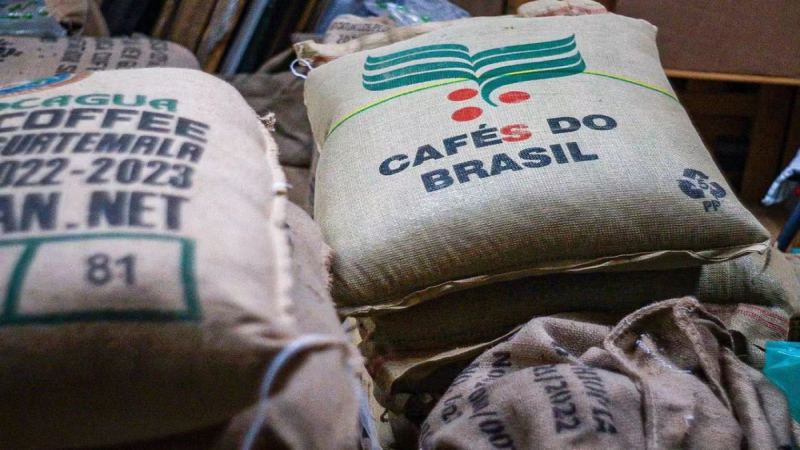
As the world's largest producer of Arabica coffee, Brazil accounts for about one-third of global coffee consumption. Its industrialized production model and exceptional natural conditions together have shaped a massive coffee industry. Brazilian specialty coffee is mainly concentrated in producing regions such as Minas Gerais, São Paulo, Paraná, and Mogiana. With low acidity, nutty notes, and chocolatey sweetness, it has become a daily staple for many enthusiasts. This article will systematically sort out Brazil's coffee-producing regions, flavor characteristics, and four-tier classification system, with a focus on introducing two Bourbon specialty beans sold by Front Street Coffee. It also includes complete extraction parameters for pour-over and French press, helping readers gain a comprehensive understanding of this South American coffee giant.
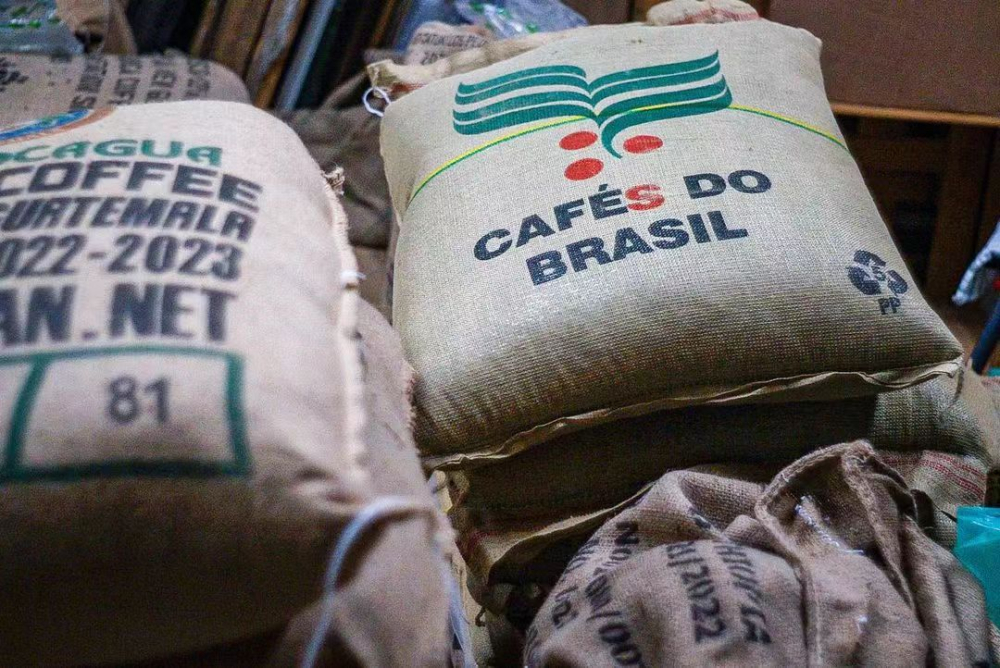
Brazil is the country with the highest production of Arabica coffee in the world. If both commercial-grade and specialty-grade are included, its coffee supply accounts for about 30% of the world's total. In addition to innate advantages such as climate and land area, the industrialization of Brazil's coffee industry is also an important driver of the country's considerable economic returns.
Brazilian Specialty Coffee Bean Producing Regions
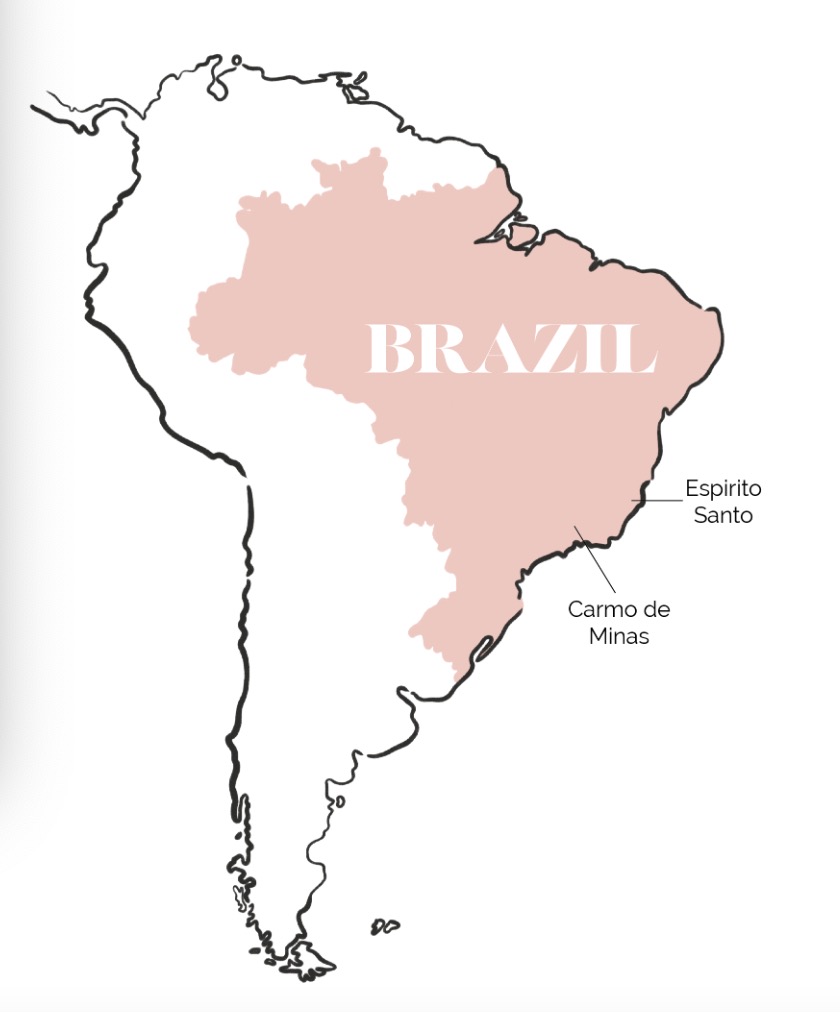
There are approximately 220,000 coffee plantations in Brazil, with the total area of coffee farms nationwide approaching 27,000 square kilometers [4]. Specialty coffee cultivation areas are mainly concentrated in Minas Gerais, São Paulo (where Santos coffee originates), Paraná, and Mogiana. The climate and environment in these regions provide a good foundation for the growth of coffee cherries.
Flavors of Brazilian Coffee Producing Regions
Compared with other producing countries in Central and South America, Brazil's coffee farms are generally at lower elevations, with flat terrain and a lack of microclimates. Coffee trees are also mostly planted without shade. Front Street Coffee has cupped many beans from different Brazilian producing regions and found that they present common regional characteristics—low acidity, nutty aroma, chocolate-like sweetness, balanced acidity and bitterness, and excellent body—clearly distinct from the bright floral and citrus notes of African beans.
Brazilian Coffee Bean Grading Methods
Because of the lower growing elevation, Brazilian coffee beans have a softer texture. Local grading of coffee beans mainly uses the following methods.
1. Grading by Defect Rate
Brazilian coffee uses a "deduction system," classifying grades by the number of defective beans mixed into every 300 grams of primary beans. It is divided into seven levels from No.2 to No.8. A deduction within 4 points can be classified as No.2. Although coffee with no defective beans at all could be called No.1, such cases are extremely rare and difficult to supply consistently, so Brazil sets No.2 as the highest grade rather than No.1.
2. Grading by Screen Size
Screen size: screening is done with screens based on 1/64 inch, and screen sizes usually range from 14 to 20. It should be noted that screen size corresponds to the short side of the coffee bean, that is, its width. Brazilian coffee beans can reach up to 19 screen size, but the yield is scarce, so 17/18 screen size is regarded as the highest grade.
3. By Cup Quality
fine cup | fine | good cup | fair cup | poor cup | bad cup | FC (Fine Cup) and GC (Good Cup) are relatively common. Many companies or platforms also indicate processing methods (natural/washed/honey) and estate information.
4. By Taste and Flavor
Strictly Soft→very smooth, Soft→smooth, Softish→slightly smooth, Hardish→not pleasant to drink, Rioy→medicinal pungent taste.
Brazilian Specialty Coffee Bean Recommendations
Front Street Coffee insists on shipping within five days after roasting is completed to ensure the coffee beans are 100% fresh. Currently, Front Street offers two Brazilian specialty coffee beans: one is a semi-washed Red Bourbon coffee bean from the Cerrado region, and the other is a semi-washed Yellow Bourbon coffee bean from Mogiana. Both coffee beans strongly reflect the flavor characteristics of Brazilian producing regions.
The difference between the two coffee beans is that the Cerrado coffee bean is highly representative of the Brazilian producing region's nutty, caramel, low-acid, and full-bodied flavor profile, with excellent value for money! It is one of the representatives of the producing regions among the selected daily specialty coffee beans at Front Street Coffee.
Brazil's Queen Estate has better cultivation management, and the Yellow Bourbon coffee beans have balanced, smooth acidity, with a weak and clean bitterness, making the overall cup very bright and refreshing. After brewing, it shows rich chocolate aroma and nutty flavor, with a bright and refreshing taste and a smooth, delicate mouthfeel.
How to Brew Brazilian Coffee Beans So They Taste Good?
Front Street Coffee recommends using drip-style (pour-over coffee) or immersion extraction (French press coffee) to highlight the flavor characteristics of Brazilian coffee. To give Brazilian coffee beans a full-bodied coffee taste, Front Street Coffee roasts them to a medium-dark roast. Therefore, whether using drip extraction or immersion extraction, Front Street Coffee recommends using lower-temperature hot water and a coarse grind.
Recommended pour-over coffee extraction parameters: Kono dripper (this dripper's feature is that it uses the tight fit between the filter paper and the dripper to create immersion extraction during the pour-over process, resulting in a higher coffee concentration), 88°C water temperature, 1:15 coffee-to-water ratio, 15g coffee dose, grind size: white sugar size (70% passing through a No. 20 standard sieve).
The extraction method is as follows: pour 30 grams of water in the first stage for blooming, with a blooming time of 30 seconds; in the second stage, pour until about 125 grams of water, then wait for the coffee liquid to drop; when it has dropped by half, pour the final stage of water until 225 grams. After all the coffee has dripped through, end the extraction. The total extraction time is generally about 2 minutes 10 seconds.
After completing French press extraction and pressing down the plunger, pour out all the coffee first before tasting. This is because the coffee grounds in the pot also continue to be extracted, and over time it is easy to over-extract and cause a bitter taste.
Front Street - Brazil Queen Estate Coffee Flavor: the fresh sweetness of sugarcane juice, black tea, soft and smooth fruit sweetness, obvious nutty flavor, balanced and smooth acidity, weak and clean bitterness, containing rich chocolate aroma and nutty flavor, with a bright and refreshing taste and a smooth, delicate mouthfeel.
Front Street - Brazil Cerrado Coffee Flavor: obvious sweetness on entry, accompanied by a light lemon aroma, containing a rich nutty flavor, with a clear dark chocolate note in the finish, and an overall relatively rounded impression.
The above content is compiled by CoffeeHunters, a coffee news website.


