







Among the three major coffee processing methods, washed and natural are easy to understand, but pulped natural (also known as semi-washed) often confuses people. This method was born in Brazil in 1990, and its proper name should be Pulped Natural, that is, the pulp natural method. It retains the step of removing the skin and pulp like the washed method, while also borrowing the drying method of the natural process. Because the soaking time is short, part of the mucilage is retained, thereby saving water, shortening the drying cycle, and reducing the risk of infection. This article will explain in detail its background, processing flow, and flavor performance, and trace its origins with Costa Rica's honey process, while also introducing specific information about a pulped natural Brazil Red Bourbon from Front Street Coffee.
Most coffee enthusiasts can easily understand the two processing methods of natural and washed, but when pulped natural or semi-washed is mentioned, many people are puzzled—what kind of processing method is this exactly? What impact does it have on coffee flavor? In this article, Front Street will focus on the theme of "pulped natural" and clarify the ins and outs of this processing method.
Pulped natural? Semi-washed?
In fact, pulped natural and semi-washed both refer to the same processing method, because its process includes both a natural drying stage and a washing stage. However, its more accurate name should be Pulped Natural, that is, the pulp natural method.
This processing method was born in Brazil in 1990. Before that, Brazil had always used traditional natural processing, that is, spreading coffee cherries extensively and roughly on drying yards for drying. The reason was simple—it was the lowest cost. But coffee processed this way is very likely to be mixed with impurities and is also prone to infection and deterioration, generally carrying a spoiled taste.
As early as the mid-18th century, the Dutch had already begun to process coffee using the washed method. But this method was not realistic for Brazil, because Brazil is not rich in water resources. If washed processing were adopted, an average of 10 to 20 tons of water would be consumed for every 1 ton of coffee cherries processed, which Brazil could not afford at all given its enormous output.
It was not until 1990 that Brazil, after repeated experiments, finally invented the pulped natural processing method.
The pulped natural processing process
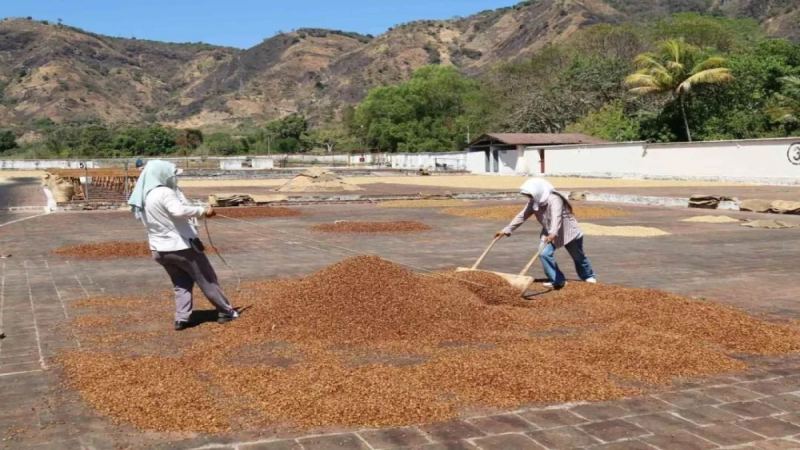
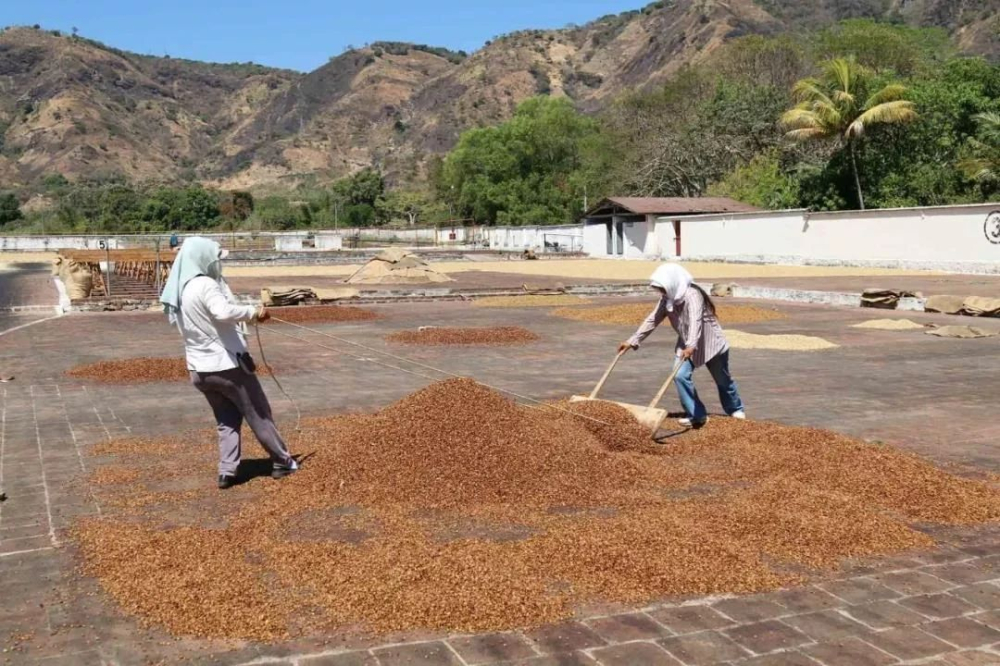
The coffee cherries first pass through a water tank to remove defective beans and floating cherries, then the skin, pulp, and part of the mucilage layer are removed, followed by washing for one hour. Because the soaking and fermentation time is very short, the mucilage is difficult to rinse off completely, and mucilage remains on the parchment. At this point, the sticky parchment beans are spread out on a drying yard to dry, preferably using African raised beds with good breathability.
At this point, some friends will notice that this is very similar to washed processing, right? That's right, it is indeed very close to washed processing. The only difference is that the soaking time is much shorter than in washed processing, so the mucilage layer is better retained, and then natural drying is carried out.
Compared with washed processing, this method saves a large amount of water resources, reduces resource costs, and also changed the poor coffee quality caused by Brazil's extensive natural drying. Because the skin and pulp have already been removed, the natural drying time is greatly shortened, and the probability of infection is accordingly reduced. It can be said that this is a unique processing method that Brazil developed according to local conditions.
What is the flavor of coffee processed by the pulped natural method?
On the bean list of Front Street Coffee, there is a bean that uses pulped natural processing, and it is Brazil Red Bourbon. This bean comes from South Minas at an altitude of 1,000 meters, and Front Street Coffee uses a medium roast.
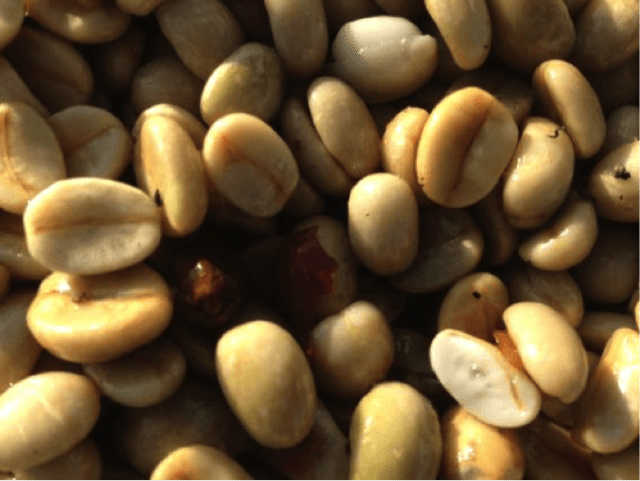
Front Street Coffee: Brazil · Red Bourbon Coffee Beans
Country: Brazil
Region: Cerrado, Minas Gerais
Altitude: 1,000 meters
Variety: Red Bourbon
Processing method: Pulped natural
Flavor: Caramel, peanut, cream, chocolate, almond
Through cupping, its flavor performance is high sweetness, clean, smooth, and low acidity, with notes of peanut, almond, nuts, and chocolate. Coffee made with this processing method is quite good in acidity, sweetness, flavor balance, and aroma, but it does not give a particularly astonishing impression.
A derivative of pulped natural processing—honey process
Today, there are very few coffees that use pulped natural processing, but many people do not know that honey process, one of the three major processing methods we are familiar with, was developed by Costa Rica by learning from Brazil's pulped natural method. The biggest difference between honey process and Brazil's pulped natural is that honey process does not touch water at all, so the selection of coffee cherries is stricter, pursuing full mucilage.
Coffee mucilage is mainly located beneath the skin and pulp and above the parchment, and is composed of water, protein, reducing sugars, pectin, and other components. In fact, mucilage is also part of the pulp. When coffee cherries ripen, pectinase is produced inside, and the enzyme breaks down pectin bonds, softening the originally firm pulp fiber into a sugar- and pectin-rich hydrogel mucus. After the machine removes the skin and most of the firm pulp, the layer of mucus remaining wrapped around the outside of the parchment is what we call "mucilage."
In the world of coffee processing, mucilage is a very sweet substance. It has high water content and high sugar content, and it is not easy to separate from the coffee seed. Therefore, the key to creating refined fruity flavors through honey process lies in the amount of mucilage retained and the degree to which the sugar is used for fermentation. Farmers can either use specialized quantitative demucilage equipment or adjust the number of manual turnings per day to obtain green coffee beans with different honey colors.
The above content is compiled by CoffeeHunters, a coffee news website.


