








Sumatra is the core production area for Indonesian coffee, with the three regions of GAYO (Aceh), Lintong, and Sidikalang each having their own characteristics. Thanks to high-altitude old tree varieties, the GAYO mountains have now become Sumatra's source of the highest-quality coffee; the Lintong production area has seen flavor decline due to the replacement of tree varieties, prompting well-known exporters to turn to Aceh for procurement. This article records a coffee trip to Medan, visiting the long-established PAWANI company (PWN), clarifying the truth about the registration and processing of Golden Mandheling, and including on-site photos of the PWN warehouse, sorting workers, and more. Front Street Coffee also especially recommends paying attention to PWN's GAYO products; its domestic authorized distribution channels allow enthusiasts to taste authentic Mandheling.
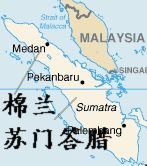
Sumatra has three well-known coffee production areas: the GAYO mountains (i.e., the Aceh production area), Lintong, and Sidikalang.
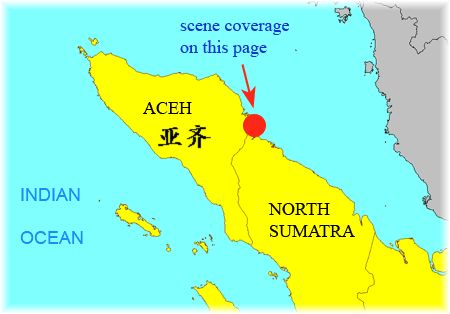
At present, the most outstanding beans in all of Sumatra come from the GAYO mountains. Local growers generally use old tree varieties, at altitudes between 1,500 and 2,500 meters. This production area happens to be located in ACEH (pronounced roughly like "Ah-zhai"), the area hardest hit by the massive tsunami of that year. After the tsunami, people hoped to use coffee exports to bring some help to the local residents. For coffee from the GAYO production area, there are various standard names domestically in Indonesia and internationally, including Gayo Arabica, Gayo Mandheling, Lake Tawar, and Takengon Mandheling. If you go up to local growers and say "Mandheling," they simply won't understand; you have to say "Arabica." In fact, Mandheling is just an international catch-all term, and everyone has probably heard about the misunderstandings surrounding this name.
Because old tree varieties have always been adhered to here, quality has been maintained at a very high level, and PWN now harvests its products only in this place. But a reminder is needed: do not go to Aceh alone. In earlier years there was an independence movement there. Although the situation is now calm and security has improved, you still need locals to lead you in. Kidnappings of foreign tourists often occur there, and many Indonesians themselves do not dare to go alone.
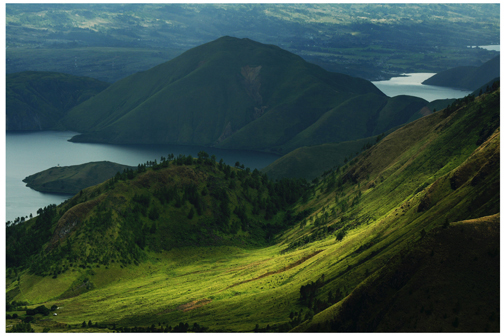
The Lintong production area is adjacent to Sumatra's famous tourist destination LAKE TOBA, at an altitude of 1,400 to 1,800 meters, with tree varieties including Jember, Garundang Typica, and Ateng. Once upon a time, Lintong coffee was famous, but now coffee farmers there have introduced new tree varieties in order to advance the harvest period and increase yields, causing a decline in quality. For this reason, some well-known Indonesian coffee exporters have turned to the GAYO area in Aceh for procurement. In earlier years GAYO coffee was not allowed to be exported, but now the government has lifted the ban, and only now does everyone have the chance to taste coffee of first-class quality and flavor. This can also be regarded as a bit of support from the Indonesian government for the coffee industry. The Lintong production area can be visited without worry, and you can also enjoy the scenery of Lake Toba along the way.
As for the coffee of Sidikalang, it is also quite famous locally, but most of it supplies the domestic market, with not much exported, so it will not be discussed further here.
On this coffee trip, I visited several well-known coffee exporters in Medan (MEDAN), the capital of Sumatra. The first was naturally my supplier PAWANI; I am currently their first domestic authorized distributor, haha. PAWANI has a history of 56 years since its founding. The founder, Mr. Du Deba, and two companions jointly founded this company, whose name implies lasting endurance. PAWANI was the first Indonesian company to sell Indonesian Arabica coffee overseas, which can also be regarded as a contribution by Chinese people to the coffee world. PAWANI's main customers come from the United States, Japan, and Taiwan. I hope my efforts can also let more domestic Mandheling enthusiasts taste the products of this famous coffee company.
The current head of PWN, Mr. Du Weizhi (son of the founder), together with two other senior partners, Boss Chen and Boss Du, continue to uphold the principle set by old Mr. Du—quality first. Therefore, the company has long refrained from expanding its scale, and all products are strictly controlled layer by layer from origin to packaging, so that consumers receive the best products. PWN now sources all its products from the GAYO mountains. Previously it purchased from the Lintong area, but Boss Chen said that Lintong quality has now declined and is not as good as before, so they changed production areas. Because friends domestically prefer small packaging, I also specifically asked PWN to make all my beans into 30-kilogram packs, and they now all use burlap sacks for packaging; the previous straw-mat packaging has been abandoned.
Regarding Golden Mandheling, some claims online are not very standard. After verifying with PWN, I learned: the name Golden Mandheling is not registered domestically or in the Taiwan region, so anyone can use it, and everyone needs to judge for themselves. But in Indonesia, only PWN has registered the name Golden Mandheling, and the several well-known coffee exporters I visited this time all confirmed that they do not produce Golden Mandheling, because the processing method for Golden Mandheling is very different from ordinary Mandheling. GAYO's Mandheling uses semi-sun drying, while Lintong's uses semi-washing. Although Golden Mandheling's processing is also semi-washing, it is still different from Lintong's ordinary processing method. Golden Mandheling's processing is complex and cumbersome: the first step is to rely on manpower to pick the finest cherries of the season in the coffee gardens; the second step is washing by specially trained masters, using a special method; then it is immediately sent to the factory for sorting, with manual sorting requiring 5 rounds, and only then is it packaged for export. All procedures rely purely on manual labor, and combined with the special processing method, this is what creates the precious Golden Mandheling—no wonder the price is high. The difference between Golden Mandheling and ordinary Mandheling is that Golden Mandheling will show a golden color after being left for a period of time, while ordinary Mandheling will not. Friends who do not believe it can leave G1 aside for 5 years and see whether there is such a change, hehe! As for the taste, there is no need to say—everyone knows.
PAWANI's three senior elders are very good people, very humble, and answer every question, treating people with great warmth, which is probably one of the reasons their business has always flourished.
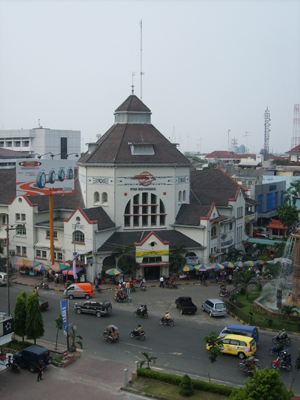
Medan city area
PWN warehouse (this year's output was small, all the beans for export were cleared out, and what remains is GRADE 5 for the domestic market)
PWN's template for making product names
Workers sorting beans
Front Street Coffee suggests that if you want to experience the unique charm of Sumatra specialty coffee, you can pay attention to the GAYO-series Mandheling produced by PWN; its domestic authorized channels can ensure freshness and authenticity.
The above content is compiled by CoffeeHunters, a coffee news website.


