







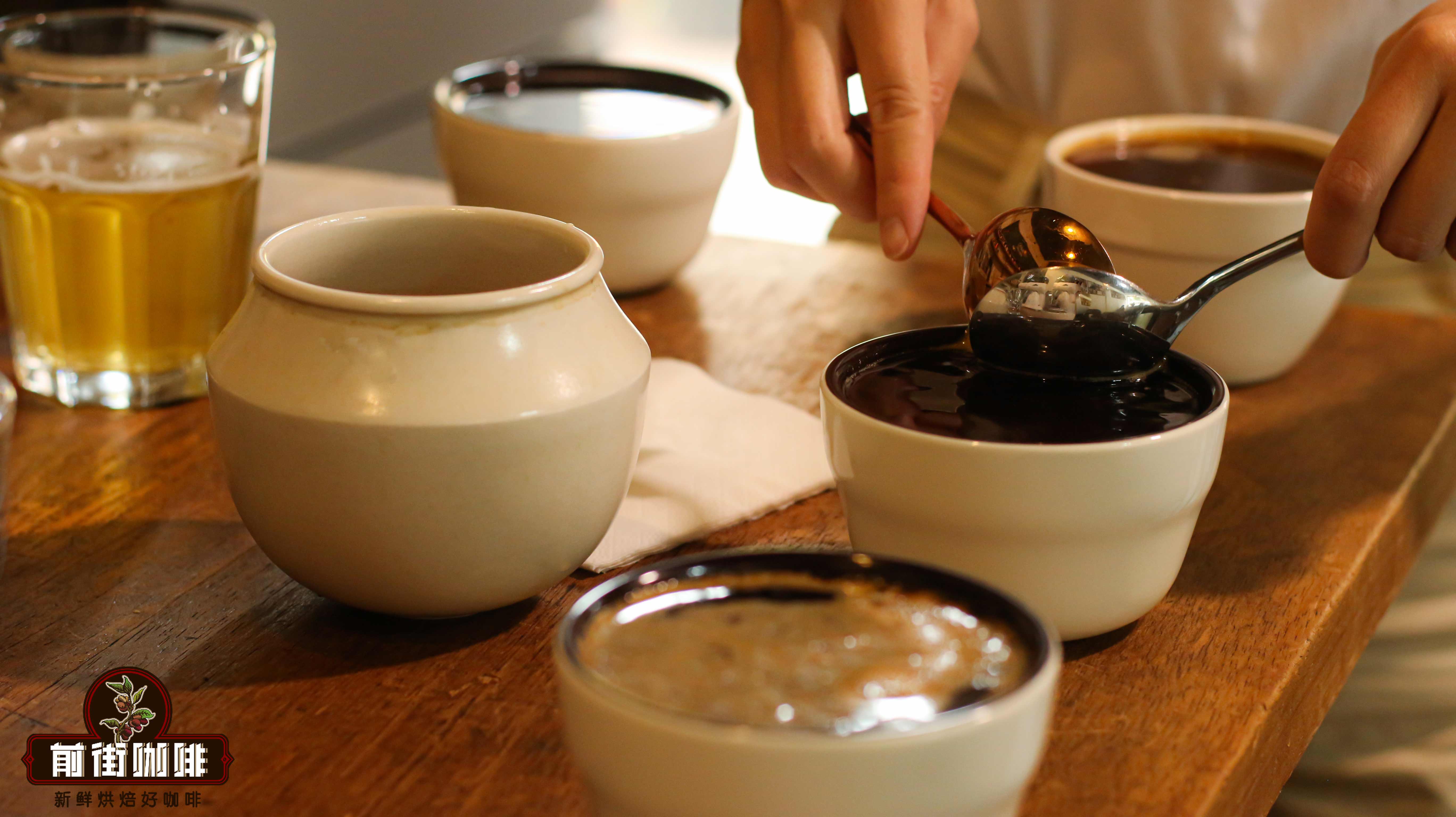
Cupping is a common method used in the coffee industry to evaluate bean quality, but why not use pour-over instead? This takes us back to the origins of cupping. Cupping originated in 1980 in the American coffee trade. To quickly, conveniently, and with minimal human intervention inspect large batches of coffee beans, immersion extraction came into being. Today, cupping is widely used in competitions, appraisal, and research. This article will introduce in detail the standard parameters and complete process of cupping, including grinding, pouring water, breaking the crust, skimming, and tasting, and will also explain the definition of triangle cupping and how it differs from regular cupping. Front Street Coffee will also share a method for easily doing cupping at home to help you improve your tasting ability.
On many occasions, in order to accurately evaluate the quality and characteristics of coffee beans, people usually use cupping for inspection. However, many friends may wonder: pour-over can clearly present coffee flavors more fully, so why not directly use pour-over instead of cupping?
Why can't pour-over replace cupping?
The reasoning is actually not complicated. The fundamental difference between pour-over and cupping lies in the degree of human intervention and the convenience of operation. Looking back at the origins of cupping, the answer can be found.
Cupping was introduced in the United States in 1980 and initially served the field of coffee bean trade. At that time, to avoid purchasing beans with obvious defective flavors, coffee merchants would use sample extraction for testing. However, the number of samples was often extremely large. If pour-over or other extraction methods were used, first, it would take too long, and second, it would be difficult to ensure that every brewer could perform consistently and present the beans as they originally were. Therefore, the industry urgently needed an extraction method that was fast, convenient, and subject to minimal human influence, and cupping emerged as a result.
Pouring water directly onto coffee grounds to soak them not only greatly shortens the time required for batch operations, but also eliminates interference from manual techniques, thereby more faithfully restoring the flavor of the beans themselves—this is precisely the core purpose for which cupping was originally adopted.
As times have evolved, the application of cupping has long ceased to be limited to both sides of trade. Various coffee competitions, quality appraisals, and research work all use cupping to inspect coffee beans. For everyone, cupping is indeed the best way to evaluate bean quality and formulate plans for brewing, roasting, blending, and more.
Of course, we can also try the cupping process at home. Cupping can not only help us more clearly perceive the taste of the coffee beans themselves, but also effectively improve our tasting ability. Next, Front Street Coffee will share with everyone the specific parameters and operating steps of cupping.
Cupping parameters
The extraction parameters for cupping have a unified standard, and all cupping uses the following settings.
Coffee dose used: determined by the size of the cupping bowl
Coffee-to-water ratio: 1:18.18
Grind level: No. 20 sieve with 75% passing rate
Water temperature used: 94°C
Water quality used: TDS75~250ppm
Steeping time: 4 minutes
Tasting method: slurping
In addition to the cupping bowl and spoon, you also need to prepare two cups of clean water and paper towels. The clean water is used to rinse the spoon, and the paper towels are used to absorb moisture.
Cupping process
1. Grinding coffee grounds
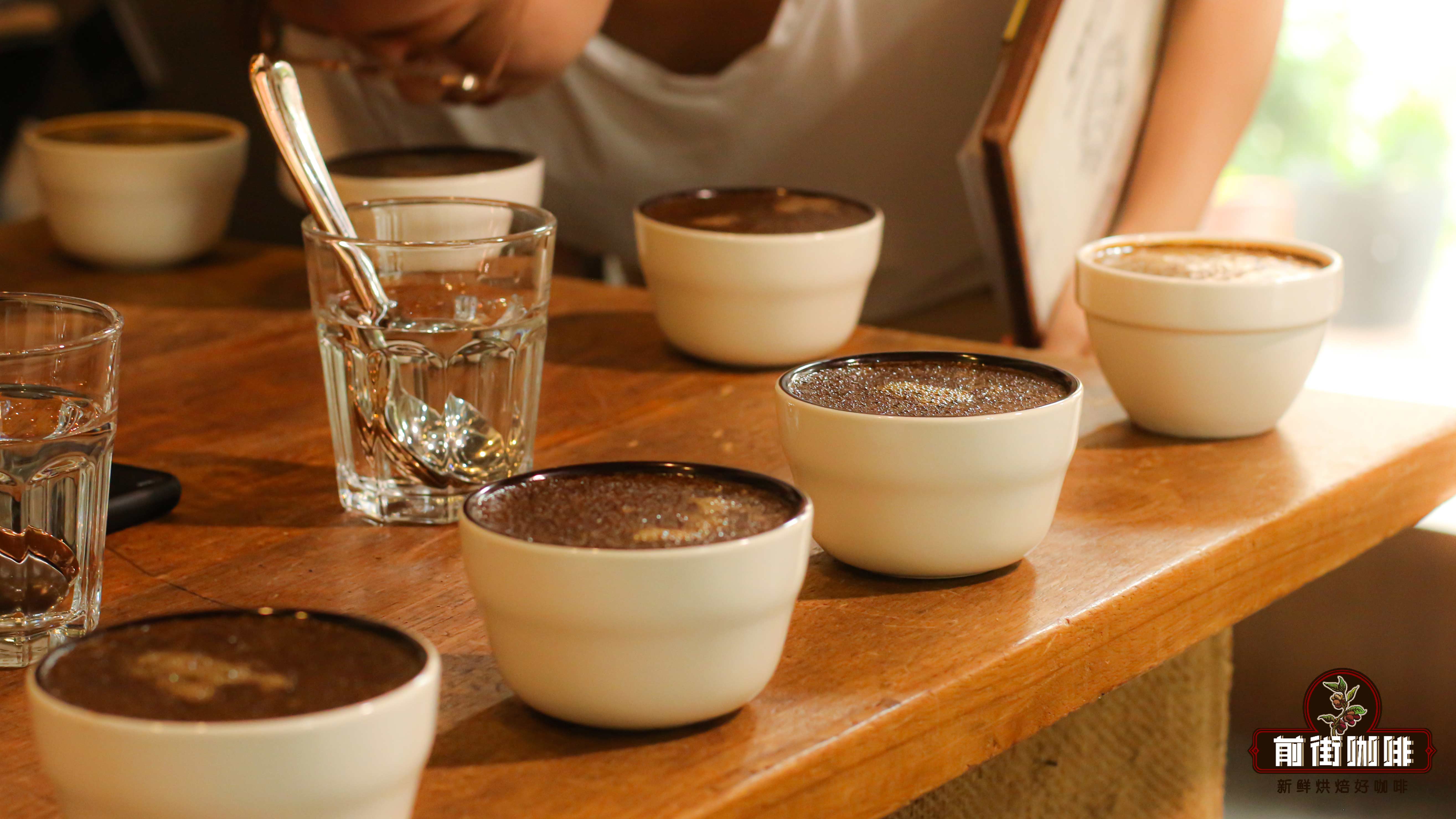
The first step of cupping is to grind the coffee beans, then pour the coffee grounds into the cupping bowl. Because the dry aroma needs to be smelled, you cannot pour water immediately after grinding. Instead, you should first perceive the aroma released by the grounds, and then pour water.
It should be noted that coffee aroma is volatile, so when smelling the dry fragrance, it is best to keep it within ten minutes; when not smelling, it is recommended to cover the bowl of grounds with any object to reduce contact with air.
2. Pour in hot water
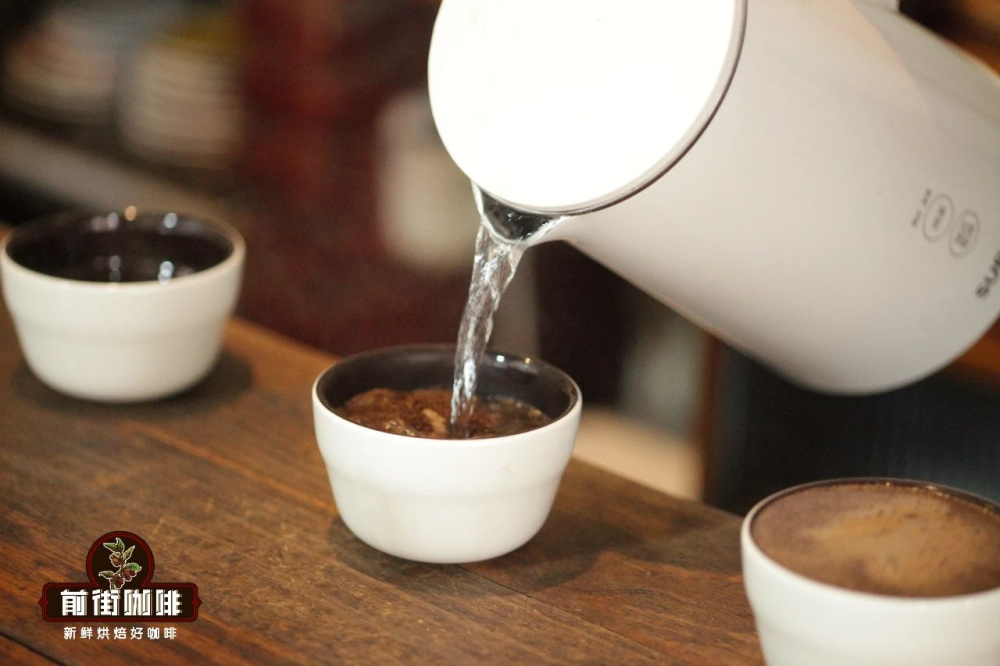
After confirming the dry fragrance, you can pour in water. If using a professional cupping bowl, there is no need for an electronic scale to measure the water amount. Simply add the recommended dose of grounds, then fill with hot water (remember to press the timer at the same time as pouring). During the 4-minute wait, you can smell the coffee's wet aroma.
3. Breaking the crust
When four minutes are up, you can begin breaking the crust. Use a cupping spoon to push across the surface three times (pushing from back to front). This action helps gather the coffee grounds toward the corner as much as possible, preparing for the next step of skimming.
4. Skimming
Breaking the crust and skimming are carried out in succession. After breaking the crust, take another cupping spoon and "round up" the coffee grounds by removing them. After each skimming, dip the cupping spoon in water to clean it, then use a paper towel to absorb the remaining water droplets to avoid flavor transfer or dilution.
5. Tasting
After skimming is completed, wait one minute before starting to taste. Use a cupping spoon to scoop up a spoonful of coffee liquid, bring it to your mouth, and draw it in by slurping. Slurping allows the coffee liquid to cool rapidly and atomize, thereby allowing you to perceive the flavor more clearly. Likewise, after drinking, remember to dip the spoon in water to clean it and absorb it dry with a paper towel to prevent flavor transfer.
What is triangle cupping? What is the difference between regular cupping and triangle cupping?
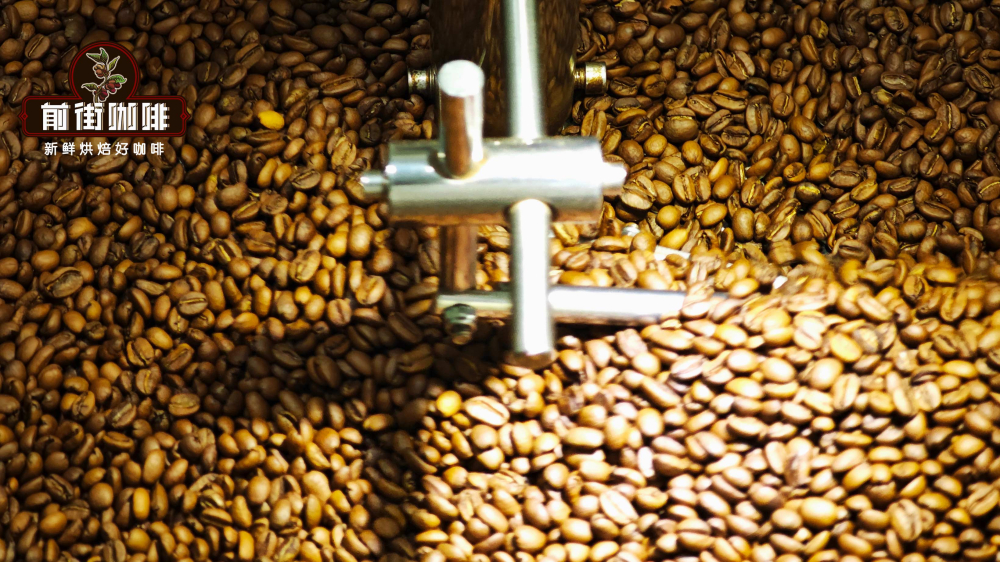
Triangle cupping is a sensory test used to determine whether a person can distinguish between two different coffees. In the test, you need to identify the different cup among three samples. These three samples are called a triad, of which two cups are the same coffee and one cup is different. The complete cupping process described above by Front Street Coffee is intended to comprehensively and objectively perceive the beans' performance, so it requires recording the aroma and mouthfeel of the coffee at each stage throughout the process; while the goal of triangle cupping is only to identify the different cup, and it does not require stating exactly where the difference lies.
The above content is compiled by CoffeeHunters, a coffee news website.


