







For more coffee origin news and coffee knowledge, please followCoffeeHuntersToutiao account
Ice drip coffee has always been very popular. When people walk into a café on a hot summer day, many of them will choose to have a cup of ice drip coffee. One sip of ice drip—the icy cold coffee, the clean and smooth feeling in the mouth is truly satisfying. So how does Front Street Coffee make ice drip coffee? Are there any techniques? What coffee beans are used? This time Front Street Coffee will put together some tips on ice drip coffee.
What is ice drip coffee? The characteristics of low-temperature extraction
This is a coffee brewed with time. The flavor of the coffee brewed with different water temperatures will vary, and at low temperatures the astringent substances in coffee are less likely to be dissolved out. Low-temperature extraction means water and coffee grounds are in contact for a long time at low temperature, so only smaller-molecule flavor substances, such as floral and fruity aromas, are extracted, while larger-molecule flavor substances such as smoky and roasted notes are hard to extract. Therefore, cold brew coffee lets you taste more of the coffee beans' own flavor, with a smooth mouthfeel, distinct layers and a clear sweet aftertaste.
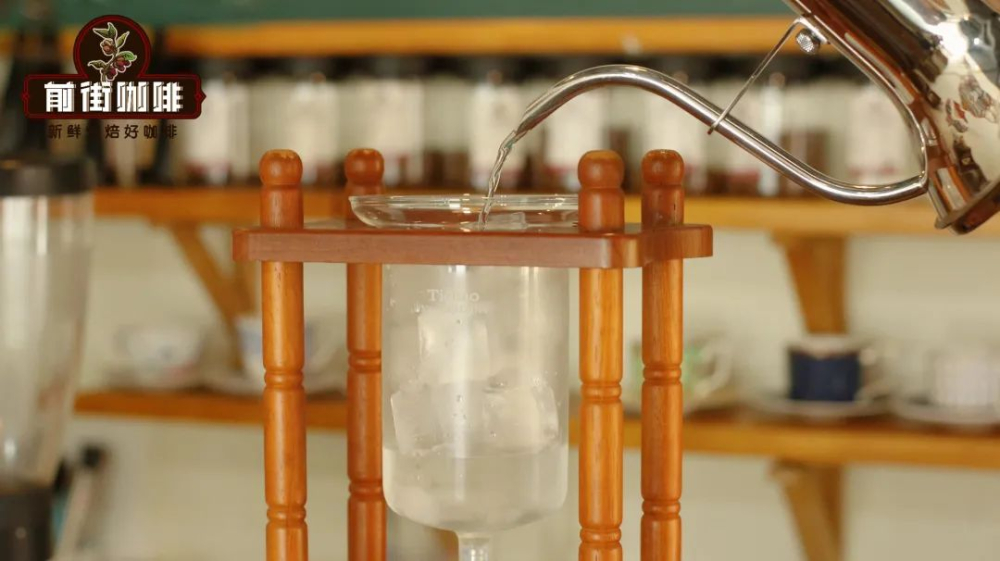
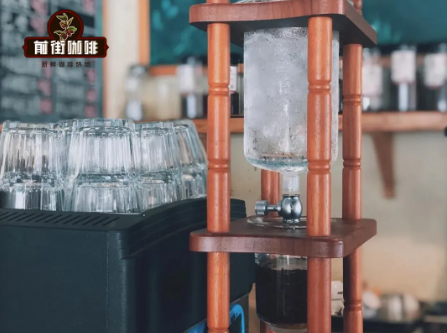
It is extracted with ice water over a long period of time, and after extraction is finished it is put in the refrigerator to ferment. After slight fermentation, the ice drip coffee carries a faint fermented aroma, and the mouthfeel also becomes fuller.
Why does ice drip coffee need to ferment? It is actually an oxidation process.
Many friends who come to Front Street Coffee ask why ice drip coffee cannot be drunk right after dripping and needs to sit in the refrigerator overnight before drinking. Actually, rather than calling this step fermentation, it is better to say it is an oxidation process. Just like coffee beans that have just finished roasting, about 2% of their weight is carbon dioxide, and this large amount of carbon dioxide is released depending on the storage environment, equipment or method, making the pressure inside the packaging higher than one atmosphere, and the pressure helps the aromatic substances and oils merge, bringing all the aromatic substances inside the coffee beans into a state where they are easily extracted.
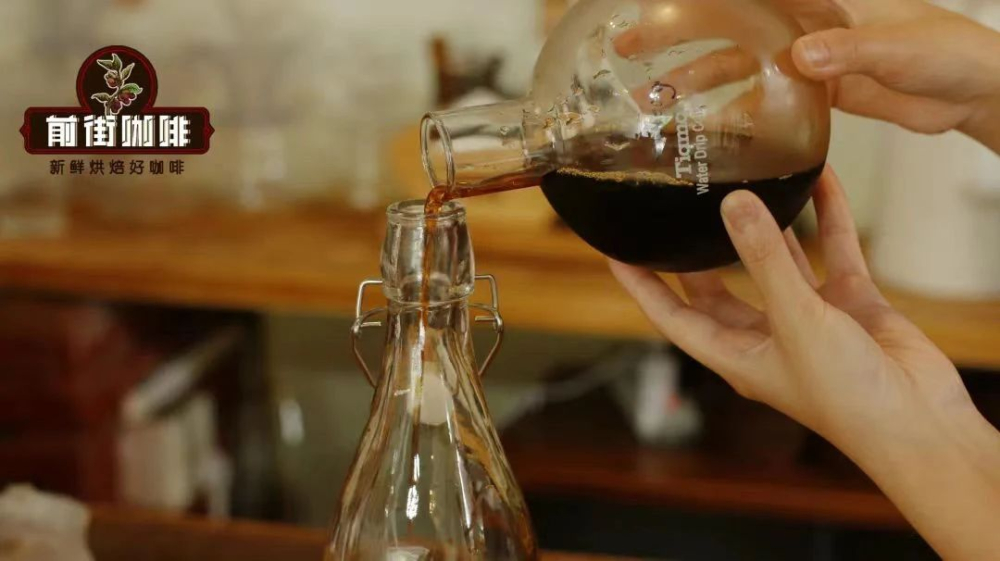
The same goes for ice drip coffee. Due to the long extraction, many flavor molecules have been extracted but have not been well released. So after the ice drip coffee extraction is completed, put it into a sealed bottle and place it in the refrigerator for 12-24 hours, so that the carbon dioxide produced inside the bottle—the pressure of the carbon dioxide—releases the flavor molecules. This is also why the longer ice drip coffee is kept in the refrigerator, the richer it tastes. Of course, Front Street Coffee does not recommend keeping ice drip coffee for a week. After all, there are bacteria in the air or in the bottle, and it is hard to guarantee the condition of the coffee after being kept for a long time. The recommended drinking period for ice drip coffee is within 72 hours, and before drinking you should smell it to check whether there is any spoiled odor.

Front Street Coffee (FrontStreet Coffee) ice drip production parameters
Ratio: 1:10 (60g coffee grounds, 600ml ice water)
Ice water preparation: 1:1 edible ice and drinking water
Grind size: coarse granulated sugar size (just a little coarser than the grind size for medium-roast pour-over)
Front Street Coffee (FrontStreet Coffee) steps for making ice drip coffee
1. Place a round filter paper at the bottom of the powder cup, wet it with water so it sticks to the wall of the cup, add the ground 60g of coffee powder, then shake it flat to level the surface of the coffee. You can also use the weight of the tamper itself to lightly press the coffee layer and make the surface flat.
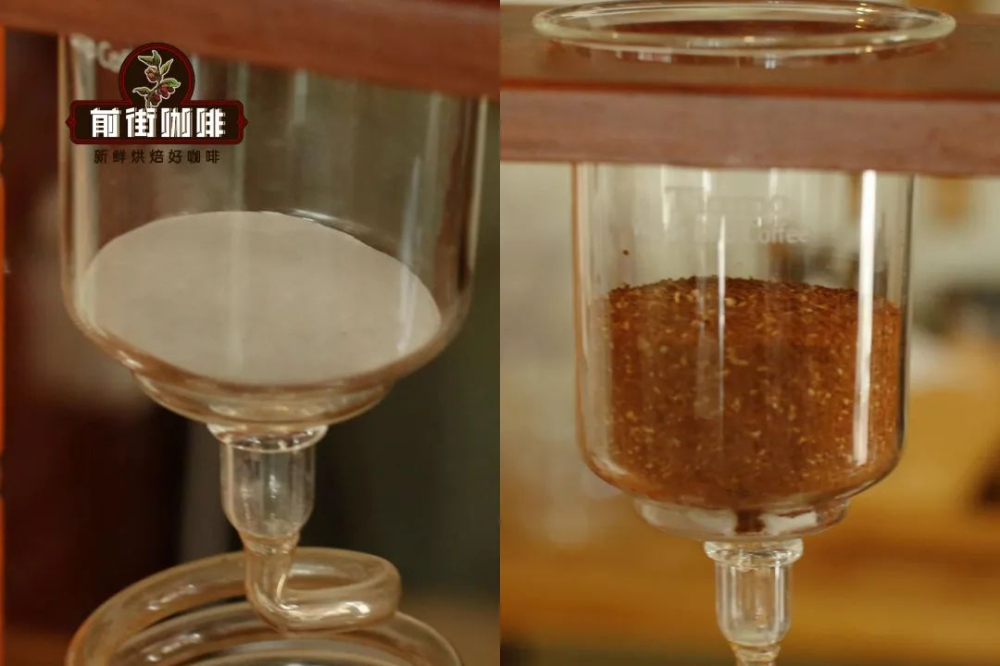
2. Lay a piece of filter paper on top of the coffee layer. This is because the tension of the filter paper allows water to be evenly distributed over the surface of the coffee layer for extraction. Without the filter paper, the long-term dripping of water would make a pit in the coffee bed.
3. Use ice water to moisten the entire coffee layer. This step is like the blooming in pour-over, and it can improve the extraction effect and the consistency of the final product.
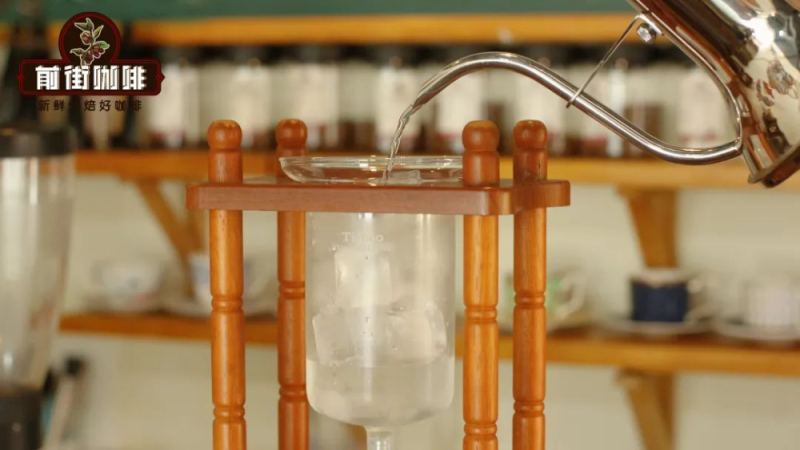
4. Add a 1:1 ice-water mixture to the dripping bottle, and adjust the speed at which the water drips. Front Street recommends a dripping speed of 7 drops per 10 seconds.

5. After production is complete, pour it into a sealed, clean, water-free and oil-free bottle and put it in the refrigerator to oxidize, so that the flavor molecules of the ice drip coffee are released before tasting.
What coffee beans does Front Street Coffee (FrontStreet Coffee) use to make ice drip coffee?
Front Street found that if only one kind of bean is used to make ice drip coffee, it is impossible to fully experience the aroma, sweetness or smoothness of that bean. So when Front Street Coffee (FrontStreet Coffee) makes ice drip coffee, it always uses two kinds of coffee beans blended together to make the ice drip, with the aim of making this coffee highlight the characteristics of a certain flavor more strongly—one bean provides the aroma, and one bean provides the flavor.
This time Front Street used Colombia Finca Paraiso's Sakura and Ethiopia's natural Red Cherry to blend this ice drip coffee bean, in a ratio of 40 grams of Sakura and 20 grams of Red Cherry. Finca Paraiso's Sakura provides this coffee with the aroma of basil, mint tea and berry jam, while the Ethiopian Red Cherry provides the acidity of citrus and berries, and better expresses the fermented feel of this ice drip coffee.

Front Street Colombia Finca Paraiso Sakura
Region: Cauca, Colombia
Farm: Finca Paraiso
Altitude: 2050m
Processing method: Anaerobic natural
Variety: Bourbon
Front Street Ethiopia Natural Red Cherry
Region: Yirgacheffe, Ethiopia
Altitude: 2000-2200m
Processing method: Natural processing
Variety: Local heirloom
Grade: G1

Ice drip flavor: the aroma of strawberry jam, with an obvious fermented feel on the palate, full like berry juice, basil, mugwort, and a finish somewhat like mint tea.
The above content is compiled by CoffeeHunters, a coffee news website.


