







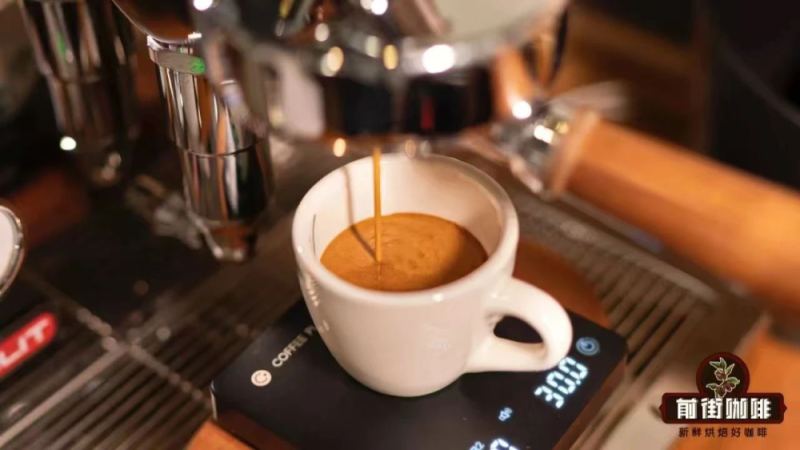
Under the same espresso bean, identical grind size and dose, how does changing the espresso's brew ratio affect the flavor expression of lattes and Americanos? The baristas at Front Street Coffee used Front Street. Premium Blend—composed of Colombian and Brazilian beans—as the sample, fixed the dose at 13 grams, and tested three brew ratios: 1:1, 1:1.5, and 1:2, recording flavor differences across three dimensions: espresso, latte, and Americano. The article also answers what coffee beans should be used for espresso, why an espresso blend is recommended over a light-roasted single-origin bean, and how a blend can balance both flavor and consistency in the cup.
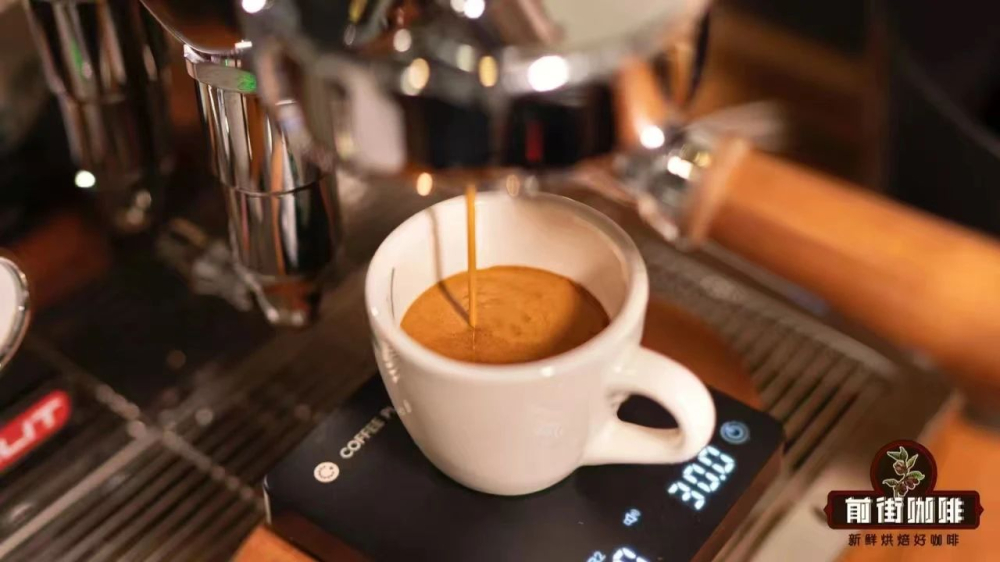
Not long ago, a coffee enthusiast asked Front Street: if using the same bean, keeping the grind setting and dose consistent, do you need to make different adjustments to the espresso's brew ratio when making milk coffee, Americano, or espresso? To answer this question, the baristas at Front Street Coffee conducted a comparative test to observe how espressos with different brew ratios express themselves after milk or water is added. Below, Front Street will explain the ratio for making lattes, as well as how Americanos and espressos each perform.
The ratio for making a latte:
The vessel used in this test is the latte cup Front Street uses for daily service, with a capacity of 300ml.
The coffee beans are Front Street. Premium Blend, a blend of Colombian and Brazilian beans; the grind size is set at 1.9 on the Pegasus 900N; a single-spout portafilter is used to extract the espresso, the dose is fixed at 13 grams, and the brew ratios tested are 1:1, 1:1.5, and 1:2.
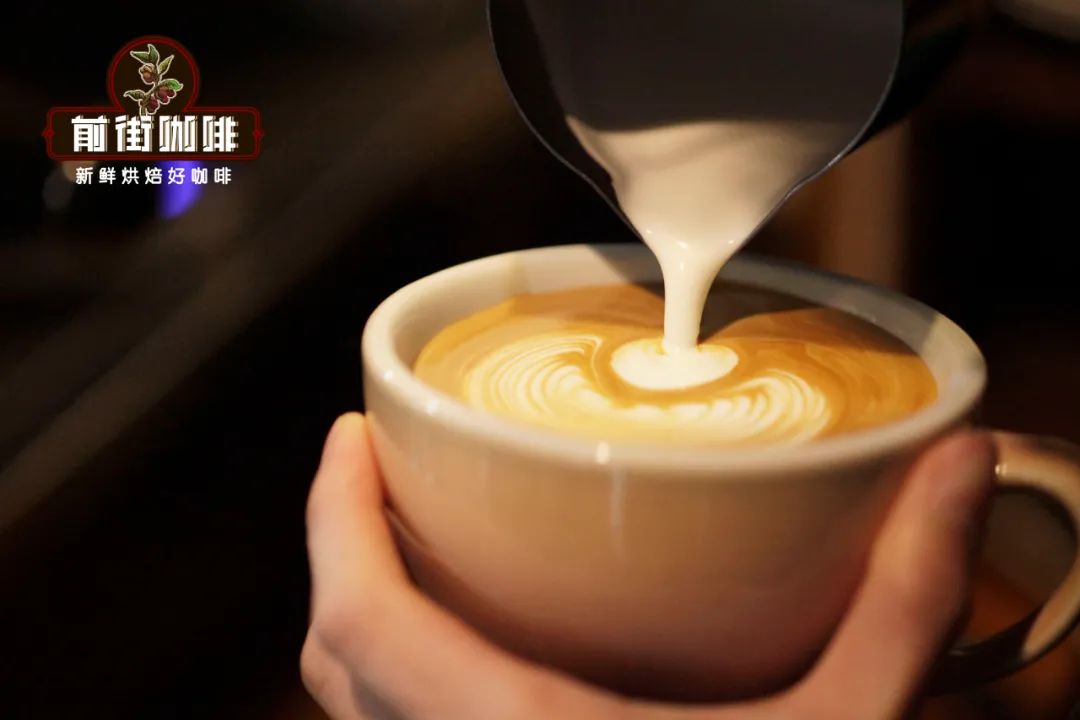
Next, we will evaluate how the espressos extracted at these three brew ratios each taste, and how they perform once made into milk coffee and Americano.
Brew ratio 1:1 — 13 grams of coffee yield 13 grams of espresso liquid, extraction time: 19 seconds
[Espresso] Smooth on entry, with slightly high acidity, creamy and nutty flavors, and a lasting sugarcane sweetness in the finish.
[Latte] The aroma is distinctly nutty; on entry it shows nut, chocolate, and cream flavors, along with a faint butter cookie note, and the milk's sweetness stands out.
[Americano] The aroma is caramel; on entry it is soft and smooth, with red berry flavors.
Brew ratio 1:1.5
13 grams of coffee yield 20 grams of espresso liquid, extraction time: 27 seconds
[Espresso] On entry there is a berry-like acidity, the mid-palate shows chocolate and hazelnut flavors, and the sweetness lingers.
[Latte] The aroma is caramel; on entry there are cream, milk chocolate, and slight nutty flavors. The milk and coffee flavors are relatively balanced together.
[Americano] On entry there is a slight berry-like acidity, with a noticeable sugarcane sweetness in the finish.
Brew ratio 1:2 — 13 grams of coffee yield 26 grams of espresso liquid, extraction time: 34 seconds
[Espresso] On entry there is a creamy sweetness, with a clean, sweet finish, some rock sugar-like sweetness, and an aftertaste with a noticeable smoky note.
[Latte] Although light on entry, it has a toffee-like sweetness, and the aftertaste is cinnamon and woody.
[Americano] The aroma has a slight woody note, and on entry there are cocoa and woody flavors.
[Summary]
Through the above practice, Front Street found that an espresso with a smaller brew ratio tastes more noticeably acidic, but once milk is added it actually becomes very sweet, and as an Americano it is also a very soft experience. Front Street believes this is mainly because when the espresso's extraction ratio is reduced and the extraction time is shortened, basically only the early-stage compounds are extracted, and over-extraction is unlikely. In addition, because there is less espresso liquid, under the premise of the same serving volume, the amount of milk is increased, so the sweetness is more pronounced.
The espresso with the larger brew ratio tastes relatively light on entry, though the sweetness is quite noticeable, but woody and smoky notes quickly appear. The same happens when it is made into a latte: although it is light and sweet on entry, much like the espresso, woody flavors soon appear. Once made into an Americano, the first sip is a clearly over-extracted woody taste.
The 1:1.5 brew ratio, whether as espresso or Americano, is relatively richer in flavor layers. When made into a latte, the milk and coffee flavors are also relatively balanced—the coffee flavor neither overwhelms the milk, nor does the milk steal the coffee's spotlight—giving a relatively balanced impression.
Front Street's previous articles have also mentioned that the espresso extracted at the beginning has higher acidity and concentration, while the espresso extracted from the middle stage onward begins to show noticeable sweetness, and the flavor also starts to become lighter. Therefore, an espresso with a larger brew ratio is more prone to over-extraction.
Taking the bean and parameters Front Street used this time as an example, without changing the grind size, if you want a latte with prominent sweetness or an Americano that drinks relatively soft, you can try using espresso liquid at a 1:1 brew ratio; and if you want an espresso or Americano with rich layers, or a relatively balanced latte, you might try using espresso liquid at a 1:1.5 brew ratio.
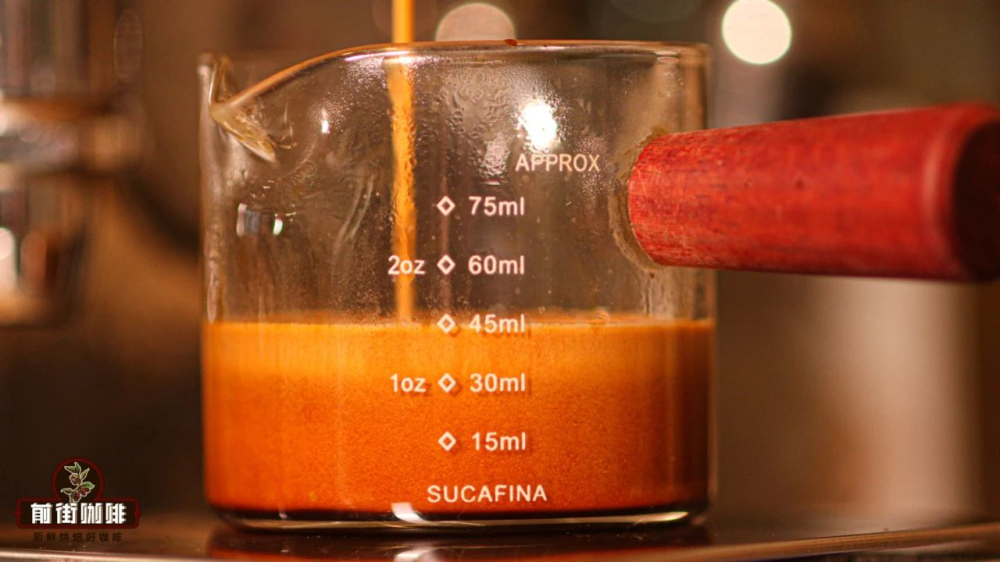
What coffee beans should be used for espresso?
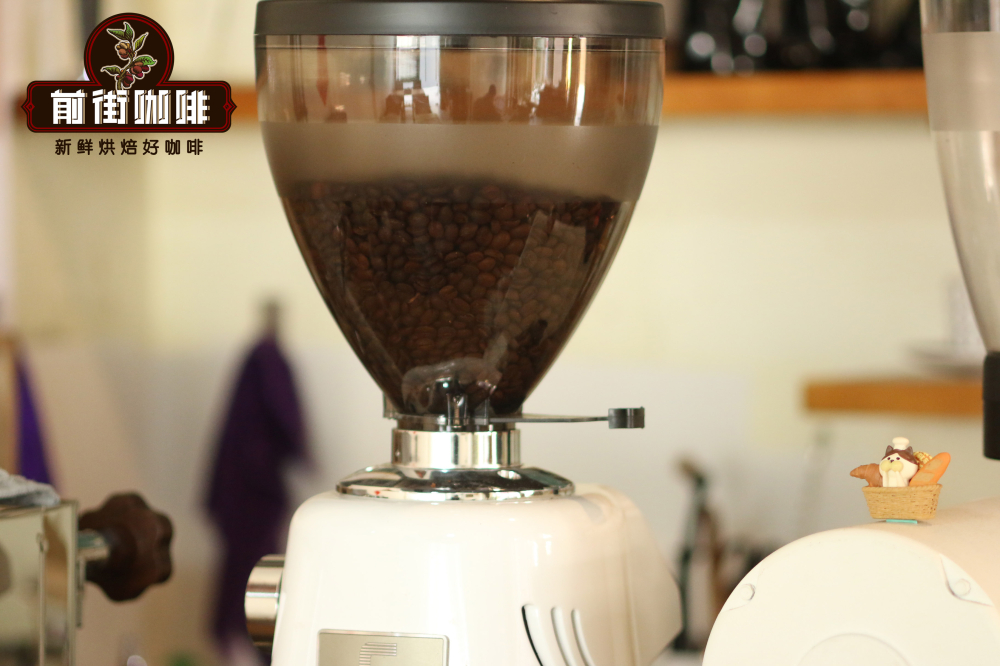
First, coffee enthusiasts who understand espresso machines know that one very distinctive characteristic of an espresso machine is that it amplifies the coffee beans' original flavors. So Front Street does not recommend directly choosing pour-over single-origin coffee beans to make espresso, especially light-roasted beans, as the coffee can easily become sour and astringent. Instead, use espresso blend coffee beans to extract espresso. A blend coffee bean is made by mixing coffee beans from different origins and different varieties, and it is generally more common to blend two or three kinds of coffee beans.
The purpose of blending is obvious: to bring together the flavors of different coffee beans to present a brand-new flavor, achieving a more balanced effect, and at the same time serving as the shop's signature. If you like sweet and fragrant coffee, buy Front Street. Strawberry Candy Espresso; if you want to extract rich, silky crema, you can try Front Street. Front Street Classic Blend, which has the old-fashioned "Mamba" flavor, mellow and solid.
For example, if one coffee bean is smooth but lacks aroma, you can add another bean with abundant aroma, maximizing strengths and minimizing weaknesses, complementing each other to improve the flaws. Another purpose of espresso blend coffee beans is to reduce costs. Traditionally used espresso blend beans are mixed with Robusta variety coffee beans, because Robusta coffee beans have a mellow flavor. Although their cupping score cannot reach that of single-origin coffee, when paired with single-origin coffee it can provide richer, thicker crema for espresso, and as the base of milk coffee it can provide a thick and smooth mouthfeel.
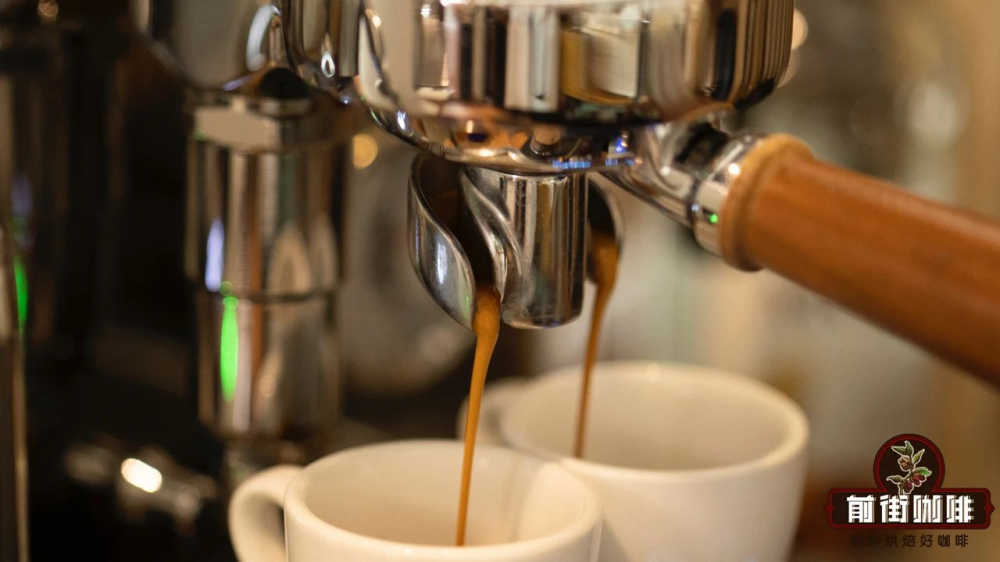
So this is also one of the reasons why espresso is so loved by coffee fans: because the coffee fruit is always an agricultural product, and every year climate and environmental issues can make the flavor of the coffee fruit unstable—perhaps this year it is sweeter, and next year it is less sweet—and blending several coffee beans together can solve this problem well, at least allowing the coffee flavor tasted each year to remain consistent.
The above content is compiled by CoffeeHunters, a coffee news website.


