







Blue Mountain Coffee is regarded by many as a classic symbol of the coffee world, its name almost synonymous with "top-tier coffee." But where exactly does Blue Mountain Coffee come from, how is it graded, and what are its flavor characteristics? This article will start with the history of Jamaican coffee cultivation, sort through the terroir conditions of the Blue Mountains and the unique traits of the Typica variety, explain in detail the Blue Mountain Coffee certification standards and export grading system established by the CIB, and share Front Street Coffee's washed processing method and pour-over extraction plan for the Clifton Mount Estate Blue Mountain No. 1, taking you through a comprehensive look at the true face behind this legendary coffee.
Just like at Front Street, when chatting with elders at home, as soon as the topic turns to coffee, the name that rolls off their tongues is often Blue Mountain Coffee. In an era when floral and fruity notes had not yet become mainstream, Blue Mountain was crowned the "King of Coffee," and even though the price was prohibitive, its name had long been etched into people's minds.
Cultivation of Jamaican Blue Mountain Coffee
In 1728, the Governor of Jamaica brought the first coffee tree from Martinique to this land, and coffee cultivation in Jamaica began. Thereafter coffee continued to spread, and it quickly took root and thrived in the Blue Mountains, which possessed outstanding natural conditions.
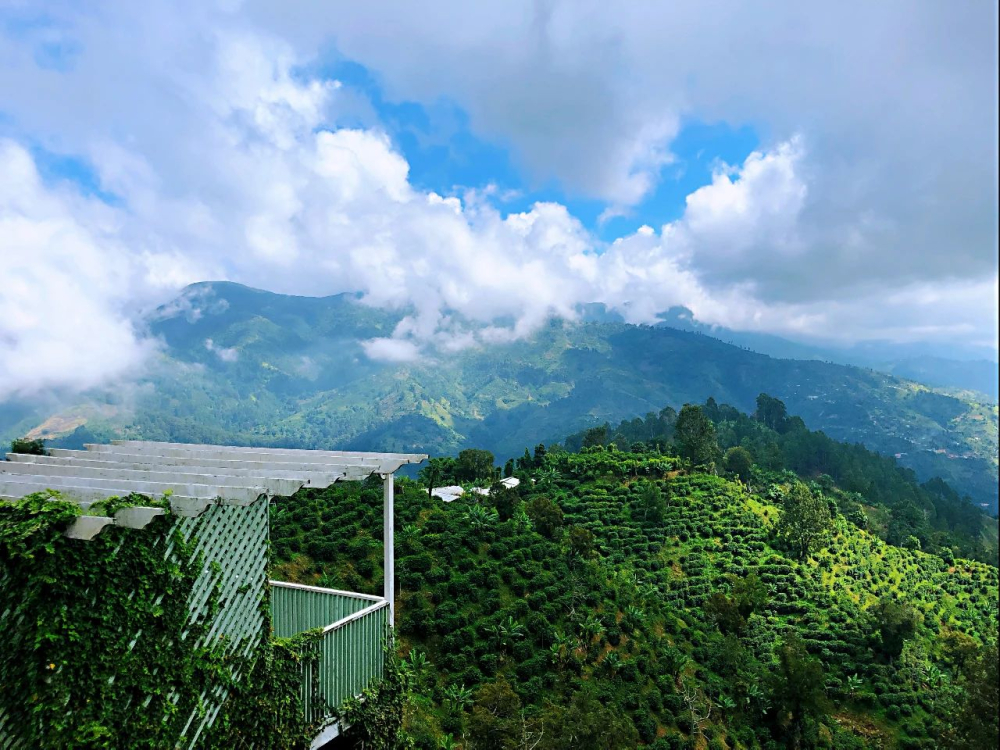
Jamaica's coffee-producing regions are concentrated in the foothills of the Blue Mountains in the east, covering four administrative areas: Saint Andrew, Saint Thomas, Saint Mary, and Portland. The Blue Mountains boast the highest peak in the Caribbean region and are themselves a renowned scenic destination, so the government has designated areas above 1,700 meters as a nature reserve, strictly prohibiting the cultivation of any crops, including coffee. The forest's natural barrier keeps the local air clean with minimal chemical pollution, and combined with the mild climate and fertile volcanic soil, these terroir conditions are ideal for the growth of Arabica coffee.
The variety planted for Blue Mountain Coffee is Typica. Since its introduction to the Blue Mountains in the 18th century, Typica has been cultivated here for over two hundred years and has gradually adapted to the island terroir, with improved disease resistance—especially far greater resistance to coffee berry disease than ordinary Typica. Front Street has always believed that the refined and clean flavor of Blue Mountain Coffee is inseparable from Jamaica's long-standing commitment to carefully cultivating the Typica variety.
The Blue Mountains' cultivation area covers approximately 6,000 hectares, but not every coffee bean produced in this region can bear the Blue Mountain name. To safeguard the quality standards of Blue Mountain Coffee, the Jamaican government established the Jamaica Coffee Industry Board (CIB) and introduced a corresponding standard system for Blue Mountain Coffee. The CIB explicitly stipulates that only Arabica coffee grown at altitudes between 910 meters and 1,700 meters qualifies to be called Jamaica Blue Mountain Coffee, while coffee produced in lower-altitude regions is classified as Jamaica High Mountain Coffee and Jamaica Prime Coffee.
Grading of Jamaican Blue Mountain Coffee
In the last century, Blue Mountain Coffee gained great fame in the global market. To protect this golden brand, the CIB established strict export grading standards based on factors such as green bean size, color, defect ratio, and cup quality. Top-quality Jamaican Blue Mountain Coffee is classified into four grades: Blue Mountain No. 1, Blue Mountain No. 2, Blue Mountain No. 3, and Blue Mountain Peaberry. Among these, the highest grade—Blue Mountain No. 1—requires green beans to meet a screen size of 17 or above, with defective beans not exceeding 2%, moisture content controlled between 10% and 12.5%, and a perfectly balanced expression of acidity, sweetness, bitterness, body, and aroma. It is not hard to imagine that the production of specialty coffee beans meeting these conditions is extremely limited.
To better maintain the moisture content of green beans during transport, Jamaica exports Blue Mountain No. 1, No. 2, and No. 3 green beans in wooden barrel packaging, available in three sizes: 70 kg, 30 kg, and 15 kg. Jamaican coffee of other grades is exported in 60 kg burlap sacks.
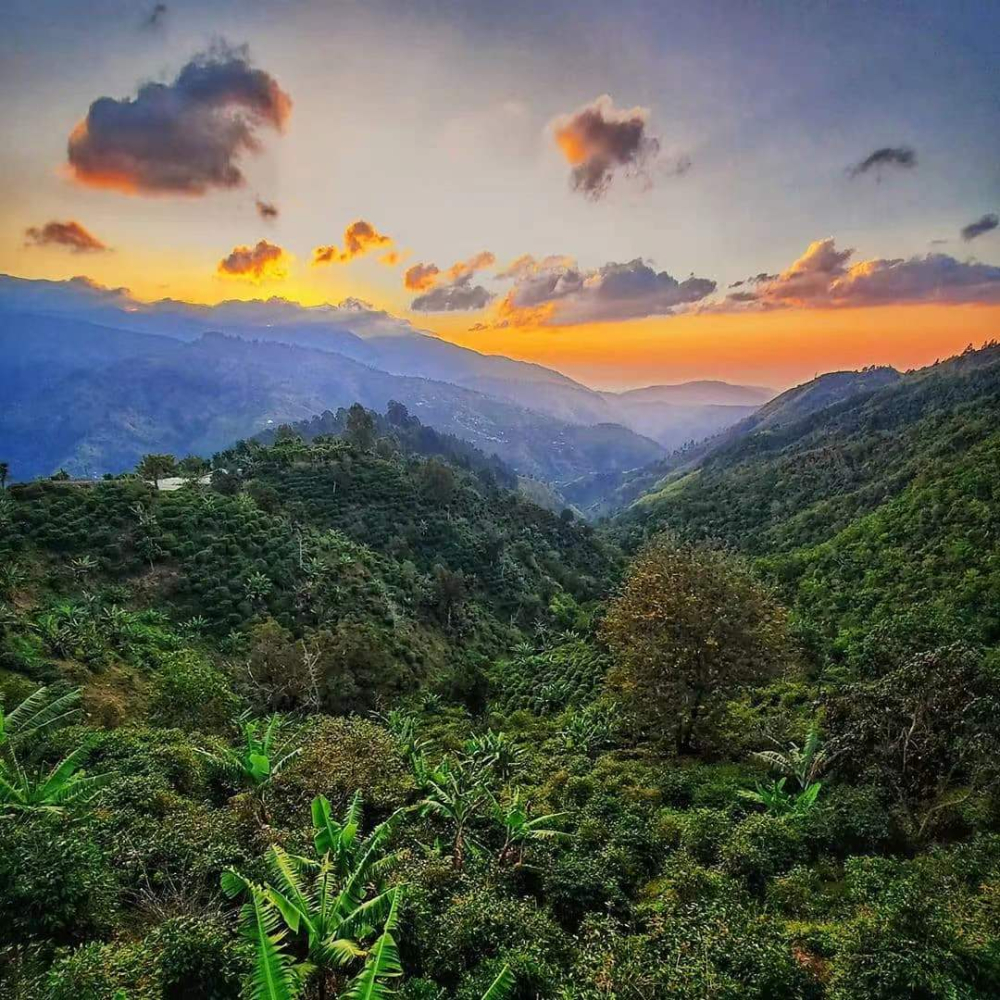
The Blue Mountain Coffee that Front Street obtained is precisely the highest-grade Jamaica Blue Mountain No. 1 coffee bean, produced at Clifton Mount Estate, using the traditional washed processing method.
Washed Processing
At Clifton Mount Estate, harvested coffee cherries are placed into water tanks, where floatation is used to separate ripe fruit from unripe fruit. The ripe cherries are then carried by water flow on conveyor belts into a pulping machine to remove the skin. The coffee beans, still covered in mucilage and parchment, are placed into tanks for fermentation. Once the mucilage breaks down, residual matter is removed by agitation with water, and the clean parchment-covered beans are sent for drying. After reaching the target moisture content, they are moved to the warehouse to rest.
Washed processing effectively reduces the defect rate of Blue Mountain Coffee, making the flavor brighter and cleaner while also ensuring more consistent quality.
How to brew Blue Mountain Coffee for the best taste?
Having learned about the many characteristics of Blue Mountain Coffee, to present the classic Blue Mountain flavor, you still need to find matching brewing parameters. Before brewing, please first confirm that the coffee beans in your hands are within their optimal flavor period—if the roast date is more than one month past, some aromas may have already dissipated, and a woody taste may even appear. Coffee beans shipped by Front Street are dispatched within 5 days of completing roasting, ensuring they are still within the optimal flavor period when you receive them.
The classic Blue Mountain flavor is dominated by rich chocolate and roasted nut aromas, with gentle acidity and a full body. To recreate this classic taste, Front Street's roaster selected a medium-dark roast level, highlighting the roasted aromas while retaining some acidity. When cupping the Blue Mountain No. 1 coffee beans, Front Street perceived a balanced and harmonious expression across acidity, sweetness, aroma, bitterness, and body, so FrontStreet Coffee's baristas also designed the brewing plan around this flavor profile.
Front Street's brewing parameters: KONO dripper, grind size with a 75% pass rate on a No. 20 standard sieve, water temperature 88°C, with Front Street's usual three-stage pouring. Coffee dose 15 grams, coffee-to-water ratio 1:15.
Three-stage pouring: First, use 30 grams of water to evenly wet the coffee bed and bloom for 30 seconds. For the second stage, pour 95 grams of water in a steady circular motion from inside outward. When the water level drops to two-thirds of the coffee bed in the dripper, begin the third stage, pouring 100 grams of water. Maintain a slow flow throughout. After approximately 2 minutes of dripping, remove the dripper. Finally, gently swirl the coffee liquid to mix evenly and it is ready to taste.
For professional coffee knowledge exchange and more coffee bean information, please follow Coffee Workshop (WeChat public account: cafe_style)
For more specialty coffee beans, please add the private WeChat of FrontStreet Coffee: qjcoffeex
The above content is compiled by CoffeeHunters, a coffee news website.


