







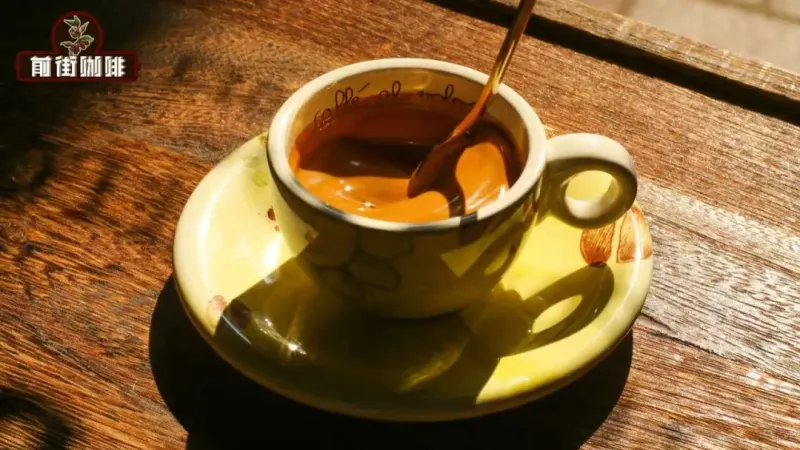
Espresso means "fast" in Italian—not only is it quick to make, but it should also be drunk immediately after it is served. As the specialty coffee wave advances, more and more enthusiasts are trying to make espresso with single-origin coffee beans, known as SOE. This article starts from the basic concept of Espresso and systematically explains the characteristics of SOE, its differences from blended beans, the approach to extraction adjustment, and the experience Front Street Coffee has accumulated in actual practice. It also recommends two single-origin coffee beans suitable for making espresso—Front Street Yirgacheffe Natural Red Cherry and Front Street Brazil Queen's Estate—with specific extraction parameter references included.
For more specialty coffee knowledge, please follow the WeChat official account: Front Street Coffee (FrontStreet Coffee)
Espresso
This name comes from Italian, originally meaning "fast." It refers both to the quick brewing action and to the fact that the coffee must be served to the customer immediately after extraction, while drinking it is also a matter of finishing it as soon as possible while it is hot.
As overall coffee quality continues to rise, using single-origin beans to make espresso has become increasingly common in today's market. This kind of espresso, which emphasizes showcasing regional flavors, forms a clear contrast with the espresso traditionally made from blended beans. However, not every single-origin bean is up to the task of making espresso. Today Front Street will talk about SOE and how to choose coffee beans suitable for making SOE.
Although SOE is the abbreviation for single-origin espresso, it is not necessarily equivalent to specialty coffee. If you choose single-origin beans with highly distinctive flavors to make SOE, you can indeed produce an espresso with a strong character.
For example, Front Street Yirgacheffe has citrus notes, while Front Street Kenya presents berry aromas. In addition, because the high-pressure extraction of an espresso machine magnifies coffee flavors exponentially, these flavors often stand out even more in espresso than in pour-over.
The beans selected for SOE single-origin espresso are usually not roasted too dark, in order to highlight regional characteristics. Compared with traditional dark-roasted espresso beans, these beans are actually less easy to extract flavor from.
Therefore, on the one hand, extraction parameters need to be adjusted to increase the extraction yield, such as extending the extraction time, making the grind finer, and increasing the dose.
On the other hand, when making espresso drinks based on SOE, the ratio of espresso to milk or water needs to be rebalanced. Appropriately reducing the amount of milk or water makes the coffee flavor more prominent and prevents the overall taste from becoming too weak.
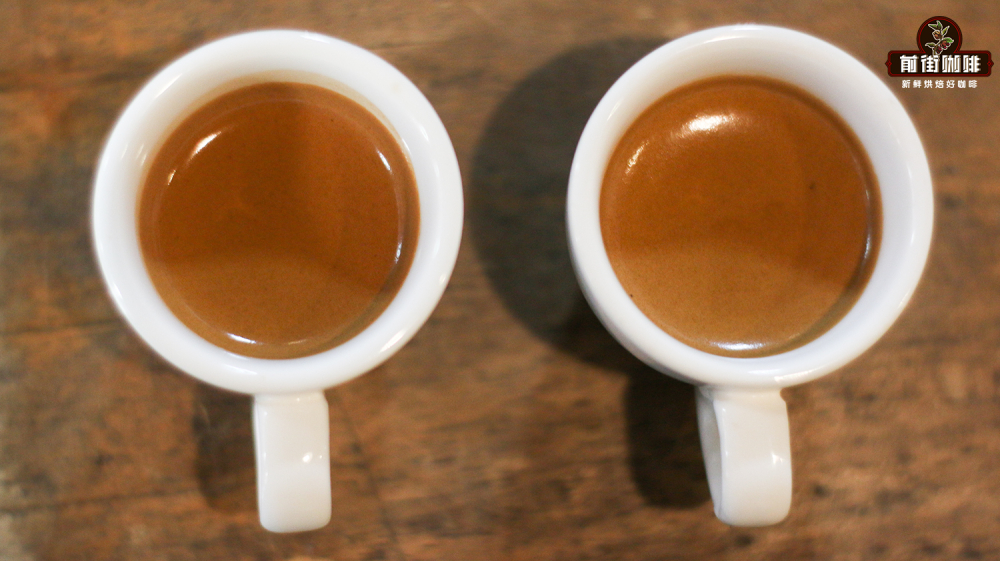
Finally, there are extremely strict standards for selecting beans to make SOE. Although SOE is highly expressive, because it is single-origin, its shortcomings are also easily magnified. Factors such as roast level and particle size all directly affect the flavor direction.
If you do not have high-quality coffee beans on hand, the SOE you make will not only taste bad, but there will be no way to hide it. So in actual practice, SOE has quite high technical requirements for every stage, which is also one of the reasons SOE usually sells for more than ordinary Espresso.
The espresso blend used by Front Street Coffee (FrontStreet Coffee) aims to increase the layering and harmony of the flavor, but this is not the only path. Nowadays the SOE approach is also very common, that is, using single-origin coffee beans to make espresso and highlighting regional flavors, though the shortcomings are magnified along with it. Moreover, the roasting parameters for SOE are not the same as those for pour-over beans. Front Street Coffee (FrontStreet Coffee) once used Front Street Yirgacheffe coffee beans roasted for pour-over to extract espresso, and the result was that the acidity was so intense it was almost undrinkable (though of course some people do prefer this style). The reason is that Front Street Yirgacheffe is already known for its fruity acidity, and under the high-temperature, high-pressure conditions of espresso extraction, its acidity was magnified several times over, turning what was originally a strength into a weakness, which goes against the original intention of serving coffee. Therefore, when Front Street Coffee (FrontStreet Coffee) selects single-origin beans for making espresso, it uses a different set of roasting parameters.
Of course, some beans are themselves highly versatile and can adapt to many brewing methods. Front Street has sorted out a few for everyone to choose from.
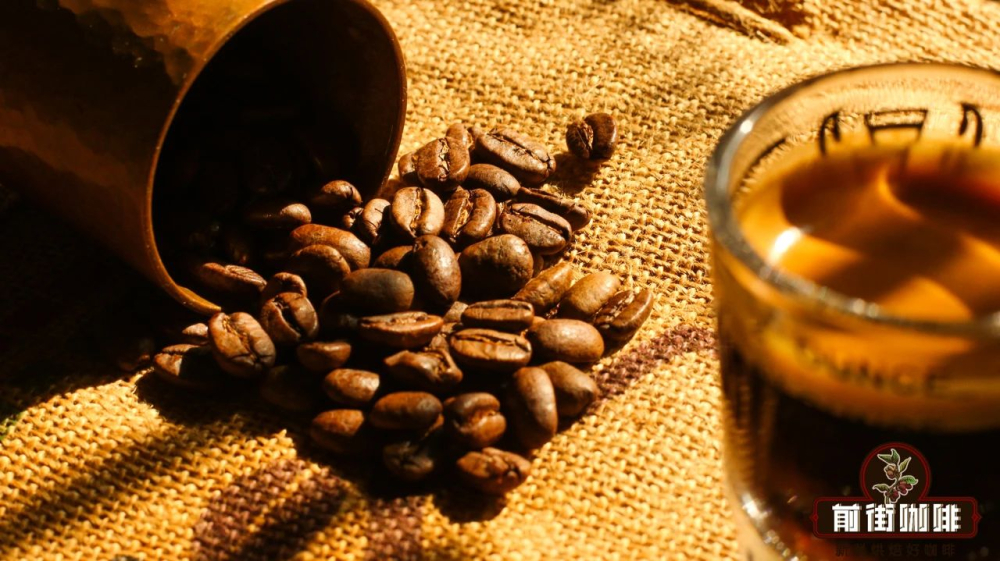
Front Street Coffee (FrontStreet Coffee) Yirgacheffe Natural Red Cherry Region: Ethiopia Yirgacheffe Estate: Arertlan Estate Altitude: 1700-2200m Variety: Local landrace Processing method: Natural
This coffee originally came from the Red Cherry Project initiated by a Dutch green bean company, aimed at motivating farmers and improving green bean quality—that is, encouraging farmers to hand in better-quality coffee beans. Fully ripe red cherry coffee fruit is the guarantee of coffee bean quality. Refined natural processing reduces the defect rate and also makes the coffee sweeter and more fragrant.
Front Street's roaster uses a medium-light roast for this bean, which preserves the rich and explosive fruity flavors in Front Street Yirgacheffe coffee beans while also enhancing sweetness and body, giving the coffee a rounded mouthfeel. When used to extract espresso, one can likewise perceive the citrus fruit notes of Front Street Yirgacheffe, with a balanced sweet-and-sour flavor and low bitterness. Compared with a dark-roasted espresso blend, the body is slightly thinner, but the flavor is qualitatively improved.
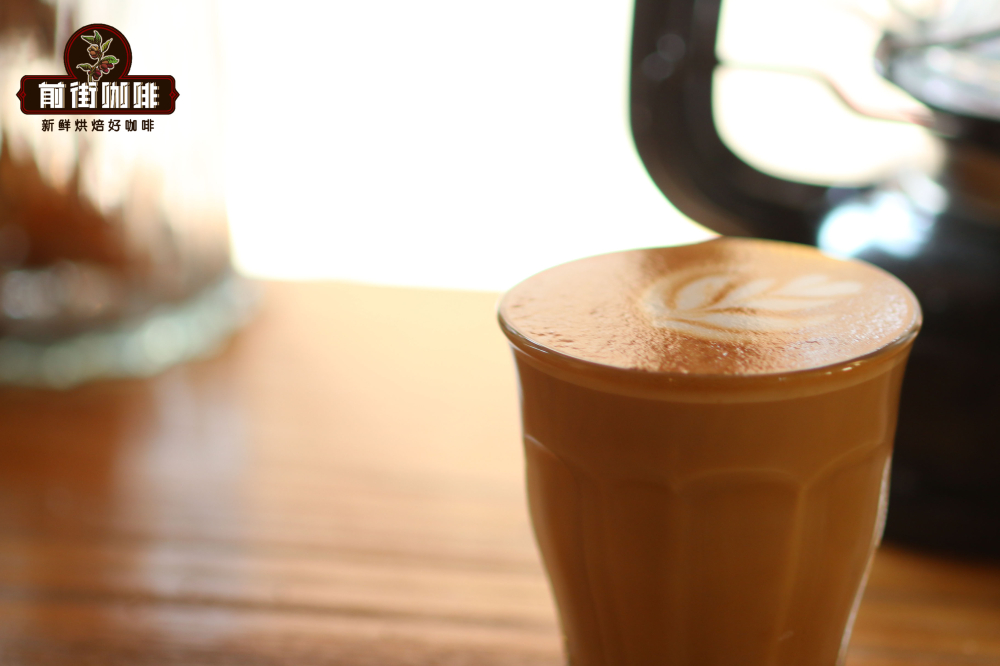
Extraction note: Because the roast level is still on the lighter side compared with beans for espresso use, the grind should be adjusted finer during extraction and the extraction time should be shorter (about 22 seconds) to prevent the sharp acidity of underextraction. Taking the Pegasus 900N grinder as an example, adjust the normal espresso grind 2 small notches finer, extract 40g of coffee liquid from 20g of coffee grounds, with a time of 22 seconds.
Front Street Coffee (FrontStreet Coffee) Brazil Queen's Estate Region: Brazil Mogiana Estate: Queen's Estate Altitude: 1400-1950m Variety: Yellow Bourbon Processing method: Natural
This coffee is known for its balance. Front Street's roaster uses a medium roast, enabling it to handle many very different extraction methods. Its balanced flavor and mouthfeel are comforting. When extracting espresso with a semi-automatic espresso machine, the nutty aroma is rich and the crema performance is also quite outstanding; it is rich and full on the palate, with a soft texture and a chocolate aroma in the finish.
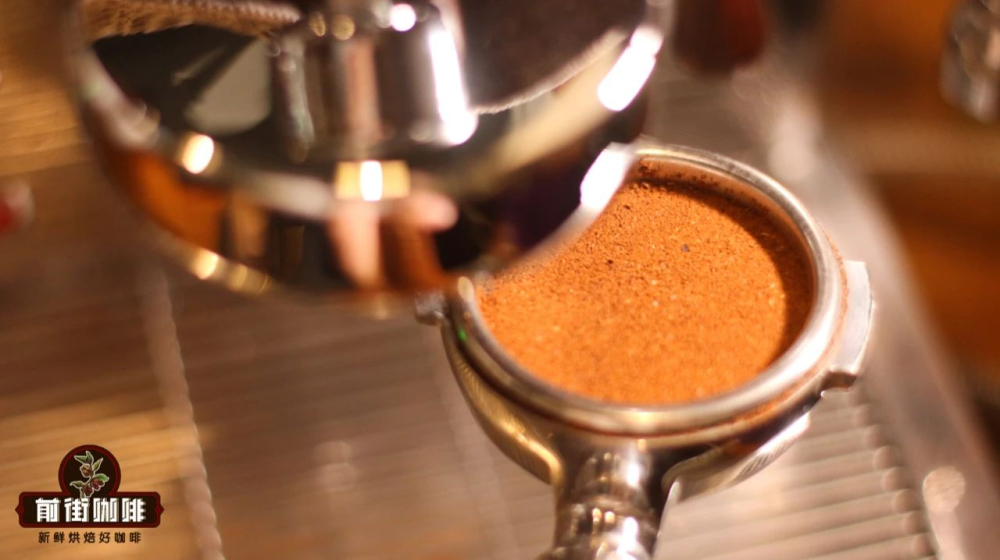
Extraction method: Use 20g of coffee grounds to extract 40g of coffee liquid, with a time of 27 seconds.
The above content is compiled by CoffeeHunters, a coffee news website.


