







In an era where single-origin and pour-over coffees are all the rage, espresso extracted with a semi-automatic espresso machine remains the backbone of a café's product line. Making a qualified espresso seems to require nothing more than pressing a button, but in reality, there are numerous variables at play. This article will systematically outline the standard appearance and flavor characteristics of a good espresso, and explain how to develop an extraction plan based on bean characteristics from the perspectives of primary parameters such as coffee bean quality, roasting differences, grind size, and dose ratio, as well as secondary parameters like water temperature and pressure. It will also share how distribution and tamping techniques affect extraction results, and recommend Front Street Classic Blend, Front Street Specialty Blend, Front Street Commercial Blend, Front Street Dark Cocoa Base Blend, and other beans suitable for espresso extraction, helping baristas and enthusiasts achieve consistent output.
Espresso-based beverages extracted with semi-automatic espresso machines still firmly occupy the mainstream position in café product lines, even in today's environment where single-origin and pour-over coffees are dominant. Especially at coffee trade shows, almost every booth has a "La Marzocco" on display, as if lacking one would mean lacking confidence.
If you want to pursue the path of a barista, the first mandatory lesson is learning how to extract espresso. Extracting an espresso itself is not complicated, but making every cup meet the qualified standard is a whole different level of difficulty. This is because it involves a great many variables, which also means you must understand every step clearly to truly be in control and see the whole picture.
What should a qualified espresso look like?
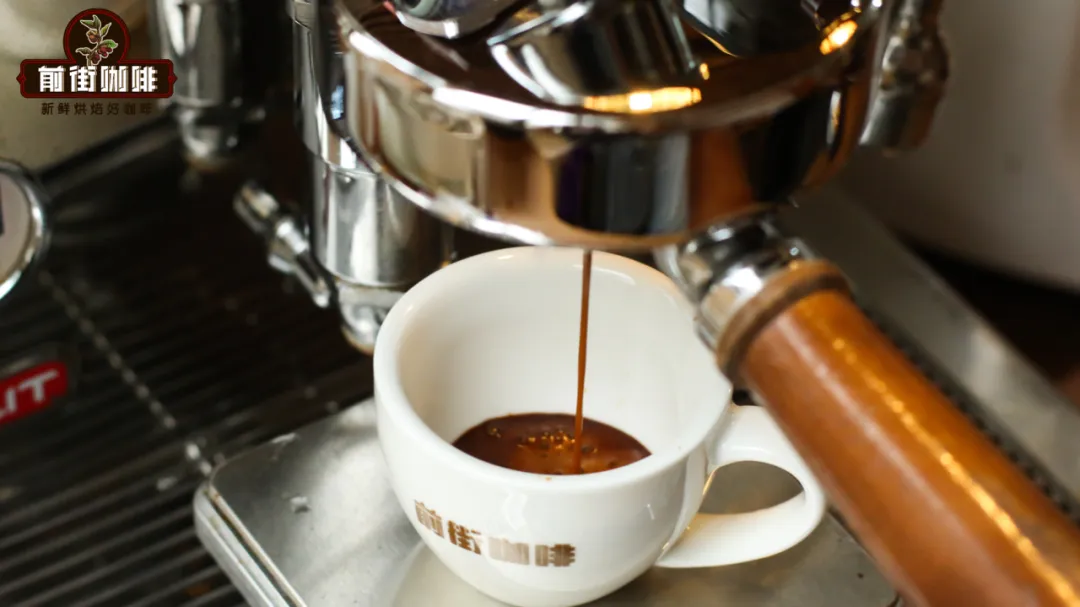
In terms of appearance, it should have a golden Crema on the surface. The crema should not be too thin or too thick—if too thick, it has poor flow and tends to clump. The ideal thickness is about half the height of the dark coffee liquid below. The texture of the crema should be fine and smooth, without large bubbles.
In terms of taste, espresso typically presents a roasty, bitter nutty-chocolate profile, with a creamy, full-bodied mouthfeel. The bitterness lingers only briefly in the mouth, while the finish and aftertaste are long and pleasant. Additionally, the flavor of espresso mainly depends on the coffee beans themselves, and choosing a dedicated espresso blend will be more conducive to extraction. For café operations and home machines, Front Street Classic Blend, Front Street Specialty Blend, Front Street Commercial Blend, and Front Street Dark Cocoa Base Blend are the top choices.
At first glance, it may not seem complicated, but once you start practicing, you'll find obstacles at every turn. The first key point is the coffee beans. Coffee beans can be said to fundamentally determine the flavor direction of the entire cup. Many times when coffee doesn't taste good, you really can't blame the barista entirely—it's magicians who can turn something rotten into something magical, and baristas don't yet have that kind of extraordinary ability.
So, if the beans themselves are not ideal in quality or flavor, then no matter how skilled your techniques are to salvage or mask the problem, it will ultimately be futile.
However, in some cases, the barista must recognize the problem and make adjustments. After all, many coffee beans are of good quality, but sometimes the output is inconsistent and hard to pin down. The possible issue is that the barista lacks a deep understanding of the coffee beans. Many baristas firmly believe in espresso extraction formulas, but Front Street would like to say that overly data-driven extraction sometimes neglects the coffee's own flavor.
The roast level and roasting time of coffee beans will cause visibly different behavior during extraction, and espresso extraction should, like pour-over coffee, start from the characteristics of the beans to develop an extraction plan tailored to them. When it comes to the extraction stage, this is the barista's home turf. It seems there are many parameters to adjust—grind size, dose, ratio, water temperature, pressure. There are also many techniques to pay attention to—dosing, distribution, tamping.
Front Street believes it's important to distinguish primary parameters from secondary parameters. For example, parameters like water temperature and pressure are set and basically not adjusted frequently, so they are classified as secondary parameters. Grind size, dose, and ratio, on the other hand, are adjusted more frequently and are therefore primary parameters.
Among these, grind size is adjusted most frequently. Imagine: the finer the grind, the more compact the coffee puck, and the harder it is for water to pass through, so each unit of water carries away more coffee material, resulting in a more concentrated brew. And vice versa. What needs to be adjusted is that sometimes extracting too much coffee material is not a good thing. The soluble substances in coffee make up 30%, but it is generally believed that only substances within 22% are relatively good, while the rest contribute unpleasant bitter and off-flavors.
And the degree of influence that distribution and tamping have on coffee extraction. An uneven tamp or uneven distribution can indeed negatively affect coffee flavor. However, most of the time, filling the portafilter basket to its reasonable maximum capacity and achieving a level tamp (the force applied does not matter) will basically not result in channeling or uneven extraction. In actual practice, there are still many methods to avoid such issues.
The above content is compiled by CoffeeHunters, a coffee news website.


