








As the most accessible choice among espresso coffee equipment, the moka pot is found in nearly every Italian household. It was invented by Alfonso Bialetti in 1933 and uses a distillation-style principle with a heated base, sharing a fairly similar brewing concept with the first commercial espresso machine launched by La Pavoni in 1905. This article will systematically cover the key points of using a moka pot, from coffee bean selection and grind size assessment to the complete brewing steps and cleaning maintenance. It also offers specific recommendations based on several Front Street Coffee bean options to help enthusiasts easily brew a rich and aromatic cup of moka pot coffee at home.
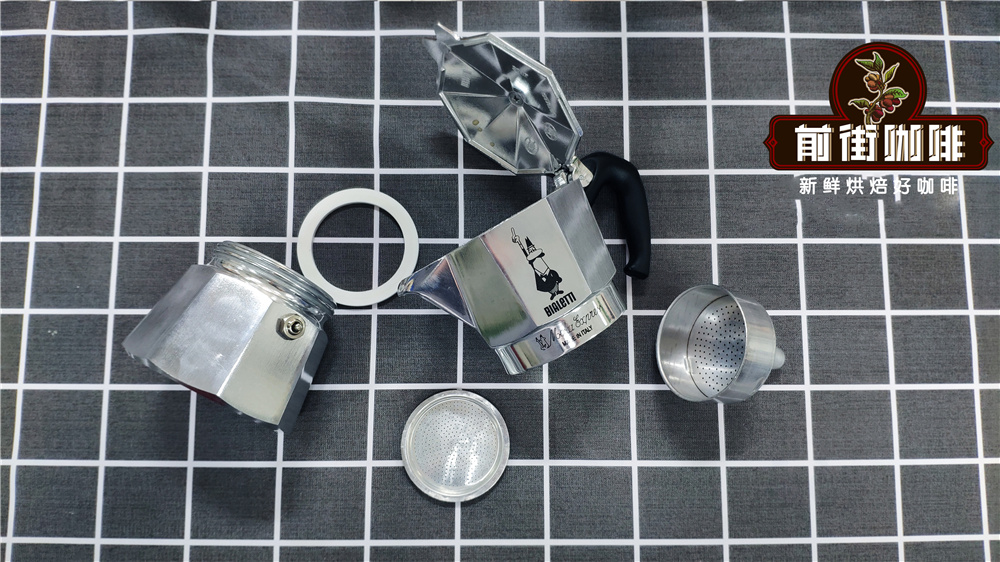
Among the many espresso coffee equipment options, the moka pot is arguably the one closest to ordinary households. Italians use it extremely commonly. In 1933, Alfonso Bialetti invented this device, which completes brewing by heating its base and belongs to distillation-style extraction. In terms of principle, the moka pot shares many similarities with the first commercial espresso machine designed and produced by La Pavoni in 1905.
What coffee beans or ground coffee is most suitable for a moka pot?
As a household coffee device, the moka pot's advantage lies in its convenience and ease of use.
In Italy, not many households own a coffee grinder; people usually go directly to large shopping malls to buy coffee grounds specially made for moka pots. So-called specialty grounds are simply products whose roast level and grind size match the moka pot. Housewives do not need much professional coffee knowledge to brew aromatic, full-bodied coffee with it.
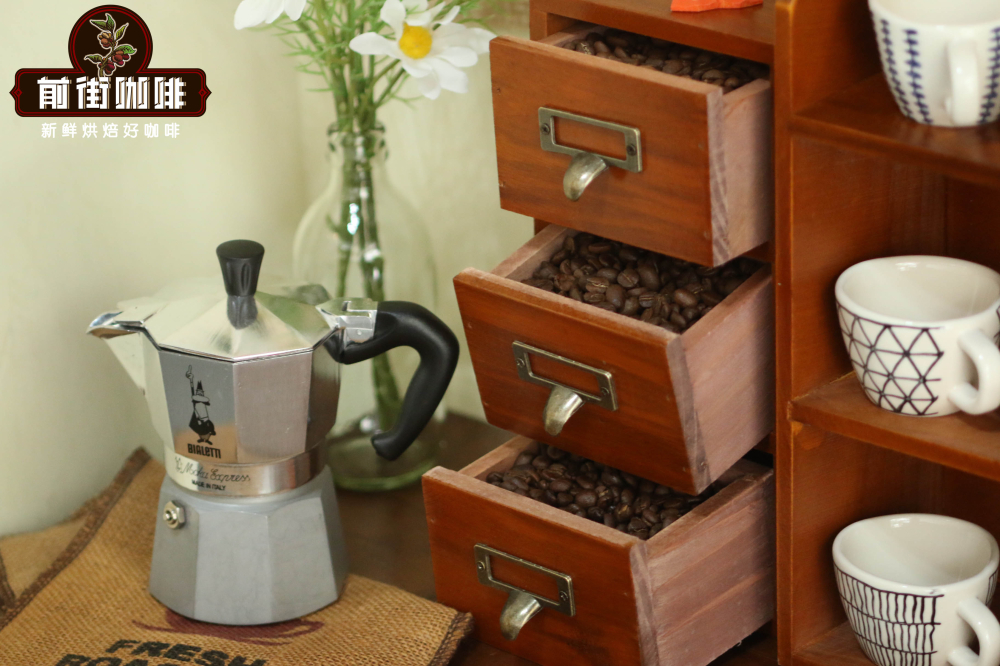
In China, it is not easy to buy coffee grounds specially made for moka pots, so you have to do it yourself. Theoretically, almost any coffee bean can be used to brew a moka pot, but the moka pot excels at expressing intense, full-bodied flavors. If light-roasted beans are used, the acidity will be noticeably amplified, making it feel rather unbalanced on the palate, with thin oils and a weak taste. Therefore, it is recommended to prioritize medium-dark roasted coffee beans.
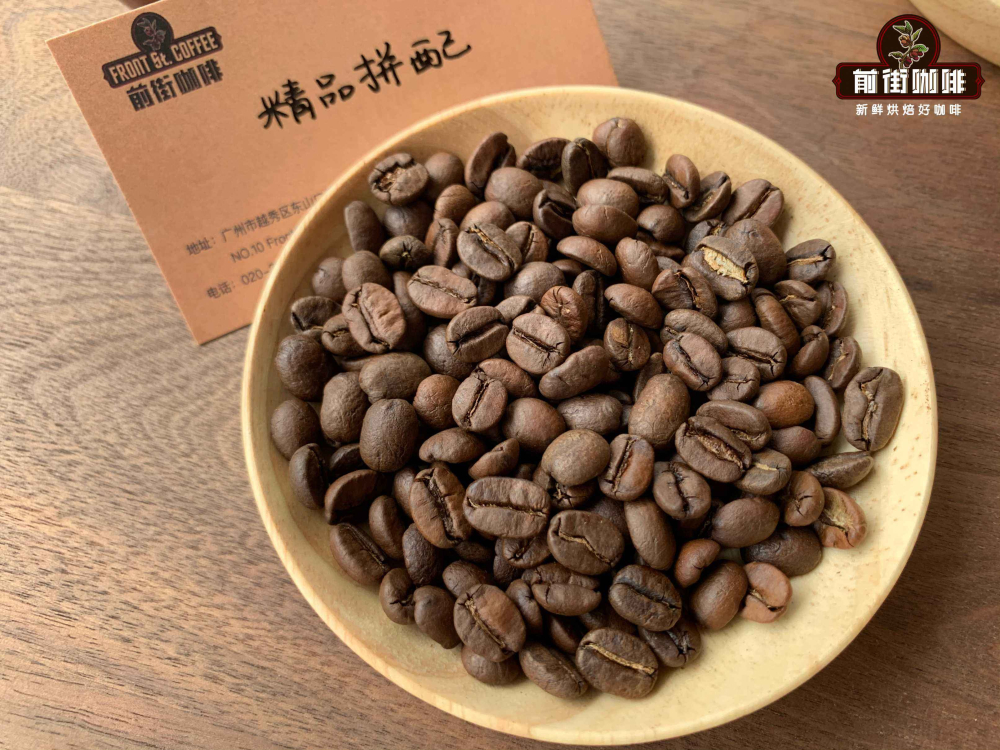
If you are just starting out, baristas will first recommend using an espresso blend. The advantage of a blend is that the formula is designed with balanced flavor in mind, making the taste closer to most people's preferences. For example, Front Street Coffee. Specialty Blend uses semi-washed Brazilian beans paired with washed Colombian beans, presenting intense notes of mixed nuts, creamy chocolate, and caramel. It is sweet and smooth on the palate, with a touch of soft acidity and delicate oils.
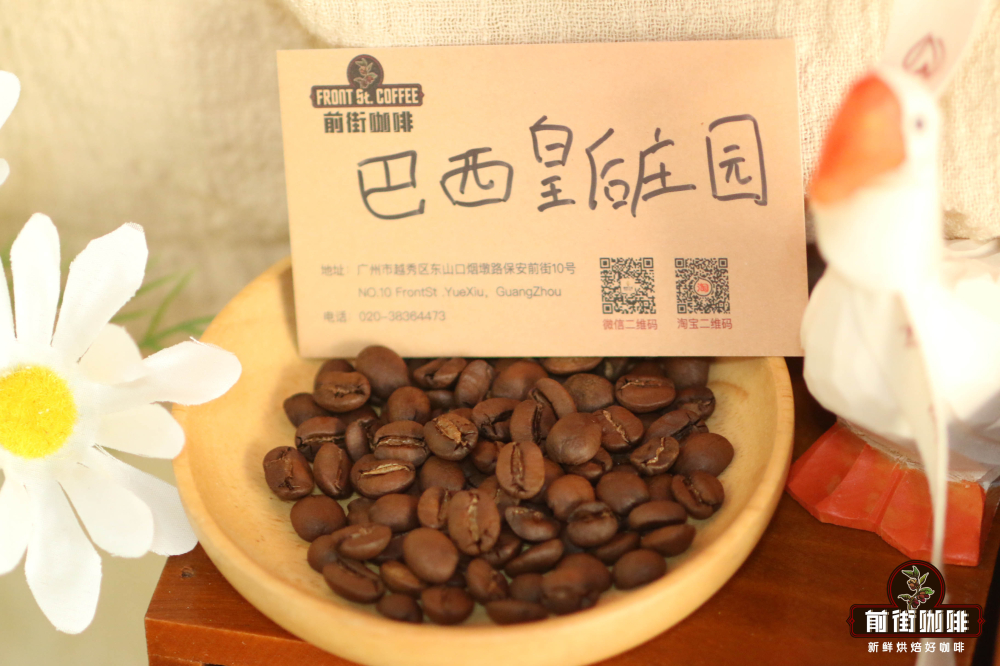
If you want to experience a more distinct regional character, medium-roasted single-origin beans are also very suitable for moka pot extraction. You can try Front Street Coffee. Brazil Queen's Estate and Front Street Coffee. PNG Bird of Paradise Estate. Their common characteristics are good balance, intense nutty notes, and a fructose-like sweetness.
If you are after stronger aroma and flavor layering, you can choose beans with a darker roast, such as Front Street Coffee. Front Street Coffee PWN Golden Mandheling coffee beans, which carry a unique herbal fragrance and are also very compatible for making moka pot coffee.
How fine should the coffee grounds for a moka pot be?
Many friends hope to use a moka pot to brew coffee that can replace an espresso machine. But the two are completely different brewing tools, so the parameters naturally cannot be copied directly. People often ask Front Street Coffee's baristas: when brewing coffee with a moka pot, should the grounds also be ground as fine as for espresso?
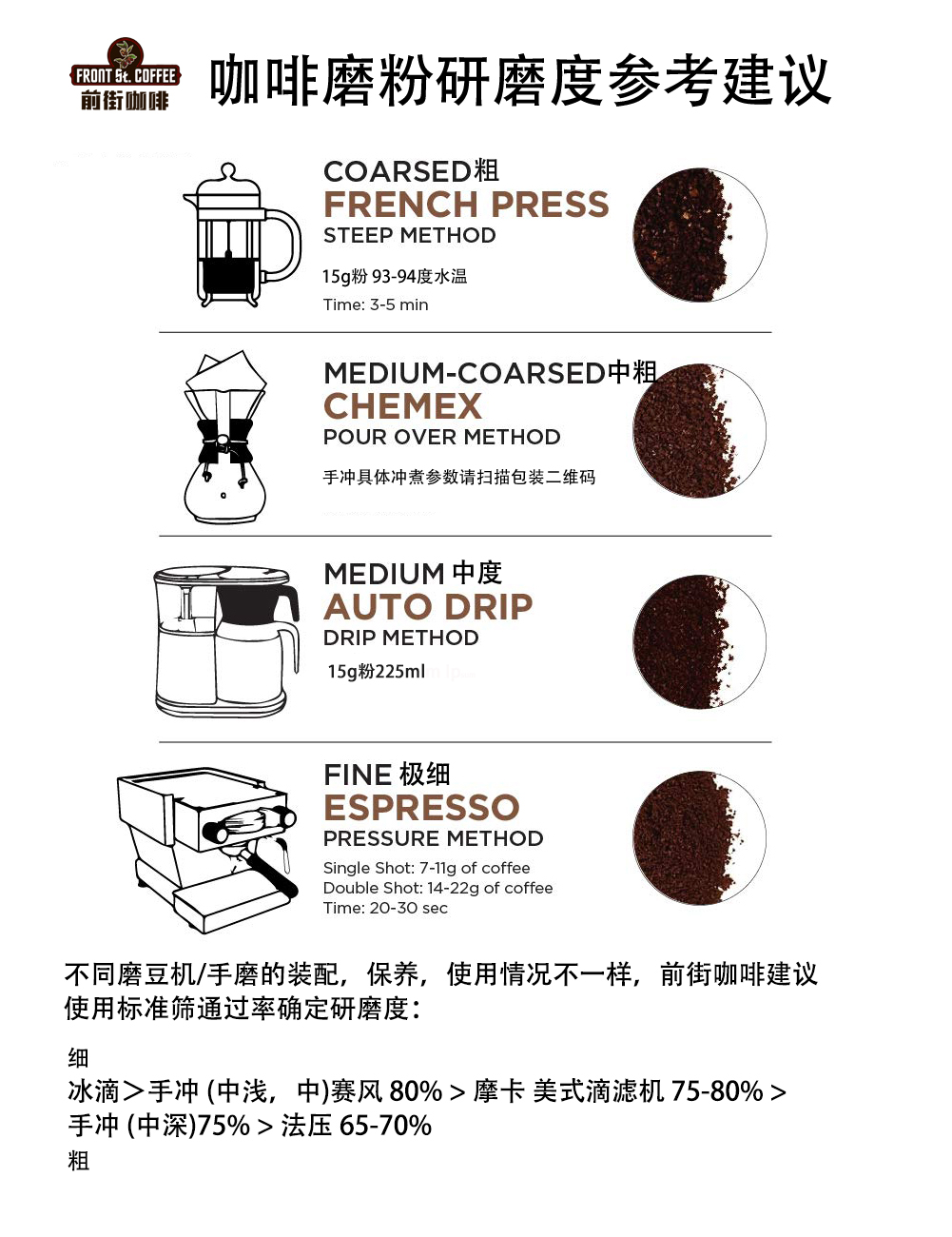
In fact, the grind size for a moka pot should be slightly coarser than for espresso. You can refer to the gap size of the filter screen in the basket; as long as the coffee particles will not fall into the lower chamber, it is fine. But it should not be too coarse either, otherwise sufficient pressure cannot be generated, oils will not come out, and there may even be sputtering because the resistance is too low.
1. Grind size is proportional to extraction time: Grind size affects extraction duration and extraction yield. The finer the grind, the longer the extraction time and the higher the extraction yield; the coarser the grind, the shorter the extraction time and the lower the extraction yield.
2. Darker roasts slightly coarser, lighter roasts slightly finer: The darker the roast, the more the coffee's fibrous structure has been broken down, making it easier to extract. Grinding too fine can easily make it bitter, so a slightly coarser grind is suitable; light-roasted beans are the opposite.
3. Grind size can adjust bitterness: The finer the grind, the higher the extraction yield, and the easier it is to bring out high-molecular-weight bitter substances such as chlorogenic acid, quinic acid, and caffeine; if ground too coarse, high-molecular astringent and bitter substances are not easily released, but medium-molecular aromatic and sweet components will also remain in the coffee grounds due to underextraction, causing waste. Therefore, baristas need to pay attention to whether the grind size is appropriate and the optimal grind size for each type of bean.
Coffee particle size is usually between 0.3 mm and 0.55 mm. But not everyone can distinguish a one- or two-millimeter difference with the naked eye. The simplest method is to use a grind size ruler, or use moka pot specialty grounds as a reference. You can also debug directly by feel: if the grounds are too fine, you may hear the humming sound of boiling water but see no coffee liquid rising, in which case you should turn off the heat immediately; if the grounds are too coarse, the coffee liquid may gush out like a fountain.
The process of making coffee with a moka pot
1. Pour purified water into the lower chamber of the moka pot, keeping the water level about 0.5 cm below the safety valve.
2. Slowly pour the coffee grounds into the basket, tap gently to distribute them evenly. After the coffee grounds form a small mound, level the surface by distributing the grounds.
Filling the basket is to avoid extracting defective flavors. The closer the coffee ground density within the basket, the more it prevents some areas from being over-extracted or under-extracted, thereby avoiding uneven flavor or bitterness.
3. Place the basket into the lower chamber, screw the upper and lower parts of the moka pot tightly, then place it on an electric ceramic stove and heat over high heat.
4. When the moka pot heats up to a certain point and makes a noticeable humming sound, turn the electric ceramic stove to low heat and open the lid of the upper chamber.
5. When half of the coffee liquid has flowed into the upper chamber, turn off the electric ceramic stove. The residual heat and internal pressure of the moka pot will continue to "push" the remaining coffee liquid into the upper chamber.
6. Once all the coffee liquid has been extracted into the upper chamber, it can be poured into a cup and enjoyed. Coffee brewed with a moka pot is very intense and can even extract Crema. You can also add an appropriate amount of water or milk to balance it for a better flavor.
Some friends find something wrong after heating: the moka pot first flows out some clear water, and only after a while does the coffee liquid slowly come out, so they suspect something went wrong. In fact, this is not an operational error, but rather that not all parts were dried in time when cleaning the device, and the residual water flowed up first through the gaps.
Front Street Coffee cleans the moka pot immediately after each use and dries it with a clean cloth or paper towel to avoid residual coffee stains causing flavor transfer or burnt bitterness. If old coffee stains remain on the filter plate, gasket, or extraction channels, they may cause blockages and affect normal extraction.
The above content is compiled by CoffeeHunters, a coffee news website.


