







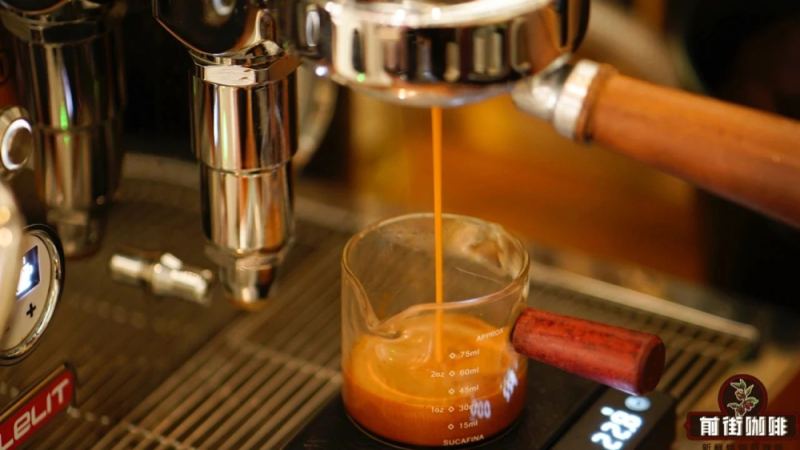
Espresso is a favorite of many coffee lovers, but do you really understand it? From the birth of the first espresso machine in 1884 to today's rich crema produced under 9 bars of pressure, espresso has traveled a long road of evolution. This article will systematically explain the basic knowledge of espresso, from its history and principles to how to drink it and brewing parameters. The baristas at Front Street Coffee will also share a key detail: why is a glass of ice water served alongside espresso? How exactly should this glass of ice water be used? If you have ever wondered whether espresso can be drunk straight, this article will give you a clear answer.
For more specialty coffee knowledge, please follow our WeChat official account: Front Street Coffee
Have you ever watched how baristas start their day when a café first opens? The baristas at Front Street Coffee choose to start their day with espresso, and watching them drink cup after cup, onlookers can't help but be surprised. Baristas are, of course, people who understand coffee, but is this way of drinking espresso straight the correct way to enjoy it?
What?!! Hold on!!! It's not that simple!!! But before explaining how to drink espresso, we need to first understand the espresso machine.
History
In 1884, Angelo Moriondo invented the first espresso machine and demonstrated it in Turin, Italy. This machine was born to handle the endless stream of coffee customers in his shop, and the coffee it produced was called "Espresso." In Italian, espresso carries the meaning of "pressed out." Unfortunately, this was a dual-group machine with only 1.5 bars of pressure and an extraction time of up to 40 seconds, ultimately producing a thin-bodied cup closer to what today's American coffee machines produce.
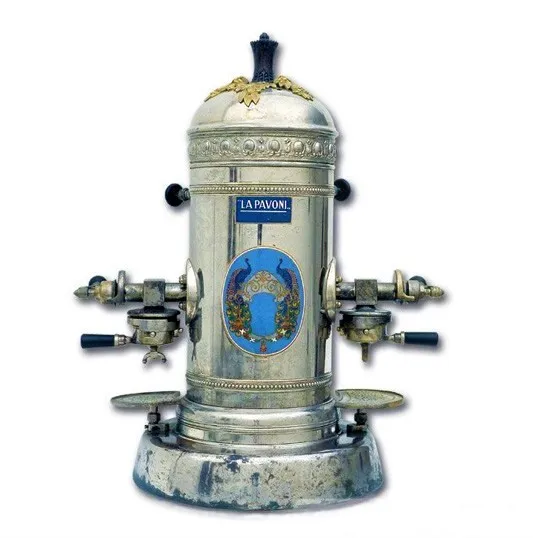
In 1901, Milanese engineer Luigi Bezzera first registered a patent for commercial espresso machine technology. In 1905, La Pavoni first put this technology into production of espresso machines, and the world's first true espresso machine was officially born. Early espresso machines operated by steam, but due to excessively high temperatures and limited pressure, the extracted coffee had neither rich crema nor anything but a very burnt, bitter taste.
In the 1930s, the electric age replaced the steam age, and Milanese barista Achille Gaggia designed a coffee machine with a piston lever. In 1948, the rights to this patented technology were transferred to the Faema company. In 1961, Faema launched the Faema E61 espresso machine. With the advent of pump-driven coffee machines, extraction pressure could reach an unprecedented 9 bars. Thereafter, espresso acquired its signature emulsified crema, with intense flavor and a rich, viscous mouthfeel.
Principles
Today, espresso is mostly made by forcing water heated to over 90°C through finely ground coffee powder at 9 to 11 bars of pressure in a very short time to produce a concentrated coffee liquid. This method simultaneously extracts both the water-soluble and water-insoluble substances from the coffee grounds while producing a large amount of crema. The resulting coffee has a richer, smoother taste than other coffees.
How to Drink Espresso
When Front Street serves espresso, it always comes with a glass of ice water. Those trying espresso for the first time may be puzzled—what is this glass of ice water for? Surely you're not supposed to pour the espresso into the ice water?
If the baristas at Front Street saw someone doing that, they would step in to stop it. Pouring espresso into ice water—isn't that just a plain iced Americano? What happened to tasting the espresso properly?
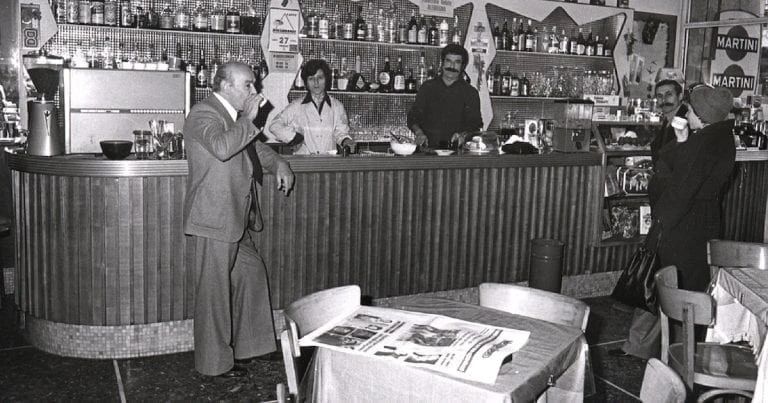
In fact, the purpose of the ice water is to let you thoroughly cleanse your palate before tasting the espresso, resetting your sense of taste and smell to zero. Then you can let the espresso collide intensely with your palate. As the coffee in the cup decreases, you can taste the different flavors and mouthfeels of the espresso from start to finish.
In addition, a small spoon is also provided when serving espresso. The purpose of the small spoon is to stir—freshly served espresso has very distinct layers, and you can use the spoon to thoroughly mix the upper layer of foam with the liquid below. Of course, you can also leave the small spoon aside as decoration and taste the subtle mouthfeel changes brought by the layers.
Front Street Coffee Espresso Brewing Method
The steps for making espresso are seemingly simple: dosing, distributing, tamping, and brewing. However, extracting a qualified shot of espresso involves many important factors—otherwise, baristas wouldn't be drinking themselves sick the moment a café opens. These important factors include dose, yield, grind size, pressure, and more.
[Dose] The dose is generally determined by the capacity of the portafilter basket, then reduced slightly based on the condition of the coffee grounds and other factors. If the dose is too much, the portafilter handle won't be able to lock onto the group head; if the dose is too little, extraction will be uneven. Front Street's basket capacity is 20 grams.
[Yield] Generally speaking, the internationally common parameter is 1:2, meaning the amount of extracted liquid is twice the dose of coffee grounds.
[Grind Size] The finer the grind, the finer the coffee particles, and the more coffee substances can be extracted, which may cause over-extraction. The coarser the grind, the coarser the coffee particles, the less surface area of the particles contacts the water, and the fewer coffee substances are extracted, easily leading to under-extraction. Therefore, an appropriate grind size is crucial.
[Pressure] The ideal extraction pressure is around 9 bars. If the extraction pressure is too low, too little crema is extracted, fewer quality flavor compounds are extracted, and the taste is relatively inferior—prone to under-extraction. If the extraction pressure is too high, the forceful hot water violently agitates the coffee grounds, destroying too much coffee structure and extracting more insoluble substances, making the result bitter and astringent.
Front Street Coffee Espresso Brewing Method
Coffee machine: Faema E98
Pressure: 9 bar±2
Temperature: 90.5~96°C
Time: 20~30 sec
Ground coffee to water ratio: 1:1.7~1:2
Dose: 12g (single espresso) 20g (double espresso)
Extraction yield: 20ml (single) 40ml (double)
The espresso beans used at Front Street's stores to extract espresso are the Sunflower Warm Sun blend. This blend consists of 70% Honduras Sherry and 30% Ethiopian natural Red Cherry. The 70% Honduras Sherry has undergone Sherry whisky barrel fermentation, providing the coffee with a rich boozy aroma and vanilla cream flavors. The 30% Ethiopian natural Red Cherry provides the espresso with berry acidity.
Front Street Coffee: Sunflower Warm Sun Blend
Region: Honduras & Ethiopia
Varieties: Caturra, Catuai, Pacas, local heirloom varieties
Processing method: Fine washed Sherry whisky barrel fermentation & natural
The espresso extracted by Front Street using this blend presents pronounced fruit acidity, with a faint berry aroma lingering, rich boozy and chocolate flavors, and a comfortable sweet aftertaste.
The above content is compiled by CoffeeHunters, a coffee news website.


