







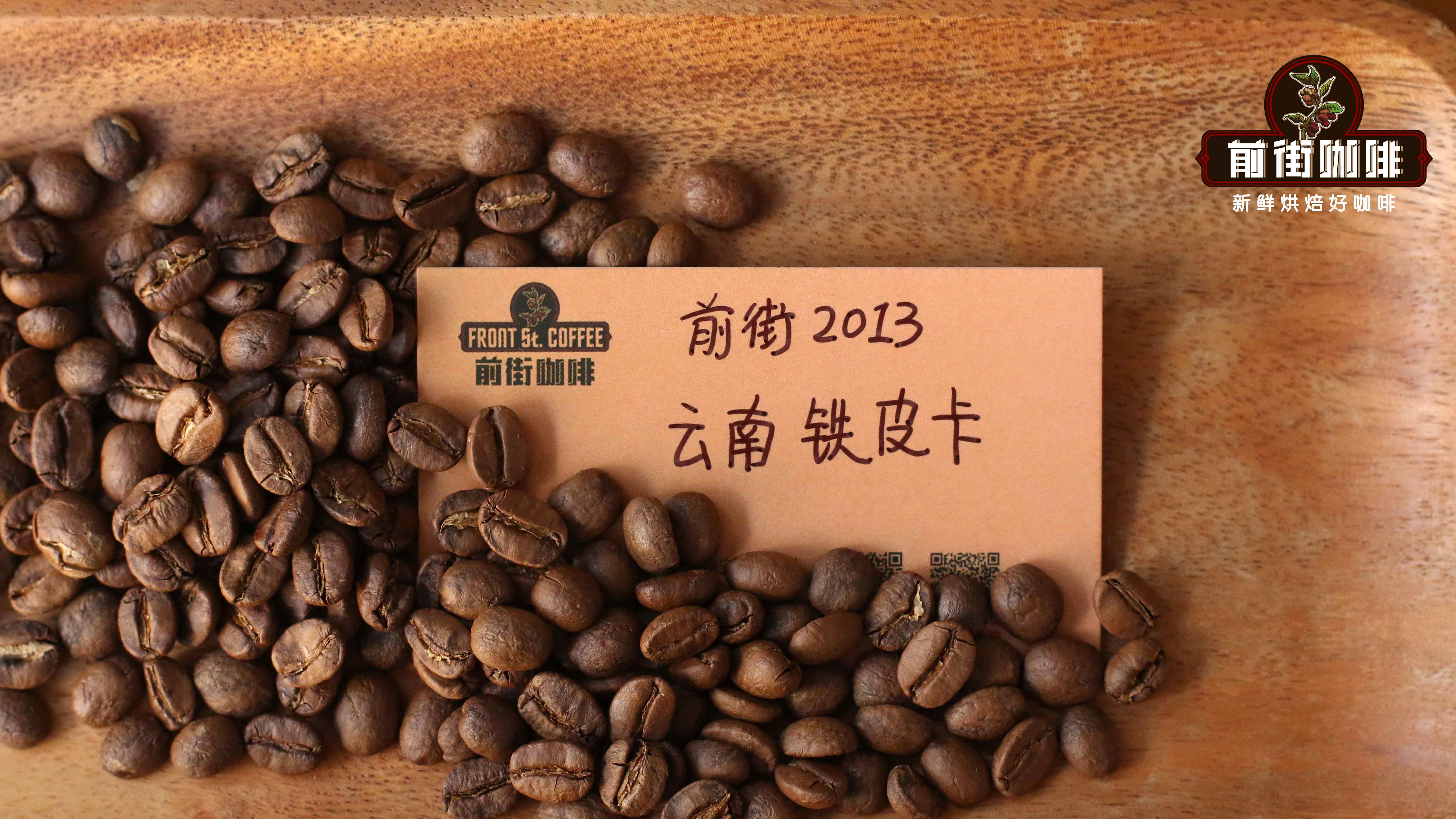
Yunnan is the core coffee-producing region in China, with about 98% of the country's coffee beans coming from this land. From the coffee plants brought by French missionaries in 1904 to the promotion of rust-resistant Catimor varieties by Nestlé in 1989, Yunnan coffee has traveled a path from experimentation to commercialization. Today, Pu'er, Baoshan, Lincang, Xishuangbanna, and other places have become major growing areas, where mountains at elevations of 800 to 1850 meters nurture coffees that combine balance with regional character. Front Street Coffee planted Typica on a Yunnan mountain and launched [Front Street 2013], using natural processing and a medium roast to preserve sweetness and a juicy mouthfeel, forming a sharp contrast with the commonly seen Catimor on the market. This article will sort through the history of Yunnan coffee, variety differences, brewing parameters, and flavor performance, and objectively analyze its strengths and weaknesses, providing coffee enthusiasts with a practical reference for buying Yunnan pour-over beans.
The vast majority of coffee in China is produced in Yunnan, a land adjacent to Myanmar, Laos, Vietnam, and other countries rich in coffee resources. Front Street has introduced Yunnan coffee's past earlier, and here we will sort through it again for everyone. In 1904, French missionary Tian Deneng introduced coffee plants from Myanmar to satisfy his habit of drinking a small cup of coffee every day, but the scale of planting at the time was limited and clearly experimental in nature. It was not until 1989, when Nestlé promoted the cultivation of rust-resistant Catimor varieties in many parts of Yunnan, that coffee truly developed into an important cash crop in our country.
At present, 98% of the country's coffee comes from Yunnan, with a planting area of about 90,000 hectares and an annual output of about 100,000 metric tons. It can be said that Yunnan coffee is almost synonymous with Chinese coffee. Fujian, Hainan, and other places also grow coffee, but due to elevation limitations, they are mostly dominated by Robusta, whose flavor is too intense, making it difficult to match the rising specialty coffee market and unsuitable for the current consumer demand for single-origin pour-over coffee. Therefore, Yunnan, which can produce high-quality Arabica beans, has naturally become the mainstream direction of China's specialty coffee.
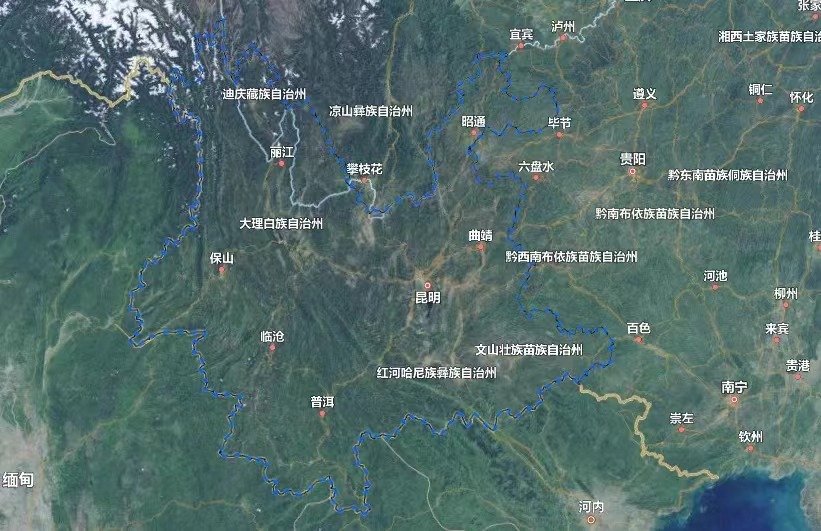
The advantage of the Yunnan producing region lies in its relatively high elevation, ranging from about 800 to 1850 meters. The obvious temperature difference between day and night and relatively abundant rainfall lay the foundation for high-quality green coffee beans. However, according to Front Street's understanding, the elevation of most coffee-growing areas in Yunnan is right around the qualifying line for high-quality coffee cultivation, that is, fluctuating around 1000 meters. The main coffee-growing areas in Yunnan are concentrated in the southwest: Pu'er, Baoshan, Lincang, Xishuangbanna, and other places. At present, the main Arabica varieties grown in Yunnan are Catimor and Typica, but last year the Baoshan area pioneered the launch of a milestone bean variety—Geisha. Front Street will not expand on this for now; simply put: in 2016, Lao Fan, the owner of Zuoyuan Estate in Baoshan, planted Yunnan's first batch of Geisha in the shaded back of a valley at an elevation of 1400 to 1600 meters.
Yunnan Geisha has not yet become mainstream, so today Front Street will still use its own experience to introduce Catimor and Typica. Front Street was growing coffee in Yunnan earlier than it opened its shop. At first, Front Street tried planting at its base in Guangzhou, but conditions in all aspects were very limited, so it turned its attention to Yunnan. In May 2016, Front Street planted its first batch of Typica coffee beans on a Yunnan mountain, and also figured out why locals chose Catimor. The reason is simple: the cost-performance ratio is not high. Coffee fans with some knowledge should know that Catimor carries Robusta genetic material and is a hybrid of Timor and Caturra.
In 1959, Catimor was successfully bred in Portugal. Because of its short tree shape, dense nodes, high planting density, and lower requirements for elevation and other natural conditions, it is very suitable for commercial coffee. Of course, Catimor is also often criticized by coffee enthusiasts because of its Robusta genes. Catimor's taste is stronger than other Arabica beans. In fact, what Yunnan first introduced was Typica. Compared with Robusta, Typica coffee beans are smaller in size, so they are called small-bean coffee. Later, when brands such as Nestlé entered, they needed a more "commercial" bean variety to adapt to the evolving coffee market, and Yunnan began to widely plant high-yield Catimor. The more mainstream Catimor then became known as Yunnan small-bean coffee.
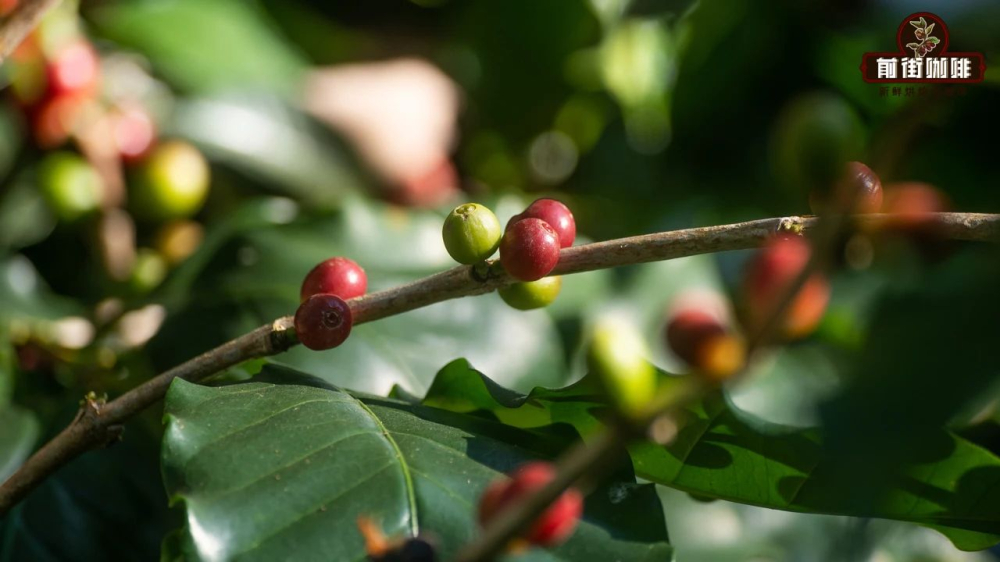
But Front Street hoped to take flavor factors into account beyond yield, so it still chose the better-flavored Typica and named it [Front Street 2013].
The popularity of Front Street 2013 can also be seen from its booming sales. This coffee uses natural processing to preserve overall sweetness to the greatest extent, making up for the lack of sweetness caused by elevation. After drying, Front Street transports it to a roasting factory far away in Guangdong. For this bean, Front Street uses a medium roast, which performs well: a balanced taste of chocolate, nuts, and dried apricots, along with a soft plum acidity.
Today's Yunnan small-bean coffee mainly refers to the Catimor variety. Front Street also has Catimor coffee beans from Baoshan, Yunnan. Now Front Street will brew a comparison to see how it differs from the Typica grown by Front Street and the Catimor from ordinary Yunnan farms:
FrontStreet Coffee extraction parameters:
V60 dripper
Water temperature 91°C
Water-to-coffee ratio 1:15
Coffee dose 15g
Grind size (75% passing through China No. 20 standard sieve)
FrontStreet Coffee extraction method:
Bloom the coffee grounds with twice the coffee dose in water, then pour in a small stream in circles from the center outward to 125 grams. When the water level drops and is about to expose the coffee bed, continue pouring to the required total water amount. After the water in the dripper has drained, remove the dripper. The entire extraction time is about 2 minutes.
Characteristics and taste of Yunnan coffee beans:
Natural Catimor: the taste leans more toward nutty and chocolate flavors, with higher body, overall balance, and no special acidity.
Front Street 2013: the entry is rich in juiciness, with a slight herbal aroma, a smooth mouthfeel, leaning balanced, and a short, lively, and bright plum acidity. It has rich layering, shifting from apricot peach to citrus from start to finish. The sweetness leans toward brown sugar.
Front Street believes that the Yunnan producing region is located in an area suitable for coffee cultivation, and the overall quality of the coffee is good. But everything has both positive and negative sides, and Front Street will list the advantages and disadvantages of Yunnan's coffee industry:
Advantages: fresh, with a short arrival cycle. Good balance and easy to blend. Some specialty washed coffees have flavors such as berries, and experiments with some special processing methods and new processing methods have brought some unique tonality and flavors to Yunnan specialty coffee, making Yunnan specialty coffee usable as single-origin coffee. Commercial-grade Yunnan coffee beans are cheaper than imported coffee beans.
Disadvantages: limited by coffee varieties, the flavor is relatively one-dimensional, the production cost of high-quality coffee is high, and it is difficult for the selling price to compete on price with imported high-quality coffee. Domestic roasters use it in a relatively small proportion, there is a lack of market share, and the brand influence of the producing region is insufficient; combined with domestic inherent prejudice against Yunnan coffee and relatively little awareness of Yunnan coffee, the actual domestic consumption of Yunnan coffee is still very limited. The quality of Yunnan coffee is not very stable, and the standardization and rationalization of cultivation, processing, and handling still need to be improved.
Professional coffee knowledge sharing. For more coffee bean information, please follow the WeChat public account: FrontStreet Coffee
The above content is compiled by CoffeeHunters, a coffee news website.


