







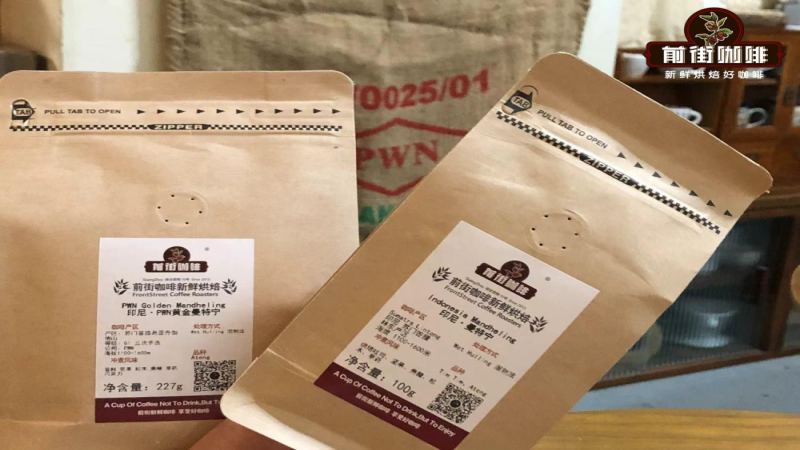
Mandheling is a coffee bean cherished by many coffee enthusiasts. It comes from the archipelago nation of Indonesia and continues to attract a large following with its distinctive character. Behind the name Mandheling lies an intriguing double misunderstanding, and its origin classification also has clear boundaries—only Arabica from North Sumatra can bear the name Mandheling. This article begins with the naming legend as understood by Front Street, then outlines the characteristics of the two core producing regions, Lintong and Aceh, introduces the screening standards and identification methods for PWN Golden Mandheling, and shares Front Street's complete brewing parameters and three-stage pouring scheme for dark-roasted Mandheling, helping you brew a rich, sweet cup at home.
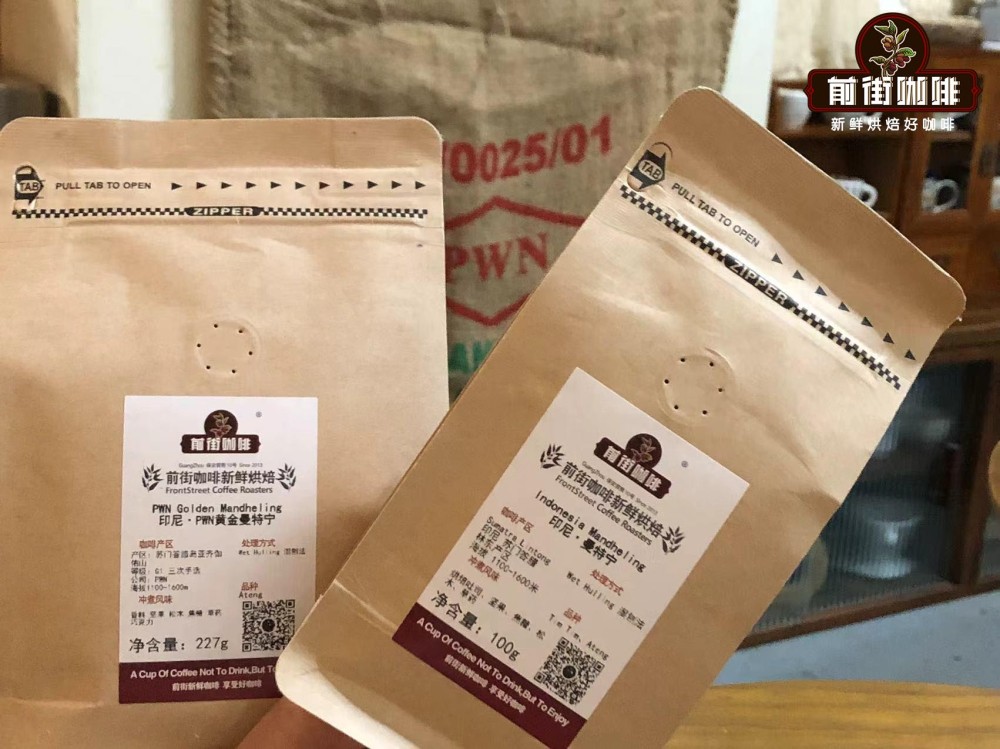
Anyone with some knowledge of coffee has probably heard of Mandheling coffee beans. These beans come from Indonesia, known as the nation of a thousand islands, and to this day they remain distinctive in flavor, capturing the hearts of generation after generation of coffee lovers.
The Origin of the Name Mandheling
Mandheling The naming of this bean is quite unusual—it uses neither a place name nor a variety name, but rather a term born from a double misunderstanding. According to what Front Street has learned: during World War II, when Japan occupied Indonesia, a Japanese soldier drank an exceptionally rich and aromatic cup of coffee at a café and asked the owner what the coffee was called. The owner mistakenly thought he was asking where he was from, so he blurted out "Mandailing." The soldier misheard it and remembered it as "Mandheling." After the war ended, the soldier recalled the rich coffee he had drunk in Indonesia and became interested in starting that business in Japan. He commissioned an Indonesian coffee merchant to ship 15 tons over, and it proved hugely popular in the market, so the name Mandheling spread from there. That coffee merchant was none other than the founder of the now-famous Pwani Coffee Company (PWN).
Although this is only a legend, it is an indisputable fact that Mandheling became world-famous for its fine taste, and it has become a favorite in the hearts of countless coffee people. Front Street also found that, beyond the naming story, the origin of Mandheling coffee beans is equally worth discussing. By definition, only Arabica coffee beans produced in North Sumatra are qualified to be called Mandheling. Therefore, Robusta from southern Sumatra, as well as coffee produced on Java and Sulawesi, cannot bear the name Mandheling.
Mandheling Coffee Producing Regions
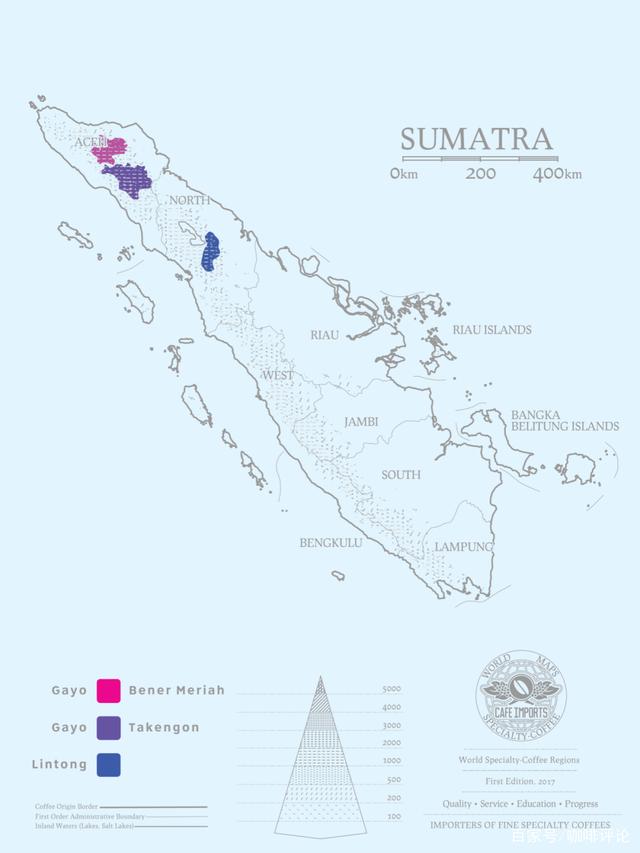
Within North Sumatra, there are mainly two places that produce high-quality Mandheling: one is the Lintong region centered on Lake Toba, and the other is the Aceh region around Lake Tawar.
Lintong Producing Region
Lintong is a traditional producing region with a long history. Its high mountains range from 1,000 to 1,500 meters above sea level, and the many volcanoes in the area have enriched the soil with volcanic material. For a long time, Lintong Mandheling has been a sought-after product of outstanding quality. Front Street's Indonesian daily-drinking beans are precisely Mandheling coffee beans from the Lintong region. After Front Street evaluated multiple Mandheling coffee beans , it found that Lintong Mandheling is rich on the palate, with prominent chocolate and nut notes, along with a hint of regional herbal character, enough to represent the typical flavor of Mandheling coffee.
Aceh Gayo Mountain Producing Region
In earlier years, Aceh was unstable due to the outbreak of an independence movement. Even if the coffee quality was excellent, few coffee merchants were willing to take the risk of going deep into the area to collect beans. It was not until the situation eased in 2005 that the Aceh producing region came back into the view of coffee buyers.
Aceh Gayo Mountain is located at the northernmost corner of Sumatra. The coffee-growing areas are mainly distributed in Takegon town and the hillsides around Lake Tawar, with an average altitude of between 1,100 and 1,600 meters. The Golden Mandheling coffee beans produced by the well-known Pwani company come from here, which shows that the coffee bean quality of the Aceh producing region surpasses that of Lintong.
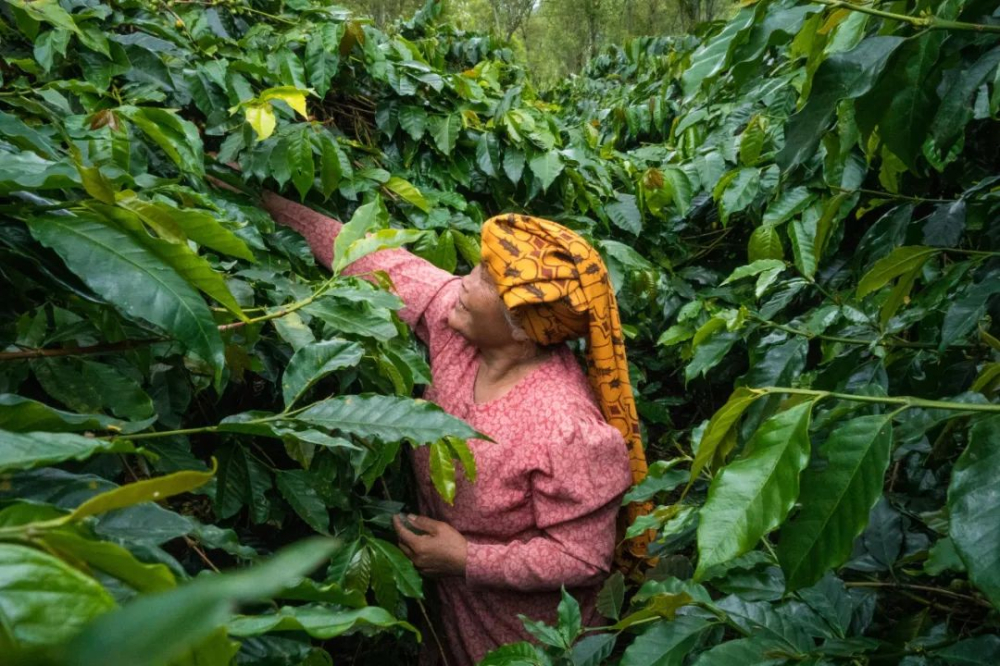
The coffee variety grown locally is called "Ateng," a name that sounds quite unfamiliar. In fact, Indonesia has its own local naming system for coffee varieties. For example, what Indonesia calls Tim Tim is what we usually call Timor. And Ateng is the local Indonesian name for Catimor. The Ateng variety adapts well to the growing conditions of the Aceh region, and its flavor can develop fully.
PWN's Golden Mandheling coffee beans are known for the extremely high quality of the green beans. One reason the quality is guaranteed is that after processing is completed, they undergo three rounds of manual sorting to reduce the defect rate of the green beans as much as possible, ensuring full, uniform beans. Under the sun, every bean is plump and large, glowing with a golden luster.
For this reason, the price of Golden Mandheling is generally higher than that of other Mandheling coffee beans. Some unscrupulous merchants also pass off Mandheling G1 as Golden Mandheling. So how can consumers confirm whether what they bought is truly Golden Mandheling? The most direct way is to ask the merchant to show the coffee jute bag for Golden Mandheling, as well as the PWN certificate corresponding to the bag number.
How to Brew Mandheling Coffee?
Although Mandheling is of good quality, if it is not brewed properly, it can easily bring out bitterness and off-flavors. Friends troubled by this can refer to Front Street's brewing scheme.
When brewing dark-roasted coffee beans like Mandheling, Front Street recommends using a Kono dripper, which helps enhance the coffee's richness; if you do not have one on hand, a V60 dripper will also work.
Use 15g of coffee powder for one serving. The coffee beans are best rested for 4 to 7 days (counting the roast date as day one), which gives a more ideal flavor.
In terms of grind size, Mandheling should be ground coarser than light-roasted beans. Because Golden Mandheling is dark-roasted, the bean structure is looser and absorbs water and releases substances more quickly. If it is ground as fine as light-roasted beans, it is easy to brew out burnt bitterness; if ground coarser, the coffee will taste bland and thin, like water. A good grind size is one with a 70% pass rate through a No. 20 sieve.
For water temperature, Front Street recommends brewing with water at 87 to 88°C. A high water temperature is the source of much burnt bitterness. Of course, water that is too low in temperature will also make the coffee flat and insipid.
For the coffee-to-water ratio, Front Street recommends 1:15. Although some brewing methods suggest using 1:13 or even a smaller ratio for a stronger drink, part of the reason for shrinking the ratio is to avoid bitterness and off-flavors in the tail end, at the cost of affecting the finish. Front Street believes that as long as the relationship between water temperature and grind size is handled well, a 1:15 ratio actually better showcases the overall flavor layers of Golden Mandheling.
The brewing method uses the common three-stage pouring. Pouring in three stages better presents Mandheling's rich mouthfeel and caramel sweetness. The specific pour amounts are: in the first stage, pour 30ml for blooming. This stage should wet all the coffee grounds, allowing the bed to degas and laying a foundation for extracting flavor substances later; in the second stage, pour 100ml. This stage is mainly to bring out Mandheling's golden foam.
In the final stage, gently pour 95ml in the center. This enhances the coffee's sweetness, presenting an overall thick, rich mouthfeel, along with caramel sweetness and chocolate and nut flavors.
The above content is compiled by CoffeeHunters, a coffee news website.


