







Blue Mountain coffee, as a representative of top-tier coffee, is familiar even to those who don't often drink coffee. But the market is flooded with confusing products like "Blue Mountain flavor" and "Blue Mountain blend," while genuine Jamaican Blue Mountain coffee beans are limited in supply and expensive. This article will systematically outline Jamaica's coffee grading standards and explain in detail how to identify Blue Mountain No. 1 coffee beans and key brewing points. From the Clifton Farm origin certificate and green bean wooden barrels displayed at the Front Street Coffee store, to the KONO dripper pour-over parameters under medium-dark roasting, we'll give you a comprehensive understanding of this classic coffee with its "balanced acidity, sweetness, and bitterness, with nutty and cocoa notes."
There is such a coffee bean that even people who have never been exposed to coffee have heard of, or even seen, its name on television programs. As one of the top coffees, Blue Mountain coffee beans hold a place in the hearts of both coffee novices and seasoned coffee enthusiasts.
Blue Mountain coffee is the coffee that many who are just getting into specialty coffee dream of, in order to catch a glimpse of the Blue Mountain coffee flavor and to find out exactly what that "characteristic of having no characteristics" that coffee veterans talk about really tastes like.
As a top-tier coffee, Blue Mountain coffee beans also reflect that top-tier status in their price. The baristas at Front Street Coffee occasionally receive requests from friends asking for help verifying whether the Blue Mountain coffee beans they purchased are authentic Blue Mountain coffee beans.
Among the many coffee beans Front Street has introduced, you can find that aside from a few coffee beans with poetic names, most coffee beans are named after places, estates, processing stations, and so on. For example, what we usually call Yirgacheffe is a coffee-producing region in Ethiopia. Blue Mountain is no exception. The origin of Blue Mountain coffee beans is in fact the Blue Mountain region of Jamaica, and only those grown in that area and meeting certain standards can be called Blue Mountain coffee beans. As a result, genuine Blue Mountain coffee beans are limited in supply, and every single bean is a treasure cherished by coffee people.
Some merchants saw a business opportunity and played word games in their packaging design, such as "Blue Mountain flavor" and "Blue Mountain blend." However, reality may be cruel: there may not even be a single bean truly from Jamaica's Blue Mountains inside. Because Blue Mountain coffee has a rich nutty character and a full-bodied mouthfeel, some merchants, in order to imitate the Blue Mountain coffee flavor, use coffee beans from producing countries such as Colombia and Brazil and apply a relatively dark roast, losing the basic flavor of the beans' country of origin, thereby achieving the requirements of balance and fullness.
The flavor characteristics of Blue Mountain coffee are that acidity, sweetness, and bitterness are neither prominent nor lacking, with rich nutty and dark cocoa flavors and a full-bodied mouthfeel. Only Jamaica's Blue Mountain region can create such a unique coffee flavor. The Blue Mountain range is located in eastern Jamaica. Surrounded by the Caribbean Sea, whenever the weather is clear, the sun shines directly on the azure sea, and the mountain peaks reflect the brilliant blue glow of the seawater, hence the name "Blue Mountain." The weather here is cool, with frequent fog and rainfall. This fertile land, harmonized with water, produces the world-renowned Blue Mountain coffee.
The highest elevation of the Blue Mountain range can reach over 2,100 meters, but not the entire area is suitable for growing coffee. Jamaica's coffee cultivation is divided into three grades according to growing region and growing elevation: Jamaica Blue Mountain Coffee, Jamaica High Mountain Coffee, and Jamaica Prime Coffee.
Among these, to qualify as Jamaica Blue Mountain Coffee, it must be grown within the Blue Mountain region and at an elevation of over 1,000 meters. On a map, the Blue Mountain coffee-producing area spans four administrative regions of Jamaica: Saint Thomas, Saint Andrew, Saint Mary, and Portland.
In addition, Jamaica Blue Mountain coffee is further subdivided into four grades. Grade No. 1 coffee beans have a green bean screen size of about 17/18 mesh, and the defect rate of the green beans is less than 3%. The Jamaica Coffee Board's requirements for Jamaica Blue Mountain coffee are so strict that its quality is clearly extraordinary.
Blue Mountain No. 1 coffee beans have a blue-green appearance as green beans, carry a lingering fresh aroma, and are uniform in bean size. After the coffee beans are roasted, having gone through the process of dehydration and expansion, Blue Mountain No. 1 coffee beans noticeably increase in size and remain uniform in bean shape. Because a washed processing method is used, remnants of silver skin remain in the center of the coffee beans.
Because Blue Mountain has a small planting area and low production, Blue Mountain coffee beans are relatively expensive. Japan once provided aid to Jamaica, which had suffered meteorological disasters, around the 1980s and held priority purchasing rights for Blue Mountain coffee beans. Later, as other countries' economies developed prominently, the Japanese market could no longer consume large quantities of Blue Mountain coffee beans, and more Blue Mountain coffee beans entered the Chinese market.
For coffee lovers who do not have an especially deep understanding of coffee flavors, it may be somewhat difficult to identify genuine Blue Mountain coffee beans by taste. However, this does not mean there are no other ways.
The Jamaican authorities place great importance on the quality of Blue Mountain coffee, and exports of Blue Mountain coffee beans generally come with relevant certificates. In addition, unlike other coffee-producing countries, coffee bean exports generally use burlap sacks, whereas Jamaica exports Blue Mountain coffee beans in wooden barrels.
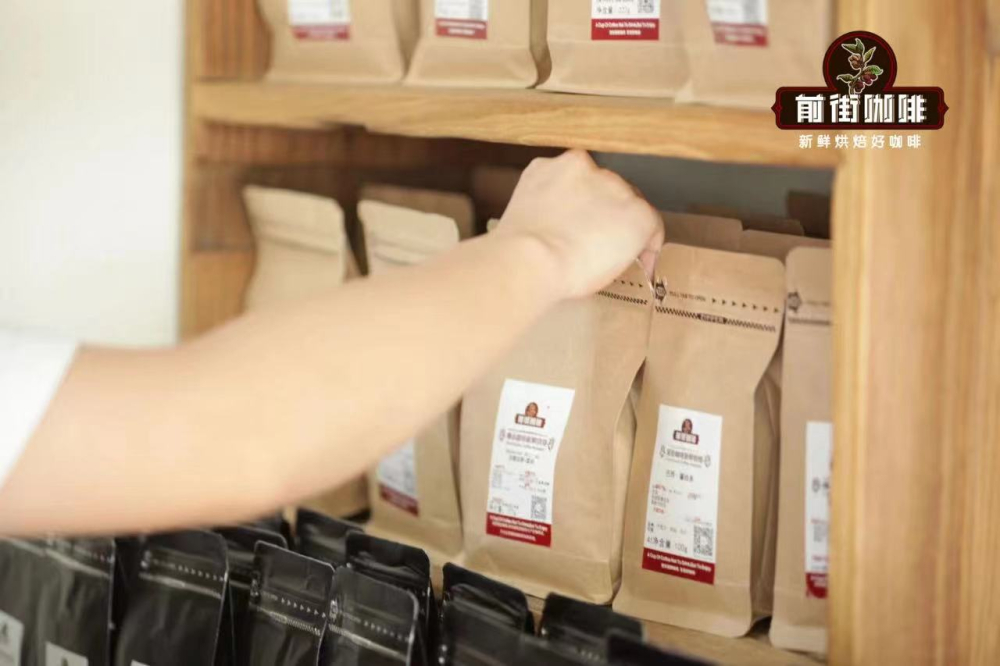
In the Front Street Coffee store, wooden barrels of Blue Mountain green beans and the Blue Mountain No. 1 coffee bean origin certificate issued by Jamaica's Clifton Farm are on display. If you're interested, you can visit the Front Street store to see for yourself.
Front Street's Blue Mountain No. 1 coffee beans come from Clifton Farm. On the wooden barrel of Blue Mountain green beans displayed at the Front Street store, you can see a green frog printed on it, which is the Rainforest Alliance certification mark. This mark means that Clifton Farm's coffee-growing environment is superior, that no chemical substances such as pesticides or fertilizers are used in cultivation, and that great attention is paid to ecological protection and biodiversity.
Compared with traditional flavors, people today prefer flavors that go beyond tradition. In addition to the emergence of special processing methods, roasting coffee beans also tends toward lighter levels. When Front Street Coffee's roaster roasts the Jamaican Clifton Blue Mountain No. 1 coffee beans, in order to present the traditional Blue Mountain coffee flavor, a medium-dark roast level is used.
According to its roast level, when Front Street Coffee's baristas brew this coffee bean, the brewing parameters are as follows:
Dripper: KONO
Water temperature: 88°C
Dose: 15 grams
Coffee-to-water ratio: 1:15
Grind size: 80% passing through a Chinese standard No. 20 sieve
Because Front Street ships coffee beans freshly roasted within 5 days, by the time they arrive, 4 to 7 days of resting have already passed, and the carbon dioxide gas in the coffee beans is still abundant. During brewing, blooming is necessary to promote the release of carbon dioxide and provide more stable conditions for subsequent extraction.
Pour in 30 grams of hot water and bloom for 30 seconds, then pour from the center point in a fine stream and slowly circle to 125 grams. When the water level in the dripper drops to the point where the coffee bed is about to be exposed, continue circular pouring to 225 grams. The total extraction time is about 2 minutes.
After brewing, Front Street's Blue Mountain coffee has a rich nutty and cocoa flavor on the palate, with balanced acidity, sweetness, and bitterness and a full-bodied mouthfeel.
For more coffee bean information, please follow Coffee Workshop (WeChat public account: cafe_style)
For professional coffee knowledge exchange, please add WeChat ID: kaixinguoguo0925
The above content is compiled by CoffeeHunters, a coffee news website.


