







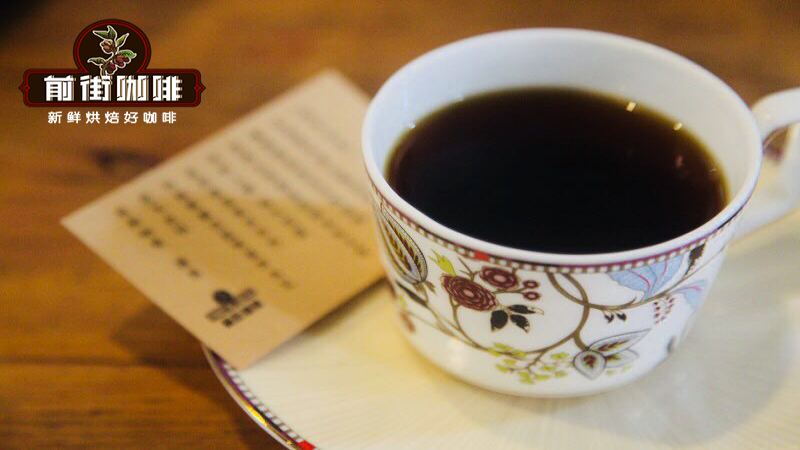
In an era when specialty coffee was not yet widespread in China, Jamaican Blue Mountain was almost synonymous with high-end coffee—even if you had never tasted it, you had certainly heard of it. The unique balanced flavor of Blue Mountain coffee—its signature harmony of acidity, sweetness, bitterness, and body—is inseparable from the Caribbean island climate, volcanic soil, and high-altitude growing conditions. The Jamaican Coffee Industry Board strictly classifies the Blue Mountain region by altitude, and Blue Mountain No.1 has explicit requirements for green bean screen size and defect rate. The Blue Mountain No.1 on Front Street Coffee's bean list comes from Clifton Mount Estate, using a medium-dark roast and brewed with a KONO dripper, presenting the classic flavors of nuts, dark chocolate, and caramel.
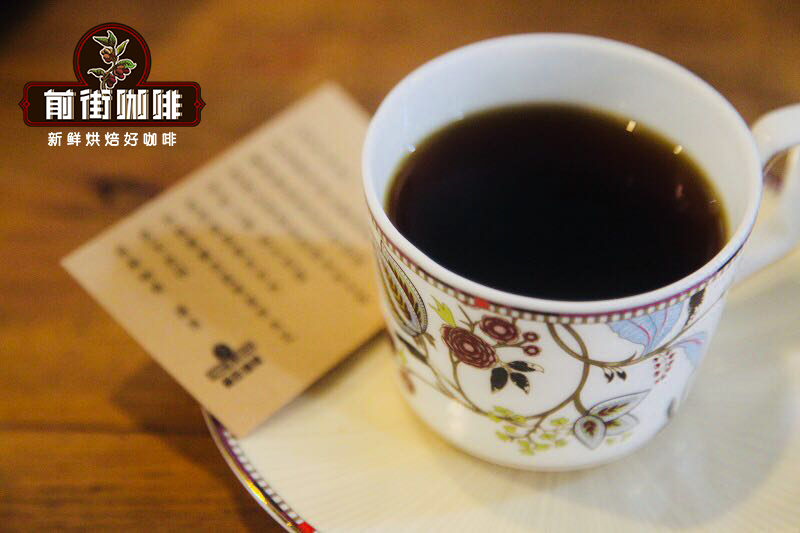
In the years before specialty coffee culture had spread widely in China, Blue Mountain coffee was almost synonymous with "expensive" and "high quality" in the public mind—it could even be called the top star of the coffee world. Even if you had never tasted it, you had certainly heard of its fame. Jamaican Blue Mountain coffee blends acidity, sweetness, bitterness, and body in just the right proportions, with a rich and intense aroma—this is the classic Blue Mountain flavor. Front Street Coffee has always believed that this sense of balance is the most distinctive characteristic that sets Blue Mountain coffee apart from other regions.
The Formation of Blue Mountain Flavor
The fundamental reason behind Blue Mountain coffee's high status lies in its unique flavor expression, and the source of this flavor is the irreproducible natural conditions of the Blue Mountain region. Richard Sharpe, the owner of Clifton Mount Estate, once described it this way in an interview: it is the specific latitude, longitude, and the special geographical location of the Caribbean island that create a microclimate found nowhere else in the world. The Blue Mountain No.1 coffee on Front Street Coffee's bean list comes from this famous Clifton Mount Estate.
The Blue Mountain range is located in eastern Jamaica, in a seismically active zone, and volcanic activity has left this land with abundant mineral-rich fertile soil. The Blue Mountains contain the highest peak in the Caribbean region and are themselves a famous local tourist attraction. The mountain air is fresh and pollution-free, and with abundant year-round rainfall and a cool, humid climate, coffee trees grow exceptionally well in the misty, cloud-shrouded environment. Friends who regularly read Front Street Coffee articles will have noticed that the vast majority of high-quality coffees come from high-altitude regions, because the significant temperature differences at high altitudes give coffee cherries more time to accumulate nutrients, ultimately making the cup taste more aromatic, mellow, and sweet.
The Blue Mountain range covers a fairly wide area, but the terrain is uneven. Coffee trees are mostly planted on steep slopes, making manual harvesting extremely difficult. Local estates typically hire experienced women workers to go up the mountain and hand-select fully ripe coffee cherries to ensure coffee quality.
Blue Mountain coffee is one of the few varieties still cultivating Typica, an ancient Arabica line. The young leaves of Typica have bronze-colored tips, which is why it is also called "red-tipped coffee." Its leaf surface is smoother than other varieties, the tree shape is tall and slender, and both the fruit and green beans are relatively elongated. There is a Typica tree planted next to Front Street Coffee's shop—you can observe it while enjoying your coffee. Typica is most praised for its elegant, clean flavor and balanced mouthfeel; the higher the growing altitude, the better it performs. The main reason Typica is so scarce is its weak resistance to pests and diseases and low fruit yield per tree, making large-scale production difficult.
Beyond the innate terroir advantages and excellent variety, Front Street Coffee believes that the consistency of Blue Mountain coffee quality also benefits from the washed processing method. Locally, the harvested coffee cherries are first floated in water for initial sorting to remove substandard fruit, then machine-depulped to remove skin and pulp, left to ferment for 12 to 18 hours, then scrubbed so the mucilage layer easily falls away, and finally the washed beans are dried and dehydrated. Washed processing can greatly reduce the defect rate of coffee beans, making the flavor cleaner and more transparent.
What Grade Is the Top-Level Blue Mountain No.1 Coffee?
Coffee cultivation in the Blue Mountain range began in the early 18th century and gained international fame in the 1960s. Jamaica wanted Blue Mountain coffee to have a higher market positioning, so it established a grading system based on altitude, green bean defect rate, and bean size—the higher the grade, the more expensive the price.
Blue Mountain coffee growing areas are distributed below 1,700 meters (above 1,700 meters is an ecological reserve where no crops may be planted). According to the classification standards of the Jamaican Coffee Industry Board (CIB), only coffee grown between 910 and 1,700 meters may bear the name "Jamaican Blue Mountain Coffee"—this area is only about 6,000 hectares. Of the remaining two-thirds of the land, output from 460 to 910 meters is called Jamaican High Mountain Coffee, and below 460 meters is called Jamaican Prime Coffee. Blue Mountain coffee itself is further subdivided into four grades: No.1, No.2, No.3, and PB.
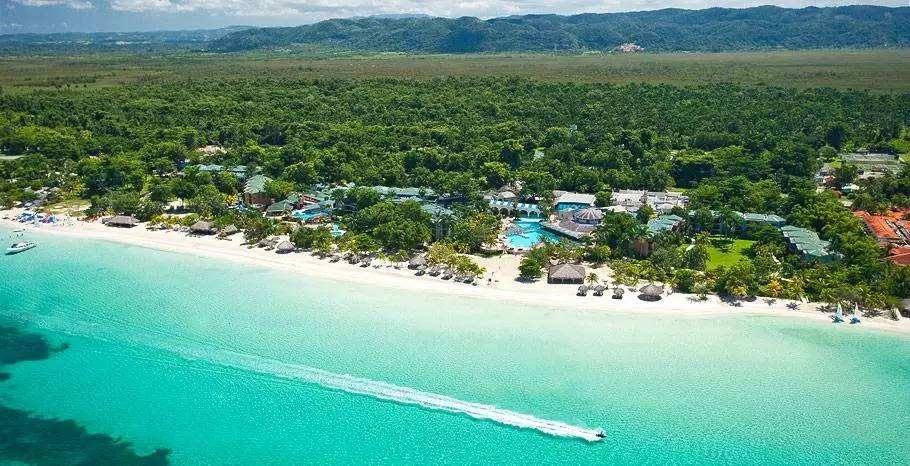
Green bean handling is also extremely strictly controlled. Blue Mountain coffee must undergo meticulous hand sorting to remove defective beans that affect quality, ensuring the high standard of the final product. The highest grade is Blue Mountain No.1 coffee beans, which require selected beans of 17 screen or above, a defect rate below 3%, and uniform, plump beans. The Blue Mountain No.1 green beans that Front Street Coffee received are packed in wooden barrels—Blue Mountain is the only coffee-producing region in the world that exports coffee in wooden barrels. The barrels keep the coffee beans at a humidity level of 11.5%, ensuring the beans are in suitable condition for roasting.
For roasting, Front Street Coffee chooses a medium-dark roast level to recreate the classic Blue Mountain flavor, allowing the dark chocolate aroma and sweetness of Blue Mountain coffee to be fully released.
For brewing, the approach of FrontStreet Coffee's baristas is to let Blue Mountain coffee show a richer, more balanced mouthfeel. They recommend using a KONO dripper, which has "immersion extraction" characteristics. KONO's ribs are concentrated in the lower half; the ribs guide the coffee liquid downward, while the upper half fits tightly against the dripper wall, hindering the release of steam. The flow rate therefore slows down, producing a more concentrated extraction and a richer, more substantial mouthfeel. At the same time, to avoid over-extraction, Front Street Coffee uses a slightly coarser grind and a lower water temperature to extract Blue Mountain No.1.
Blue Mountain No.1 pour-over parameters: 88°C water temperature, 1:15 coffee-to-water ratio, 15g coffee grounds, grind size (75% passing a No. 20 standard sieve), three-stage extraction.
First pour 30g of hot water for a 30-second bloom, then pour from the center with a fine stream in a slow circular motion up to 125g. When the water level in the dripper drops to the point where the coffee bed is about to be exposed, continue circular pouring up to 225g. Total extraction time is about 2 minutes.
The flavor of Blue Mountain No.1 coffee is nuts, dark chocolate, and caramel, with well-balanced acidity, sweetness, and bitterness, and a lingering aroma.
For professional coffee knowledge exchange and more coffee bean information, please follow Coffee Workshop (WeChat public account: cafe_style)
For more specialty coffee beans, please add the private WeChat of FrontStreet Coffee: qjcoffeex
The above content is compiled by CoffeeHunters, a coffee news website.


