







Geisha coffee beans are recognized as the top variety in the specialty coffee world, conquering countless coffee lovers with their delicate floral aroma and elegant fruity acidity. This article will take you through the legendary journey of Geisha from the primitive forests of Ethiopia to Panama's La Esmeralda estate, explaining in detail La Esmeralda's Red Label Geisha grading system and natural processing method, while also comparing the flavor profiles of three varieties from Gesha Village in Ethiopia. Front Street Coffee will also share the roasting curves, cupping reports, and brewing parameters of two Geisha coffees to help you fully understand the stylistic differences between Panama Geisha and Gesha Village Geisha.
For more specialty coffee knowledge, please follow our WeChat public account: Front Street Coffee
Even if you have never personally tasted Front Street Geisha coffee, many friends who visit Front Street Coffee have long heard of this variety's fame. Geisha coffee beans have a rather legendary history behind them, enjoying an extremely high reputation in Panama and throughout the entire specialty coffee world. Next, Front Street will take you through the ins and outs of Geisha coffee, understanding how it was discovered and gradually made its way to the world stage. At the same time, Front Street will also compare Front Street Panama Geisha coffee with Front Street Ethiopia Geisha coffee, directly presenting the flavor and taste characteristics and differences of both to you through this article.
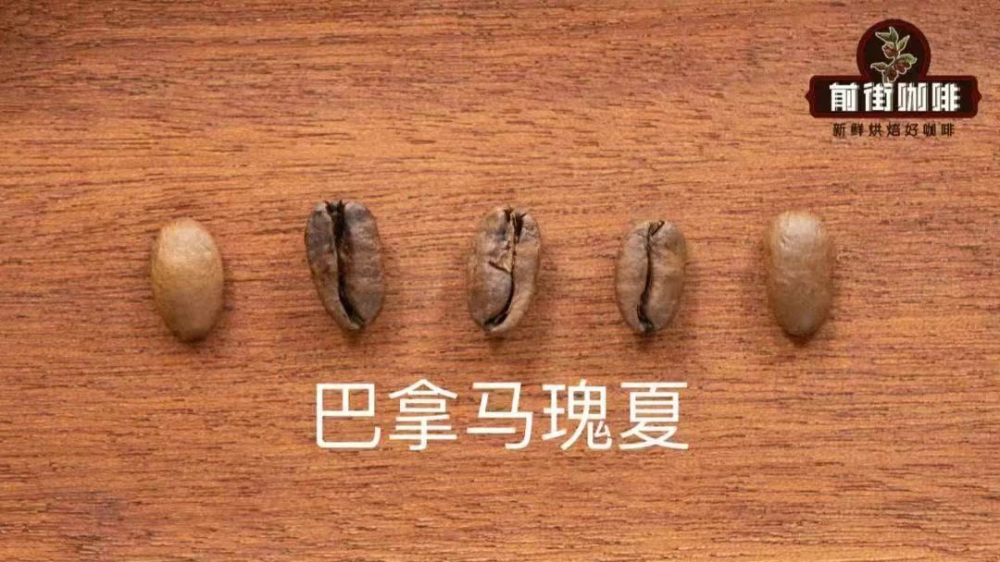
The Propagation History of Geisha Coffee Beans Geisha coffee beans originated in southwestern Ethiopia, Africa. In 1963, Don Pachi Serracin introduced Geisha coffee trees from Costa Rica to Panama. Because of low yield, which directly affected harvest volume, coffee farmers were not very willing to plant them, and they were always used as windbreak trees. It was not until Daniel Peterson, the owner of Panama La Esmeralda estate, accidentally discovered that the coffee beans produced by these Geisha coffee trees, originally used as windbreaks at the highest point of his coffee estate, actually had the citrus and floral aromas unique to African beans. So he separated these coffee beans, participated in the 2004 Panama coffee bean cupping competition, and became an instant sensation. From then on, Geisha beans have been unstoppable, winning the Panama coffee cupping competition championship for many consecutive years. In the eyes of specialty coffee lovers around the world today, Front Street Geisha coffee beans are undoubtedly the supreme treasure.
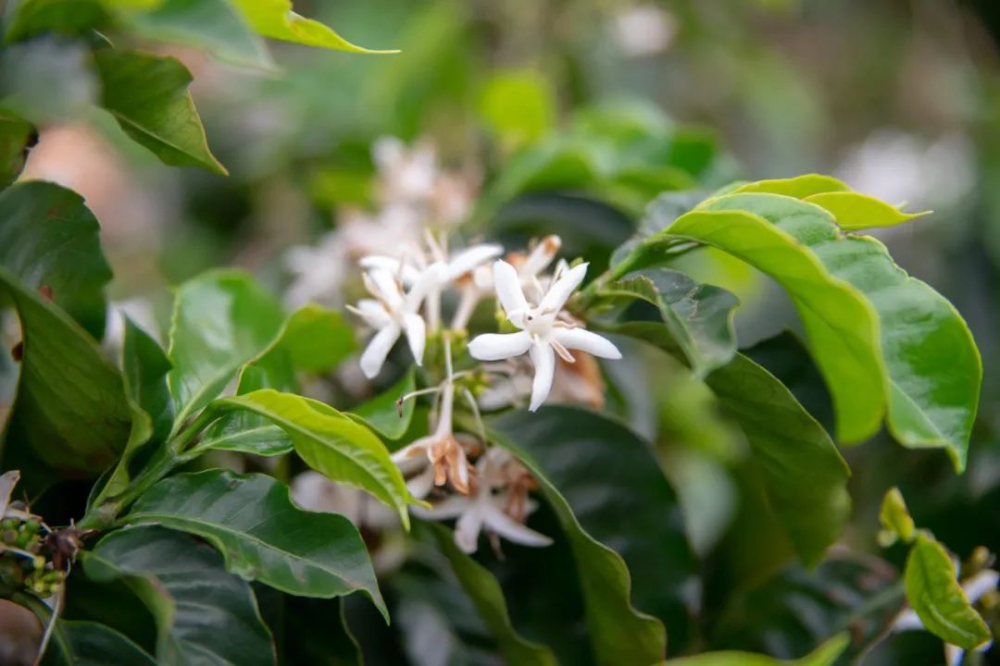
The Flavor of Geisha Coffee Although the flavor of the Geisha variety is exquisite, this elegant flavor comes from a specific growing environment. The Geisha variety is very picky about its growing environment, requiring cultivation in areas with higher altitudes, cloud cover or abundant shade trees, and fertile soil. High-altitude Geisha variety coffee carries obvious floral aromas and delicate, elegant fruity acidity. Such an elegant flavor is also one of the reasons it has swept the globe.
Previously, Front Street Coffee wrote many articles about La Esmeralda's Geisha. In this article, Front Street will no longer describe La Esmeralda's Geisha in detail. This time, Front Street Coffee will compare the Geisha from Ethiopia, the hometown of Geisha, with the Geisha coffee from Panama La Esmeralda, to see how the flavors of the two Geishas perform.
Front Street Panama La Esmeralda Geisha
In 2017, Panama La Esmeralda Geisha coffee beans won the natural group championship again, which should be the 18th championship trophy. Being able to stand out among many strong competitors year after year is not only due to the delicious genes of Geisha beans. Good coffee estate management as well as harvesting and processing are absolutely indispensable. It is very worth mentioning that the owner of La Esmeralda places great importance on environmental protection. Therefore, the coffee produced can participate in the Rainforest Alliance cupping competition and has brought home 5 championship trophies.
Through auctions, the method of allowing valuable items to obtain high prices is equally applicable to selling high-quality coffee beans. Panama La Esmeralda Geisha coffee beans are especially unique. In order to obtain reasonable compensation for the good coffee beans they have carefully cultivated and managed, after the annual coffee cupping competition, La Esmeralda holds its own global auction, which is also an annual event in the specialty coffee world.
After years of experimentation, La Esmeralda discovered that only Geisha beans harvested from coffee trees growing above 1,400 meters in altitude can display the special flavor that Geisha beans should have. Therefore, the main grading is based on planting altitude, supplemented by actual cupping results, dividing Geisha beans into three grades: Esmeralda Special (Red Label), Private Collection (Green Label), and Geisha 1500 (Blue Label). The auction-level grade of La Esmeralda is Esmeralda Special, commonly known as Red Label. Geisha produced under Esmeralda Special is what we commonly hear as Red Label. It is selected from Geisha beans grown at altitudes of 1,600-1,800 meters, with cupping scores above 90 points, from the Jaramillo and Canas Verdes production areas. Red Label lots can be either washed or natural processed. The Front Street Red Label Geisha obtained by Front Street Coffee comes from the Mansa plot, which is the most recently purchased plot by La Esmeralda, with an average altitude of 1,700-1,900m. The Front Street La Esmeralda Red Label Geisha obtained by Front Street Coffee uses natural processing. When brewed, it has bright rose, citrus aromas, brown rice, berries, apricots, complex fruits, honey, a thick juicy body, rich flavor layers, and obvious sweetness.
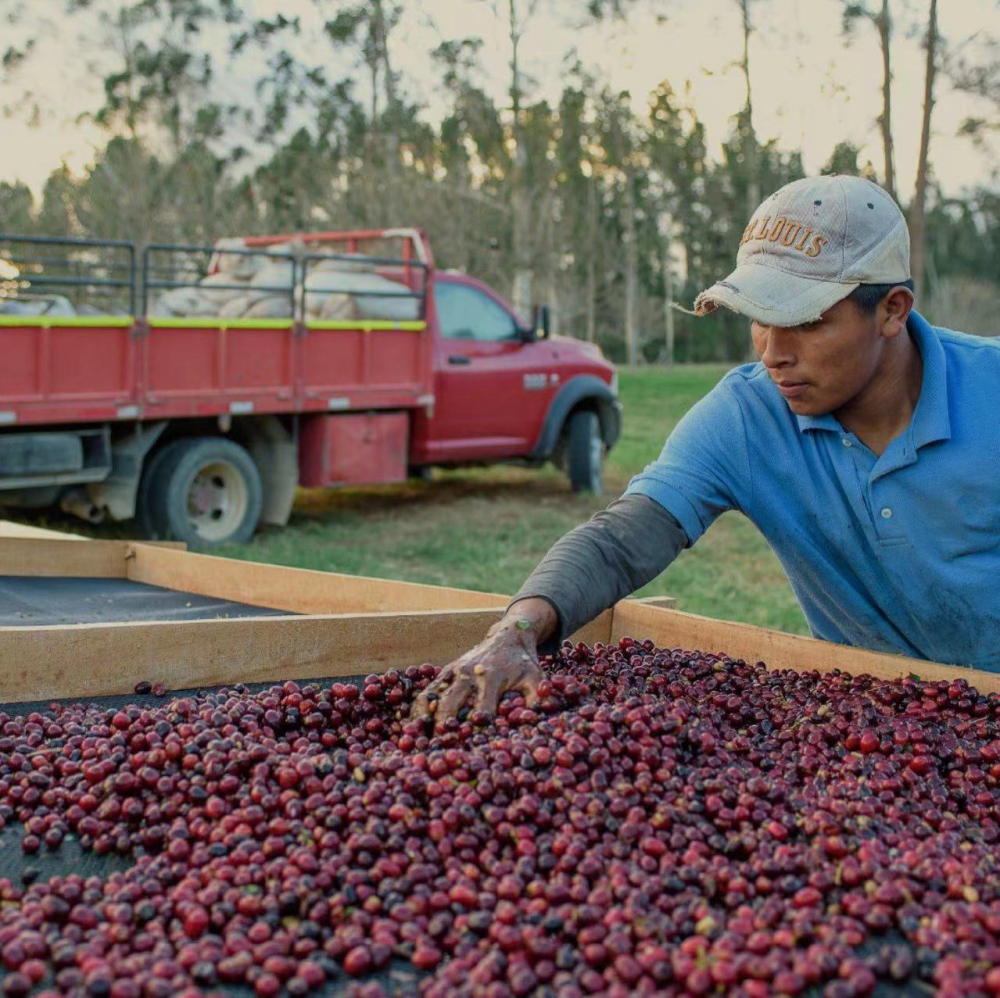
La Esmeralda's Natural Processing In La Esmeralda's natural processing, the harvested coffee cherries are sent directly to the courtyard to dry. The coffee cherries slowly dry while the coffee beans are still inside, and the coffee beans become full of fruit and aromatic flavors. The coffee cherries are evenly dried. Depending on the weather and the composition of the site, the coffee is dried on concrete tables for 3 to 5 days (8 hours per day). When it reaches sufficient dryness, it is placed in a Guardiola dryer and rotated for 72 hours to complete the drying process and prevent fermentation. After drying is completed, machines are used to remove the pulp and other parts.
Guardiola is the preferred drying method. As long as the coffee batch size allows, Guardiola can handle large amounts of coffee. Guardiola is a horizontally rotating drum that allows warm air to flow around the beans, eliminating moisture. After the coffee beans are dried, they are placed in nylon bags and left in the warehouse for 30 to 45 days. This step is also called "reposo," which helps stabilize the coffee beans and improve the flavor in the cup.
Front Street Ethiopia Gesha Village Geisha In 2007, documentary director Adam Overton and his photographer wife Rachel Samuel, while filming a documentary about Ethiopian coffee for the Ethiopian government, came into contact with the Gera coffee forest in the Bench Maji region. During this process, they developed the idea of establishing their own coffee estate and brand. In 2009, they were fortunate enough to meet the famous Mule Estate owner and BOP judge Willem Boot, and Willem Boot's ideas also provided an opportunity for the Overton couple: return to Ethiopia and find the birthplace of Geisha. Finally, they came to Bench Maji, a region in southwestern Ethiopia near South Sudan, where many places are called Gesha Village and which is the most likely area to find original Geisha.
Adam followed Willem Boot and began "adventuring" in the forests around the estate. In a jungle magically wrapped in dense forest, they discovered multiple wild tree species, and what surprised them most was finding wild Geisha. Later they learned that this was the Gori Gesha forest, the place where the Geisha variety was first discovered. So they collected seeds from the original Geisha trees, selected from them, and then planted them in Gesha Village. They decided to establish the estate here and named it Gesha Village Coffee Estate, a 475-hectare coffee farm located about 12 miles from the Gori Gesha forest. Gesha Village has three varieties, each named after the expedition team members when the coffee was discovered: Gesha 1931, Gori Gesha, and Illubabor provided by the Ethiopian Coffee Research Center.
Gori Gesha (GG): This variety replicates the genetic diversity found within the Gori Gesha coffee forest. Gesha 1931 (G31): A combination of various different forest varieties, very similar to Panama Geisha, selected by observing plant morphology, bean appearance, screen size, and cupping flavor. Illubabor Forest 1974 (IF): Discovered during an expedition to the Illubabor forest in 1974, later developed by the Ethiopian Research Center into a variety with resistance.
Ethiopia originally had no estates or estate grading system. After Willem Boot and Adam discovered the Geisha forest, they decided to bring Panama's coffee estate management model here, so Gesha Village Coffee Estate became the only coffee estate in Ethiopia. Their approach is that each lot, each tag, can be traced back to detailed information about the beans. Gesha Village has a strict internal grading system: Auction, Gold Label, Red Label, Green Label, and Chaka lots. The most popular Gesha Village Geisha coffee at Front Street Coffee is the Front Street Gesha Village Red Label Geisha.
Red Label Lot Lots with complete traceability, possessing typical Gesha Village flavor. The flavor intensity and complexity are slightly weaker than Front Street Gesha Village Gold Label lots, making it a very cost-effective single-origin lot.
Front Street Coffee: Front Street Gesha Village Red Label Coffee Beans Gesha Village Coffee Estate Grower's Reserve Country: Ethiopia Region: Bench Maji Altitude: 1909-2069m Variety: Gori Gesha Processing Method: Natural
Gesha Village Natural Processing First, floating impurities are removed, then the cherries are sun-dried in thin layers on African raised beds covered with plastic sheeting. When drying on the drying beds, they are screened again to pick out insect-damaged beans and greenish coffee beans. The total drying time is 18-30 days. Front Street believes that naturally processed coffee has obvious sweetness, soft acidity, and produces complex fruity flavor notes.
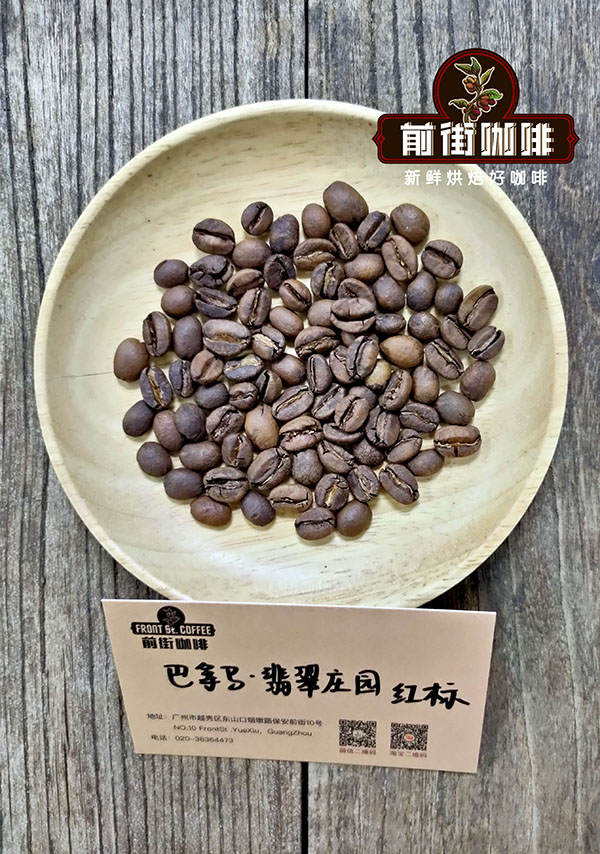
Front Street Coffee's Recommended Roasting for Geisha Coffee Beans
Front Street La Esmeralda roasting uses a Yangjia 800N with a bean charge of 380g. Charge at 150℃, heat power 120, damper open at 3; turning point at 1'36", when the temperature reaches 140℃ open the damper to 4, heat power unchanged; when the temperature reaches 147.6℃ the bean surface turns yellow, the grassy smell completely disappears, entering the dehydration phase; when the temperature reaches 150℃, adjust the heat power to 100, damper unchanged; at 7'38" the bean surface shows ugly wrinkles and dark spots, the bread-like smell clearly turns into coffee aroma, which can be defined as the prelude to first crack. At this time, listen carefully for the sound of first crack. At 8'10" first crack begins, open the damper to 4, develop for 1'28" after first crack, drop at 189.5℃.
Front Street Gesha Village Red Label uses a Yangjia 800N with a bean charge of 300g: charge at 160℃, heat power 100, damper open at 3; turning point at 1'40", when the temperature reaches 142℃ open the damper to 4 and increase heat power to 150; when the temperature reaches 148.1℃ the bean surface turns yellow, the grassy smell completely disappears, entering the dehydration phase, reduce heat power to 120; at 7'20" the bean surface shows ugly wrinkles and dark spots, the bread-like smell clearly turns into coffee aroma, which can be defined as the prelude to first crack. At this time, listen carefully for the sound of first crack. At 8'25" first crack begins, open the damper to 5, develop for 1'45" after first crack, drop at 197.5℃.
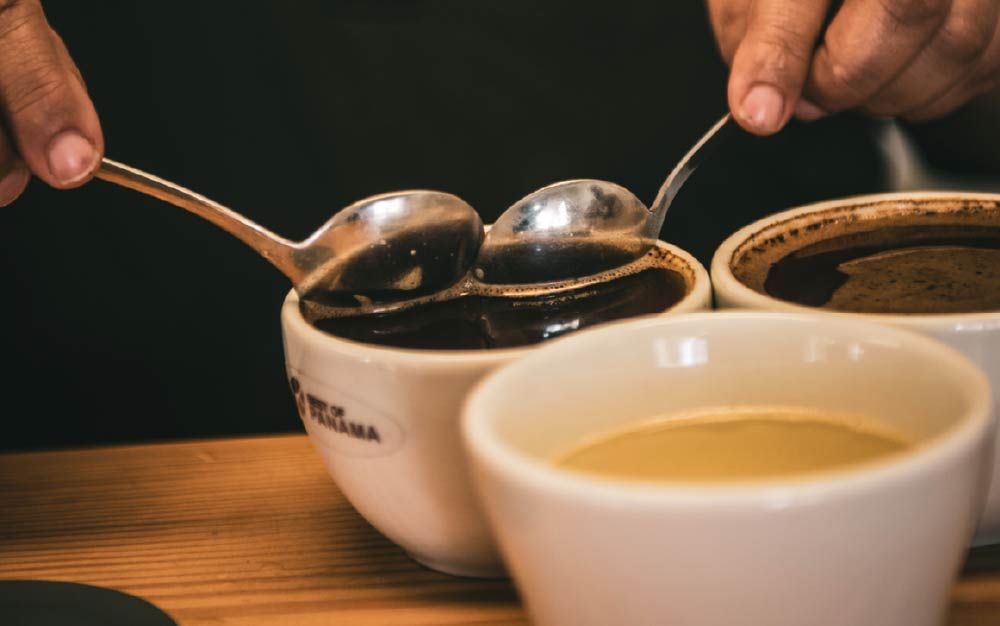
Front Street Coffee Geisha Coffee Bean Cupping Report 【Front Street Panama Red Label Geisha Cupping】 Dry aroma: jasmine, citrus Wet aroma: citrus, lemon, honey Palate: lemon, honey, berries, orange peel, mango, cream, citrus, tea-like
【Front Street Gesha Village Geisha Cupping】 Dry aroma: fermented notes Wet aroma: stone fruits Palate: floral, tea-like, cream, tea-like
Through cupping, Front Street found that the similarity between Gesha Village's Geisha coffee and the familiar Panama Geisha is not very high. Panama-grown Geisha coffee beans have charming floral aromas in dry aroma, wet aroma, and on the palate, while Gesha Village-grown Geisha is characterized by stone fruit notes in dry aroma, wet aroma, and on the palate, with floral aromas appearing somewhat inferior compared to Panama Geisha.
Front Street Coffee Brewing Notes Dripper: V60 Dose: 15g Coffee-to-water ratio: 1:16 Grind size: BG6H (78% passing through No. 20 sieve) Water temperature: 91°C
Front Street brewing method: First rinse the filter paper and preheat the dripper and coffee pot. Use 30g of water for a 30-second bloom, then pour in a small stream in a circular motion until 125g for a pour pause. When the water level is about to expose the coffee bed, continue pouring to 240g and stop. When the water level is about to expose the coffee bed again, remove the dripper. (Timing starts from the beginning of the bloom) Total extraction time is 1'55" to 2'05".
Front Street La Esmeralda Red Label Brewing Flavor : Bright rose, citrus aromas, brown rice, berries, apricots, complex fruits, honey, a thick juicy body, rich flavor layers, and obvious sweetness.
Front Street Gesha Village Brewing Flavor: At high temperature it is citrus acidity without losing body. As the temperature drops slightly, the acidity turns softer, the flavor leans toward yellow stone fruits, creamy sweetness, slight floral notes, and a slight dark cocoa finish. At low temperature it is maple syrup and berries.
The above content is compiled by CoffeeHunters, a coffee news website.


