







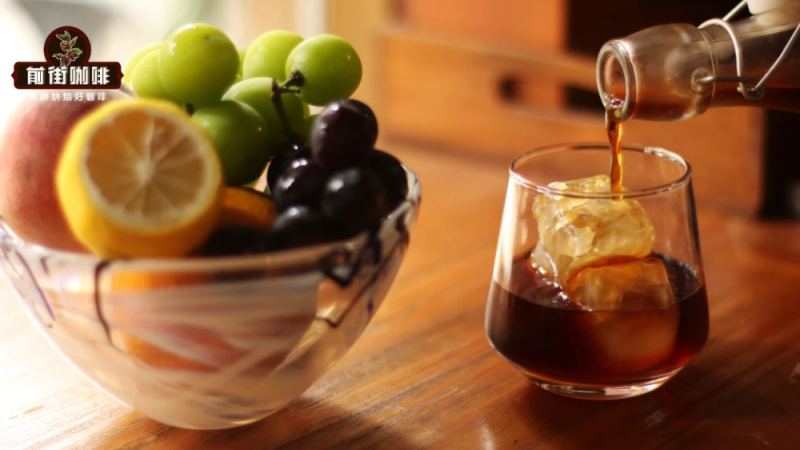
On a scorching summer day, a refreshing glass of iced coffee is undoubtedly a coffee lover's favorite. As representatives of low-temperature extraction, ice drip coffee and cold brew coffee have become stars among summer beverages with their crisp taste and rich flavor layers. At the same time, rapidly cooling hot pour-over coffee by adding ice is also a convenient option. This article will take Front Street Coffee's practice as an example to analyze in detail the historical origins and production process of ice drip coffee, compare the differences in extraction principles between cold brew and iced pour-over, and provide specific coffee-to-water ratios, grinding adjustment suggestions, and suitable bean recommendations, helping you find the summer iced coffee solution that best suits your taste.
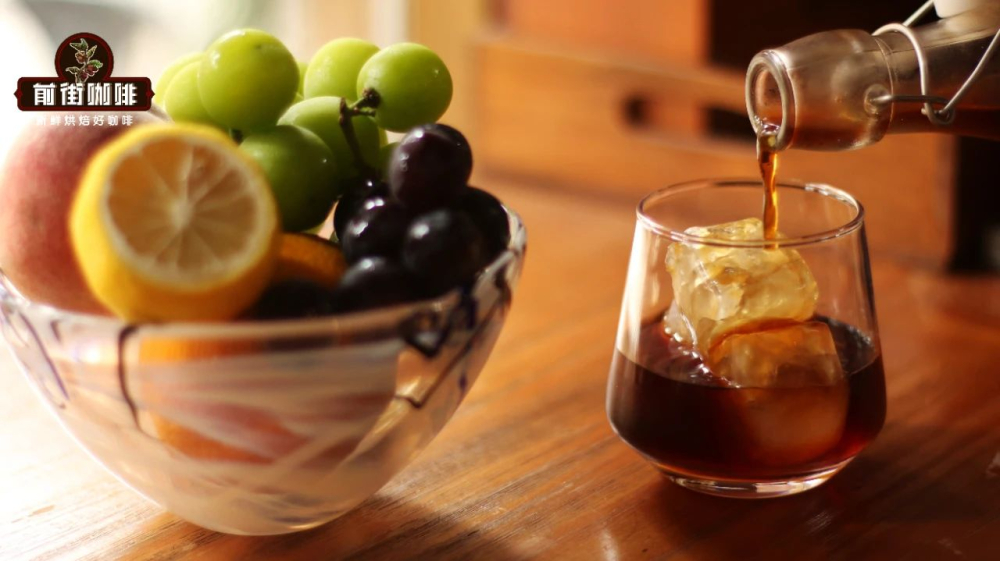
Every midsummer, for those who love coffee, being able to drink a glass of ice-cold, crystal-clear coffee is truly a great enjoyment. If you pursue low calories, care about the lingering aftertaste in your mouth, and like trying new things, then in summer you might as well try two popular drinks in the iced coffee world—"Ice Drip Coffee" and "Cold Brew Coffee." Compared with hot-water extraction, ice drip coffee has a uniquely charming flavor, with a crisp taste and rich flavor layers. A glass during the scorching heat is indeed deeply satisfying. Next, follow Front Street Coffee as we step into the world of ice drip coffee.
Ice drip coffee, also called Dutch coffee. It is said that during the period of Dutch colonial rule in Indonesia, large amounts of strongly flavored Robusta coffee beans were grown locally. In order to enjoy these highly bitter coffees even in the hot climate, people designed a brewing device that lets cold water drip slowly.
Completely different from hot-water brewing, heavy flavor substances are difficult to release in low-temperature ice water. Therefore, coffee extracted with ice water mainly presents sweet and sour substances, and because the extraction time is long, the caffeine content is actually higher than that of hot-water brewing. This also explains why ice drip coffee is widely popular in the Netherlands—it is refreshing and quickly energizing.
Although ice drip coffee originated in the Netherlands, interestingly, this kind of coffee is almost nowhere to be seen in the Netherlands itself. Instead, it set off an ice drip craze in Asia. In Japan, ice drip coffee has a history of hundreds of years, so it is also called "Kyoto coffee" or "Japanese-style slow-drip." In South Korea, almost every cafe sells ice drip coffee, and many well-known ice drip equipment brands also come from Japan and South Korea, such as Tiamo and Hario.
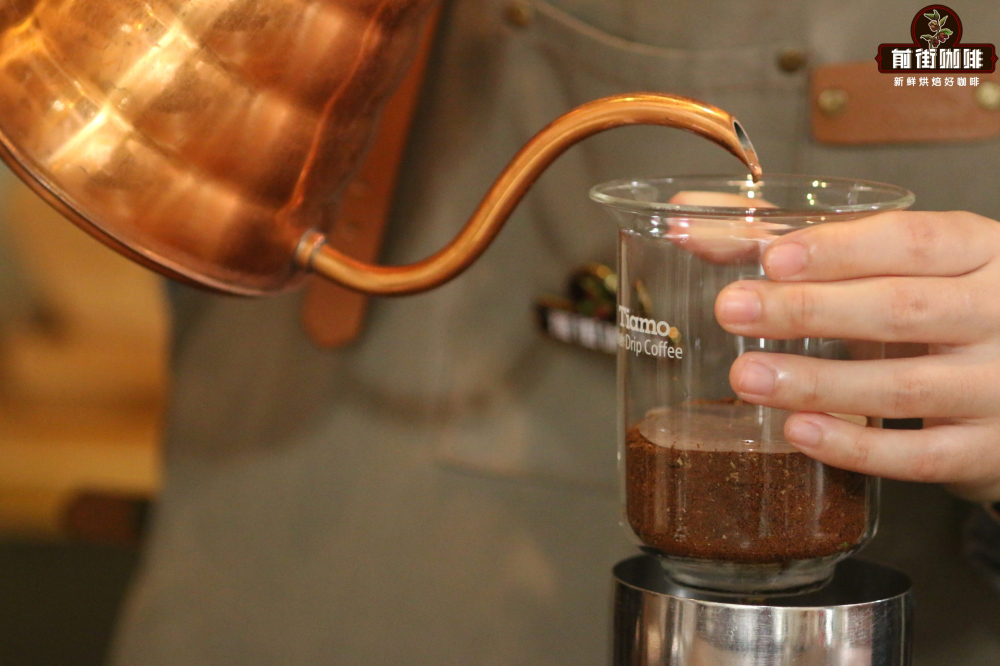
Front Street Coffee uses a Tiamo ice drip pot. To make ice drip coffee, coffee grounds with the coarseness of fine granulated sugar are usually used (75% passing rate on China's No. 20 standard sieve), extracting 600 grams of coffee liquid (coffee-to-liquid ratio 1:10), with an ice-water mixture prepared at 1:1.
Place a round filter paper at the bottom of the powder cup, wet it with water so it adheres to the cup wall. Then pour 60 grams of ground coffee into the powder cup and gently shake to level the surface. Next, place another sheet of filter paper on top of the coffee bed. The tension of the filter paper allows water to be evenly distributed across the surface of the coffee bed for extraction. Without the filter paper, long-term dripping would punch a pit into the coffee bed.
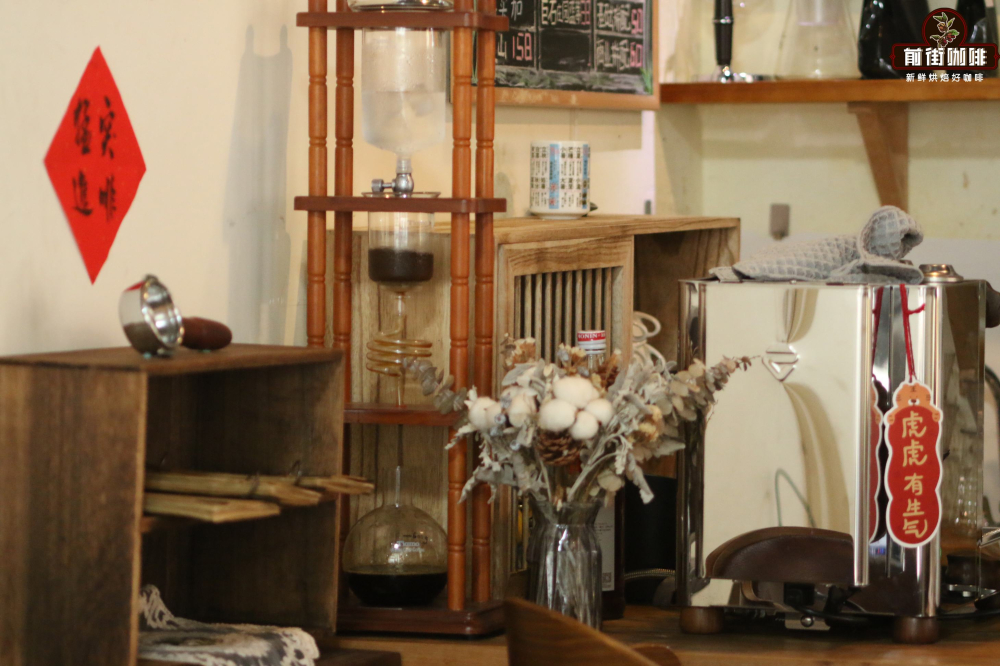
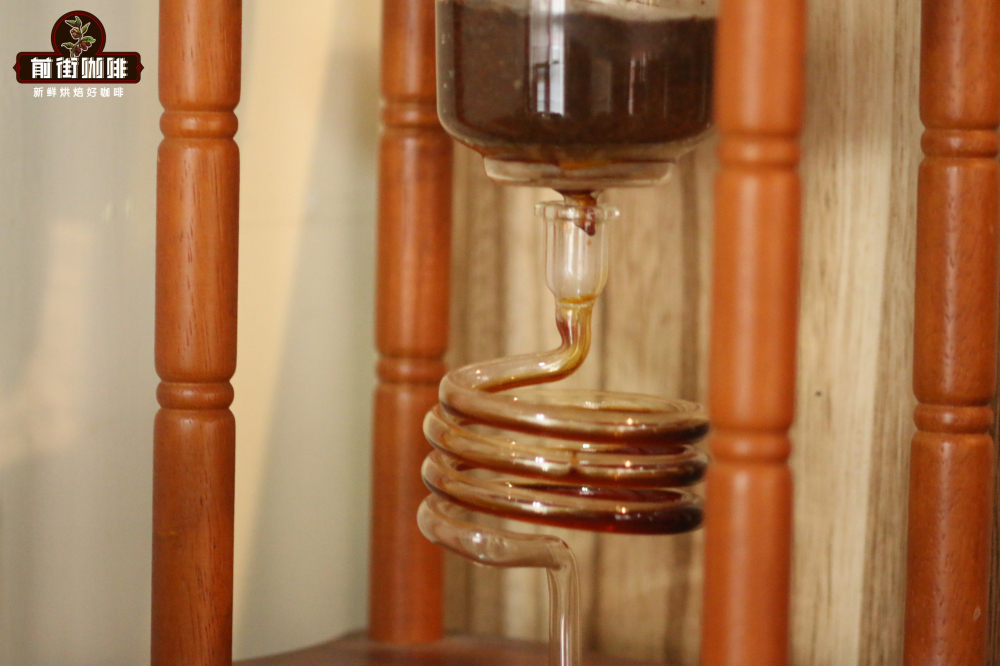
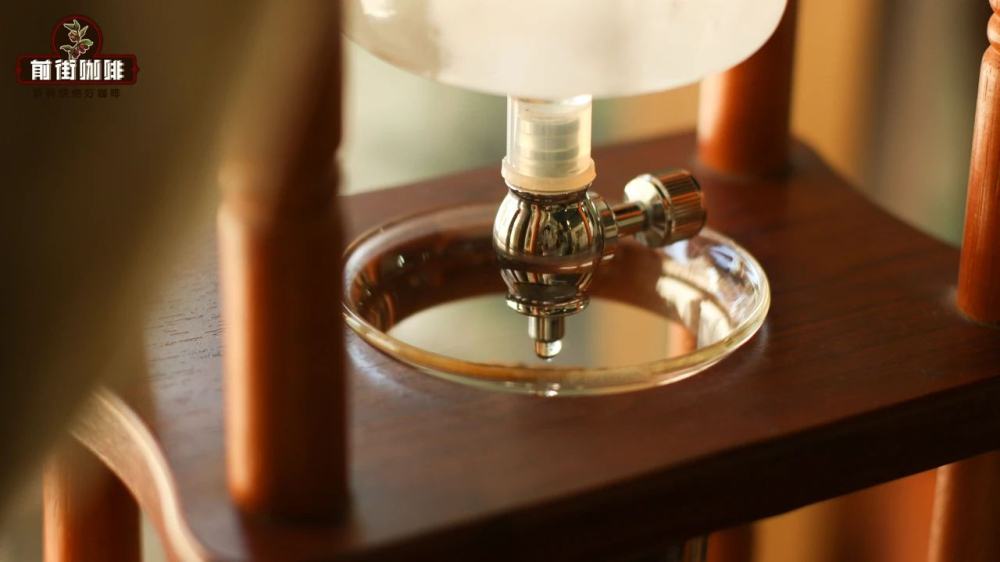
After laying the filter paper, wet the entire coffee bed with ice water. This step is similar to the blooming stage in pour-over and helps improve extraction effectiveness and consistency. Add a 1:1 ice-water mixture to the drip bottle and adjust the dripping speed. Front Street recommends controlling the drip speed at 6 drops per 10 seconds. After production is complete, pour it into a sealed, clean, water-free and oil-free bottle, and place it in the refrigerator for oxidation, allowing the flavor molecules of the ice drip coffee to be fully released before tasting.
Although ice drip coffee is delicious, the production process is usually rather cumbersome, requiring frequent attention to whether the ice water is still dripping. The ice cubes may look clean with no obvious impurities, but because the ice drip speed is extremely slow, averaging 6 drops per 10 seconds, one extraction often takes 6 to 8 hours.
The valve is opened very slightly, so as long as there is a bit of impurity, it may block the water outlet. In addition, a set of ice drip equipment is quite expensive, so in order to make low-temperature extracted coffee more conveniently at home, people invented cold brew coffee.
The method of adding ice to hot coffee
Front Street has summarized iced brewing plans for many kinds of coffee beans. When the ratio of coffee grounds to hot water is controlled at 1:10, the resulting iced coffee has the best concentration. Then add ice at 5 times the weight of the coffee grounds. After dilution and cooling, the coffee liquid can still show a good flavor. That is the formula mentioned above by Front Street. Taking a single serving of 15 grams of coffee grounds as an example, 10 times hot water is 150 grams, and 5 times ice is 75 grams; if brewing two servings with 20 grams, then 200 grams of hot water and 100 grams of ice are needed.
However, note that the less hot water poured, the shorter the entire extraction process will become. The most common situation is changing from the original 2 minutes to 1 minute 20 seconds. This means the later-stage flavor substances have no chance to be released, and the whole cup of iced coffee will most likely be under-extracted. In other words, although the concentration is sufficient, the flavor is not. Therefore, in order to coordinate the proportion of aromatic substances released, we need to grind finer, which in turn extends the extraction time.
Unlike other clear parameters, the grind size of coffee grounds has always been difficult to describe precisely in words. Once the deviation is too large, it can easily cause extraction problems. Therefore, Front Street believes it is enough to simply grind slightly finer than the usual grind setting for hot brewing.
For example, the grinder used in Front Street stores is the EK43s. If a coffee's setting for hot brewing is 10, then for iced brewing adjust it to 9 to 9.5; when using a C40 hand grinder, if a certain bean uses 24 clicks for hot brewing, then for iced brewing adjust it finer to 22 clicks.
Medium-light roasted coffee beans: Tanzania · Kilimanjaro Coffee grounds: 15 grams 10 times hot water: 150 grams 5 times ice: 75 grams Water temperature: 93°C Grind size: EK43s setting 9 (85% passing rate on No. 20 sieve) Dripper: Hario V60
Technique: three-stage pouring
Before pouring, first put the ice cubes into the sharing pot (adding ice first or later has little effect on the flavor), then pour in 15 grams of coffee grounds. Start from the center and spiral outward in a small circle, pouring 30 grams of water in a thin stream to bloom for 30 seconds; in the second stage, pour 60 grams of water using the same technique; when the water in the dripper is about to finish dripping, pour the remaining 60 grams of hot water. The final extraction time falls between 1 minute 50 seconds and 2 minutes.
Finally, swirl the sharing pot to speed up the melting of the ice, and at the same time shake the coffee liquid fully to mix and cool it, then it is ready to enjoy. The Kilimanjaro iced pour-over brewed this way has a crisp taste and bright acidity, with flavors of green grapes, berries, and nuts on the palate, accompanied by a hint of light floral aroma.
The advantage of coffee extracted at low temperature is that it does not force out the impurities and bitterness of the coffee beans, which is why they prefer to use the Cold Brew method to brew coffee. This way of drinking is not only fresher and slightly sweeter, but because the sourness and bitterness are relatively reduced, the mouthfeel is also smoother. The disadvantage is that because the water and coffee grounds are in contact for a long time, it has the highest caffeine content among iced coffee options. If you are sensitive to caffeine, remember not to drink too much.
As Front Street said above, extracting coffee at low temperature cannot effectively extract rich, full-bodied substances. Therefore, Front Street Coffee recommends that everyone use coffee beans with obvious acidic and aromatic flavors to make cold brew or ice drip coffee. For example, medium-light roasted coffee beans and coffee beans processed with special processing methods are all suitable for making cold-extracted coffee.
All the pour-over coffees sold daily by Front Street Coffee can be made iced. Usually, Front Street Ethiopia Yirgacheffe Guddina coffee beans are used (citrus, honey, green tea flavors), Front Street Ethiopia Sidamo Huakui coffee beans (compound berry juice, rose, black tea flavors), Front Street Panama Butterfly Geisha coffee beans (white floral aroma, citrus, honey, green tea flavors), and Front Street Costa Rica Strawberry Candy coffee beans (strawberry hard candy, raisins, fermented aroma). The common characteristics of these coffee beans are rich aroma and obvious sweet-and-sour taste, making them very suitable for making refreshing iced coffee in summer.
Cost-effective everyday pour-over coffee bean recommendations: Front Street Ethiopia Yirgacheffe Guddina, Front Street Panama Emerald Estate Green Label Geisha coffee beans
Espresso coffee bean recommendations: Front Street Classic Blend, Strawberry Candy Espresso Blend
You can now purchase the above coffee beans at the Tmall "Front Street Flagship Store," where you can also find 60 kinds of single-origin pour-over coffee beans and espresso coffee beans from around the world. Front Street coffee beans are freshly roasted and shipped within 24 hours.
Tmall Front Street Flagship Store link: https://qianjieshipin.tmall.com
Or you can directly search "Front Street Flagship Store" on Taobao.
Front Street Coffee store address: No. 315 Donghuadong Road, Yuexiu District, Guangzhou
The above content is compiled by CoffeeHunters, a coffee news website.


