







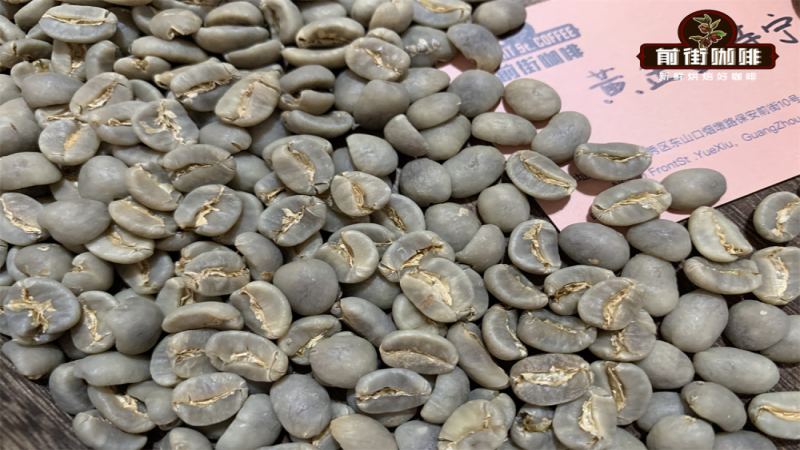
Mandheling coffee is a leading specialty Arabica produced on the Indonesian island of Sumatra, grown on plateaus at elevations of 750–1500 meters, with the best quality coming from around Lake Toba and the Lintong hills. Its name is neither a producing region nor a variety, but rather stems from a misnomer for the Mandailing people during World War II, which later spread and gained fame through Japanese soldiers. Mandheling has a rich, full-bodied taste with low acidity and herbal spice notes, and is mostly processed using the wet-hulling method. Japanese companies later established strict screening standards, giving rise to Golden Mandheling. Front Street Coffee's bean list commonly features Lintong Mandheling and Golden Mandheling—the former an entry-level daily drinking bean, the latter cleaned and translucent after four rounds of hand-sorting. This article will comprehensively cover Mandheling's origins, varieties, processing methods, and the story behind its name.
Mandheling coffee beans come from the Indonesian island of Sumatra, and are therefore also known as "Sumatra coffee." This coffee grows in highland mountains at elevations of 750 to 1500 meters and is one of Indonesia's few Arabica varieties, with the first-grade Mandheling produced in Takengon and Sidikalang being the finest. Due to limited production, coffee lovers regard it as a "famous brand," especially Mandheling beans given a French roast, whose intense bitterness and dark bean color make coffee addicts unable to forget its rich, bitter charm.
At the end of the seventeenth century, the Dutch East India Company transplanted Arabica trees (Typica) from India to Jakarta on the island of Java. Thanks to the suitable climate and soil, Arabica quickly spread to Sumatra in the northwest of Java and to Sulawesi in the northeast. However, in the 1880s a severe leaf disease broke out in Java, and Arabica nearly died off, so the Dutch switched to planting the highly disease-resistant Robusta, stabilizing Indonesia's coffee industry. To this day, Robusta remains the mainstay of Indonesian coffee, accounting for about 90% of coffee production, distributed across low-altitude areas of Java and Bali. The elegant-flavored Arabica is mainly distributed in northern Sumatra, Sulawesi, and the higher altitudes of Java. Although it accounts for only about 10% of Indonesia's coffee production, reputations such as Mandheling, Golden Mandheling, Lake Tawar, Mount Gayo, Aceh, Sulawesi, Aged Mandheling, and Java Old Brown have made Indonesian coffee famous in the specialty world for decades, untainted by inferior Robusta.
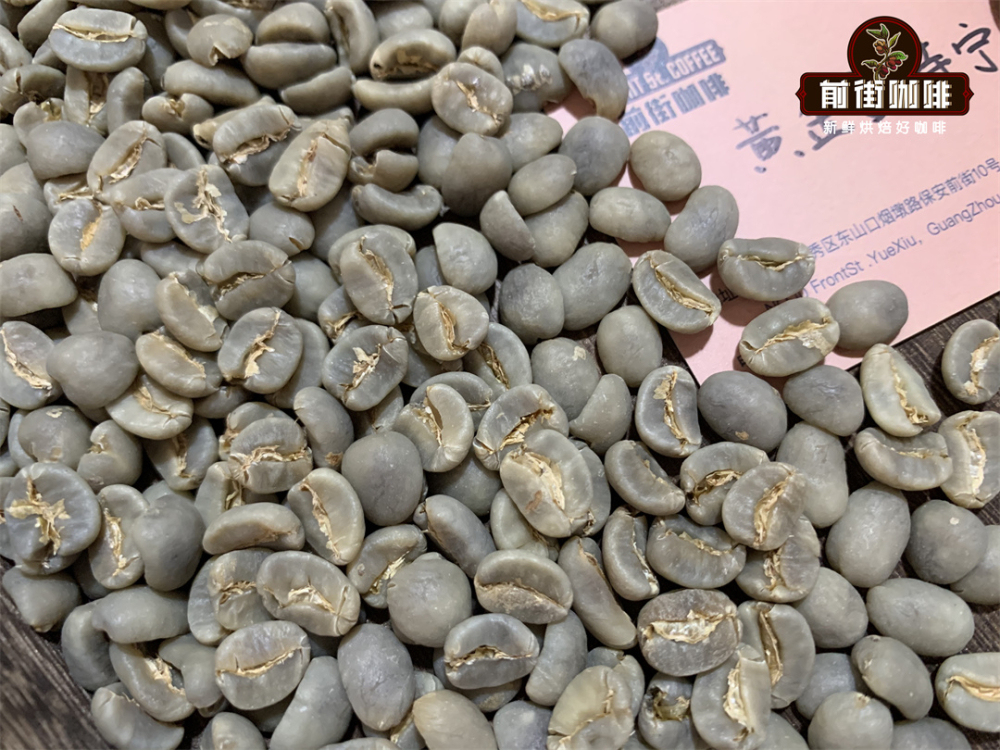
Flavor Characteristics of Mandheling Coffee
Mandheling has a rich, solid mouthfeel with a pleasant acidity. Its aroma is mellow, its acidity moderate, and its sweetness rich and intriguing. The flavor is very intense—sweetly fragrant, purely bitter, full-bodied—accompanied by a touch of sweetness and slight acidity, with a long lingering aftertaste. Most coffee lovers drink it as a single-origin coffee, but it is also an indispensable variety in blended coffee.
The Origin of Mandheling
Mandheling can be called the synonym for Indonesian specialty coffee, but it is not the name of a producing region, place, or port, nor the name of a coffee variety, but rather a phonetic mispronunciation of the Mandailing people who originally lived in Sumatra. Why did this ethnic group become associated with coffee? There is a传奇 story of a fortunate mistake behind it.
According to Sumatran records, during the Japanese occupation of Indonesia in World War II, a Japanese soldier drank an incomparably fragrant coffee in a café and asked the owner the name of the coffee. The owner mistook it for "Where are you from?" and answered: Mandailing. After the war, the Japanese soldier remembered the "Mandheling" he had drunk in Indonesia and asked an Indonesian coffee trader to ship 15 tons to Japan, where it became hugely popular. The name Mandheling spread just like that. More interestingly, that coffee trader is now the renowned Pwani Coffee Company (PWN). In other words, this Japanese soldier's mispronunciation inadvertently made the fame of both Mandheling and Pwani.
Speaking of Mandheling coffee, Front Street Coffee's bean list has two very common options: Lintong Mandheling and Golden Mandheling. Front Street Coffee loves its rich aroma, full body, and intense taste, and its unique herbal spice flavor is also a hallmark of Mandheling coffee.
Mandheling Coffee
By convention, any coffee produced in Sumatra is called Mandheling, but this is not professional, because the coffees of the two major lake regions—Lake Toba and Lake Tawar—are different.
Mandheling mainly refers to coffee produced by the Batak people around Lake Toba in north-central Sumatra or in the Lintong hills, mostly grown with unshaded sun exposure and processed mainly by semi-washed or natural methods, with more pronounced herbal and earthy notes and a flavor tending toward a low, heavy, low-acid, muted aroma—this is Mandheling's greatest characteristic.
Front Street Coffee's entry-level daily drinking bean from Indonesia's Mandheling region comes from here. Lintong Mandheling uses the unique wet-hulling method, which creates its low acidity and high body.
As for the northernmost Lake Tawar area or the Aceh region, another ethnic group, the Gayo, uses traditional shade cultivation and mainly washed or semi-washed processing, giving a brighter acidity and aroma, with the muted aroma less pronounced. The American specialty world mostly does not call this region Mandheling, and rightly so, more often calling it Aceh coffee or Lake Tawar coffee. In other words, the Lake Toba and Lintong areas of north-central Sumatra can be called Mandheling, while the northernmost Lake Tawar area might better be called Aceh coffee, Gayo coffee, or Lake Tawar coffee to be more professional.
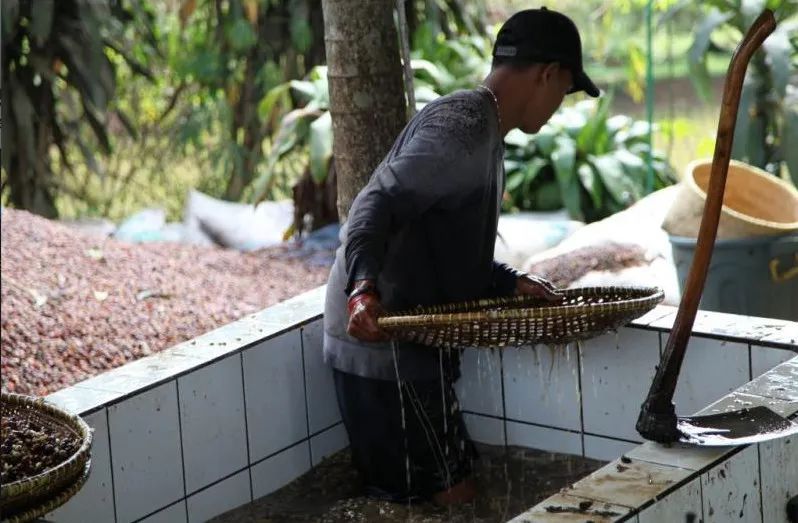
Wet-Hulling Method
Mandheling coffee mostly uses Sumatra's unique wet-hulling method. Due to scarce water resources, Mandheling was initially mainly sun-dried, but the drawback was unstable quality; later, Brazilian semi-washed methods were also tried, but the local weather is often rainy, with constant typhoons and year-round dampness and rain, unable to provide the good weather required for sun-drying.
Golden Mandheling
More than a decade ago, the Japanese adopted stricter quality control, hand-sorting the beans four times to remove defective beans and producing Golden Mandheling with a dark green color and uniform bean appearance, creating another wave of market demand that even Europe and America went crazy for.
Golden Mandheling coffee beans come from Lake Tawar at Mount Gayo in northwestern Sumatra. Golden Mandheling's specification standard is 18 screen size or above, with fewer than 3 defective beans (in a 300g green bean sample), belonging to the highest grade G1, dark green in color, with a neat, flat bean shape. After strict screening, Front Street Coffee found that Golden Mandheling not only lacks the earthy, miscellaneous flavors unique to ordinary Mandheling, but also tastes cleaner and more translucent.
Why did the concept of Golden Mandheling emerge? We understand that the wet-hulling process can produce something like sheep-hoof beans, so to improve the problem of many defective beans, the Japanese began cooperating with local green bean traders and established a strict screening system. After processing, the green beans undergo density and color sorting, and then are hand-sorted four times, finally presenting Mandheling with uniform color and uniform bean shape. It is said that when processing the green beans, Mandheling under sunlight gives off a golden luster, hence the name Golden Mandheling.
However, the one who registered Golden Mandheling as a trademark was not a Japanese company, but the local Indonesian company that partners with Japanese companies to export Mandheling coffee beans—PWN (Pwani Coffee Company). Japanese companies could only separately register "Gold Top Mandheling," that is, Gold Top Golden Mandheling. Front Street Coffee believes that in terms of flavor expression, the two are actually not very different. But Golden Mandheling was registered as a trademark by PWN, and the words "Golden Mandheling" became PWN's exclusive property. A while ago, Front Street Coffee also purchased Golden Mandheling from PWN's new season, produced in the Gayo Mountains of Aceh, North Sumatra, whose variety is Ateng. (Ateng is a hybrid between Arabica and Robusta, widely planted in Sumatra and other small Indonesian islands.)
The above content is compiled by CoffeeHunters, a coffee news website.


