








Although Guatemala is often overshadowed by Panama when it comes to Central American coffee, it has carved out its own niche with a rich, smooth, and mellow flavor interwoven with charcoal roast and chocolate smoke, and Antigua coffee is even called "cigarette coffee." This article, from the perspective of Front Street Coffee, outlines Guatemala's geography and climate, planting history, and the division of its eight major producing regions, with a focus on three representative regions: Antigua, Huehuetenango, and New Oriente. It also shares the regional information and staged brewing methods for two Front Street beans—Guatemala Flor and Huehuetenango—to give you a comprehensive understanding of this Central American producing country that can grow extremely hard beans.
For more specialty coffee knowledge, please follow the WeChat public account: Front Street Coffee (FrontStreet Coffee)
When people mention American coffee, most脱口而出 Brazil, Colombia, and other South American producing countries; and when it comes to Central America, the spotlight is often stolen by Panama. In fact, Guatemalan coffee also has a strong regional identity, otherwise Front Street's daily bean series would not have included it in the first place (that particular one has now been discontinued).
Most people who have tried Guatemalan coffee have this impression: full-bodied, smooth, with a mellow note tinged with a hint of charcoal roast, like chocolate sweetness blended with smoky aroma. It is precisely because of this unique charcoal aroma that Antigua coffee is also called "cigarette coffee."
Guatemala Country Overview Guatemala is located in the southern part of the North American continent and the northwestern part of Central America, bordered by Mexico to the west and north, and Honduras and El Salvador to the southeast. About two-thirds of the country's land area consists of mountains and plateaus, with the western and southern parts belonging to a volcanic belt that contains more than thirty volcanoes.
The country lies in the tropics, with a tropical rainforest climate in the northern and eastern coastal areas, and a subtropical climate in the southern mountains. The dry and wet seasons are clearly defined, with the wet season from May to October and the dry season from November to April of the following year. The central highlands are Guatemala's cultural core, with an elevation between 1,300 and 1,800 meters, a mild climate year-round, and temperatures maintained between 18 and 28 degrees Celsius.
Annual rainfall in the northeast is about 2,000 to 3,000 millimeters, while in the south it is 500 to 1,000 millimeters. Guatemala's overall elevation is relatively high, and its coffee-growing belt is distributed above 1,500 meters and between 14 and 16 degrees north latitude, conditions that easily produce extremely hard beans.
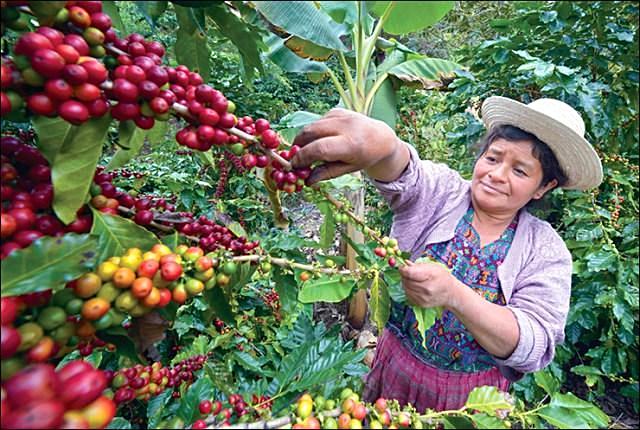
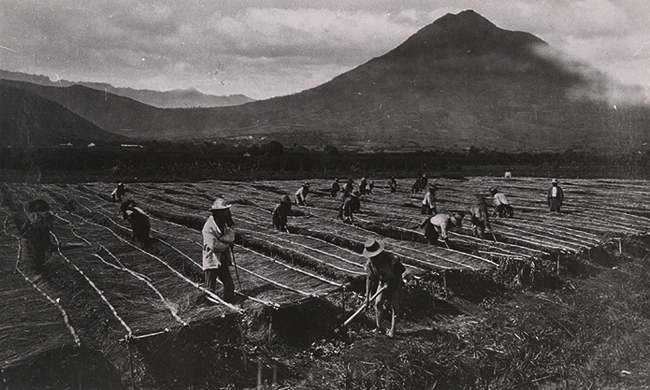
Guatemala Coffee Planting History Guatemala's recorded history of coffee drinking can be traced back to 1747, but actual cultivation did not begin until 1750, when Father Jesuit introduced coffee trees to the area for planting. In 1845, coffee became one of Guatemala's important economic crops. By 1880, coffee accounted for 90% of the country's total exports; in order to further expand production, those in power turned their eyes to indigenous lands, forcing people to sell their land and move to areas with poorer soil. To this day, Guatemala still has about 60,000 family-owned farms engaged in coffee operations. Coffee is mostly grown in the Sierra mountains near the Pacific coast, a range that runs through the entire country, extending north to connect with the Rocky Mountains and south to the Andes.
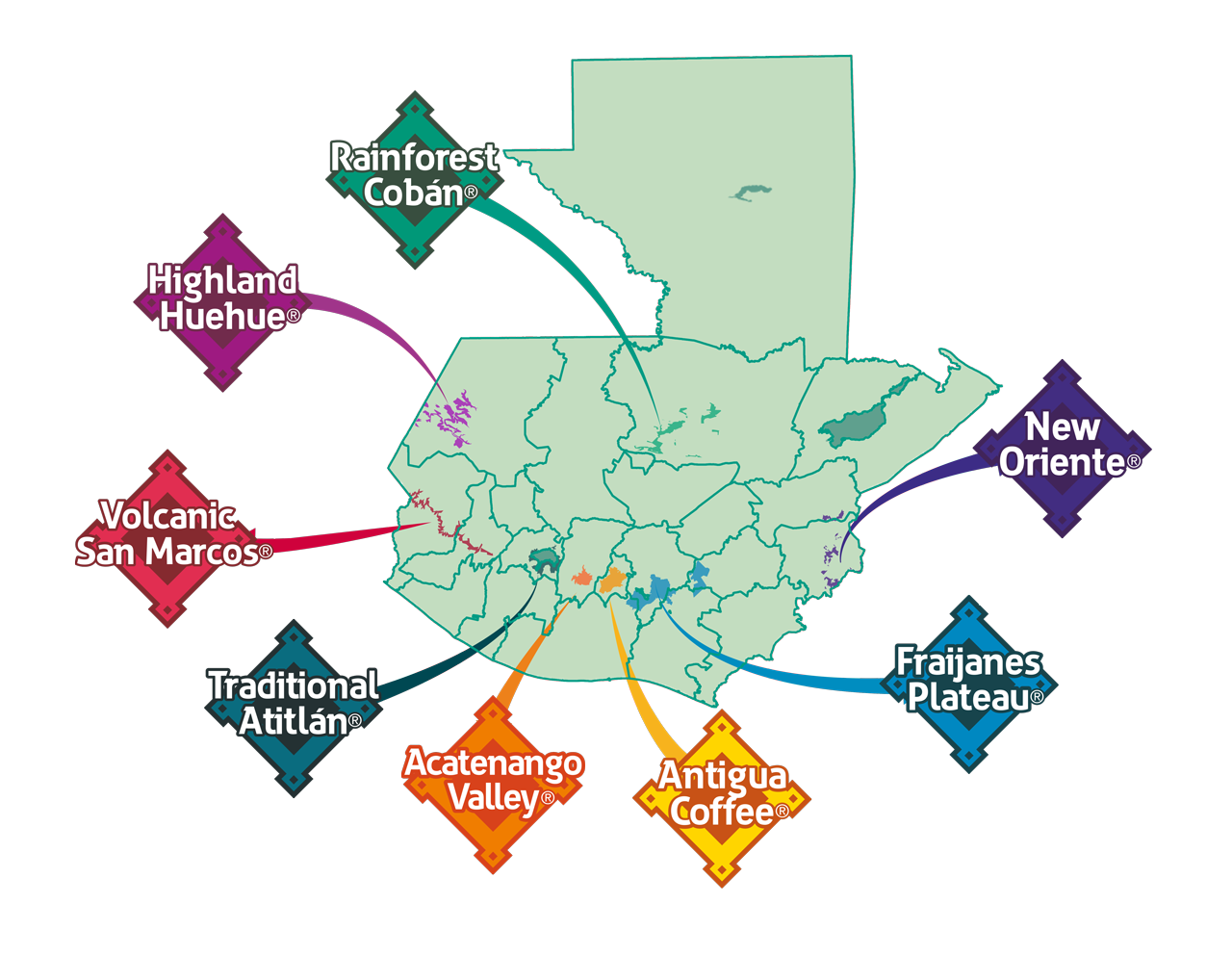
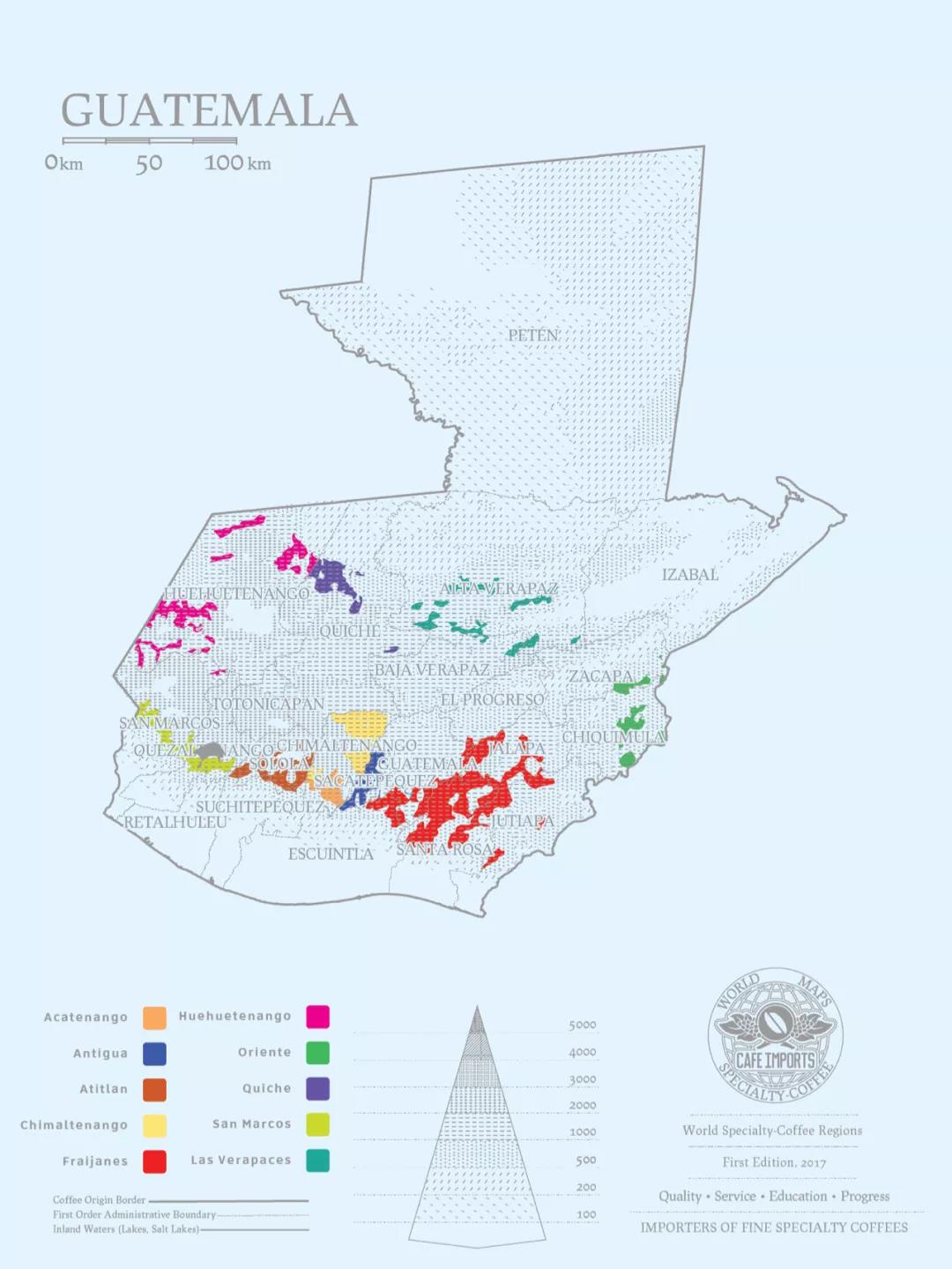
Guatemala Coffee Producing Regions The Guatemalan Coffee Association created the Guatemalan coffee bean brand and, with the slogan "A Rainbow of Choices," divided coffee beans into eight different origins: Antigua Classic, Huehuetenango, Rainforest Coban, Traditional Atitlan, Fraijanes Plateau, Volcanic San Marcos, Acatenango, and New Oriente.
Below, Front Street Coffee (FrontStreet Coffee) introduces three of the better-known producing regions:
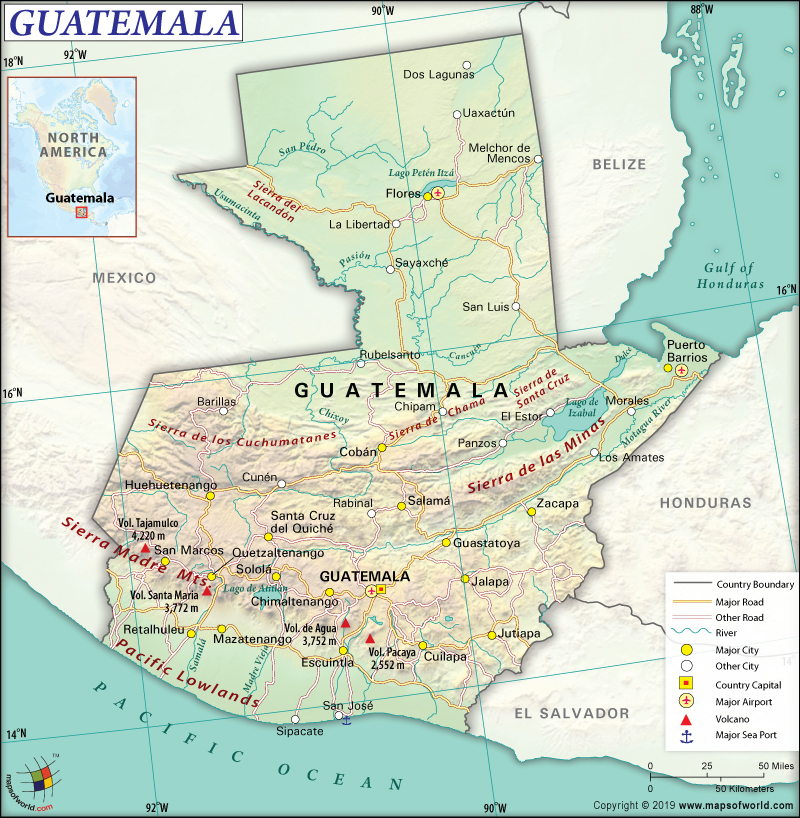
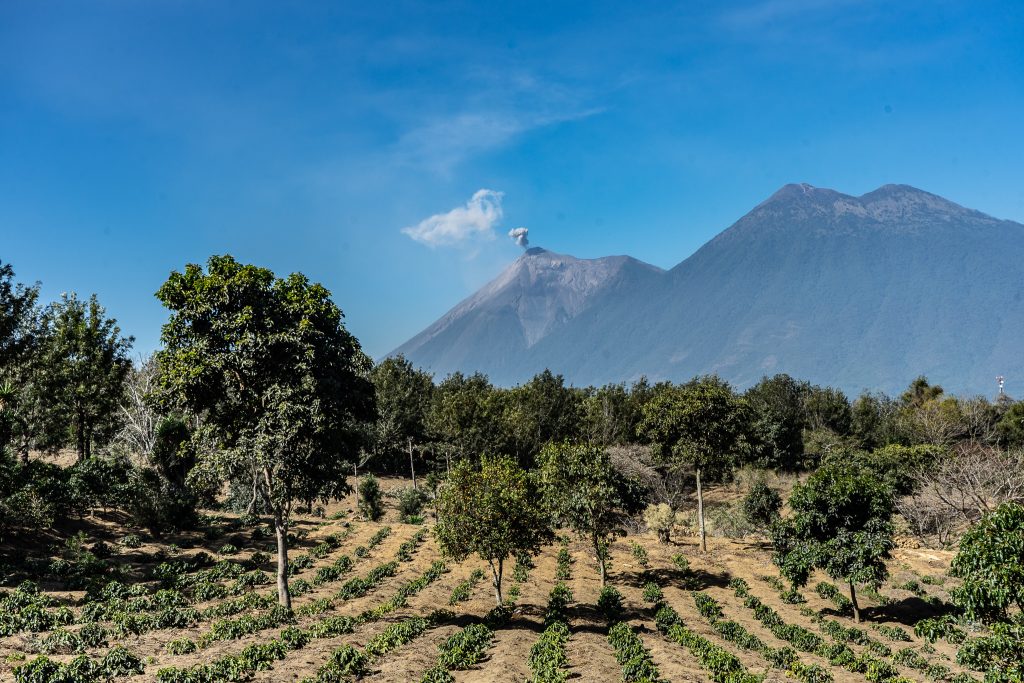
[Antigua Region] The Antigua region is surrounded by three volcanoes—Agua, Fuego, and Acatenango—forming a valley. Among them, Fuego is an active volcano that erupts from time to time, enriching the local soil with minerals. The region retains large areas of primary forest, and together with fertile volcanic soil, coffee trees can obtain sufficient nutrients. Antigua has a mild climate year-round, stable humidity, and rarely experiences extreme weather changes. Coffee grows at elevations above 1,500 meters. The coffee produced here is the most awarded in Guatemala and the country's most prestigious producing region.
One of the Guatemalan beans Front Street Coffee (FrontStreet Coffee) has sourced—Front Street Flor coffee beans—comes precisely from the Antigua region and from La Minita company. Thanks to the climatic and elevation advantages brought by the estate's geographical environment, La Minita has created production conditions unfavorable to the mass reproduction of pests, so no insecticides are used when growing coffee, and a small number of pests will not cause obvious harm to the coffee trees.
The estate conducts soil testing twice a year, based on which it decides its fertilization plan; it is especially cautious when using yield-increasing products, fertilizing about three times a year. This scientific cultivation management, combined with La Minita's strict control of the entire process from planting to packaging, has produced the excellent flavor of this Front Street Guatemala Flor coffee bean and made its quality more assured.
Front Street Guatemala Antigua Flor Region: Guatemala Antigua Region Estate: La Minita Estate La Minita Elevation: 1,200 meters Variety: Caturra, Bourbon Processing method: Washed processing
[Huehuetenango Region] The Huehuetenango region has a dry climate and high elevation. The dry hot winds from Mexico's Isthmus of Tehuantepec protect the coffee here from frost; at the same time, the warm, moist Caribbean air brought by the central mountain range keeps the producing region shrouded in clouds and mist with changeable weather, and it also has fertile volcanic soil.
In Front Street's daily bean series, there is one coffee bean from Guatemala's Huehuetenango region.
Front Street Guatemala Huehuetenango Region: Guatemala Huehuetenango Region Elevation: 1,500m-2,000m Variety: Bourbon, Caturra, Catuai Processing method: Washed processing
[New Oriente Region] In ancient times, the New Oriente area was once a volcanic region, and the soil here is composed of metamorphic rock, and therefore rich in minerals. Before coffee cultivation began, the New Oriente area was once the poorest region in Guatemala; since the 1950s, mountain farmers have relied on this naturally fertile, nutrient-rich land to grow coffee, and the area has gradually come to life. Today it has become a rising star in Guatemala's coffee-growing industry.
The coffee produced in the New Oriente region has a balanced flavor, full body, and a chocolate note.
Brewing Method Taking Front Street Coffee (FrontStreet Coffee) Guatemala Antigua Flor as an example, a staged extraction is used: first bloom with 30 grams of water for 30 seconds, then pour in a small stream in a circular motion until 125 grams, at which point a stage is made, and when the water level drops and is about to expose the coffee bed, continue pouring until 225 grams and stop, and when the water level drops again and is about to expose the coffee bed, remove the dripper (timing starts at the beginning of blooming), with a total extraction time of 2'00".
Flavor Description The citrus acidity is relatively prominent, with a juicy acidity, rich floral aroma, pleasant sweetness, medium body, and a slight caramel note and smoky flavor in the finish. Overall it is clean, mild, smooth in texture, balanced in taste, and lively and varied in layers.
The above content is compiled by CoffeeHunters, a coffee news website.


