







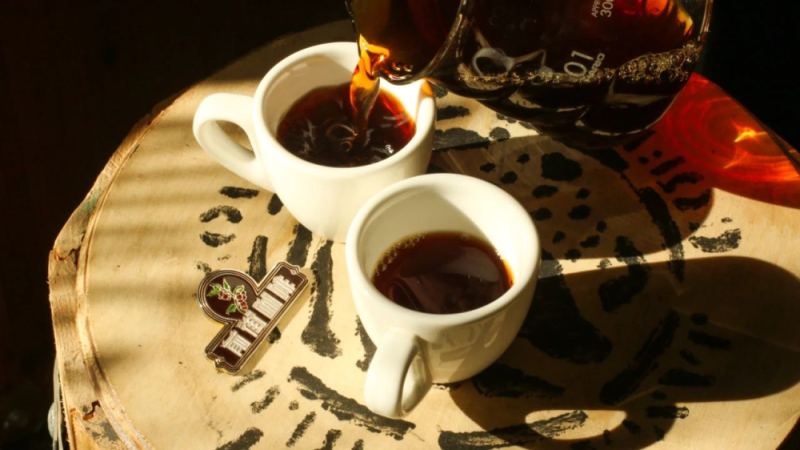
Blue Mountain coffee is recognized as one of the best-tasting coffees in the world, with its sweet, acidic, and bitter notes in balanced harmony, leaving almost no bitterness and only a very slight hint of acidity. Why does Blue Mountain coffee perform so exceptionally? How can you make sure you are buying authentic Blue Mountain No. 1? And how should you brew it to bring out its dark chocolate, nutty, and creamy smooth flavors? Starting from Front Street Coffee's sourcing and brewing experience, this article walks you through the origin and terroir of Blue Mountain coffee, its varietal characteristics, how to identify the genuine product, and the specific parameters and techniques for pour-over extraction, so you can consistently recreate a balanced, rich cup of Blue Mountain No. 1 at home.
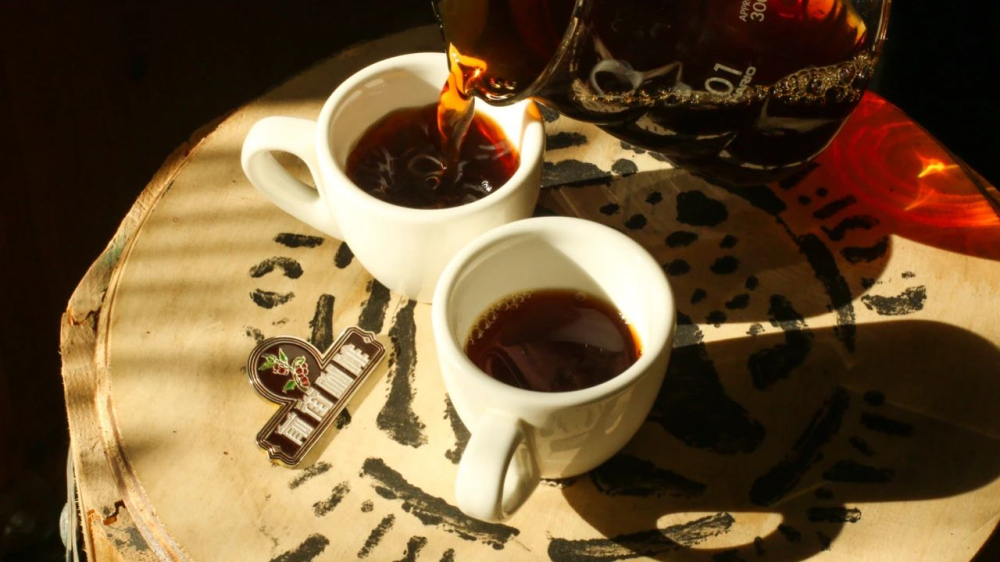
Blue Mountain coffee encompasses almost all the qualities a fine coffee should have: full aroma, rich body, and, even more rare, a harmony among sweet, acidic, and bitter notes that is just right, so it drinks without noticeable bitterness and with acidity appearing only within a very slight range. For this reason, Front Street Coffee recommends drip filtration (that is, pour-over) to extract Blue Mountain coffee.
Why does Blue Mountain coffee taste so good?
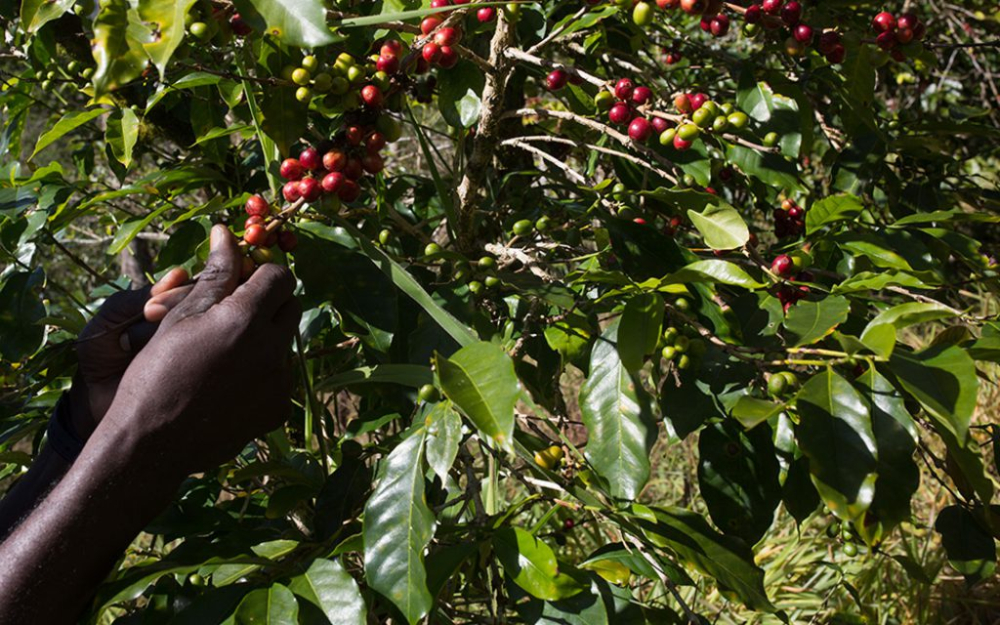
Blue Mountain coffee tastes good not only because of the variety itself, but also because of the terroir in which it grows. This coffee is cultivated in the Blue Mountains of Jamaica in the Caribbean, at elevations between 910 and 1,700 meters; any coffee produced below 910 meters can only be called Jamaican High Mountain coffee or Jamaican Supreme coffee.
The coffee variety grown in the Blue Mountains is entirely Typica. In the 1720s, Typica was introduced to the Jamaican Blue Mountains from Martinique, and after more than two hundred years of evolution, Blue Mountain Typica gradually developed better disease resistance, especially outperforming ordinary Typica in resistance to coffee berry disease.
However, once Blue Mountain Typica leaves the Blue Mountain production area, or is planted below 910 meters, it can no longer replicate that clear, sweet, subtle fragrance — which is also why Blue Mountain coffee, Jamaican High Mountain coffee, and Jamaican Supreme coffee are distinguished from one another. The Blue Mountains lie within the coffee-growing belt, with fertile volcanic soil, clean and pollution-free air, and a humid climate with frequent fog and rain year-round, an average rainfall of about 1,980 millimeters, and temperatures maintained around 27 degrees Celsius. The day-night temperature difference brought by the high altitude lengthens the coffee's growing cycle, also giving the flavors and sweetness more time to develop.
How can you buy authentic Blue Mountain coffee?
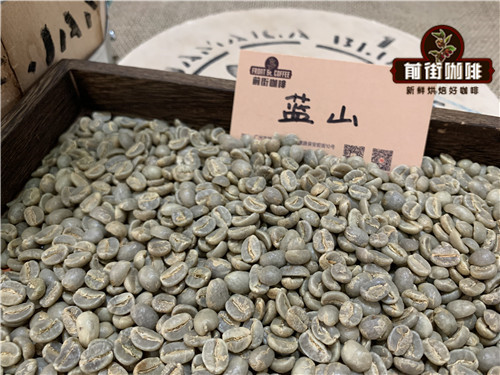
Authentic Blue Mountain coffee beans are single-origin (single-estate) coffee beans and should come with an export certificate or certificate of origin issued by the Jamaican government. Many products on the market labeled Blue Mountain flavor, Blue Mountain blend, or Blue Mountain espresso-style, or coffee beans priced abnormally low, are not authentic Blue Mountain coffee. Typically, authentic Blue Mountain No. 1 roasted beans sell for over one hundred yuan per 100 grams, so do not be tempted by cheap prices.
In addition to certificates, the Jamaican government also stipulates that all exported Blue Mountain coffee must be shipped 100% in wooden barrels, in sizes of 15 kg, 30 kg, and 70 kg. The Blue Mountain No. 1 coffee beans currently sold by Front Street Coffee come from the oldest coffee-growing site in the Blue Mountains — Clifton Mount Estate, at a growing elevation of 1,310 meters. This estate is also the only estate in Jamaica to have passed Rainforest Alliance certification; obtaining this certification means promoting environmental responsibility, social fairness, and economic development, so the wooden barrels of exported Blue Mountain coffee bear the green frog certification mark.
At Front Street Coffee's physical store, you can see the wooden barrels printed with the green water frog mark, as well as the certification certificate issued by Clifton Mount Estate.
How should Blue Mountain coffee be brewed to taste good?
To bring out the good flavor of Blue Mountain coffee, using freshly roasted coffee beans is crucial. So that every consumer can drink coffee in its best state, all coffee beans sold by Front Street Coffee are shipped within 5 days after roasting is completed. To match the public's perception of Blue Mountain coffee as rich and full-bodied, Front Street Coffee roasts Blue Mountain coffee to a medium-dark level, increasing body and sweet aftertaste while retaining a slight fruity acidity for more layered complexity.
Before brewing, Front Street first confirms the freshness of the coffee beans; if the roast date is more than a month old, Front Street will switch to fresher coffee beans. Coffee beans have an optimal flavor period after roasting, and the aroma is lost more quickly with storage time, making it difficult to restore the original flavor during brewing. This is also why Front Street insists on shipping only coffee within 5 days of roasting, hoping every customer can use coffee beans in their full flavor window. When brewing coffee beans with a predominantly bitter profile, Front Street usually gives priority to the KONO dripper to highlight a rich mouthfeel. The upper part of the KONO dripper allows the filter paper to fit better, and compared with the V60 dripper, its extraction method is mainly immersion-based, which can increase the coffee's overall concentration and thereby enhance body. Likewise, the KONO dripper is also suitable for brewing Brazil Queen Estate coffee beans and Golden Mandheling coffee beans.
To give Blue Mountain coffee a gentle body, Front Street Coffee uses a KONO dripper, paired with a medium-coarse grind (coarse sugar size, 70% passing rate through the Chinese No. 20 standard sieve) and a water temperature of 88 to 89 degrees Celsius for extraction. The specific technique is as follows: in the first stage, pour 30 grams of water for blooming, with a bloom time of 30 seconds; in the second stage, pour water to about 125 grams and wait for the coffee liquid to drop; when the liquid level drops to half, pour the final stage of water to 225 grams, and end the extraction once all the coffee liquid has dripped through; the total extraction time is usually about 2 minutes 10 seconds.
The flavor performance of pour-over "Front Street Blue Mountain No. 1 Coffee": rich dark chocolate and nutty flavors, a creamy smooth mouthfeel, and a balance of sweetness, acidity, and bitterness.
The above content is compiled by CoffeeHunters, a coffee news website.


